Vulf Maria, Shunkina Daria, Komar Aleksandra, Bograya Maria, Zatolokin Pavel, Kirienkova Elena, Gazatova Natalia, Kozlov Ivan, Litvinova Larisa
Center for Immunology and Cellular Biotechnology, Immanuel Kant Baltic Federal University, Kaliningrad, Russia.
Department of Organization and Management in the Sphere of Circulation of Medicines, Institute of Postgraduate Education, I.M. Sechenov Federal State Autonomous Educational University of Higher Education-First Moscow State Medical University of the Ministry of Health of the Russian Federation (Sechenov University), Moscow, Russia.
Front Cell Dev Biol. 2021 Sep 9;9:736677. doi: 10.3389/fcell.2021.736677. eCollection 2021.
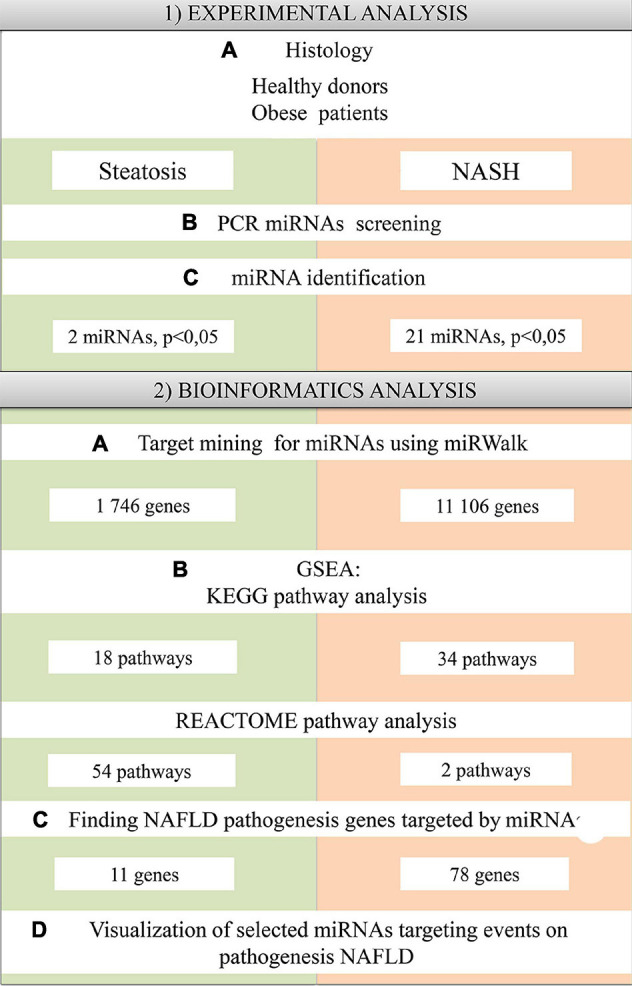
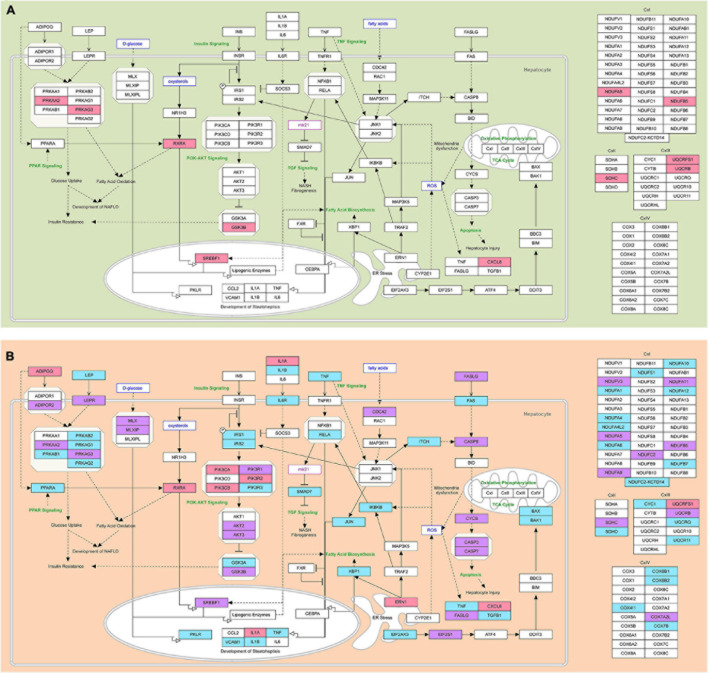
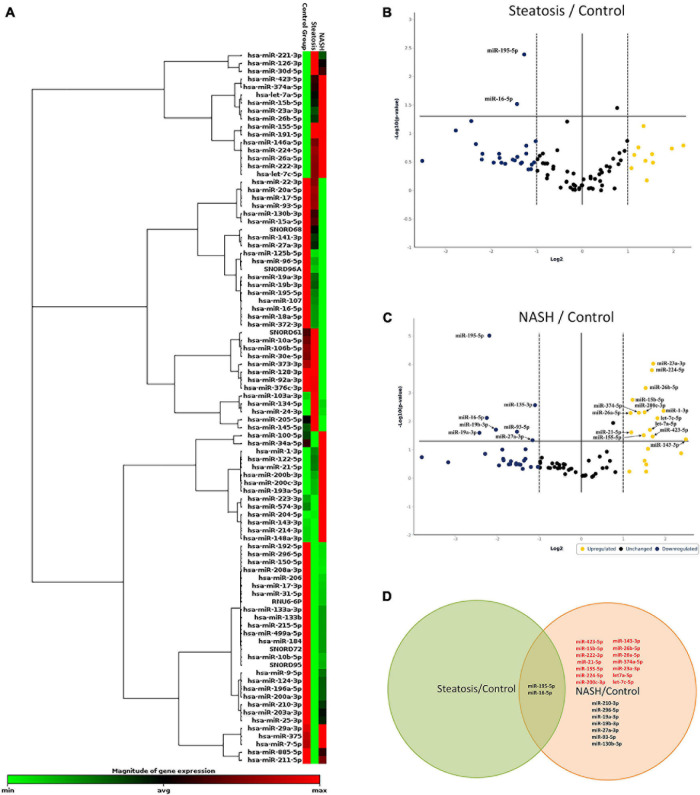
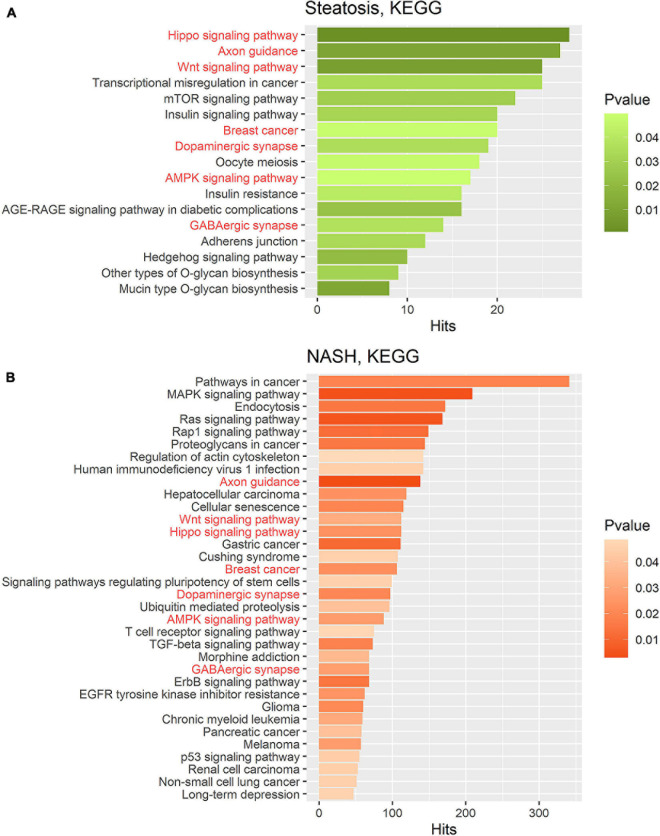
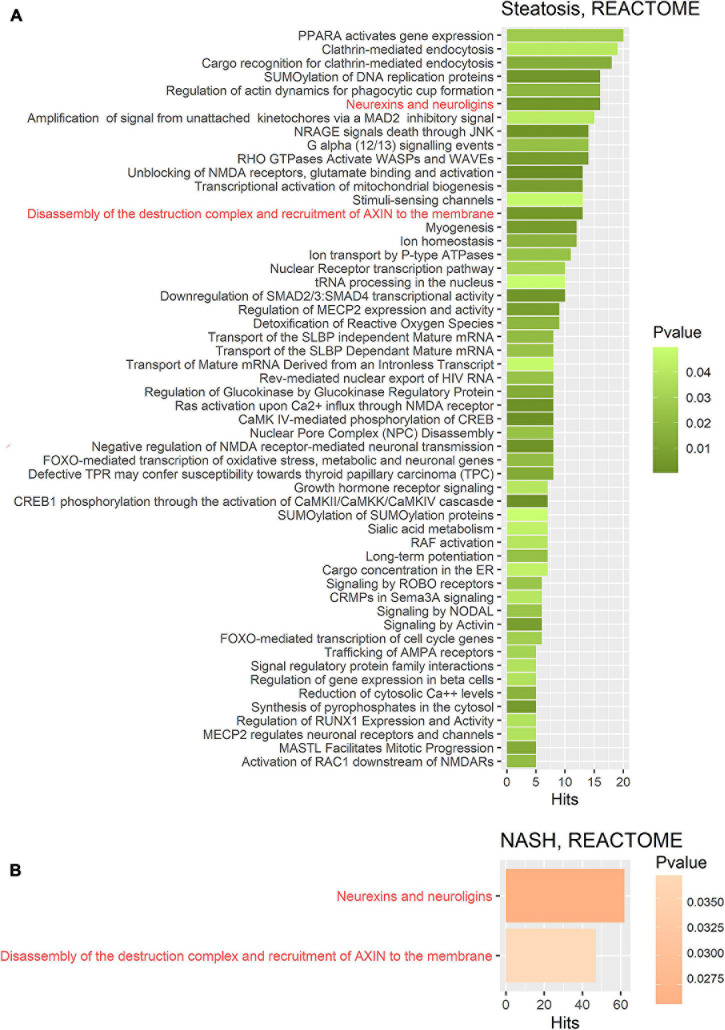
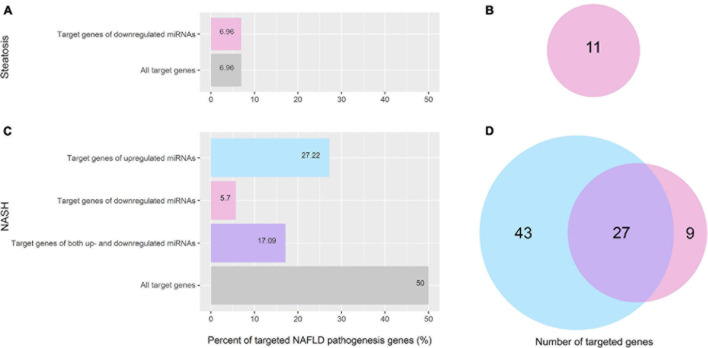
Non-alcoholic fatty liver disease (NAFLD) is emerging as one of the most common chronic liver diseases worldwide, affecting 25% of the world population. In recent years, there has been increasing evidence for the involvement of microRNAs in the epigenetic regulation of genes taking part in the development of steatosis and steatohepatitis-two main stages of NAFLD pathogenesis. In the present study, miRNA profiles were studied in groups of patients with steatosis and steatohepatitis to compare the characteristics of RNA-dependent epigenetic regulation of the stages of NAFLD development. According to the results of miRNA screening, 23 miRNAs were differentially expressed serum in a group of patients with steatohepatitis and 2 in a group of patients with steatosis. MiR-195-5p and miR-16-5p are common differentially expressed miRNAs for both steatosis and steatohepatitis. We analyzed the obtained results: the search for target genes for the differentially expressed miRNAs in our study and the subsequent gene set enrichment analysis performed on KEGG and REACTOME databases revealed which metabolic pathways undergo changes in RNA-dependent epigenetic regulation in steatosis and steatohepatitis. New findings within the framework of this study are the dysregulation of neurohumoral pathways in the pathogenesis of NAFLD as an object of changes in RNA-dependent epigenetic regulation. The miRNAs differentially expressed in our study were found to target 7% of genes in the classic pathogenesis of NAFLD in the group of patients with steatosis and 50% in the group of patients with steatohepatitis. The effects of these microRNAs on genes for the pathogenesis of NAFLD were analyzed in detail. MiR-374a-5p, miR-1-3p and miR-23a-3p do not target genes directly involved in the pathogenesis of NAFLD. The differentially expressed miRNAs found in this study target genes largely responsible for mitochondrial function. The role of miR-423-5p, miR-143-5p and miR-200c-3 in regulating apoptotic processes in the liver and hepatocarcinogenesis is of interest for future experimental studies. These miR-374a, miR-143, miR-1, miR-23a, and miR-423 have potential for steatohepatitis diagnosis and are poorly studied in the context of NAFLD. Thus, this work opens up prospects for further studies of microRNAs as diagnostic and therapeutic biomarkers for NAFLD.
非酒精性脂肪性肝病(NAFLD)正成为全球最常见的慢性肝病之一,影响着25%的世界人口。近年来,越来越多的证据表明,微小RNA参与了参与脂肪变性和脂肪性肝炎(NAFLD发病机制的两个主要阶段)发展的基因的表观遗传调控。在本研究中,对脂肪变性和脂肪性肝炎患者组的微小RNA谱进行了研究,以比较NAFLD发展阶段的RNA依赖性表观遗传调控特征。根据微小RNA筛选结果,在一组脂肪性肝炎患者中有23种微小RNA在血清中差异表达,在一组脂肪变性患者中有2种差异表达。MiR-195-5p和MiR-16-5p是脂肪变性和脂肪性肝炎共同差异表达的微小RNA。我们分析了所得结果:在我们的研究中寻找差异表达微小RNA的靶基因,并随后在KEGG和REACTOME数据库上进行基因集富集分析,揭示了在脂肪变性和脂肪性肝炎中哪些代谢途径在RNA依赖性表观遗传调控中发生变化。本研究框架内的新发现是,NAFLD发病机制中的神经体液途径失调是RNA依赖性表观遗传调控变化的一个对象。在我们的研究中差异表达的微小RNA被发现靶向脂肪变性患者组中NAFLD经典发病机制中7%的基因,以及脂肪性肝炎患者组中50%的基因。详细分析了这些微小RNA对NAFLD发病机制相关基因的影响。MiR-374a-5p、MiR-1-3p和MiR-23a-3p不靶向直接参与NAFLD发病机制的基因。本研究中发现的差异表达微小RNA主要靶向负责线粒体功能的基因。MiR-423-5p、MiR-143-5p和MiR-200c-3在调节肝脏凋亡过程和肝癌发生中的作用值得未来进行实验研究。这些MiR-374a、MiR-143、MiR-1、MiR-23a和MiR-423具有用于脂肪性肝炎诊断的潜力,并且在NAFLD背景下研究较少。因此,这项工作为进一步研究微小RNA作为NAFLD的诊断和治疗生物标志物开辟了前景。