Powell Lauren, Duffy Deborah L, Kruger Katherine A, Watson Brittany, Serpell James A
School of Veterinary Medicine, University of Pennsylvania, Philadelphia, PA, United States.
Office of Institutional Research, University of the Arts, Philadelphia, PA, United States.
Front Vet Sci. 2021 Sep 10;8:734973. doi: 10.3389/fvets.2021.734973. eCollection 2021.
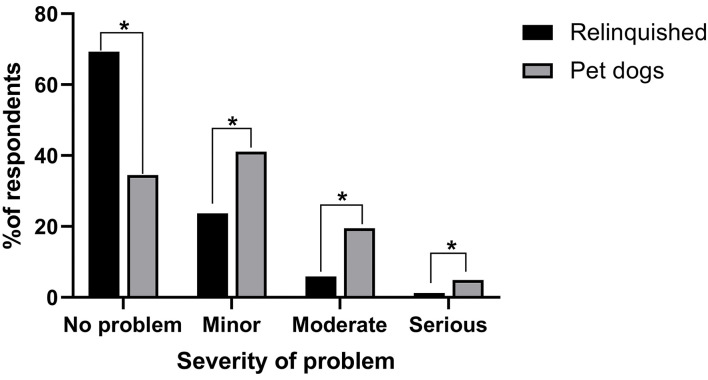
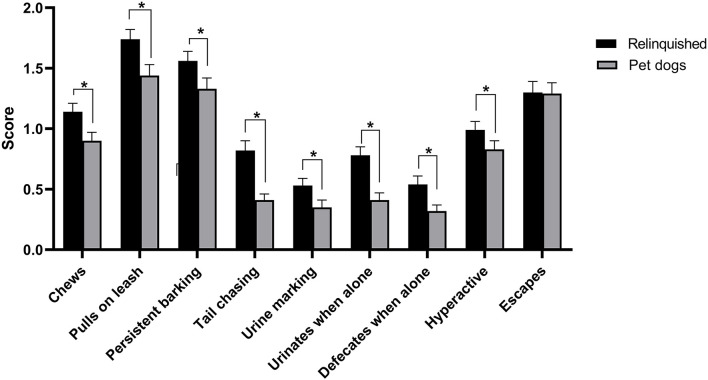
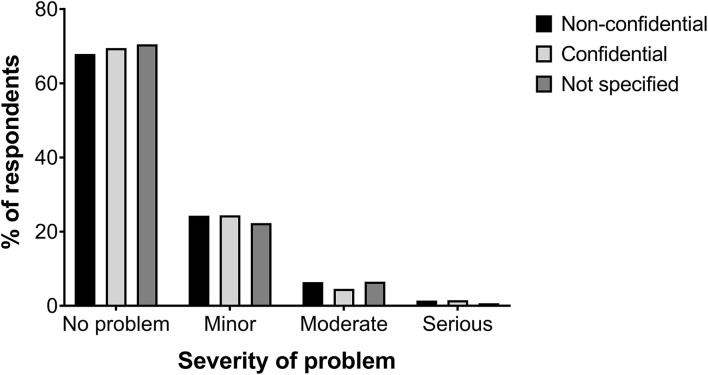
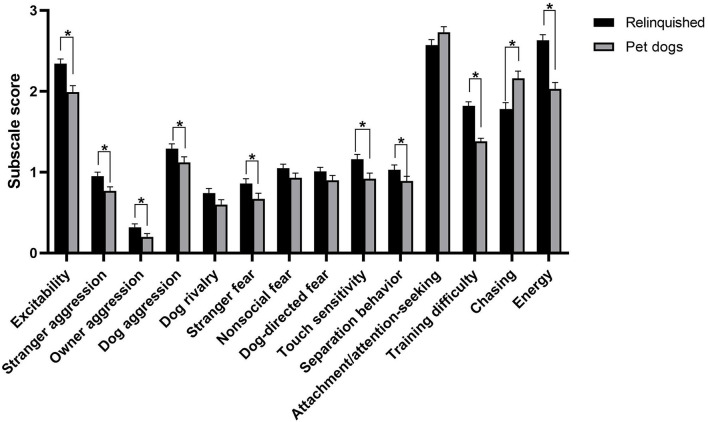
Undesirable behavior is a leading cause of canine relinquishment. Relinquishing owners could provide valuable information about their dog's behavior, although the reliability of their reports has been questioned by the sheltering community. This study aimed to investigate (a) whether relinquishing owners' reports of dog behavior differed based on the behavioral screening method; (b) whether relinquishing owners' reports were impacted by the confidentiality of their responses; and (c) whether relinquishing and non-relinquishing owners perceived the behavior of their dogs differently. The sample included 427 relinquished dogs from three animal shelters and 427 pet dogs, matched for sex and breed. Owners responded to a direct question about whether they were experiencing problems with their dog's behavior and completed the mini C-BARQ which includes 42 questions about the frequency and severity of specific canine behaviors in various circumstances. More than two-thirds (69.3%) of relinquishing owners indicated they were not experiencing problems with their dog's behavior when asked directly, compared with only 34.5% of pet owners. Yet, relinquished dogs had significantly higher (less desirable) scores than pet dogs across most C-BARQ scales. The disparity between C-BARQ scores and the single, direct question does not appear to be the result of deliberately biased reporting by relinquishing owners as the perceived confidentiality (or lack thereof) did not affect their responses ( = 1.44, = 0.97). It is possible that relinquishing owners had less understanding of dog behavior and did not recognize behavior problems as a problem. Our findings support the use of standardized behavioral questionnaires, such as the mini C-BARQ, to collect behavioral information from owners at the time of relinquishment and highlight opportunities for animal shelters to reduce relinquishment by assisting owners to recognize and manage behavioral problems.
不良行为是导致犬只被遗弃的主要原因。弃养犬只的主人可以提供有关其犬只行为的宝贵信息,尽管收容界对他们报告的可靠性提出了质疑。本研究旨在调查:(a) 根据行为筛查方法,弃养犬只的主人对犬只行为的报告是否存在差异;(b) 弃养犬只的主人的报告是否受到其回答保密性的影响;(c) 弃养犬只的主人和未弃养犬只的主人对其犬只行为的看法是否不同。样本包括来自三个动物收容所的427只被弃养犬和427只宠物犬,这些犬在性别和品种上进行了匹配。主人回答了一个关于他们是否在犬只行为方面遇到问题的直接问题,并完成了迷你C-BARQ,该问卷包括42个关于特定犬只行为在各种情况下的频率和严重程度的问题。超过三分之二(69.3%)的弃养犬只的主人在被直接询问时表示他们在犬只行为方面没有遇到问题,而宠物主人中只有34.5%这样表示。然而,在大多数C-BARQ量表上,被弃养犬只的得分显著高于宠物犬(得分越低越不理想)。C-BARQ得分与单一直接问题之间的差异似乎不是弃养犬只的主人故意提供有偏差报告的结果,因为感知到的保密性(或缺乏保密性)并未影响他们的回答( = 1.44, = 0.97)。有可能弃养犬只的主人对犬只行为的了解较少,没有将行为问题视为问题。我们的研究结果支持使用标准化的行为问卷,如迷你C-BARQ,在犬只被弃养时从主人那里收集行为信息,并突出了动物收容所通过帮助主人识别和管理行为问题来减少弃养的机会。