Zoological Institute, Department of Systems Biology and Bioinformatics, Karlsruhe Institute of Technology, Karlsruhe, Germany.
Institute of Biological and Chemical Systems-Biological Information Processing, Karlsruhe Institute of Technology, Eggenstein-Leopoldshafen, Germany.
Mol Syst Biol. 2021 Sep;17(9):e10272. doi: 10.15252/msb.202110272.
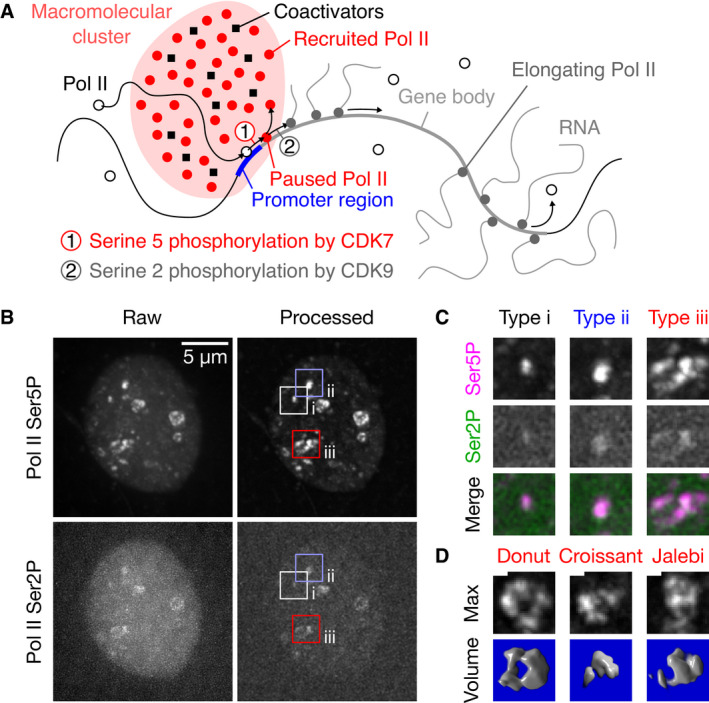
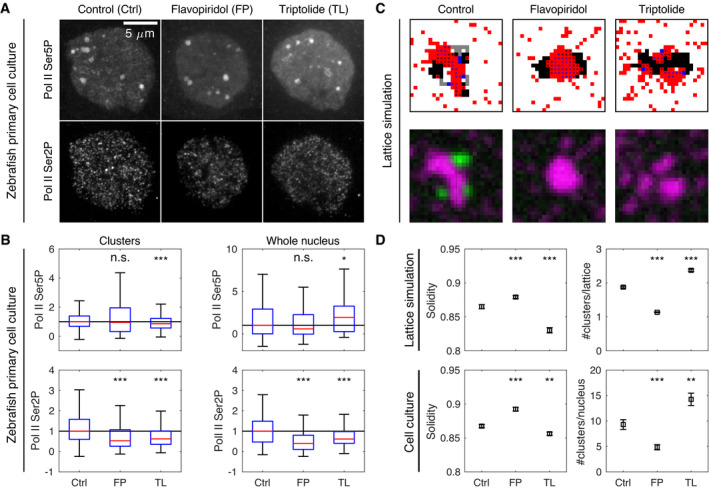
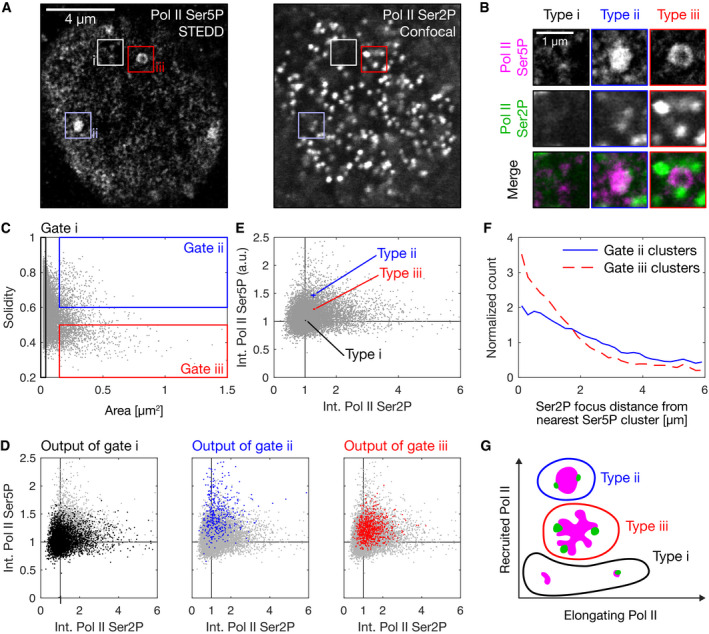
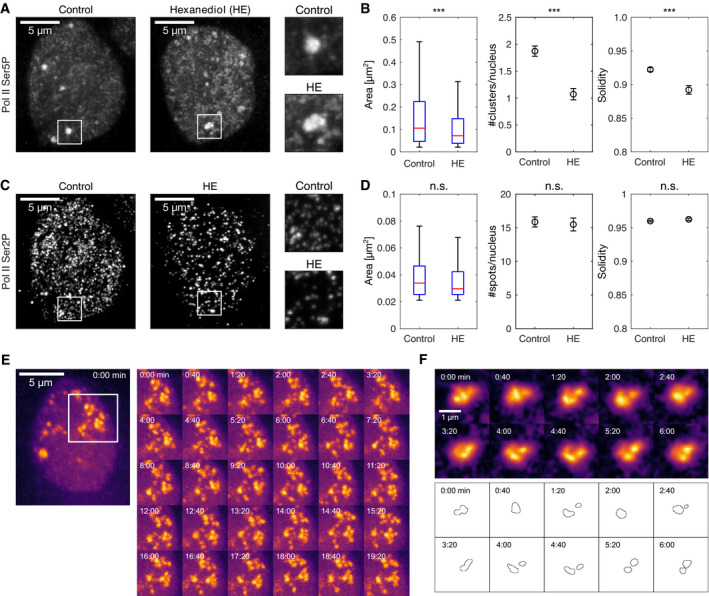
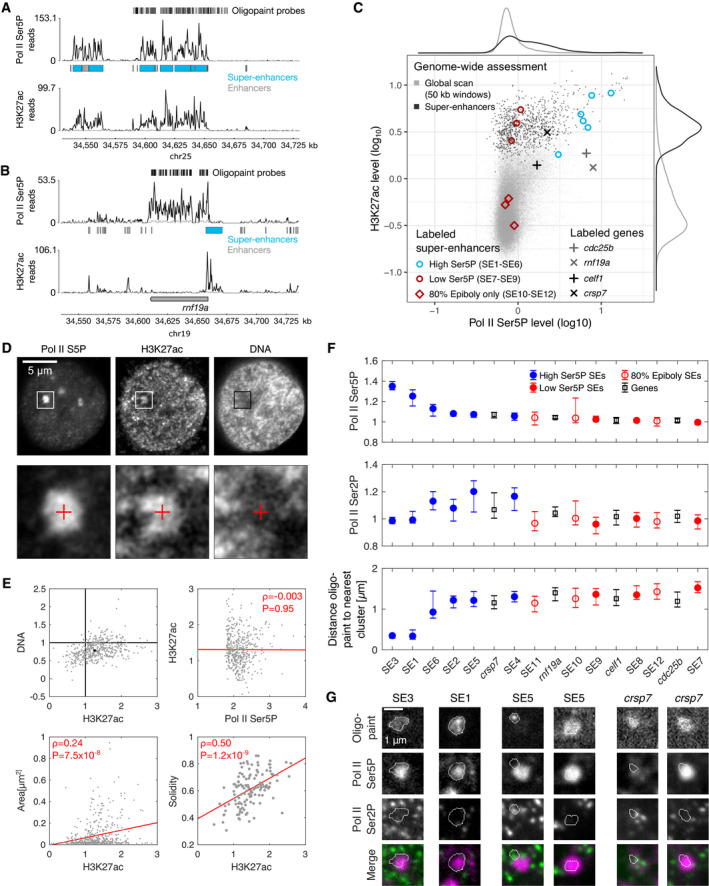
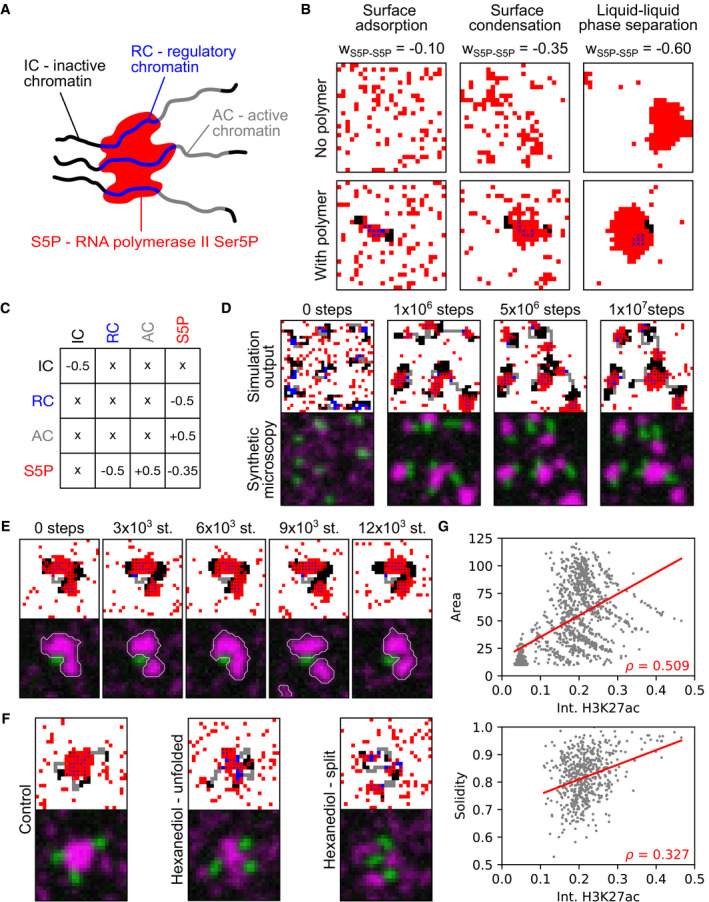
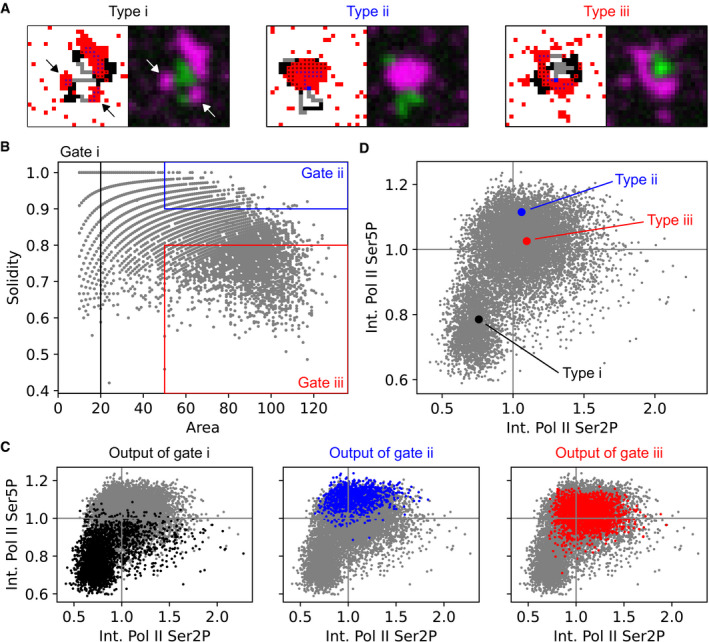
It is essential for cells to control which genes are transcribed into RNA. In eukaryotes, two major control points are recruitment of RNA polymerase II (Pol II) into a paused state, and subsequent pause release toward transcription. Pol II recruitment and pause release occur in association with macromolecular clusters, which were proposed to be formed by a liquid-liquid phase separation mechanism. How such a phase separation mechanism relates to the interaction of Pol II with DNA during recruitment and transcription, however, remains poorly understood. Here, we use live and super-resolution microscopy in zebrafish embryos to reveal Pol II clusters with a large variety of shapes, which can be explained by a theoretical model in which regulatory chromatin regions provide surfaces for liquid-phase condensation at concentrations that are too low for canonical liquid-liquid phase separation. Model simulations and chemical perturbation experiments indicate that recruited Pol II contributes to the formation of these surface-associated condensates, whereas elongating Pol II is excluded from these condensates and thereby drives their unfolding.
细胞必须控制哪些基因被转录成 RNA。在真核生物中,有两个主要的控制点,一是 RNA 聚合酶 II(Pol II)募集到暂停状态,二是随后向转录方向释放暂停。Pol II 的募集和暂停释放与大分子簇有关,这些大分子簇被认为是通过液-液相分离机制形成的。然而,这种相分离机制如何与 Pol II 在募集和转录过程中与 DNA 的相互作用相关,仍然知之甚少。在这里,我们使用斑马鱼胚胎的活细胞和超高分辨率显微镜来揭示具有多种形状的 Pol II 簇,这可以用一个理论模型来解释,该模型表明调节染色质区域为在浓度太低而无法发生经典液-液相分离的情况下,提供了液相凝聚的表面。模型模拟和化学扰动实验表明,募集的 Pol II 有助于形成这些表面相关的凝聚物,而延伸的 Pol II 则被排除在这些凝聚物之外,从而驱动它们展开。