Centre for Organismal Studies Heidelberg, University of Heidelberg, INF230, 69120 Heidelberg, Germany.
Shanghai Center for Plant Stress Biology, CAS Center for Excellence in Molecular Plant Sciences, Chinese Academy of Sciences (CAS), Shanghai 201602China.
J Cell Sci. 2021 Oct 15;134(20). doi: 10.1242/jcs.259134. Epub 2021 Oct 20.
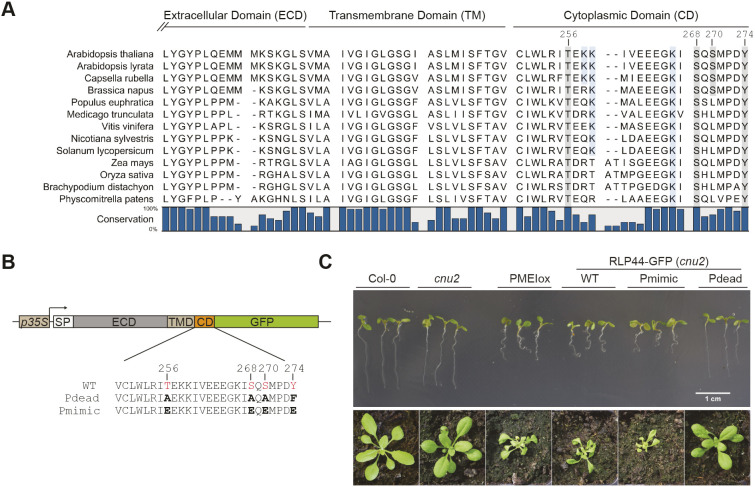
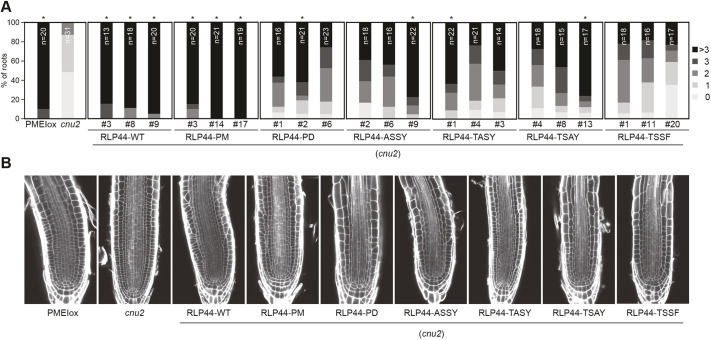
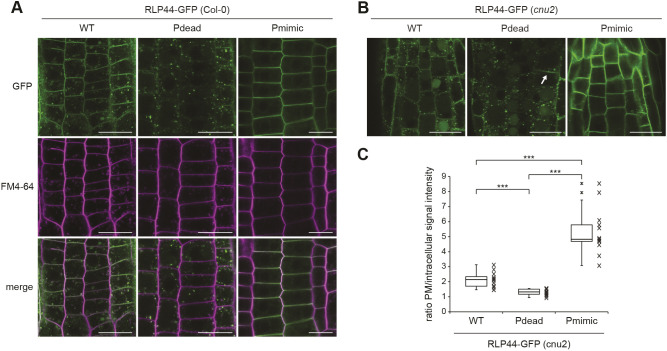
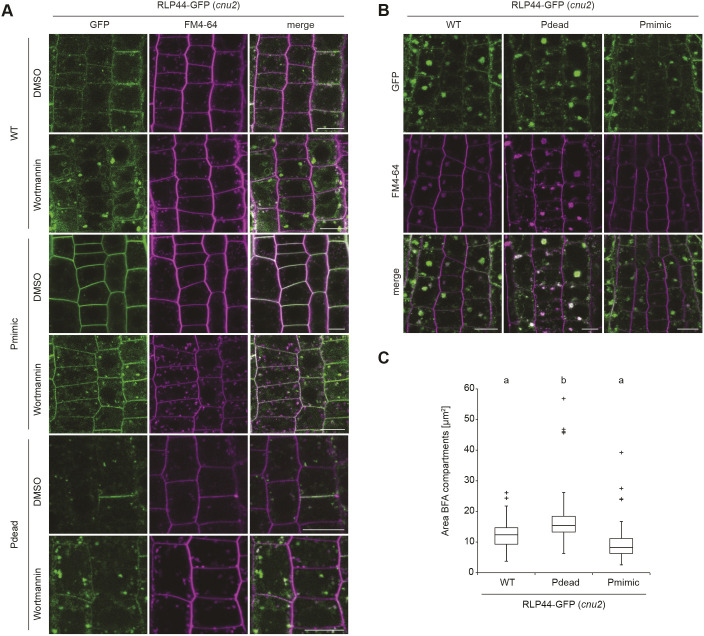
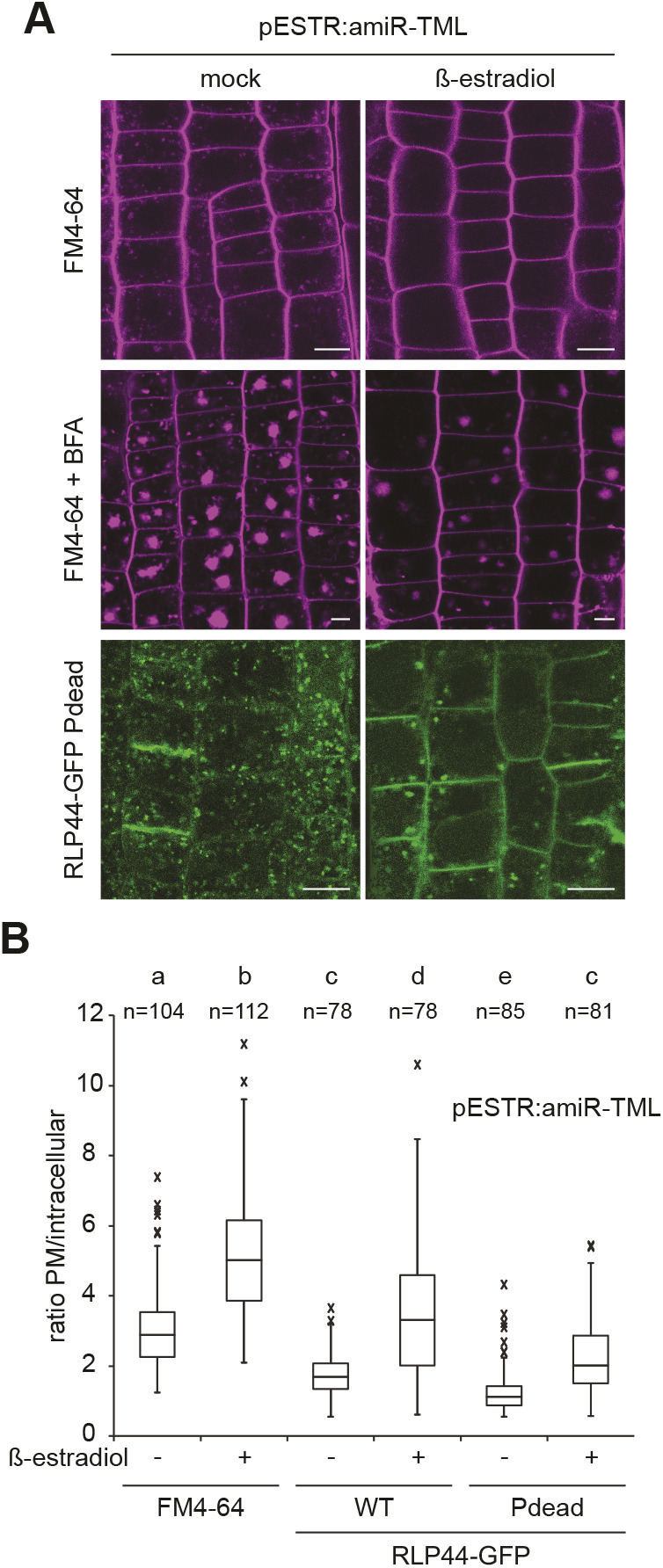
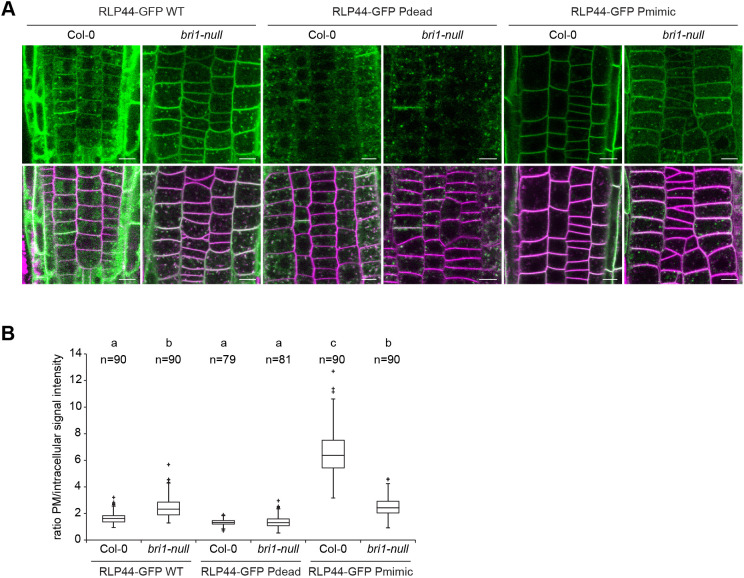
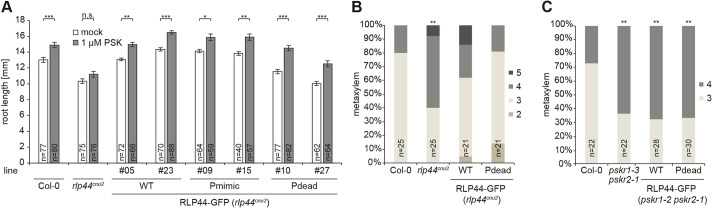
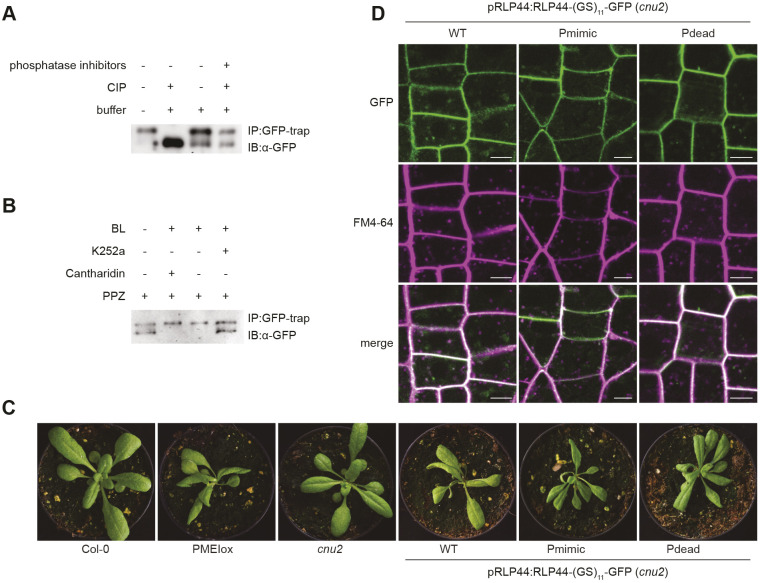
Plants rely on cell surface receptors to integrate developmental and environmental cues into behaviour adapted to the conditions. The largest group of these receptors, leucine-rich repeat receptor-like kinases, form a complex interaction network that is modulated and extended by receptor-like proteins. This raises the question of how specific outputs can be generated when receptor proteins are engaged in a plethora of promiscuous interactions. RECEPTOR-LIKE PROTEIN 44 (RLP44) acts to promote both brassinosteroid and phytosulfokine signalling, which orchestrate diverse cellular responses. However, it is unclear how these activities are coordinated. Here, we show that RLP44 is phosphorylated in its highly conserved cytosolic tail and that this post-translational modification governs its subcellular localization. Whereas phosphorylation is essential for brassinosteroid-associated functions of RLP44, its role in phytosulfokine signalling is not affected by phospho-status. Detailed mutational analysis suggests that phospho-charge, rather than modification of individual amino acids determines routing of RLP44 to its target receptor complexes, providing a framework to understand how a common component of different receptor complexes can get specifically engaged in a particular signalling pathway.
植物依靠细胞表面受体将发育和环境线索整合到适应环境的行为中。这些受体中最大的一组,富含亮氨酸重复的类受体激酶,形成了一个复杂的相互作用网络,该网络通过类受体蛋白进行调节和扩展。这就提出了一个问题,即当受体蛋白参与众多杂乱无章的相互作用时,如何产生特定的输出。受体样蛋白 44(RLP44)的作用是促进油菜素内酯和植物磺基肽信号转导,从而协调多种细胞反应。然而,目前尚不清楚如何协调这些活动。在这里,我们表明 RLP44 在其高度保守的胞质尾部发生磷酸化,并且这种翻译后修饰控制其亚细胞定位。虽然磷酸化对于 RLP44 与油菜素内酯相关的功能是必需的,但它在植物磺基肽信号转导中的作用不受磷酸化状态的影响。详细的突变分析表明,磷酸电荷,而不是单个氨基酸的修饰决定了 RLP44 向其靶受体复合物的路由,为理解如何使不同受体复合物的共同成分特异性地参与特定的信号通路提供了一个框架。