Pediatrics Department, Hospital Universitario Infanta Sofía, San Sebastián de los Reyes, Madrid, Spain; Pediatrics Research Group, Europea University of Madrid, Madrid, Spain; Fundación de Investigación Biomédica Hospital 12 de Octubre. Instituto de Investigación 12 de Octubre (imas12), Madrid, Spain.
Pediatrics Department, Hospital Infantil Universitario Niño Jesús, Madrid, Spain.
J Pediatr. 2022 Feb;241:126-132.e3. doi: 10.1016/j.jpeds.2021.09.029. Epub 2021 Sep 25.
To determine the time to reverse transcription-polymerase chain reaction (RT-PCR) negativity after the first positive RT-PCR test, factors associated with longer time to RT-PCR negativity, proportion of children seroconverting after proven severe acute respiratory syndrome coronavirus 2 infection, and factors associated with the lack of seroconversion.
The Epidemiological Study of Coronavirus in Children of the Spanish Society of Pediatrics is a multicenter study conducted in Spanish children to assess the characteristics of coronavirus disease 2019. In a subset of patients, 3 serial RT-PCR tests on nasopharyngeal swab specimens were performed after the first RT-PCR test, and immunoglobulin G serology for severe acute respiratory syndrome coronavirus 2 antibodies was performed in the acute and follow-up (<14 and ≥14 days after diagnosis) phase.
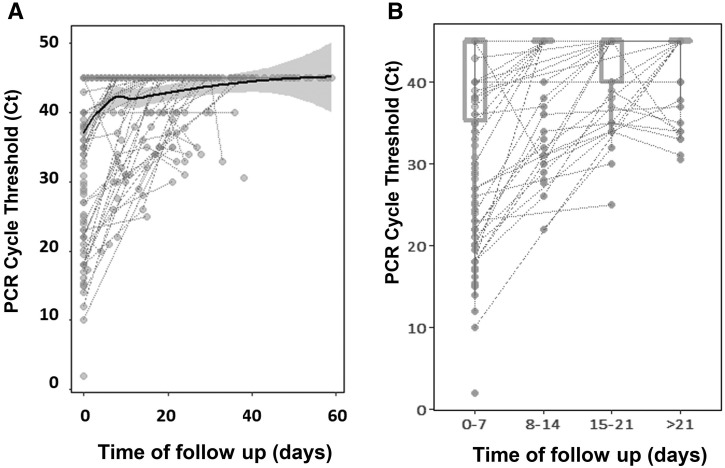
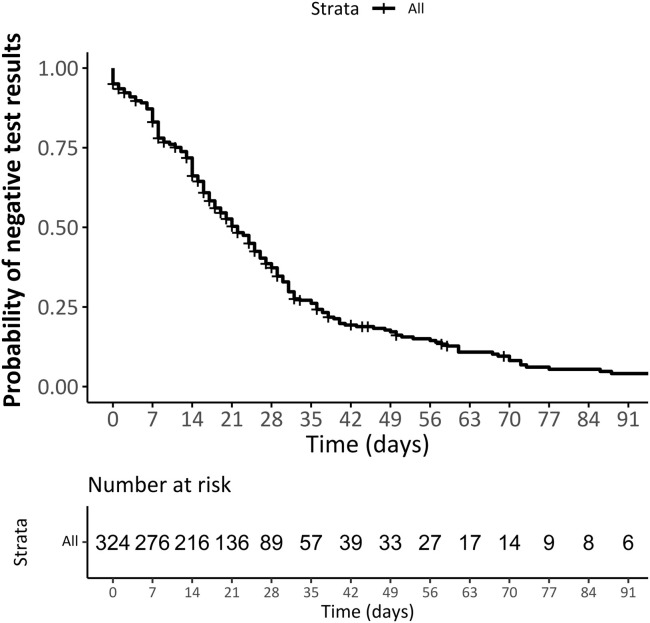
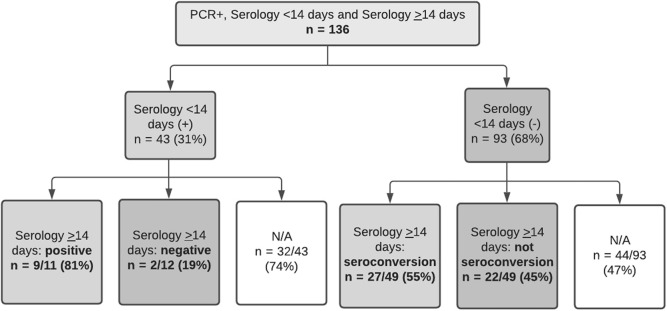
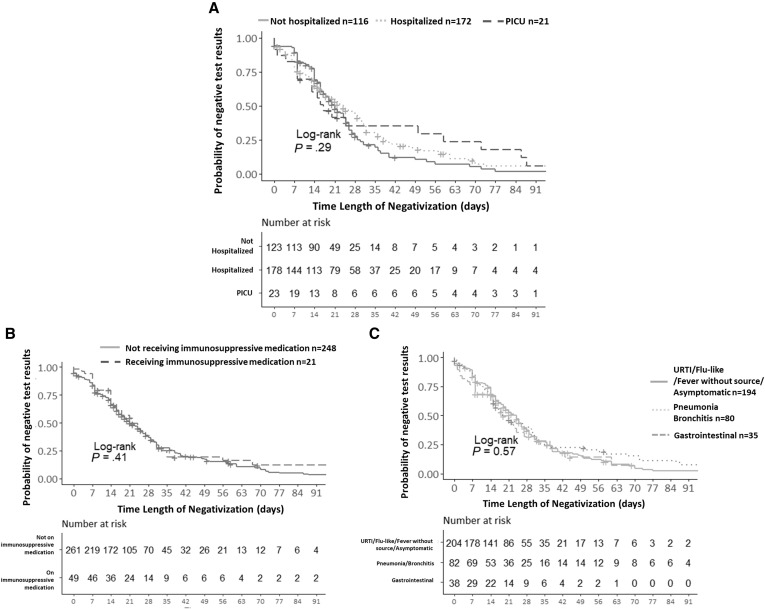
In total, 324 patients were included in the study. The median time to RT-PCR negativity was 17 days (IQR, 8-29 days), and 35% of patients remained positive more than 4 weeks after the first RT-PCR test. The probability of RT-PCR negativity did not differ across groups defined by sex, disease severity, immunosuppressive drugs, or clinical phenotype. Globally, 24% of children failed to seroconvert after infection. Seroconversion was associated with hospitalization, persistence of RT-PCR positivity, and days of fever.
Time to RT-PCR negativity was long, regardless of the severity of symptoms or other patient features. This finding should be considered when interpreting RT-PCR results in a child with symptoms, especially those with mild symptoms. Seroprevalence and postimmunization studies should consider that 11 in 4 infected children fail to seroconvert.
确定首次 RT-PCR 检测阳性后逆转录-聚合酶链反应(RT-PCR)转为阴性的时间,与 RT-PCR 转为阴性时间较长相关的因素,经证实的严重急性呼吸综合征冠状病毒 2 感染后发生血清学转换的儿童比例,以及与缺乏血清学转换相关的因素。
西班牙儿科学会冠状病毒流行病学研究是一项多中心研究,在西班牙儿童中开展,旨在评估 2019 年冠状病毒病的特征。在部分患者中,在首次 RT-PCR 检测后对鼻咽拭子标本进行了 3 次连续 RT-PCR 检测,并在急性期和随访期(<14 和≥14 天诊断后)进行了严重急性呼吸综合征冠状病毒 2 抗体的免疫球蛋白 G 血清学检测。
共纳入 324 例患者。RT-PCR 转为阴性的中位时间为 17 天(IQR,8-29 天),超过 4 周后仍有 35%的患者 RT-PCR 检测结果仍为阳性。按性别、疾病严重程度、免疫抑制剂药物或临床表型划分的各组之间,RT-PCR 转为阴性的概率无差异。总体而言,24%的儿童在感染后未能发生血清学转换。血清学转换与住院、RT-PCR 持续阳性和发热天数有关。
无论症状严重程度或其他患者特征如何,RT-PCR 转为阴性的时间均较长。对于有症状的儿童,特别是症状较轻的儿童,在解释 RT-PCR 结果时应考虑到这一发现。血清学流行率和免疫后研究应考虑到,在感染的儿童中,每 4 个就有 1 个未能发生血清学转换。