Division of Pathology & Laboratory Medicine, Children's National Hospital, Washington, DC; Department of Pathology, The George Washington University Health Sciences, Washington, DC; Department of Pediatrics, The George Washington University Health Sciences, Washington, DC.
Division of Pathology & Laboratory Medicine, Children's National Hospital, Washington, DC; Department of Pathology, The George Washington University Health Sciences, Washington, DC; Department of Pediatrics, The George Washington University Health Sciences, Washington, DC.
J Pediatr. 2020 Dec;227:31-37.e1. doi: 10.1016/j.jpeds.2020.08.078. Epub 2020 Sep 3.
To improve understanding of transition from viral infection to viral clearance, and antibody response in pediatric patients with severe acute respiratory syndrome coronavirus 2 (SARS-CoV-2) infection.
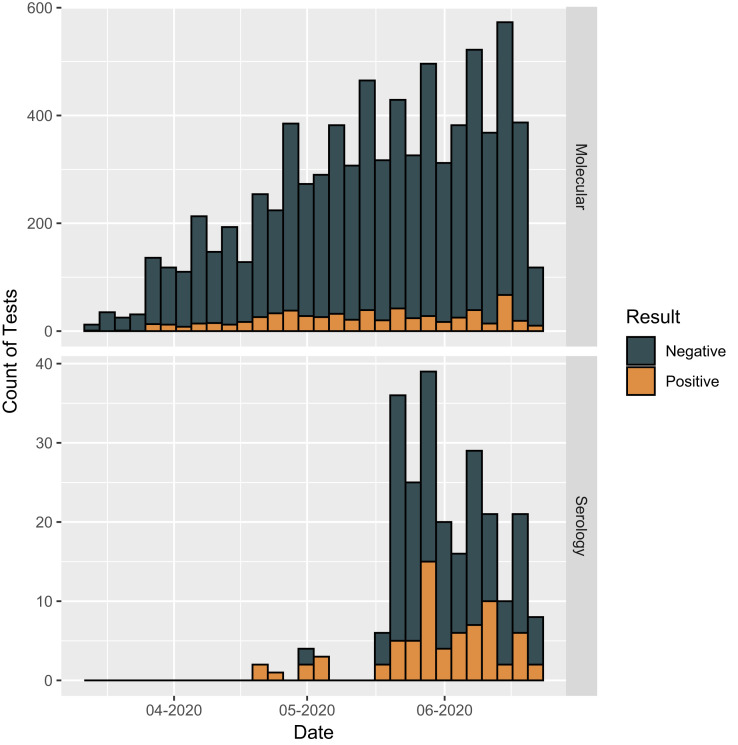
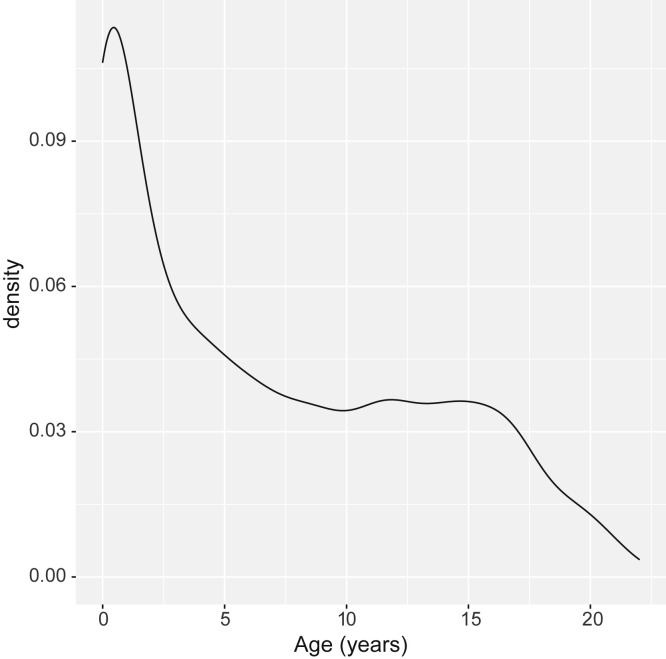
This retrospective analysis of children tested for SARS-CoV-2 by reverse transcription (RT) polymerase chain reaction (PCR) and immunoglobulin G antibody at a quaternary-care, free-standing pediatric hospital between March 13, 2020, and June 21, 2020, included 6369 patients who underwent PCR testing and 215 patients who underwent antibody testing. During the initial study period, testing focused primarily on symptomatic children; the later study period included asymptomatic patients who underwent testing as preadmission or preprocedural screening. We report the proportion of positive and negative tests, time to viral clearance, and time to seropositivity.
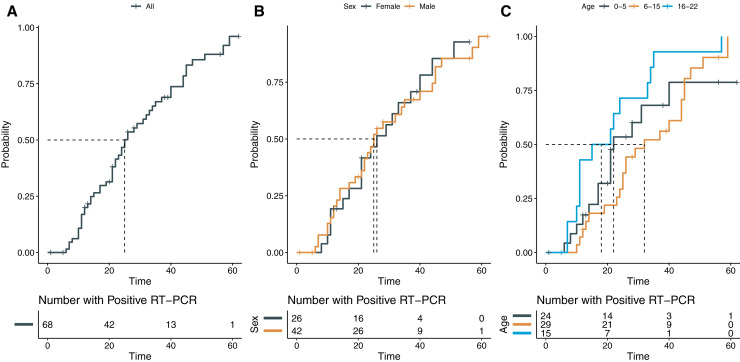
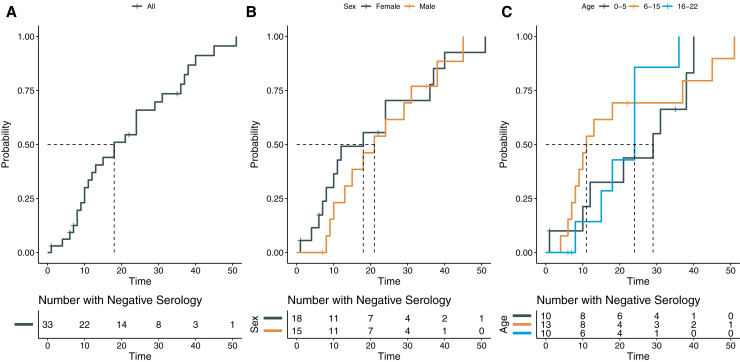
The rate of positivity varied over time due to viral circulation in the community and transition from targeted testing of symptomatic patients to more universal screening of hospitalized patients. Median duration of viral shedding (RT-PCR positivity) was 19.5 days and time from RT-PCR positivity to negativity was 25 days. Of note, patients aged 6 through 15 years demonstrated a longer time of RT-PCR positivity to negativity, compared with patients aged 16 through 22 years (median 32 vs 18 days, P = .015). Median time to seropositivity, by chemiluminescent testing, from RT-PCR positivity was 18 days, whereas median time to reach adequate levels of neutralizing antibodies (defined as comparable with 160 titer by plaque reduction neutralization testing) was 36 days.
The majority of patients demonstrated a prolonged period of viral shedding after infection with SARS CoV-2. It is unknown whether this correlates with persistent infectivity. Only 17 of 33 patients demonstrated adequate neutralizing antibodies during the time frame of specimen collection. It remains unknown whether immunoglobulin G antibody against spike structured proteins correlates with immunity, and how long antibodies and potential protection persist.
提高对儿童严重急性呼吸综合征冠状病毒 2(SARS-CoV-2)感染从病毒感染到病毒清除以及抗体反应的理解。
对 2020 年 3 月 13 日至 6 月 21 日期间在一家四级保健独立儿科医院通过逆转录(RT)聚合酶链反应(PCR)和免疫球蛋白 G 抗体检测 SARS-CoV-2 的儿童进行了回顾性分析,包括 6369 例接受 PCR 检测的患者和 215 例接受抗体检测的患者。在最初的研究期间,检测主要集中在有症状的儿童;在后期研究期间,包括无症状患者作为入院前或术前筛查进行检测。我们报告阳性和阴性检测的比例、病毒清除的时间和血清阳性的时间。
由于社区中病毒的传播以及从有症状患者的靶向检测过渡到住院患者的更普遍筛查,阳性率随时间而变化。病毒脱落(RT-PCR 阳性)的中位持续时间为 19.5 天,从 RT-PCR 阳性到阴性的时间为 25 天。值得注意的是,与 16 至 22 岁的患者相比,6 至 15 岁的患者 RT-PCR 阳性至阴性的时间更长(中位数 32 天比 18 天,P =.015)。从 RT-PCR 阳性到化学发光检测血清阳性的中位时间为 18 天,而达到足够中和抗体水平(定义为与 plaque reduction neutralization testing 相比 160 滴度相当)的中位时间为 36 天。
大多数患者在感染 SARS CoV-2 后表现出较长时间的病毒脱落。目前尚不清楚这是否与持续感染有关。在标本采集的时间范围内,仅 33 例患者中的 17 例显示出足够的中和抗体。免疫球蛋白 G 抗体针对刺突结构蛋白是否与免疫相关以及抗体和潜在保护作用能持续多久仍不清楚。