Department of Biology, Duke University, Durham, NC 27708, USA.
Department of Mathematical Sciences, Florida Atlantic University, Boca Raton, FL 33431, USA.
Cells. 2021 Aug 27;10(9):2217. doi: 10.3390/cells10092217.
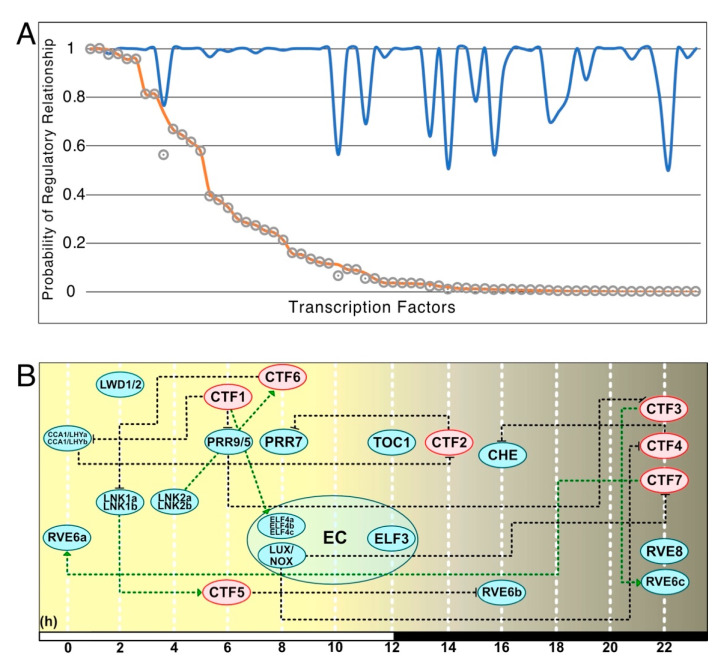
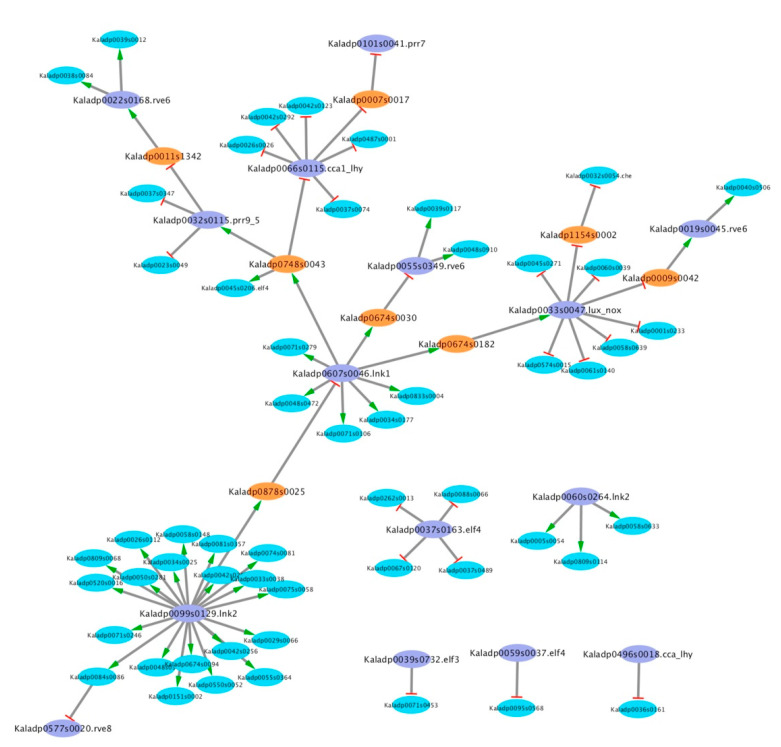
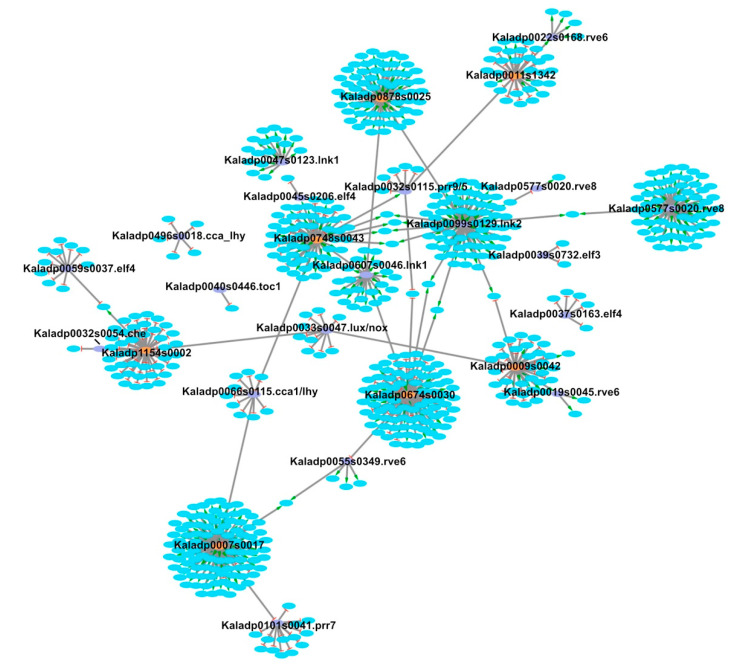
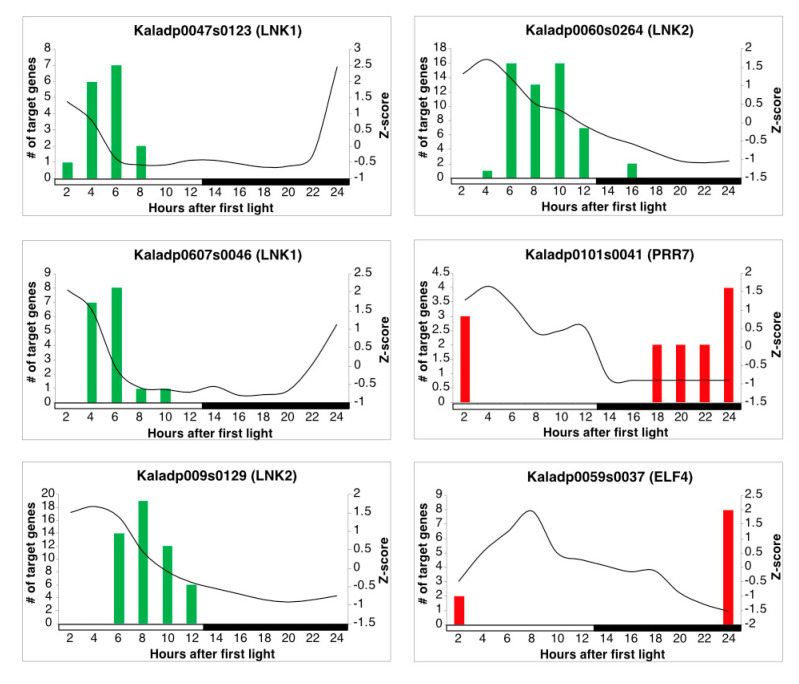
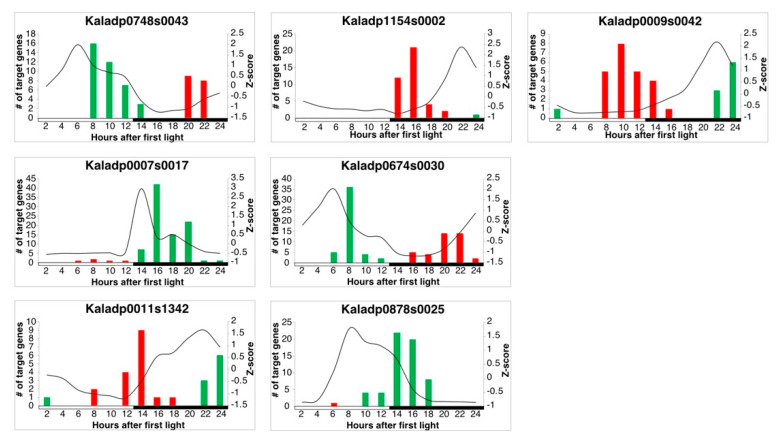
The circadian clock drives time-specific gene expression, enabling biological processes to be temporally controlled. Plants that conduct crassulacean acid metabolism (CAM) photosynthesis represent an interesting case of circadian regulation of gene expression as stomatal movement is temporally inverted relative to stomatal movement in C3 plants. The mechanisms behind how the circadian clock enabled physiological differences at the molecular level is not well understood. Recently, the rescheduling of gene expression was reported as a mechanism to explain how CAM evolved from C3. Therefore, we investigated whether core circadian clock genes in CAM plants were re-phased during evolution, or whether networks of phase-specific genes were simply re-wired to different core clock genes. We identified candidate core clock genes based on gene expression features and then applied the Local Edge Machine (LEM) algorithm to infer regulatory relationships between this new set of core candidates and known core clock genes in . We further inferred stomata-related gene targets for known and candidate core clock genes and constructed a gene regulatory network for core clock and stomata-related genes. Our results provide new insight into the mechanism of circadian control of CAM-related genes in , facilitating the engineering of CAM machinery into non-CAM plants for sustainable crop production in water-limited environments.
生物钟驱动特定时间的基因表达,使生物过程能够受到时间的控制。进行景天酸代谢(CAM)光合作用的植物是生物钟调控基因表达的一个有趣案例,因为相对于 C3 植物的气孔运动,CAM 植物的气孔运动是时间颠倒的。生物钟如何在分子水平上实现生理差异的机制尚不清楚。最近,基因表达的重新安排被报道为一种解释 CAM 如何从 C3 进化而来的机制。因此,我们研究了 CAM 植物中的核心生物钟基因在进化过程中是否重新定时,或者是否只是将特定相位的基因网络重新连接到不同的核心时钟基因上。我们根据基因表达特征确定了候选核心时钟基因,然后应用局部边缘机器(LEM)算法来推断这组新的核心候选基因与已知核心时钟基因之间的调控关系。我们进一步推断了已知和候选核心时钟基因的气孔相关基因靶标,并构建了核心时钟和气孔相关基因的基因调控网络。我们的研究结果为生物钟对 CAM 相关基因的调控机制提供了新的见解,为在缺水环境中利用可持续作物生产的 CAM 机制工程将 CAM 机制引入非 CAM 植物提供了便利。