Hepatitis Research Center, Lorestan University of Medical Sciences, Khorramabad 6813833946, Iran.
Cellular and Molecular Research Center, Research Institute for Prevention of Non-Communicable Disease, Qazvin University of Medical Sciences, Qazvin 3419759811, Iran.
Biomolecules. 2021 Aug 30;11(9):1289. doi: 10.3390/biom11091289.
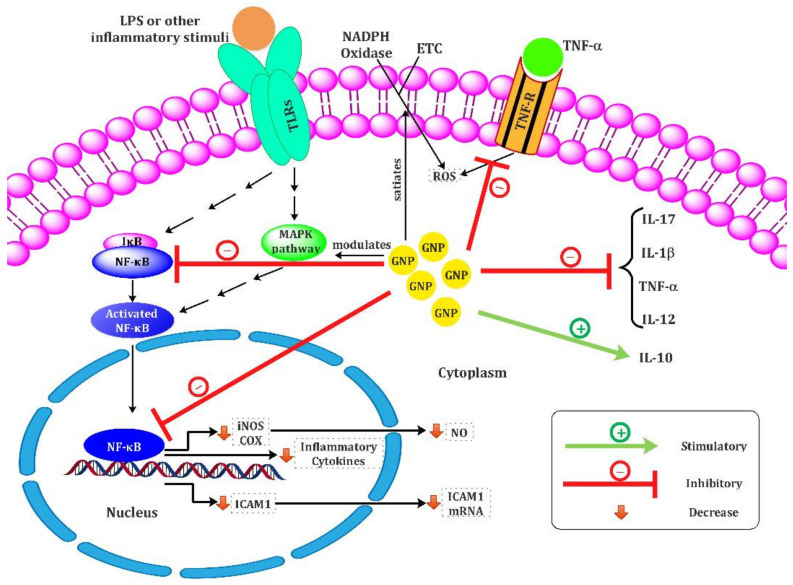
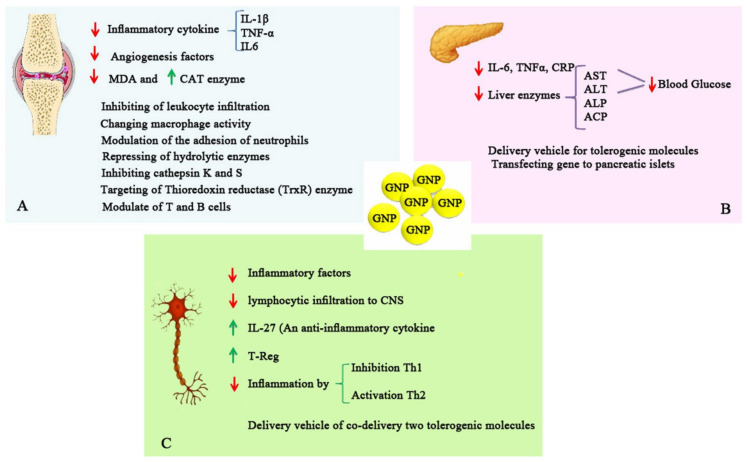
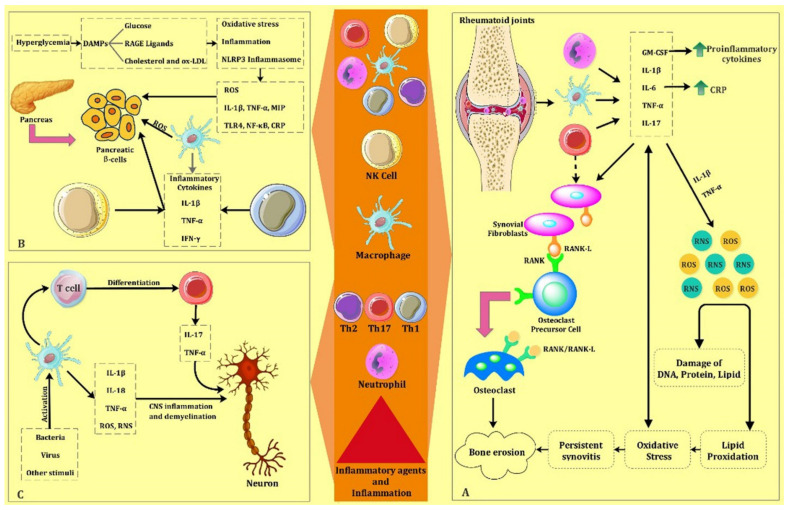
Gold nanoparticles (GNPs) have been recently applied for various diagnostic and therapeutic purposes. The unique properties of these nanoparticles (NPs), such as relative ease of synthesis in various sizes, shapes and charges, stability, high drug-loading capacity and relative availability for modification accompanied by non-cytotoxicity and biocompatibility, make them an ideal field of research in bio-nanotechnology. Moreover, their potential to alleviate various inflammatory factors, nitrite species, and reactive oxygen production and the capacity to deliver therapeutic agents has attracted attention for further studies in inflammatory and autoimmune disorders. Furthermore, the characteristics of GNPs and surface modification can modulate their toxicity, biodistribution, biocompatibility, and effects. This review discusses in vitro and in vivo effects of GNPs and their functionalized forms in managing various autoimmune disorders (Ads) such as rheumatoid arthritis, type 1 diabetes, and multiple sclerosis.
金纳米颗粒 (GNPs) 最近已被应用于各种诊断和治疗目的。这些纳米颗粒 (NPs) 的独特性质,如易于在各种尺寸、形状和电荷下合成、稳定性、高载药能力和相对易于修饰,同时具有非细胞毒性和生物相容性,使它们成为生物纳米技术研究的理想领域。此外,它们减轻各种炎症因子、亚硝酸盐种类、活性氧产生的能力以及递送治疗剂的能力引起了人们对炎症和自身免疫性疾病进一步研究的关注。此外,GNPs 的特性和表面修饰可以调节其毒性、生物分布、生物相容性和作用。本综述讨论了 GNPs 及其功能化形式在管理各种自身免疫性疾病 (Ads) 中的体外和体内作用,如类风湿关节炎、1 型糖尿病和多发性硬化症。