Vongsfak Jirapong, Pratchayasakul Wasana, Apaijai Nattayaporn, Vaniyapong Tanat, Chattipakorn Nipon, Chattipakorn Siriporn C
Neurophysiology Unit, Cardiac Electrophysiology Research and Training Center, Faculty of Medicine, Chiang Mai University, Chiang Mai 50200, Thailand.
Neurosurgery Unit, Department of Surgery, Faculty of Medicine, Chiang Mai University, Chiang Mai 50200, Thailand.
Antioxidants (Basel). 2021 Aug 30;10(9):1384. doi: 10.3390/antiox10091384.
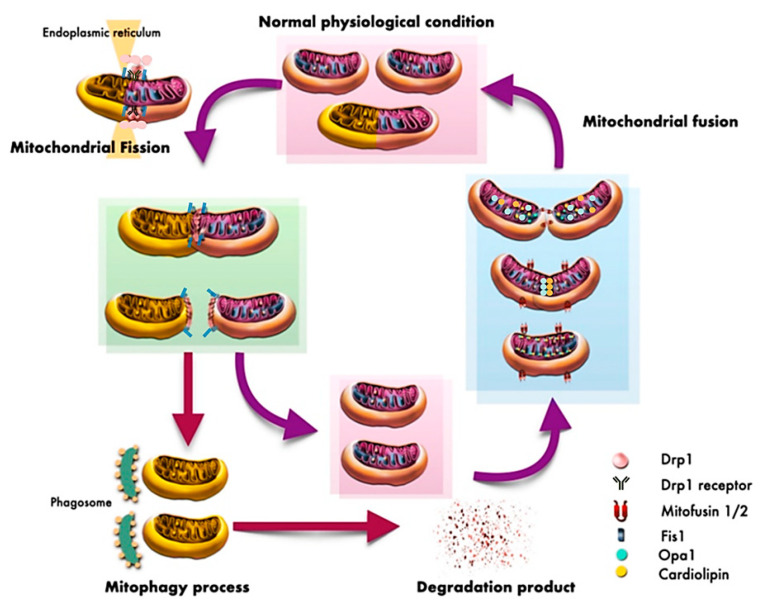
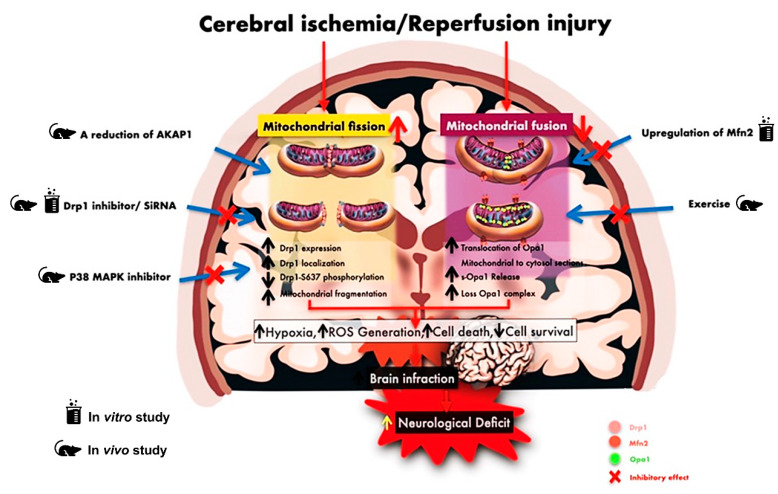
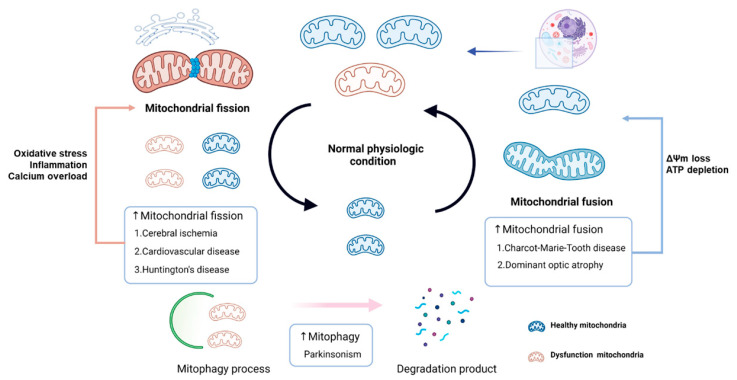
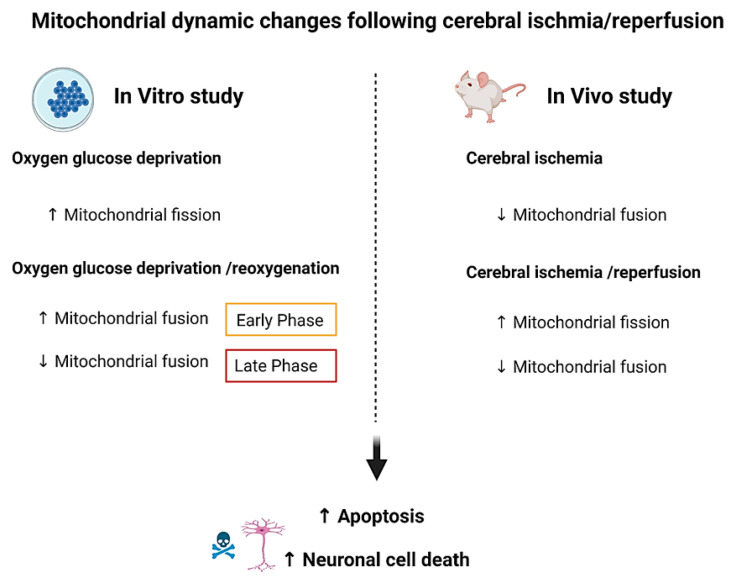
Cerebral ischemia results in a poor oxygen supply and cerebral infarction. Reperfusion to the ischemic area is the best therapeutic approach. Although reperfusion after ischemia has beneficial effects, it also causes ischemia/reperfusion (I/R) injury. Increases in oxidative stress, mitochondrial dysfunction, and cell death in the brain, resulting in brain infarction, have also been observed following cerebral I/R injury. Mitochondria are dynamic organelles, including mitochondrial fusion and fission. Both processes are essential for mitochondrial homeostasis and cell survival. Several studies demonstrated that an imbalance in mitochondrial dynamics after cerebral ischemia, with or without reperfusion injury, plays an important role in the regulation of cell survival and infarct area size. Mitochondrial dysmorphology/dysfunction and inflammatory processes also occur after cerebral ischemia. Knowledge surrounding the mechanisms involved in the imbalance in mitochondrial dynamics following cerebral ischemia with or without reperfusion injury would help in the prevention or treatment of the adverse effects of cerebral injury. Therefore, this review aims to summarize and discuss the roles of mitochondrial dynamics, mitochondrial function, and inflammatory processes in cerebral ischemia with or without reperfusion injury from in vitro and in vivo studies. Any contradictory findings are incorporated and discussed.
脑缺血会导致氧气供应不足和脑梗死。对缺血区域进行再灌注是最佳治疗方法。尽管缺血后的再灌注具有有益作用,但它也会导致缺血/再灌注(I/R)损伤。脑缺血/再灌注损伤后还观察到氧化应激增加、线粒体功能障碍以及大脑中的细胞死亡,进而导致脑梗死。线粒体是动态细胞器,包括线粒体融合和裂变。这两个过程对于线粒体稳态和细胞存活都至关重要。多项研究表明,无论有无再灌注损伤,脑缺血后线粒体动力学失衡在细胞存活和梗死面积大小的调节中都起着重要作用。脑缺血后还会出现线粒体形态异常/功能障碍和炎症过程。了解有无再灌注损伤的脑缺血后线粒体动力学失衡所涉及的机制,将有助于预防或治疗脑损伤的不良影响。因此,本综述旨在总结和讨论线粒体动力学、线粒体功能以及炎症过程在有无再灌注损伤的脑缺血中的作用,这些作用来自体外和体内研究。任何相互矛盾的发现都将被纳入并进行讨论。