Lee Minsun, Nam Jin-Hyeok, Yi Elizabeth, Bhimla Aisha, Nelson Julie, Ma Grace X
Center for Asian Health, Lewis Katz School of Medicine, Temple University, Philadelphia, PA 19140, USA.
Philadelphia Senior Center, Philadelphia, PA 19147, USA.
Brain Sci. 2021 Aug 31;11(9):1155. doi: 10.3390/brainsci11091155.
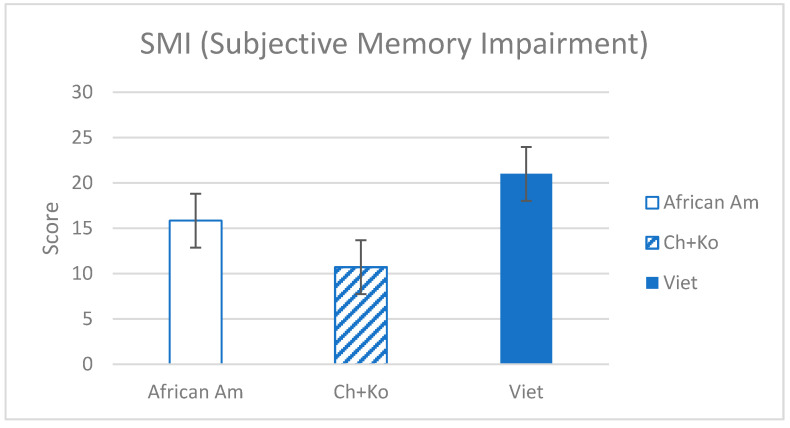
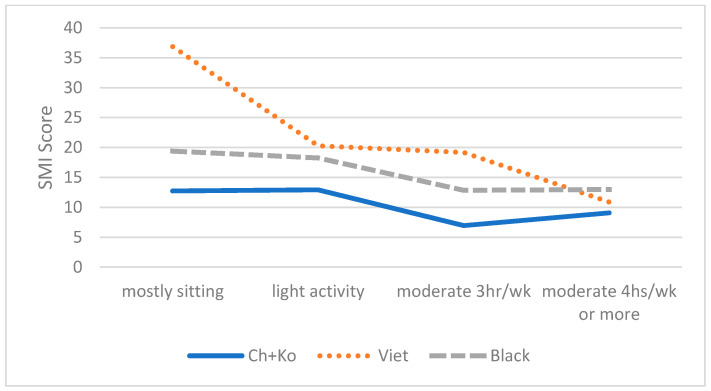
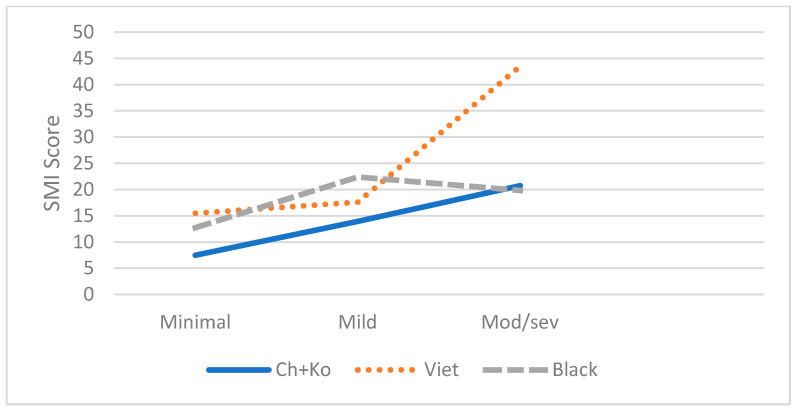
: Subjective memory impairment (SMI) is associated with negative health outcomes including mild cognitive impairment and Alzheimer's disease. However, ethnic differences in SMI and disparities in risk factors associated with SMI among minority populations are understudied. The study examined the ethnic differences in SMI, whether SMI was associated with depressive symptoms, sleep, and physical activity (PA), and whether the associations vary across racial/ethnic groups. : Participants included 243 African and Asian Americans (including Chinese, Vietnamese, and Korean Americans) aged 50 or older. Demographic information, SMI, depressive symptoms, daily sleeping hours, and PA levels were assessed. : Vietnamese Americans reported the highest SMI score. Depressive symptoms, sleeping hours, and PA levels were significantly associated with SMI. Depressive symptoms were the only significant factor across all ethnic groups. Significant interaction effects were found between ethnicity and health behaviors in predicting SMI. In particular, Vietnamese American participants with greater depressive symptoms and physical inactivity were significantly more likely to experience SMI compared to other ethnic groups : Our findings demonstrate ethnic differences in SMI and its association with depressive symptoms, sleep, and PA, which highlight the importance of considering the unique cultural and historical backgrounds across different racial/ethnic groups when examining cognitive functioning in elderly.
主观记忆障碍(SMI)与包括轻度认知障碍和阿尔茨海默病在内的不良健康结局相关。然而,对于SMI中的种族差异以及少数族裔人群中与SMI相关的风险因素差异的研究较少。本研究考察了SMI中的种族差异、SMI是否与抑郁症状、睡眠和身体活动(PA)相关,以及这些关联在不同种族/族裔群体中是否存在差异。
参与者包括243名年龄在50岁及以上的非裔和亚裔美国人(包括华裔、越南裔和韩裔美国人)。评估了人口统计学信息、SMI、抑郁症状、每日睡眠时间和PA水平。
越南裔美国人报告的SMI得分最高。抑郁症状、睡眠时间和PA水平与SMI显著相关。抑郁症状是所有种族群体中唯一的显著因素。在预测SMI时,发现种族与健康行为之间存在显著的交互作用。特别是,与其他种族群体相比,抑郁症状更严重且身体活动较少的越南裔美国参与者更有可能出现SMI。
我们的研究结果表明了SMI中的种族差异及其与抑郁症状、睡眠和PA的关联,这凸显了在研究老年人认知功能时考虑不同种族/族裔群体独特文化和历史背景的重要性。