Medical Molecular Genetics Department, Human Genetics & Genome Research Division (HGGR), National Research Centre (NRC), Cairo 12622, Egypt.
Clinical Genetics Department, Human Genetics & Genome Research Division (HGGR), National Research Centre (NRC), Cairo 12622, Egypt.
Genes (Basel). 2021 Sep 8;12(9):1389. doi: 10.3390/genes12091389.
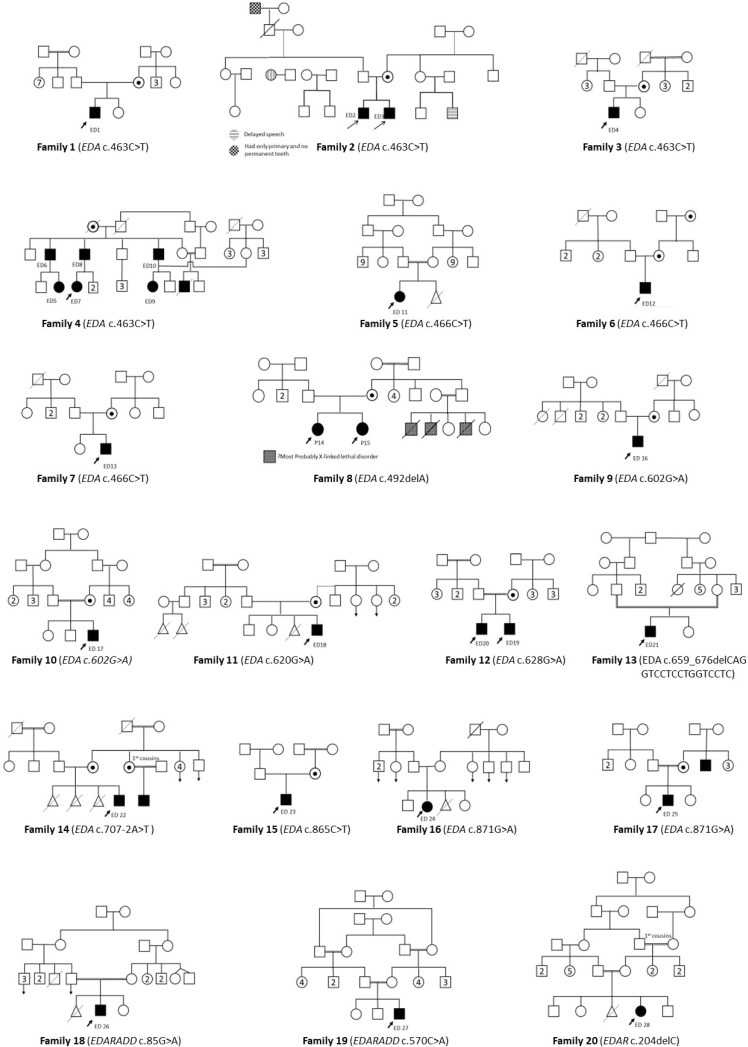
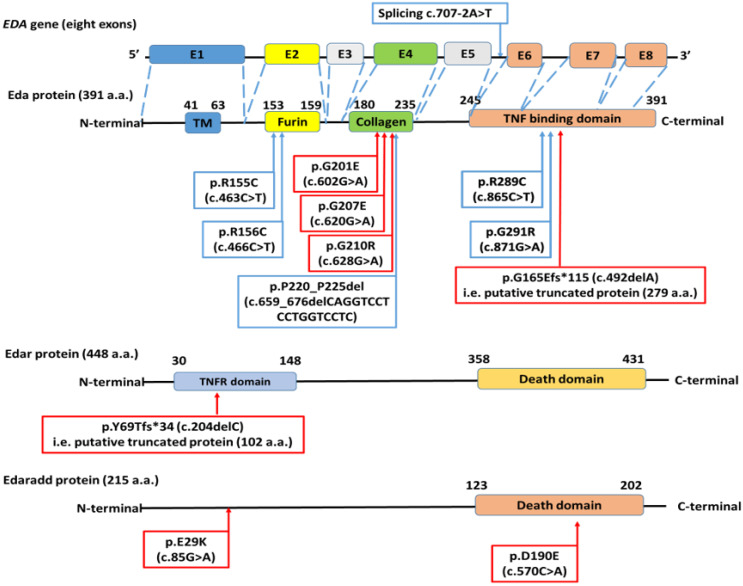
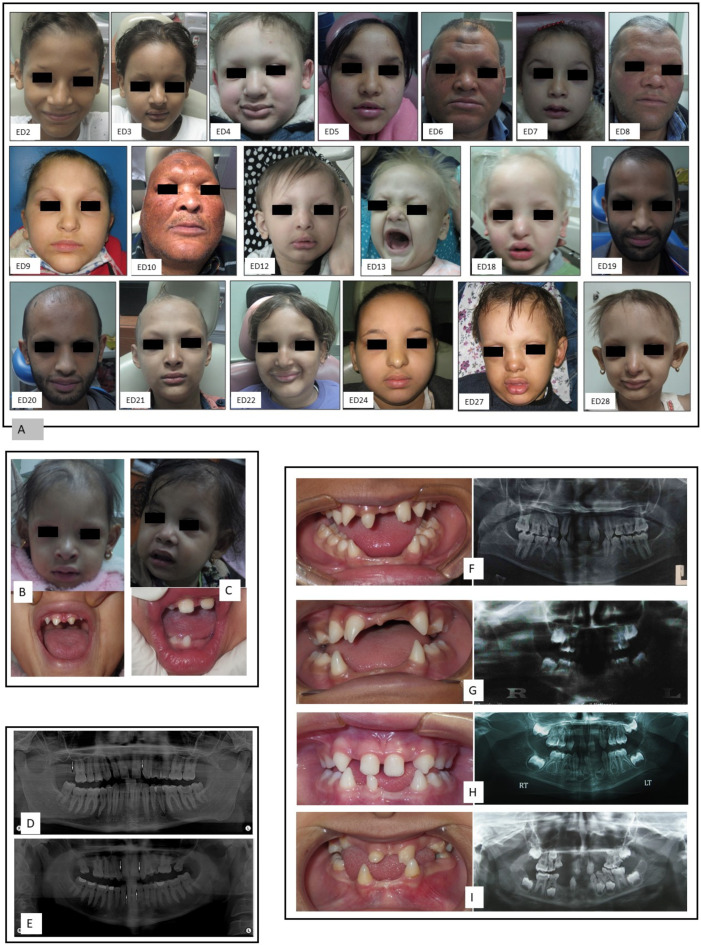
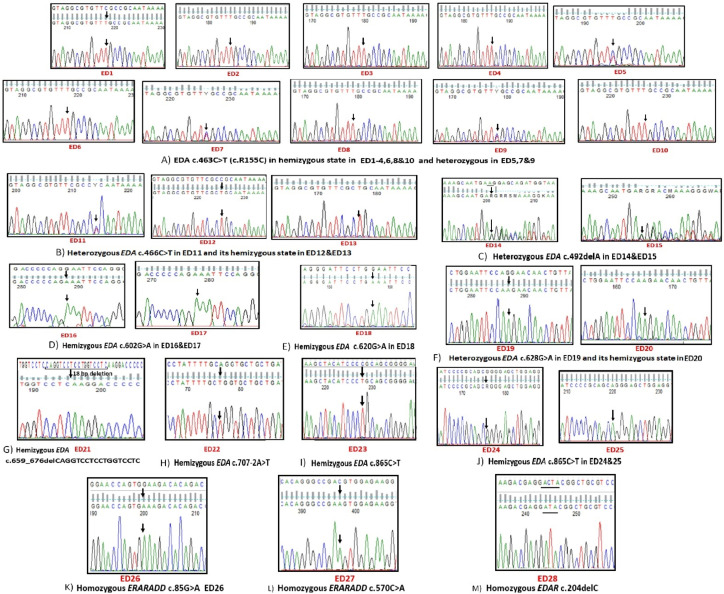
Ectodermal dysplasia (ED) is a diverse group of genetic disorders caused by congenital defects of two or more ectodermal-derived body structures, namely, hair, teeth, nails, and some glands, e.g., sweat glands. Molecular pathogenesis of ED involves mutations of genes encoding key proteins of major developmental pathways, including ectodysplasin (EDA) and wingless-type (WNT) pathways. The most common ED phenotype is hypohidrotic/anhidrotic ectodermal dysplasia (HED) featuring hypotrichosis, hypohidrosis/anhidrosis, and hypodontia. Molecular diagnosis is fundamental for disease management and emerging treatments. We used targeted next generation sequencing to study , , , and genes in 45 Egyptian ED patients with or without hypohidrosis. We present genotype and phenotype data of 28 molecularly-characterized patients demonstrating genetic heterogeneity, variable expressivity, and intrafamilial phenotypic variability. Thirteen mutations were reported, including four novel mutations, two novel , and one novel mutations. Identified mutations congregated in exons encoding key functional domains. is the most common gene contributing to 85% of the identified Egyptian ED genetic spectrum, followed by (10%) and (5%). Our cohort represents the first and largest cohort from North Africa where more than 60% of ED patients were identified emphasizing the need for exome sequencing to explore unidentified cases.
外胚层发育不全(ED)是一组由两种或多种外胚层来源的身体结构的先天性缺陷引起的遗传疾病,这些结构包括毛发、牙齿、指甲和一些腺体,例如汗腺。ED 的分子发病机制涉及编码主要发育途径关键蛋白的基因突变,包括外胚层蛋白(EDA)和 Wnt 途径。最常见的 ED 表型是少汗/无汗性外胚层发育不全(HED),其特征为毛发稀疏、少汗/无汗和牙齿缺失。分子诊断对于疾病管理和新兴治疗方法至关重要。我们使用靶向下一代测序技术研究了 45 名埃及有或无少汗症的 ED 患者的 、 、 和 基因。我们介绍了 28 名分子特征明确的患者的基因型和表型数据,这些患者表现出遗传异质性、可变外显率和家族内表型变异性。报告了 13 种突变,包括 4 种新的 突变、2 种新的 突变和 1 种新的 突变。鉴定出的突变聚集在编码关键功能域的外显子中。 是导致 85%已识别埃及 ED 遗传谱的最常见基因,其次是 (10%)和 (5%)。我们的队列代表了北非的第一个也是最大的队列,其中超过 60%的 ED 患者被确定,这强调了需要进行外显子组测序以探索未识别的病例。