Department of Pediatric Dentistry, Bauer Hall CB#7450, School of Dentistry, University of North Carolina, Chapel Hill, North Carolina.
National Foundation for Ectodermal Dysplasias, Fairview Heights, Illinois.
Am J Med Genet A. 2019 Mar;179(3):442-447. doi: 10.1002/ajmg.a.61045. Epub 2019 Jan 31.
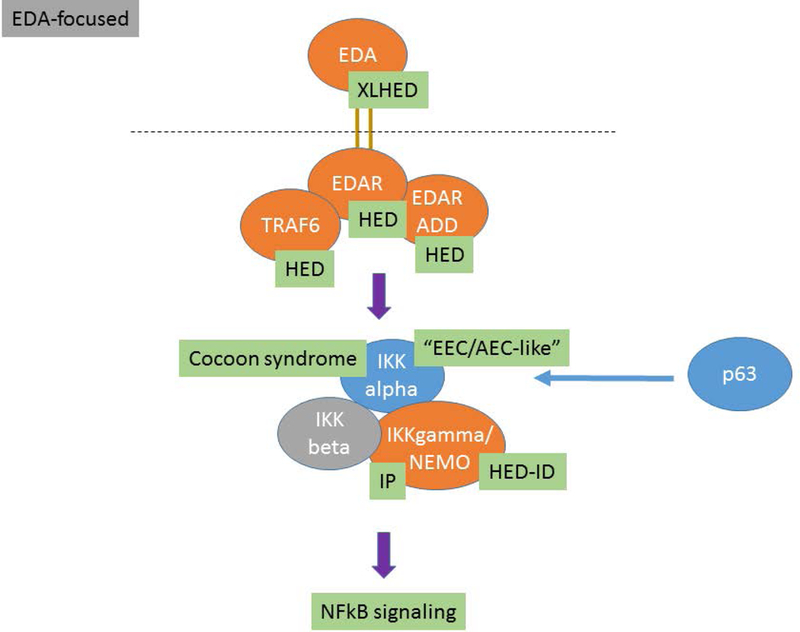
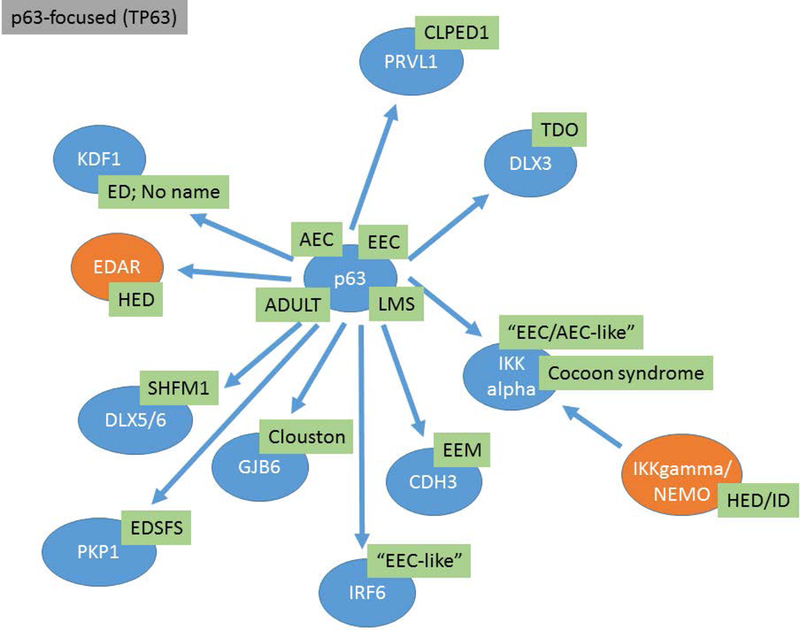
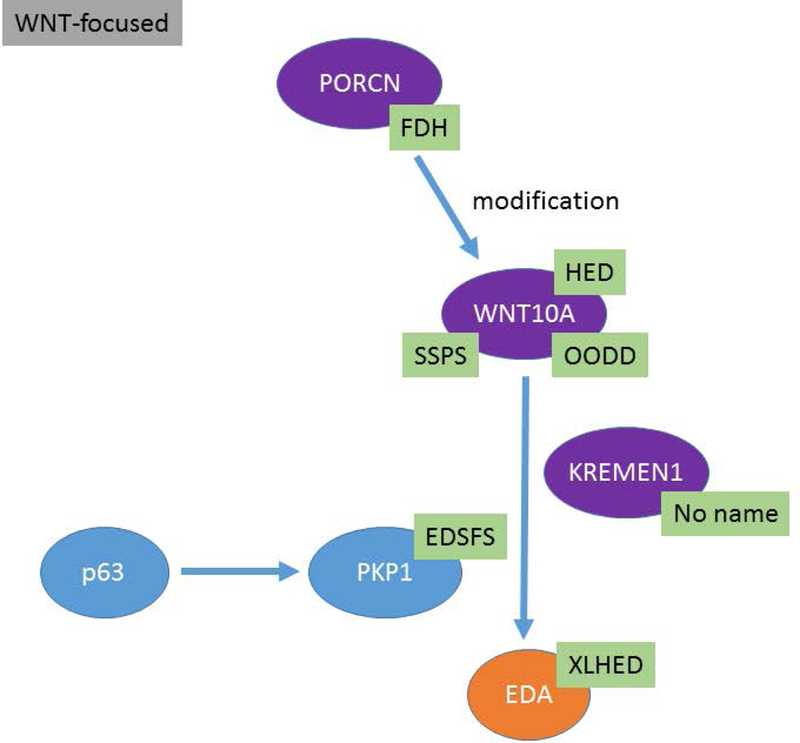
An international advisory group met at the National Institutes of Health in Bethesda, Maryland in 2017, to discuss a new classification system for the ectodermal dysplasias (EDs) that would integrate both clinical and molecular information. We propose the following, a working definition of the EDs building on previous classification systems and incorporating current approaches to diagnosis: EDs are genetic conditions affecting the development and/or homeostasis of two or more ectodermal derivatives, including hair, teeth, nails, and certain glands. Genetic variations in genes known to be associated with EDs that affect only one derivative of the ectoderm (attenuated phenotype) will be grouped as non-syndromic traits of the causative gene (e.g., non-syndromic hypodontia or missing teeth associated with pathogenic variants of EDA "ectodysplasin"). Information for categorization and cataloging includes the phenotypic features, Online Mendelian Inheritance in Man number, mode of inheritance, genetic alteration, major developmental pathways involved (e.g., EDA, WNT "wingless-type," TP63 "tumor protein p63") or the components of complex molecular structures (e.g., connexins, keratins, cadherins).
一个国际顾问小组于 2017 年在马里兰州贝塞斯达的美国国立卫生研究院开会,讨论一种新的外胚层发育不良(ED)分类系统,该系统将整合临床和分子信息。我们提出以下建议,即在以前的分类系统基础上并结合当前诊断方法的 ED 工作定义:ED 是一种影响两个或多个外胚层衍生物(包括头发、牙齿、指甲和某些腺体)发育和/或体内平衡的遗传状况。已知与仅影响外胚层一个衍生物的 ED 相关的基因中的遗传变异(减弱表型)将被归类为致病基因的非综合征特征(例如,与 EDA“外胚层发育不全蛋白”的致病性变异相关的非综合征性少牙或无牙)。分类和编目的信息包括表型特征、在线孟德尔遗传数据库编号、遗传方式、遗传改变、涉及的主要发育途径(例如 EDA、WNT“无翅型”、TP63“肿瘤蛋白 p63”)或复杂分子结构的组成部分(例如连接蛋白、角蛋白、钙黏蛋白)。