Degani Ofir, Gordani Asaf, Becher Paz, Dor Shlomit
Plant Sciences Department, Migal Galilee Research Institute, Kiryat Shmona 11016, Israel.
Faculty of Sciences, Tel-Hai College, Tel-Hai 12210, Israel.
J Fungi (Basel). 2021 Aug 28;7(9):706. doi: 10.3390/jof7090706.
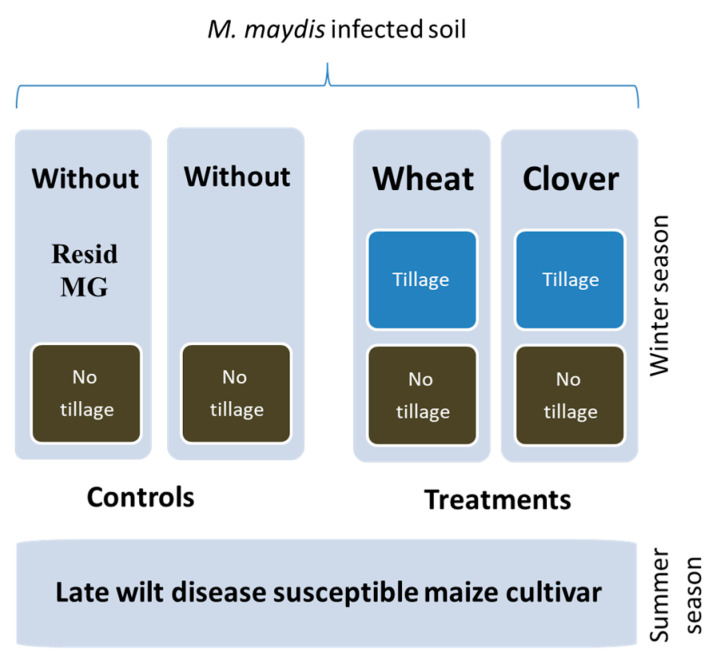
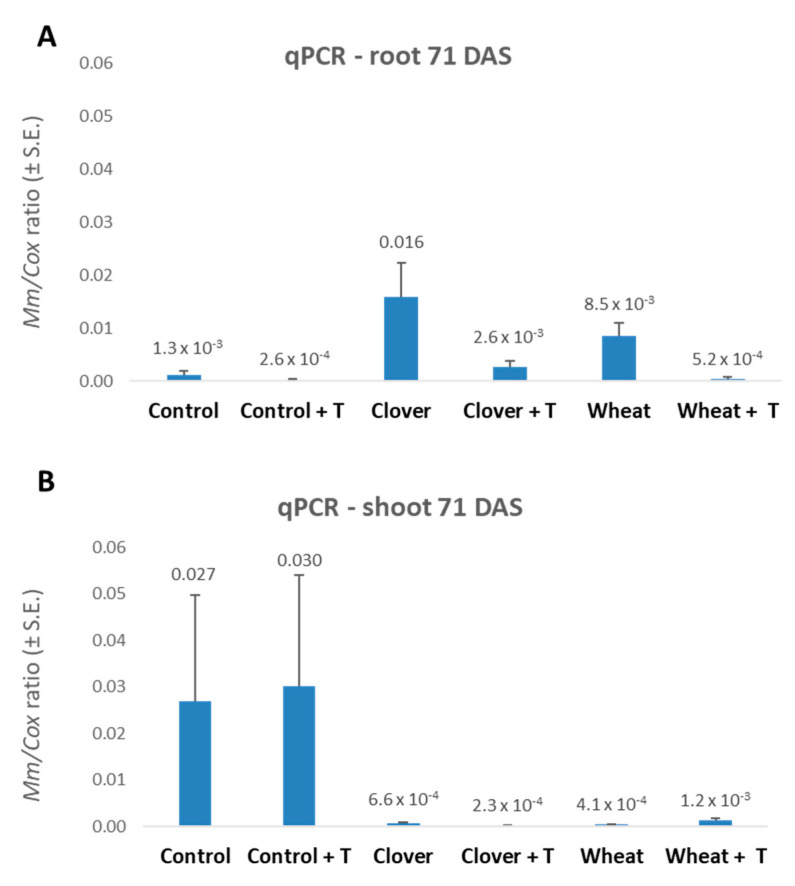
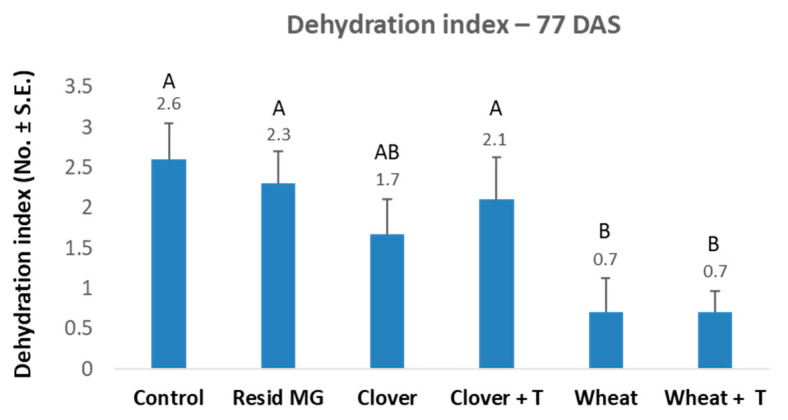
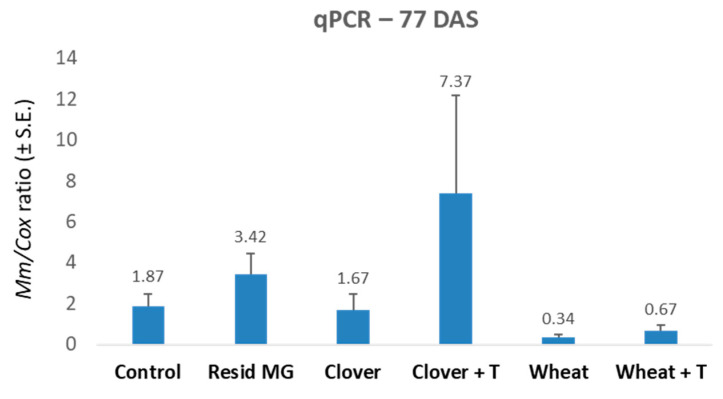
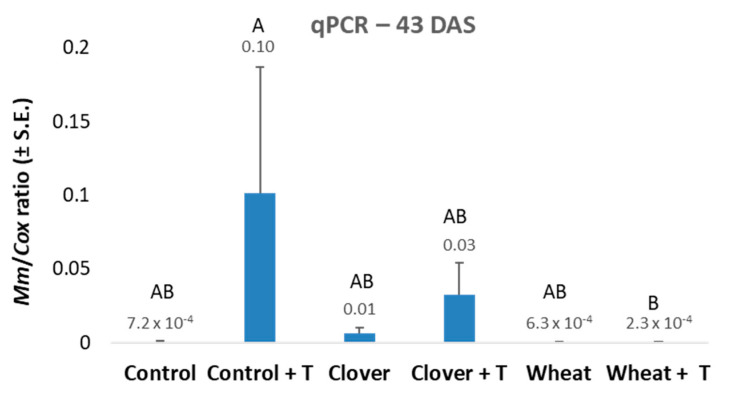
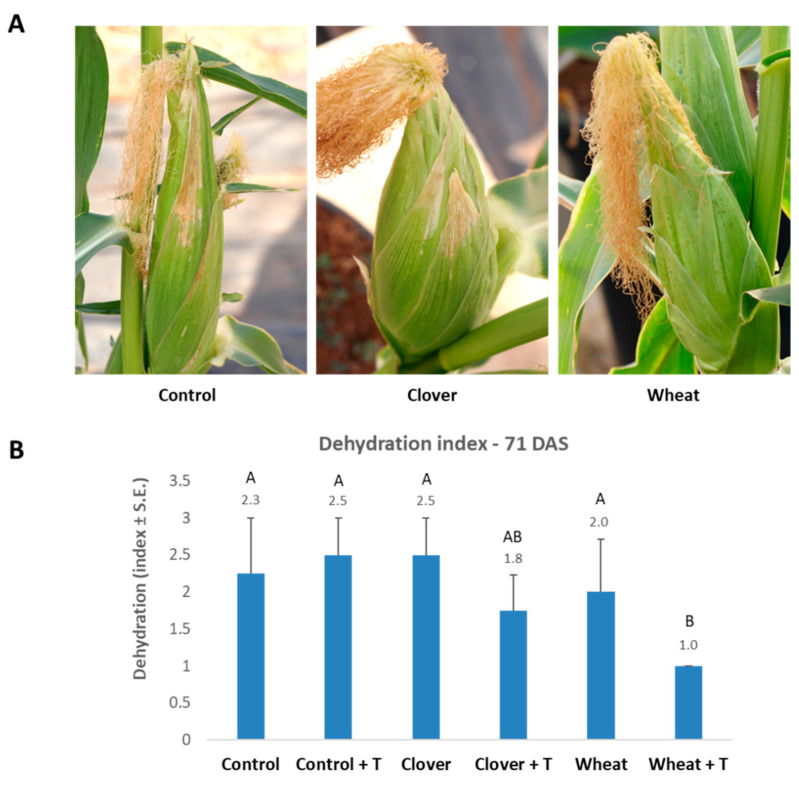
The destructive maize late wilt disease (LWD) has heavy economic implications in highly infected areas such as Israel, Egypt, and Spain. The disease outbreaks occur near the harvest, leading to total yield loss in severe cases. Crop rotation has long been known as an effective means to reduce plant diseases. Indeed, agricultural soil conservation practices that can promote beneficial soil and root fungi have become increasingly important. Such methods may have a bioprotective effect against , the LWD causal agent. In this two-year study, we tested the role of crop rotation of maize with either wheat or clover and the influence of minimum tillage in restricting LWD. In the first experiment, wheat and clover were grown in pots with LWD infected soil in a greenhouse over a full winter growth period. These cultivations were harvested in the spring, and each pot's group was split into two subgroups that underwent different land processing practices. The pots were sown with LWD-sensitive maize cultivar and tested over a whole growth period against control soils without crop rotation or soil with commercial mycorrhizal preparation. The maize crop rotation with wheat without tillage achieved prominent higher growth indices than the control and the clover crop cycle. Statistically significant improvement was measured in the non-tillage wheat soil pots in sprout height 22 days after sowing, in the healthy plants at the season's end (day 77), and in shoot and cob wet weight (compared to the control). This growth promotion was accompanied by a 5.8-fold decrease in pathogen DNA in the plant stems. The tillage in the wheat-maize growth sequence resulted in similar results with improved shoot wet-weight throughout the season. In contrast, when maize was grown after clover, the tillage reduced this parameter. The addition of commercial mycorrhizal preparation to the soil resulted in higher growth measures than the control but was less efficient than the wheat crop cycle. These results were supported by a subsequent similar experiment that relied on soil taken from commercial wheat or clover fields. Here too, the wheat-maize growth cycle (without permanent effect for the tillage) achieved the best results and improved the plants' growth parameters and immunity against LWD and lowered pathogen levels. In conclusion, the results of this study suggest that wheat and perhaps other crops yet to be inspected, together with the adjusted tillage system, may provide plants with better defense against the LWD pathogen.
具有毁灭性的玉米后期枯萎病(LWD)在以色列、埃及和西班牙等高感染地区造成了严重的经济影响。该病在收获期临近时爆发,严重情况下会导致产量完全损失。长期以来,轮作一直被认为是减少植物病害的有效手段。事实上,能够促进有益土壤和根系真菌生长的农业土壤保护措施变得越来越重要。这些方法可能对LWD病原体具有生物保护作用。在这项为期两年的研究中,我们测试了玉米与小麦或三叶草轮作的作用以及少耕对限制LWD的影响。在第一个实验中,小麦和三叶草在温室中种植于装有LWD感染土壤的花盆中,经历整个冬季生长周期。这些作物在春季收获,每个花盆组被分成两个亚组,分别进行不同的土地处理操作。花盆中播种对LWD敏感的玉米品种,并在整个生长周期内与未进行轮作的对照土壤或添加商业菌根制剂的土壤进行测试。玉米与小麦轮作且不进行耕作的情况下,其生长指标显著高于对照和三叶草作物轮作周期。在播种后22天的发芽高度、季节结束时(第77天)的健康植株以及地上部和果穗湿重方面(与对照相比),免耕小麦土壤花盆中测量到了统计学上的显著改善。这种生长促进伴随着植物茎中病原体DNA减少5.8倍。小麦 - 玉米生长序列中的耕作也产生了类似的结果,整个季节地上部湿重有所改善。相比之下,当玉米在三叶草之后种植时,耕作降低了这一参数。向土壤中添加商业菌根制剂导致生长指标高于对照,但效率低于小麦作物轮作周期。随后一项基于从商业小麦或三叶草田采集的土壤进行的类似实验支持了这些结果。同样,小麦 - 玉米生长周期(耕作无持久影响)取得了最佳效果,改善了植物的生长参数以及对LWD的免疫力,并降低了病原体水平。总之,这项研究的结果表明,小麦以及可能其他有待检测的作物,连同调整后的耕作系统,可能为植物提供更好的防御LWD病原体的能力。