Nettleton Jodi E, Klancic Teja, Schick Alana, Choo Ashley C, Cheng Ning, Shearer Jane, Borgland Stephanie L, Rho Jong M, Reimer Raylene A
Faculty of Kinesiology, University of Calgary, Calgary, AB T2N 1N4, Canada.
International Microbiome Centre, Cumming School of Medicine, University of Calgary, Calgary, AB T2N 4N1, Canada.
Microorganisms. 2021 Aug 29;9(9):1833. doi: 10.3390/microorganisms9091833.
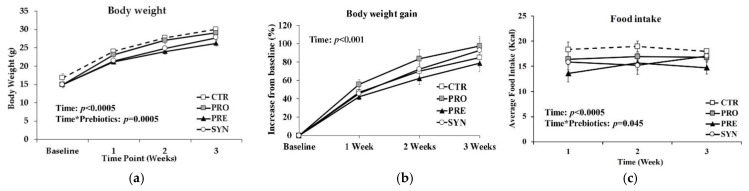
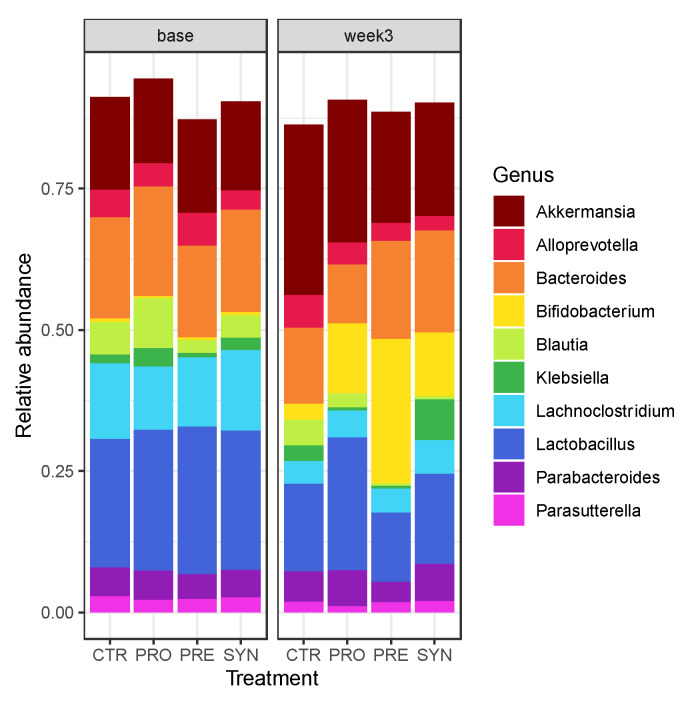
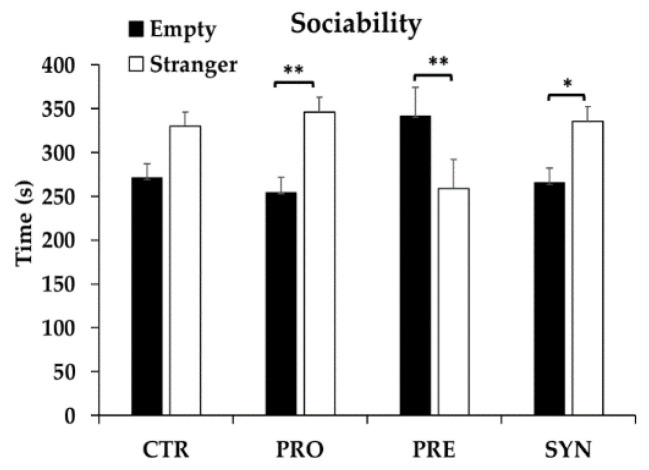
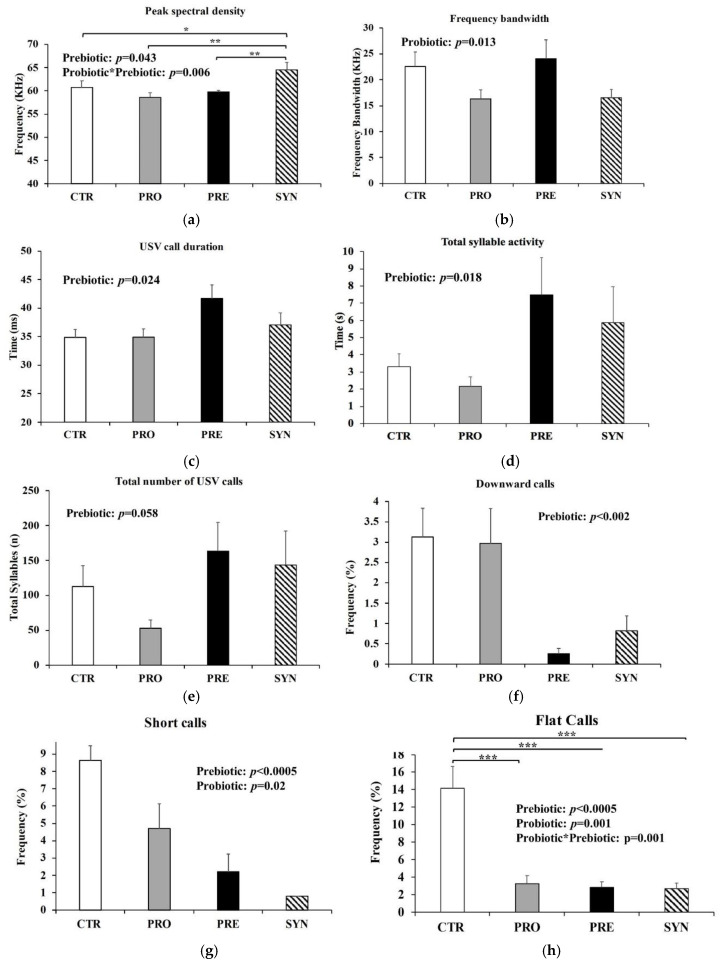
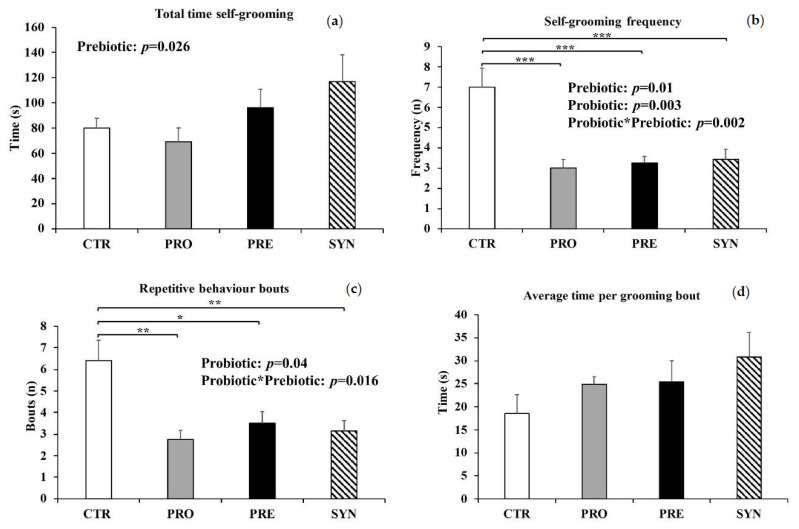
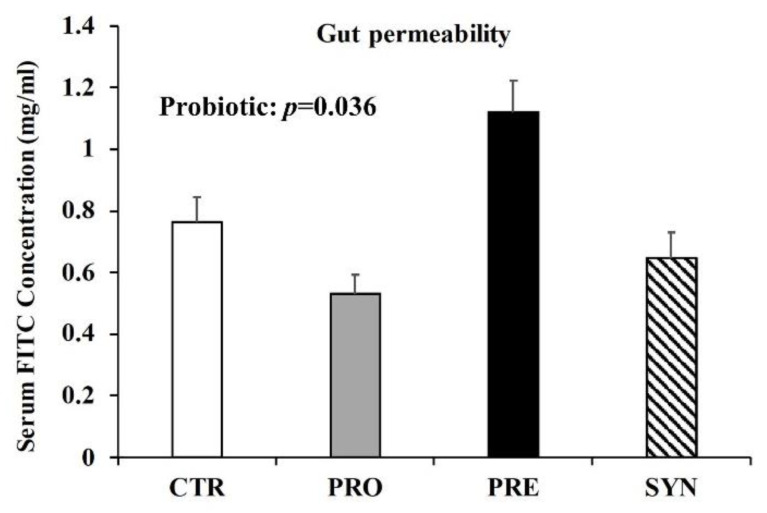
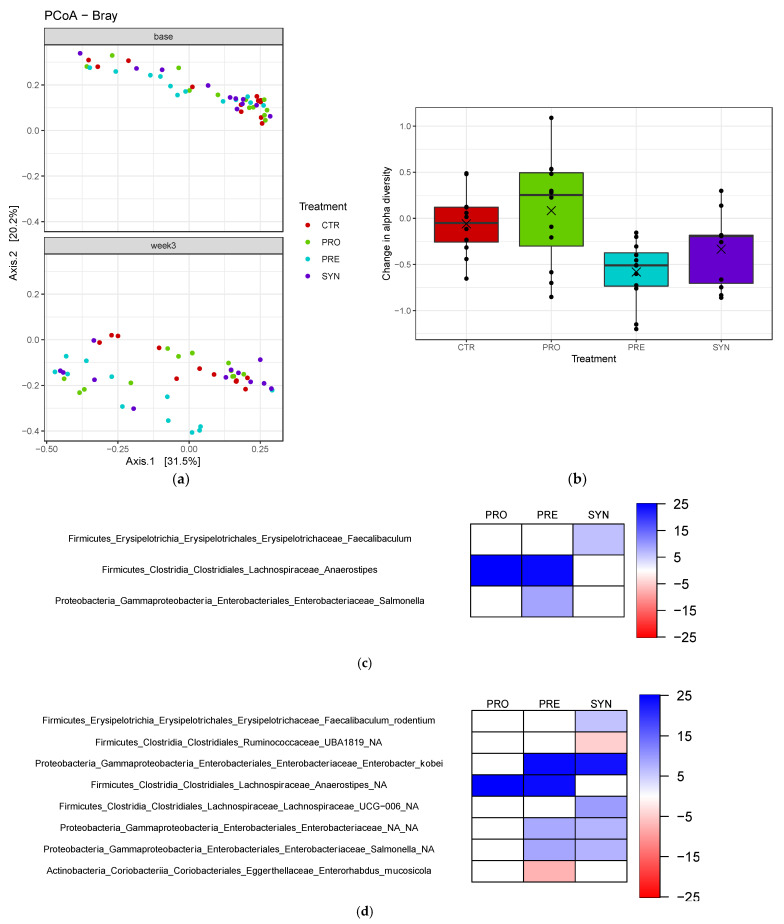
Given that prebiotics have been shown to improve gut microbiota composition, gastrointestinal symptoms and select behaviors in autism spectrum disorder (ASD), we hypothesized that prebiotic supplementation would improve sociability, communication, and repetitive behaviors in a murine model of ASD. We also examined the effect of a synbiotic (probiotic + prebiotic). Juvenile male BTBR mice were randomized to: (1) control; (2) probiotic (1 × 10 CFU/d RC-14; now known as ); (3) prebiotic (10% oligofructose-enriched inulin); (4) prebiotic + probiotic (n = 12/group) administered through food for 3 weeks. Sociability, communication, repetitive behavior, intestinal permeability and gut microbiota were assessed. Probiotic and symbiotic treatments improved sociability (92 s and 70 s longer in stranger than empty chamber) and repetitive behaviors (50% lower frequency), whereas prebiotic intake worsened sociability (82 s less in stranger chamber) and increased the total time spent self-grooming (96 s vs. 80 s CTR), but improved communication variables (4.6 ms longer call duration and 4 s higher total syllable activity). Mice consuming probiotics or synbiotics had lower intestinal permeability (30% and 15% lower than CTR). Prebiotic, probiotic, and symbiotic treatments shifted gut microbiota to taxa associated with improved gut health. may help alleviate ASD behavioral symptom severity and improve gut health. The potential use of prebiotics in an ASD population warrants further research.
鉴于益生元已被证明可改善自闭症谱系障碍(ASD)患者的肠道微生物群组成、胃肠道症状并选择行为,我们假设补充益生元可改善ASD小鼠模型的社交能力、沟通能力和重复行为。我们还研究了合生元(益生菌+益生元)的效果。将幼年雄性BTBR小鼠随机分为:(1)对照组;(2)益生菌组(1×10 CFU/d RC-14;现称为 );(3)益生元组(10%富含低聚果糖的菊粉);(4)益生元+益生菌组(每组n = 12),通过食物给药3周。评估社交能力、沟通能力、重复行为、肠道通透性和肠道微生物群。益生菌和合生元治疗改善了社交能力(与空房间相比,与陌生人相处时长分别延长92秒和70秒)和重复行为(频率降低50%),而摄入益生元则恶化了社交能力(在陌生人房间中减少82秒),并增加了自我梳理的总时长(96秒对80秒的对照组),但改善了沟通变量(叫声持续时间长4.6毫秒,总音节活动高4秒)。食用益生菌或合生元的小鼠肠道通透性较低(比对照组分别低30%和15%)。益生元、益生菌和合生元治疗使肠道微生物群向与改善肠道健康相关的分类群转变。 可能有助于减轻ASD行为症状的严重程度并改善肠道健康。益生元在ASD人群中的潜在用途值得进一步研究。