Bevilacqua Antonio, Campaniello Daniela, Speranza Barbara, Racioppo Angela, Sinigaglia Milena, Corbo Maria Rosaria
Department of the Science of Agriculture, Food, Natural Resources and Engineering, University of Foggia, 71122 Foggia, Italy.
Foods. 2024 Jan 30;13(3):446. doi: 10.3390/foods13030446.
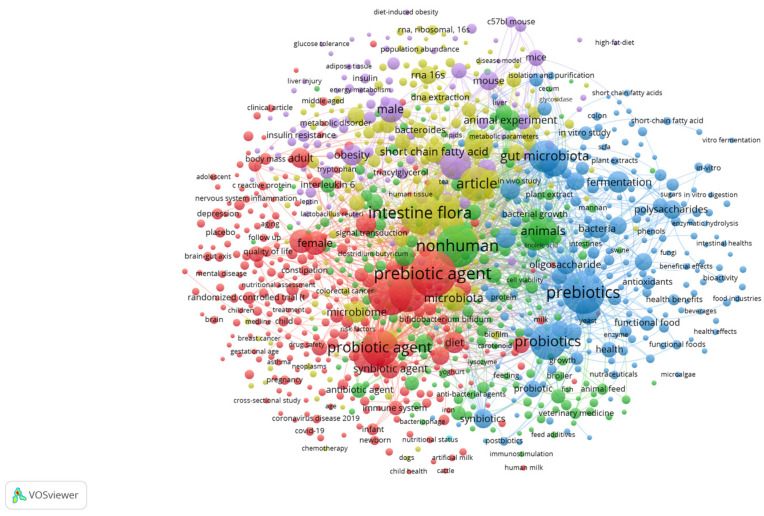
Prebiotic compounds were originally defined as "a nondigestible food ingredient that beneficially affects the host by selectively stimulating the growth and/or activity of one or a limited number of bacteria in the colon, and thus improves host health"; however, a significant modulation of the definition was carried out in the consensus panel of The International Scientific Association for Probiotics and Prebiotics (ISAPP), and the last definition states that "prebiotics are substrates that are selectively utilized by host microorganisms conferring a health benefit". Health effects of prebiotics compounds attracted the interest of researchers, food companies and Regulatory Agencies, as inferred by the number of articles on Scopus for the keywords "prebiotic" and "health effects", that is ca. 2000, for the period January 2021-January 2024. Therefore, the aim of this paper is to contribute to the debate on these topics by offering an overview of existing knowledge and advances in this field. A literature search was performed for the period 2012-2023 and after the selection of the most relevant items, the attention was focused on seven conditions for which at least 8-10 different studies were found, namely colorectal cancer, neurological or psychiatric conditions, intestinal diseases, obesity, diabetes, metabolic syndrome, and immune system disorders. In addition, the analysis of the most recent articles through the software VosViewer version 1.6.20 pointed out the existence of five clusters or macro-categories, namely: (i) pathologies; (ii) metabolic condvitions; (iii) structure and use in food; (iv) immunomodulation; (v) effect on gut microbiota.
益生元化合物最初被定义为“一种不可消化的食物成分,通过选择性刺激结肠中一种或有限数量细菌的生长和/或活性,从而有益地影响宿主,并改善宿主健康”;然而,国际益生菌和益生元科学协会(ISAPP)的共识小组对该定义进行了重大调整,最新定义指出“益生元是被宿主微生物选择性利用并赋予健康益处的底物”。益生元化合物对健康的影响引起了研究人员、食品公司和监管机构的关注,从Scopus上关于关键词“益生元”和“健康影响”的文章数量可以推断,在2021年1月至2024年1月期间约有2000篇。因此,本文的目的是通过概述该领域的现有知识和进展,为这些主题的辩论做出贡献。对2012 - 2023年期间进行了文献检索,在选择了最相关的项目后,注意力集中在发现了至少8 - 10项不同研究的七个条件上,即结直肠癌、神经或精神疾病、肠道疾病、肥胖、糖尿病、代谢综合征和免疫系统疾病。此外,通过VosViewer 1.6.20版软件对最新文章的分析指出存在五个聚类或宏观类别,即:(i)病理学;(ii)代谢状况;(iii)在食品中的结构和用途;(iv)免疫调节;(v)对肠道微生物群的影响。