Chiu Shu-Fang, Huang Po-Jung, Cheng Wei-Hung, Huang Ching-Yun, Chu Lichieh Julie, Lee Chi-Ching, Lin Hsin-Chung, Chen Lih-Chyang, Lin Wei-Ning, Tsao Chang-Huei, Tang Petrus, Yeh Yuan-Ming, Huang Kuo-Yang
Graduate Institute of Pathology and Parasitology, National Defense Medical Center, Taipei 114, Taiwan.
Department of Inspection, Taipei City Hospital, Renai Branch, Taipei 114, Taiwan.
Microorganisms. 2021 Sep 2;9(9):1864. doi: 10.3390/microorganisms9091864.
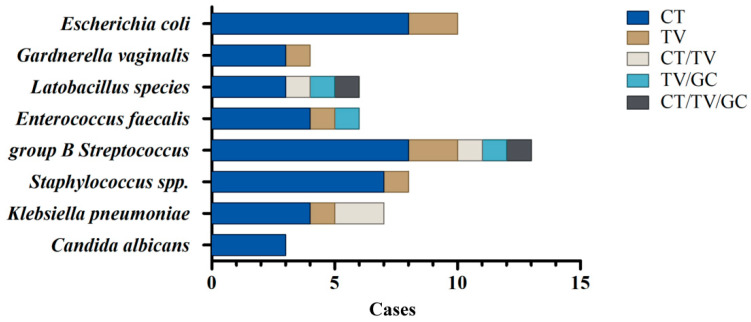
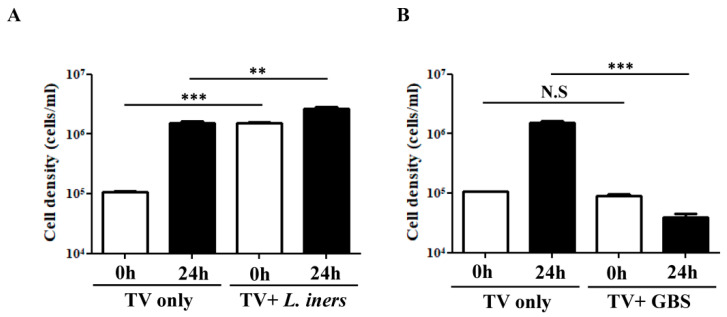
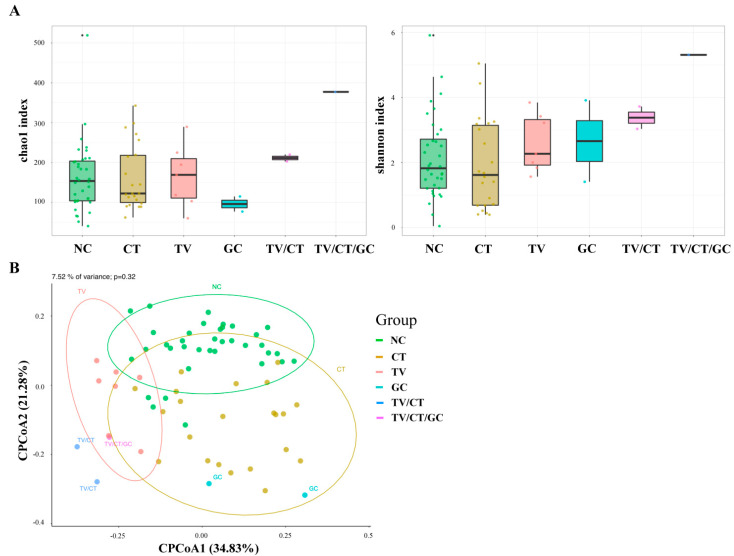
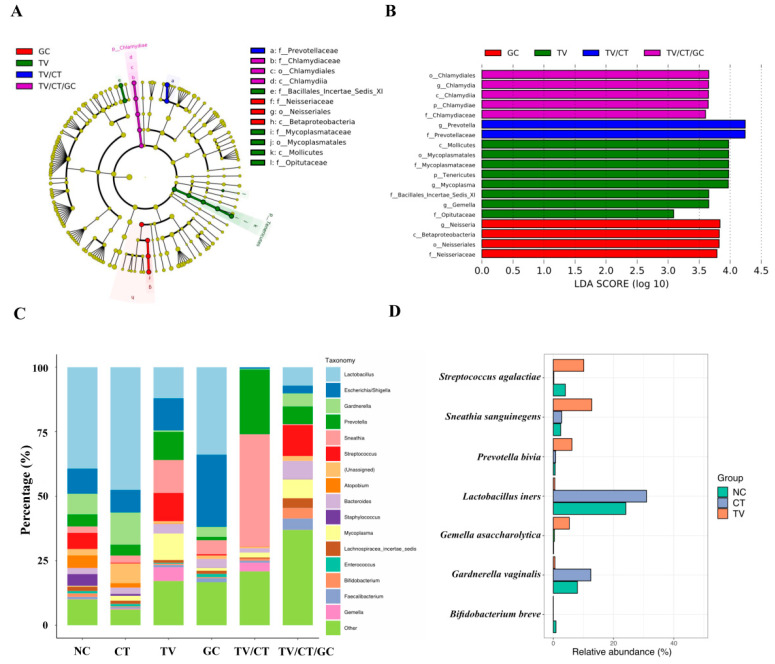
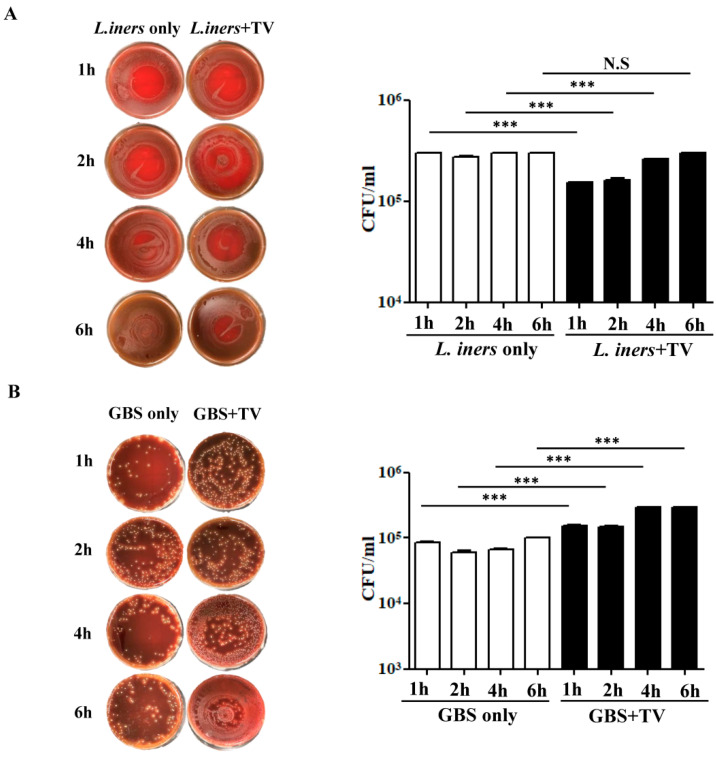
The three most common sexually transmitted infections (STIs) are (CT), (GC) and (TV). The prevalence of these STIs in Taiwan remains largely unknown and the risk of STI acquisition affected by the vaginal microbiota is also elusive. In this study, a total of 327 vaginal swabs collected from women with vaginitis were analyzed to determine the presence of STIs and the associated microorganisms by using the BD Max CT/GC/TV molecular assay, microbial cultures, and 16S rRNA sequencing. The prevalence of CT, TV, and GC was 10.8%, 2.2% and 0.6%, respectively. A culture-dependent method identified that and (GBS) were more likely to be associated with CT and TV infections. In CT-positive patients, the vaginal microbiota was dominated by , and the relative abundance of (12.46%) was also higher than that in TV-positive patients and the non-STIs group. However, spp. was significantly lower in TV-positive patients, while GBS (10.11%), (6.19%), (12.75%), and (5.31%) were significantly enriched. Using an in vitro co-culture assay, we demonstrated that the growth of was suppressed in the initial interaction with TV, but it may adapt and survive after longer exposure to TV. Additionally, it is noteworthy that TV was able to promote GBS growth. Our study highlights the vaginal microbiota composition associated with the common STIs and the crosstalk between TV and the associated bacteria, paving the way for future development of health interventions targeting the specific vaginal bacterial taxa to reduce the risk of common STIs.
三种最常见的性传播感染(STIs)是沙眼衣原体(CT)、淋病奈瑟菌(GC)和阴道毛滴虫(TV)。这些性传播感染在台湾的流行情况仍 largely unknown,并且受阴道微生物群影响的性传播感染感染风险也难以捉摸。在本研究中,共分析了从阴道炎女性收集的327份阴道拭子,通过使用BD Max CT/GC/TV分子检测、微生物培养和16S rRNA测序来确定性传播感染的存在及相关微生物。CT、TV和GC的患病率分别为10.8%、2.2%和0.6%。一种依赖培养的方法确定无乳链球菌和B群链球菌(GBS)更可能与CT和TV感染相关。在CT阳性患者中,阴道微生物群以卷曲乳酸杆菌为主,嗜酸乳杆菌的相对丰度(12.46%)也高于TV阳性患者和非性传播感染组。然而,惰性乳杆菌在TV阳性患者中显著降低,而GBS(10.11%)、嗜黏蛋白阿克曼菌(6.19%)、青春双歧杆菌(12.75%)和加氏乳杆菌(5.31%)显著富集。使用体外共培养试验,我们证明卷曲乳酸杆菌在与TV的初始相互作用中生长受到抑制,但在长时间暴露于TV后可能适应并存活。此外,值得注意的是,TV能够促进GBS生长。我们的研究突出了与常见性传播感染相关的阴道微生物群组成以及TV与相关细菌之间的相互作用,为未来针对特定阴道细菌类群开发健康干预措施以降低常见性传播感染风险铺平了道路。