Swana Kathleen W, Nagarajan Ramanathan, Camesano Terri A
Department of Chemical Engineering, Worcester Polytechnic Institute, Worcester, MA 01609, USA.
U.S. Army Combat Capabilities Development Command Soldier Center, Natick, MA 01760, USA.
Microorganisms. 2021 Sep 17;9(9):1975. doi: 10.3390/microorganisms9091975.
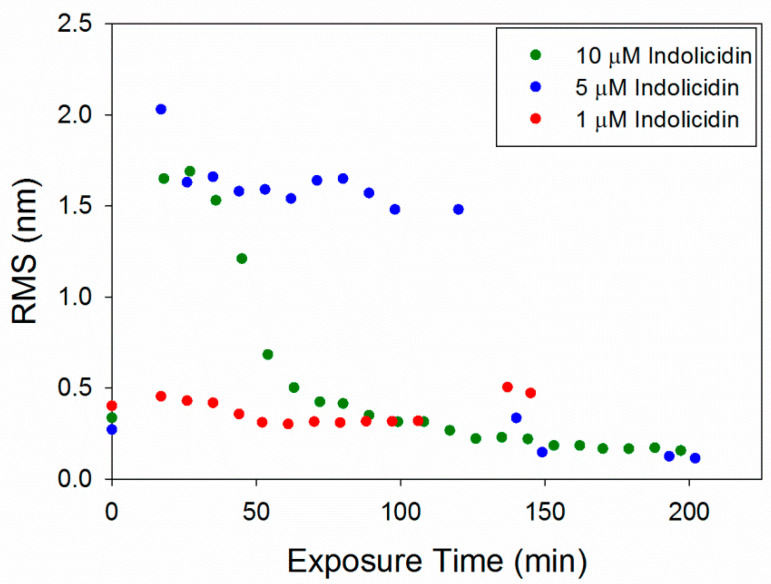
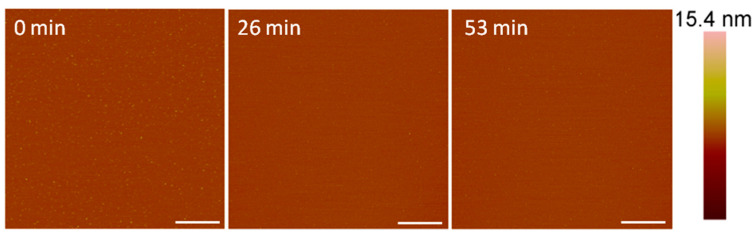
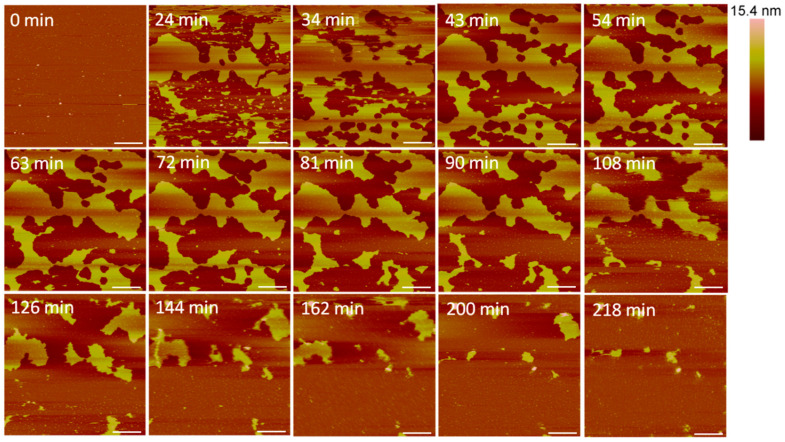
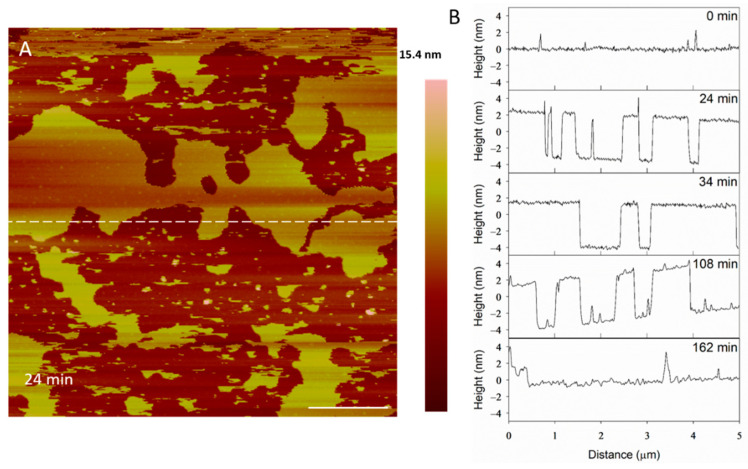
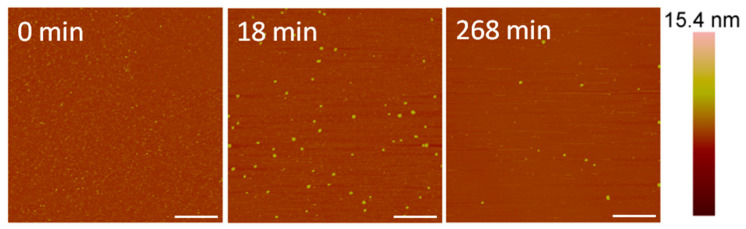
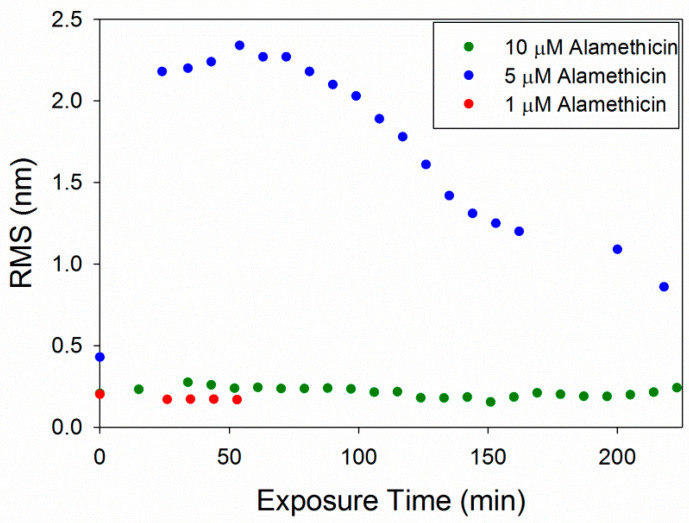
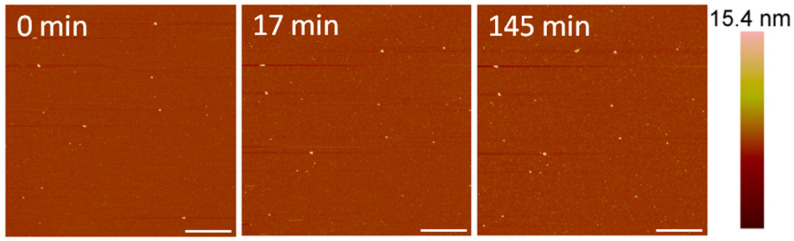
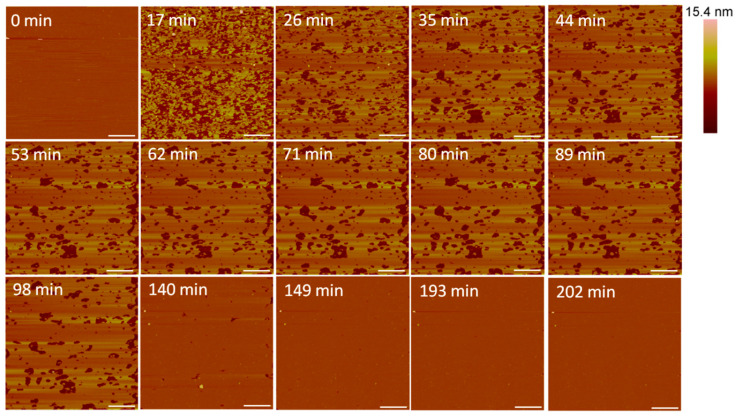
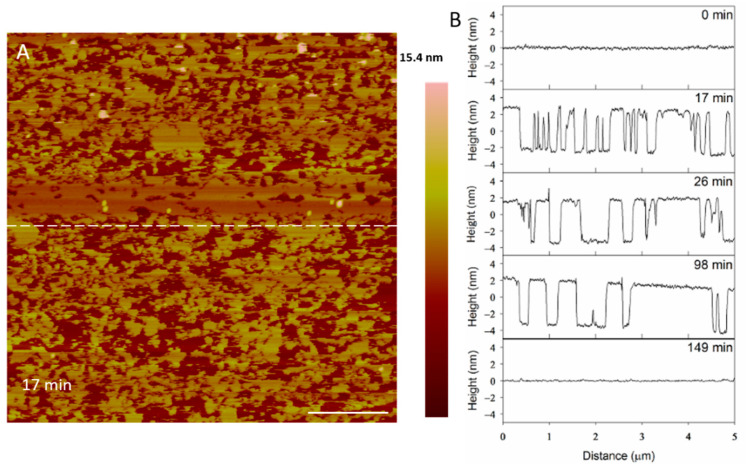
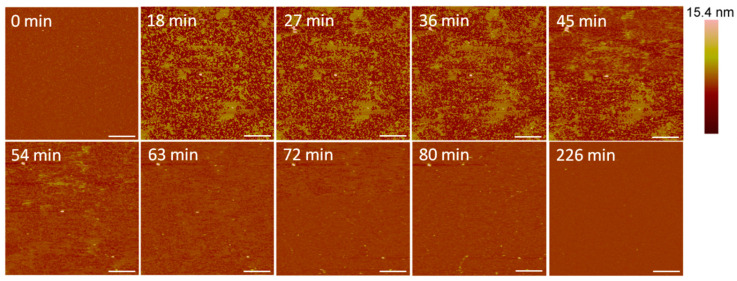
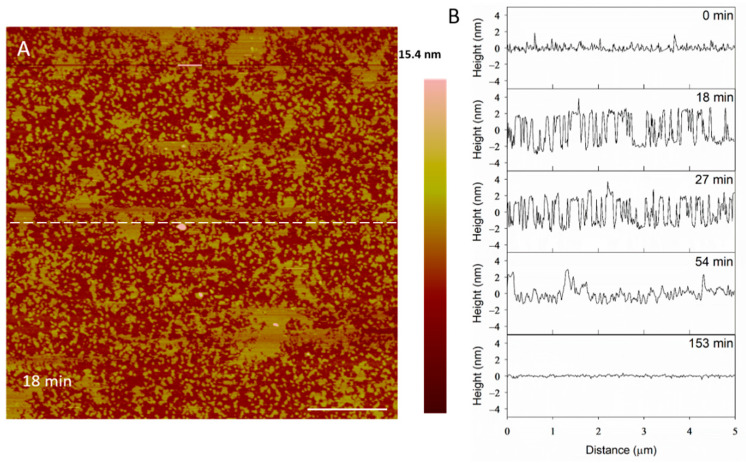
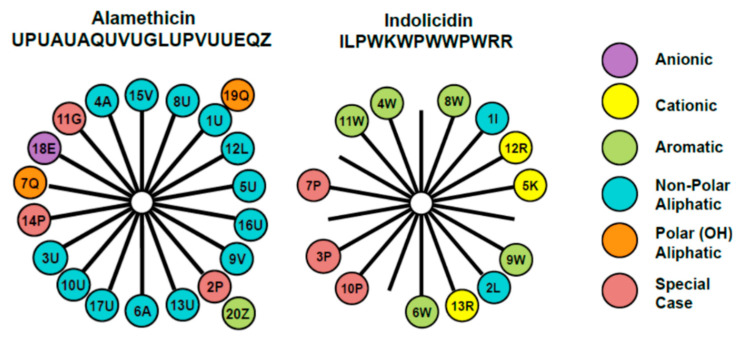
Antimicrobial peptides (AMPs) interact with bacterial cell membranes through a variety of mechanisms, causing changes extending from nanopore formation to microscale membrane lysis, eventually leading to cell death. Several AMPs also disrupt mammalian cell membranes, despite their significantly different lipid composition and such collateral hemolytic damage hinders the potential therapeutic applicability of the AMP as an anti-microbial. Elucidating the mechanisms underlying the AMP-membrane interactions is challenging due to the variations in the chemical and structural features of the AMPs, the complex compositional variations of cell membranes and the inadequacy of any single experimental technique to comprehensively probe them. (1) Background: Atomic Force Microscopy (AFM) imaging can be used in combination with other techniques to help understand how AMPs alter the orientation and structural organization of the molecules within cell membranes exposed to AMPs. The structure, size, net charge, hydrophobicity and amphipathicity of the AMPs affect how they interact with cell membranes of differing lipid compositions. (2) Methods: Our study examined two different types of AMPs, a 20-amino acid, neutral, α-helical (amphipathic) peptide, alamethicin, and a 13-amino acid, non-α-helical cationic peptide, indolicidin (which intramolecularly folds, creating a hydrophobic core), for their interactions with supported lipid bilayers (SLBs). Robust SLB model membranes on quartz supports, incorporating predominantly anionic lipids representative of bacterial cells, are currently not available and remain to be developed. Therefore, the SLBs of zwitterionic egg phosphatidylcholine (PC), which represents the composition of a mammalian cell membrane, was utilized as the model membrane. This also allows for a comparison with the results obtained from the Quartz Crystal Microbalance with Dissipation (QCM-D) experiments conducted for these peptides interacting with the same zwitterionic SLBs. Further, in the case of alamethicin, because of its neutrality, the lipid charge may be less relevant for understanding its membrane interactions. (3) Results: Using AFM imaging and roughness analysis, we found that alamethicin produced large, unstable defects in the membrane at 5 µM concentrations, and completely removed the bilayer at 10 µM. Indolicidin produced smaller holes in the bilayer at 5 and 10 µM, although they were able to fill in over time. The root-mean-square (RMS) roughness values for the images showed that the surface roughness caused by visible defects peaked after peptide injection and gradually decreased over time. (4) Conclusions: AFM is useful for helping to uncover the dynamic interactions between different AMPs and cell membranes, which can facilitate the selection and design of more efficient AMPs for use in therapeutics and antimicrobial applications.
抗菌肽(AMPs)通过多种机制与细菌细胞膜相互作用,引起从纳米孔形成到微观尺度膜裂解等一系列变化,最终导致细胞死亡。尽管哺乳动物细胞膜的脂质组成与细菌细胞膜显著不同,但仍有几种抗菌肽会破坏其细胞膜,这种附带的溶血损伤阻碍了抗菌肽作为抗菌剂的潜在治疗应用。由于抗菌肽的化学和结构特征存在差异、细胞膜的复杂组成变化以及任何单一实验技术都不足以全面探测这些相互作用,因此阐明抗菌肽与膜相互作用的潜在机制具有挑战性。(1)背景:原子力显微镜(AFM)成像可与其他技术结合使用,以帮助理解抗菌肽如何改变暴露于抗菌肽的细胞膜内分子的取向和结构组织。抗菌肽的结构、大小、净电荷、疏水性和两亲性会影响它们与不同脂质组成的细胞膜的相互作用方式。(2)方法:我们的研究考察了两种不同类型的抗菌肽,一种是由20个氨基酸组成的中性α-螺旋(两亲性)肽阿拉米辛,另一种是由13个氨基酸组成的非α-螺旋阳离子肽吲哚杀菌素(其分子内折叠形成疏水核心),研究它们与支持脂质双层(SLBs)的相互作用。目前尚无包含主要代表细菌细胞的阴离子脂质的、在石英载体上的稳健的支持脂质双层模型膜,仍有待开发。因此,两性离子型卵磷脂(PC)的支持脂质双层被用作模型膜,其代表哺乳动物细胞膜的组成。这也便于与这些肽与相同两性离子支持脂质双层相互作用的石英晶体微天平耗散技术(QCM-D)实验结果进行比较。此外,对于阿拉米辛,由于其呈中性,脂质电荷对于理解其与膜的相互作用可能不太相关。(3)结果:通过AFM成像和粗糙度分析,我们发现5μM浓度的阿拉米辛会在膜中产生大的、不稳定的缺陷,而在10μM时会完全破坏双层膜。5μM和10μM的吲哚杀菌素会在双层膜中产生较小的孔,不过随着时间推移这些孔能够被填充。图像的均方根(RMS)粗糙度值表明,由可见缺陷引起的表面粗糙度在注入肽后达到峰值,并随时间逐渐降低。(4)结论:AFM有助于揭示不同抗菌肽与细胞膜之间的动态相互作用,这有助于选择和设计更有效的抗菌肽用于治疗和抗菌应用。