Yang Chuanhe, Wang Yinan, Sims Michelle M, He Yali, Miller Duane D, Pfeffer Lawrence M
Department of Pathology and Laboratory Medicine, Center for Cancer Research, College of Medicine, University of Tennessee Health Science Center, Memphis, TN 38163, USA.
Department of Pharmaceutical Sciences, College of Pharmacy, University of Tennessee Health Science Center, Memphis, TN 38163, USA.
Pharmaceuticals (Basel). 2021 Sep 6;14(9):904. doi: 10.3390/ph14090904.
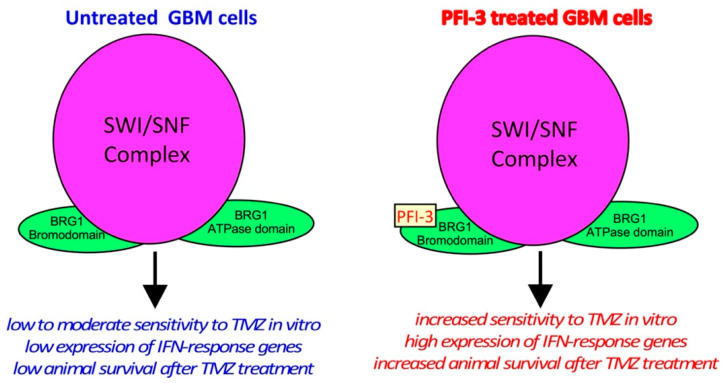
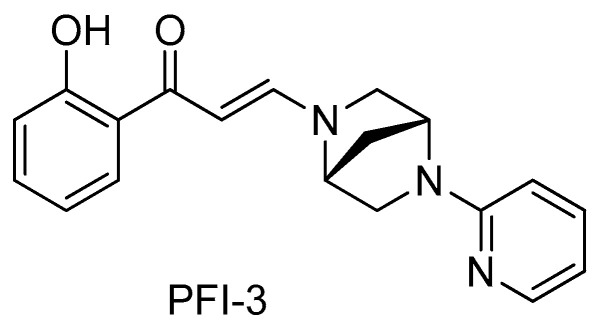
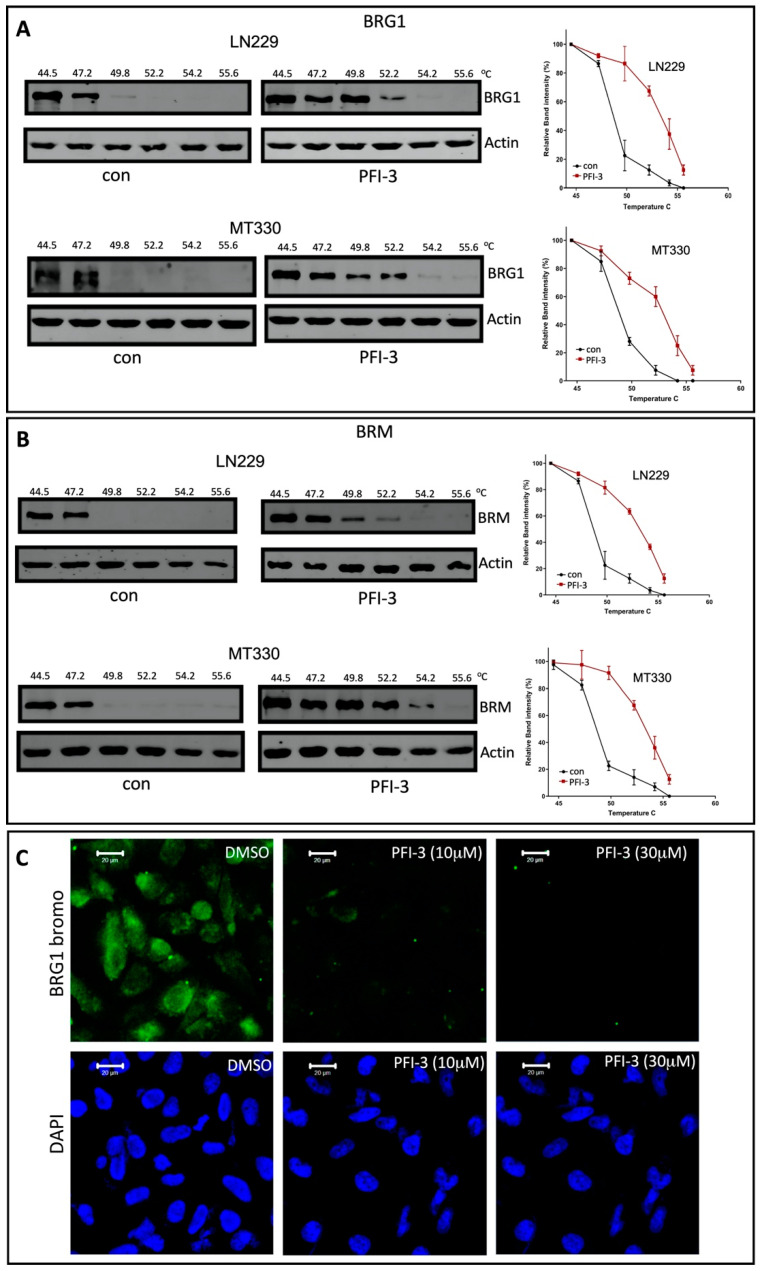
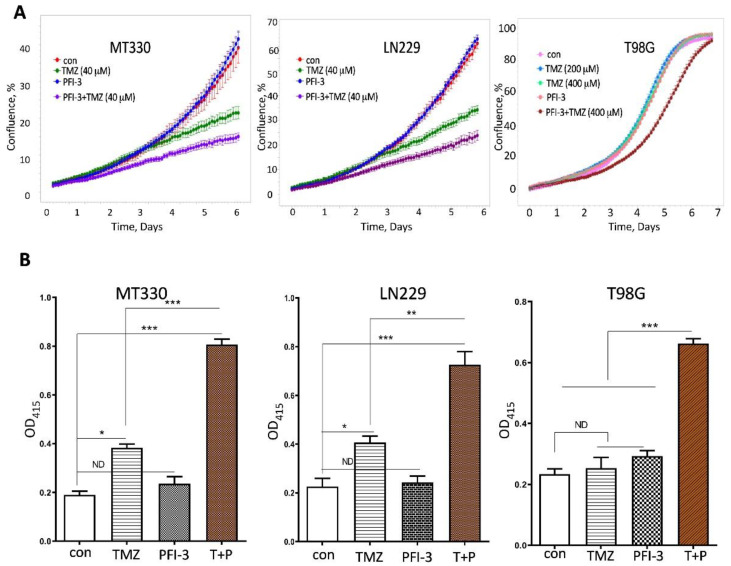
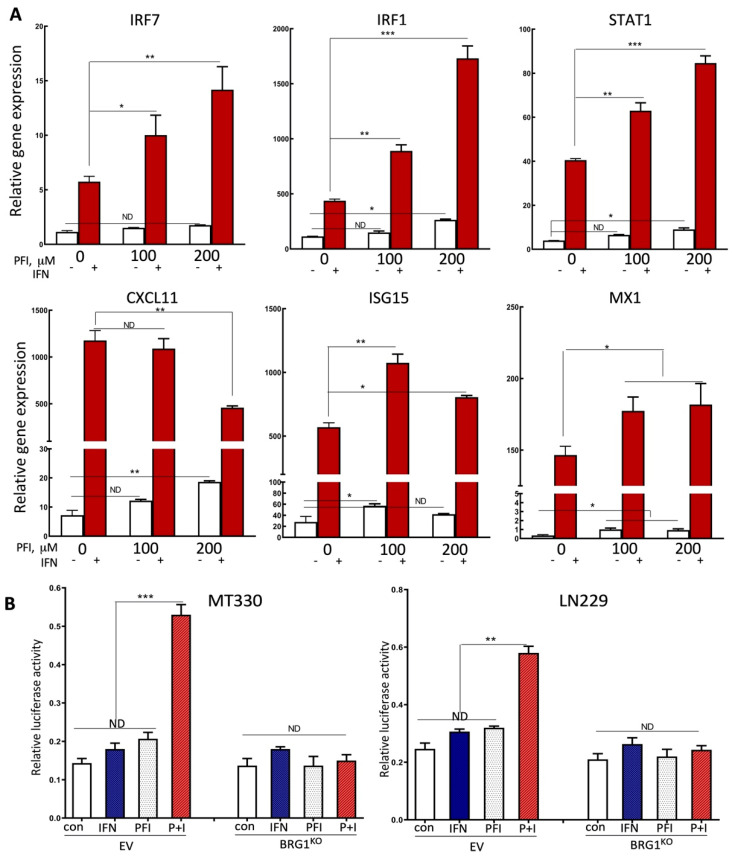
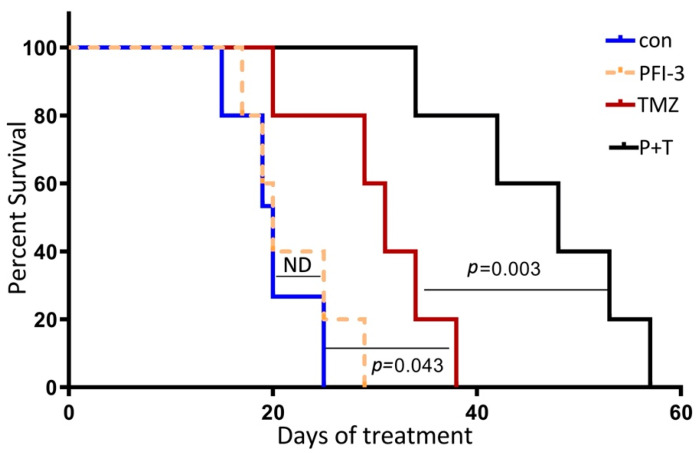
Glioblastoma (GBM) is a deadly and incurable brain cancer with limited therapeutic options. PFI-3 is a small-molecule bromodomain (BRD) inhibitor of the BRM/BRG1 subunits of the SWI/SNF chromatin remodeling complex. The objective of this study is to determine the efficacy of PFI-3 as a potential GBM therapy. We report that PFI-3 binds to these BRDs when expressed in GBM cells. PFI-3 markedly enhanced the antiproliferative and cell death-inducing effects of temozolomide (TMZ) in TMZ-sensitive GBM cells as well as overcame the chemoresistance of highly TMZ-resistant GBM cells. PFI-3 also altered gene expression in GBM and enhanced the basal and interferon-induced expression of a subset of interferon-responsive genes. Besides the effects of PFI-3 on GBM cells in vitro, we found that PFI-3 markedly potentiated the anticancer effect of TMZ in an intracranial GBM animal model, resulting in a marked increase in survival of animals bearing GBM tumors. Taken together, we identified the BRG1 and BRM subunits of SWI/SNF as novel targets in GBM and revealed the therapeutic potential of applying small molecule inhibitors of SWI/SNF to improve the clinical outcome in GBM using standard-of-care chemotherapy.
胶质母细胞瘤(GBM)是一种致命且无法治愈的脑癌,治疗选择有限。PFI-3是一种针对SWI/SNF染色质重塑复合体的BRM/BRG1亚基的小分子溴结构域(BRD)抑制剂。本研究的目的是确定PFI-3作为一种潜在的GBM治疗方法的疗效。我们报告称,当在GBM细胞中表达时,PFI-3会与这些BRD结合。PFI-3显著增强了替莫唑胺(TMZ)对TMZ敏感的GBM细胞的抗增殖和诱导细胞死亡的作用,同时克服了高度耐TMZ的GBM细胞的化疗耐药性。PFI-3还改变了GBM中的基因表达,并增强了一部分干扰素反应基因的基础表达以及干扰素诱导的表达。除了PFI-3在体外对GBM细胞的作用外,我们发现PFI-3在颅内GBM动物模型中显著增强了TMZ的抗癌作用,导致携带GBM肿瘤的动物存活率显著提高。综上所述,我们确定SWI/SNF的BRG1和BRM亚基是GBM中的新靶点,并揭示了应用SWI/SNF小分子抑制剂结合标准护理化疗来改善GBM临床结果的治疗潜力。