Department of Pathology and Laboratory Medicine (College of Medicine), and the Center for Cancer Research, University of Tennessee Health Science Center, Memphis, TN, USA.
Department of Pharmaceutical Sciences (College of Pharmacy), University of Tennessee Health Science Center, Memphis, TN, USA.
J Cell Mol Med. 2021 Mar;25(6):2956-2966. doi: 10.1111/jcmm.16330. Epub 2021 Feb 2.
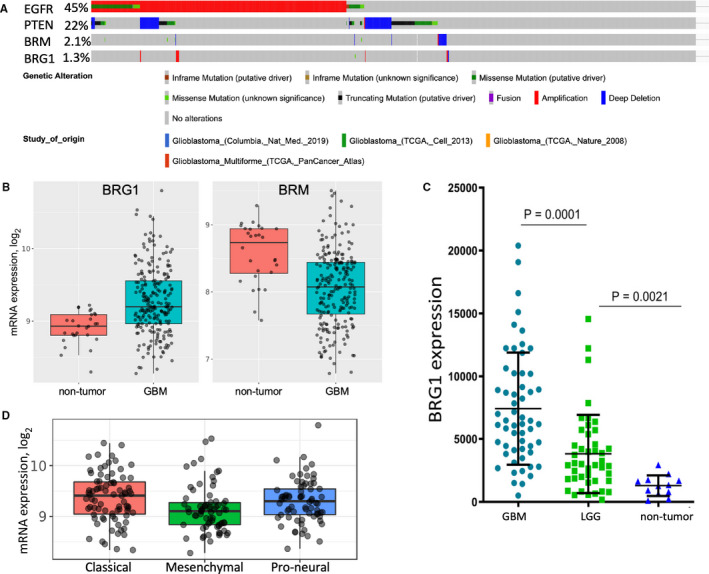
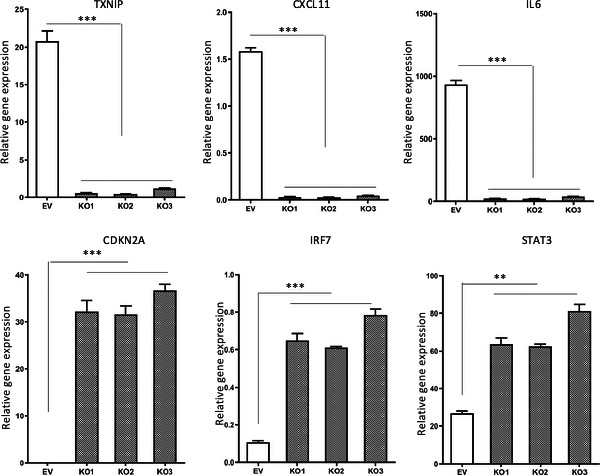
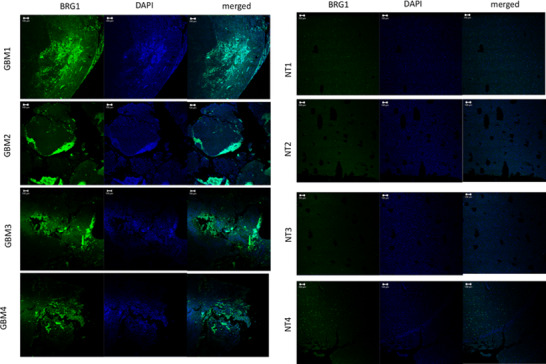
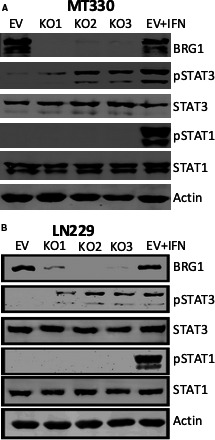
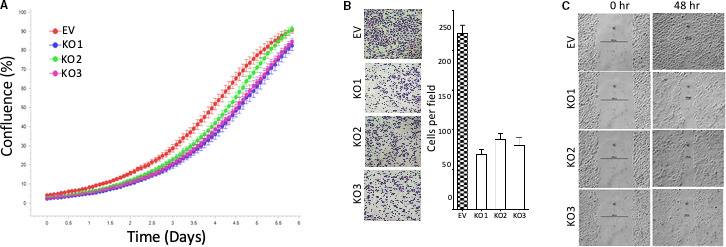
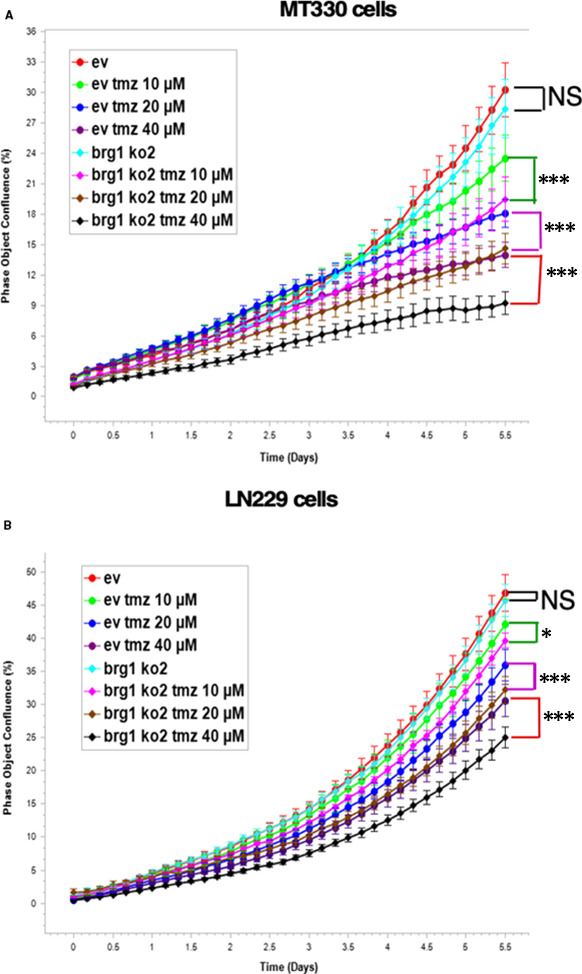
Glioblastoma multiforme (GBM) is an aggressive malignant brain tumour that is resistant to existing therapeutics. Identifying signalling pathways deregulated in GBM that can be targeted therapeutically is critical to improve the present dismal prognosis for GBM patients. In this report, we have identified that the BRG1 (Brahma-Related Gene-1) catalytic subunit of the SWI/SNF chromatin remodelling complex promotes the malignant phenotype of GBM cells. We found that BRG1 is ubiquitously expressed in tumour tissue from GBM patients, and high BRG1 expression levels are localized to specific brain tumour regions. Knockout (KO) of BRG1 by CRISPR-Cas9 gene editing had minimal effects on GBM cell proliferation, but significantly inhibited GBM cell migration and invasion. BRG1-KO also sensitized GBM cells to the anti-proliferative effects of the anti-cancer agent temozolomide (TMZ), which is used to treat GBM patients in the clinic, and selectively altered STAT3 tyrosine phosphorylation and gene expression. These results demonstrate that BRG-1 promotes invasion and migration, and decreases chemotherapy sensitivity, indicating that it functions in an oncogenic manner in GBM cells. Taken together, our findings suggest that targeting BRG1 in GBM may have therapeutic benefit in the treatment of this deadly form of brain cancer.
多形性胶质母细胞瘤(GBM)是一种具有侵袭性的恶性脑肿瘤,对现有疗法具有耐药性。鉴定在 GBM 中失调的信号通路,这些信号通路可以作为治疗靶点,对于改善 GBM 患者目前的悲惨预后至关重要。在本报告中,我们发现 SWI/SNF 染色质重塑复合物的 BRG1(Brahma-Related Gene-1)催化亚基促进了 GBM 细胞的恶性表型。我们发现 BRG1 在 GBM 患者的肿瘤组织中普遍表达,并且高 BRG1 表达水平定位于特定的脑肿瘤区域。使用 CRISPR-Cas9 基因编辑敲除 BRG1 对 GBM 细胞的增殖影响很小,但显著抑制了 GBM 细胞的迁移和侵袭。BRG1-KO 还使 GBM 细胞对用于治疗 GBM 患者的抗癌药物替莫唑胺(TMZ)的抗增殖作用更加敏感,并且选择性地改变了 STAT3 酪氨酸磷酸化和基因表达。这些结果表明 BRG-1 促进了侵袭和迁移,并降低了化疗敏感性,表明其在 GBM 细胞中以致癌方式发挥作用。总之,我们的研究结果表明,针对 GBM 中的 BRG1 可能对治疗这种致命形式的脑癌具有治疗益处。