• 文献检索
  • 文档翻译
  • 深度研究
  • 学术资讯
  • Suppr Zotero 插件Zotero 插件
  • 邀请有礼
  • 套餐&价格
  • 历史记录
应用&插件
Suppr Zotero 插件Zotero 插件浏览器插件Mac 客户端Windows 客户端微信小程序
定价
高级版会员购买积分包购买API积分包
服务
文献检索文档翻译深度研究API 文档MCP 服务
关于我们
关于 Suppr公司介绍联系我们用户协议隐私条款
关注我们

Suppr 超能文献

核心技术专利:CN118964589B侵权必究
粤ICP备2023148730 号-1Suppr @ 2026

文献检索

告别复杂PubMed语法,用中文像聊天一样搜索,搜遍4000万医学文献。AI智能推荐,让科研检索更轻松。

立即免费搜索

文件翻译

保留排版,准确专业,支持PDF/Word/PPT等文件格式,支持 12+语言互译。

免费翻译文档

深度研究

AI帮你快速写综述,25分钟生成高质量综述,智能提取关键信息,辅助科研写作。

立即免费体验

意大利案例研究:通过营养相关的移动应用程序评估营养摄入量。

An Italian Case Study for Assessing Nutrient Intake through Nutrition-Related Mobile Apps.

机构信息

CREA Council for Agricultural Research and Economics-Research Centre for Food and Nutrition, Via Ardeatina 546, 00178 Rome, Italy.

Independent Expert (Formerly Council for Agricultural Research and Economics), 00178 Rome, Italy.

出版信息

Nutrients. 2021 Aug 31;13(9):3073. doi: 10.3390/nu13093073.

DOI:10.3390/nu13093073
PMID:34578951
原文链接:https://pmc.ncbi.nlm.nih.gov/articles/PMC8465951/
Abstract

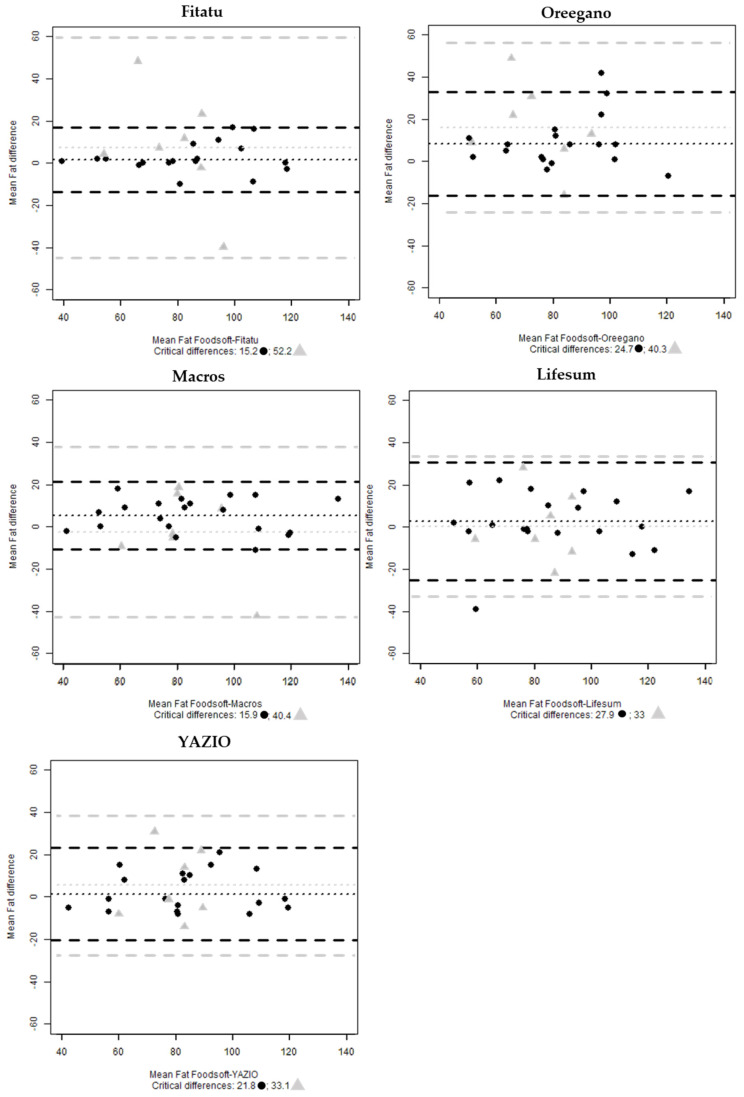
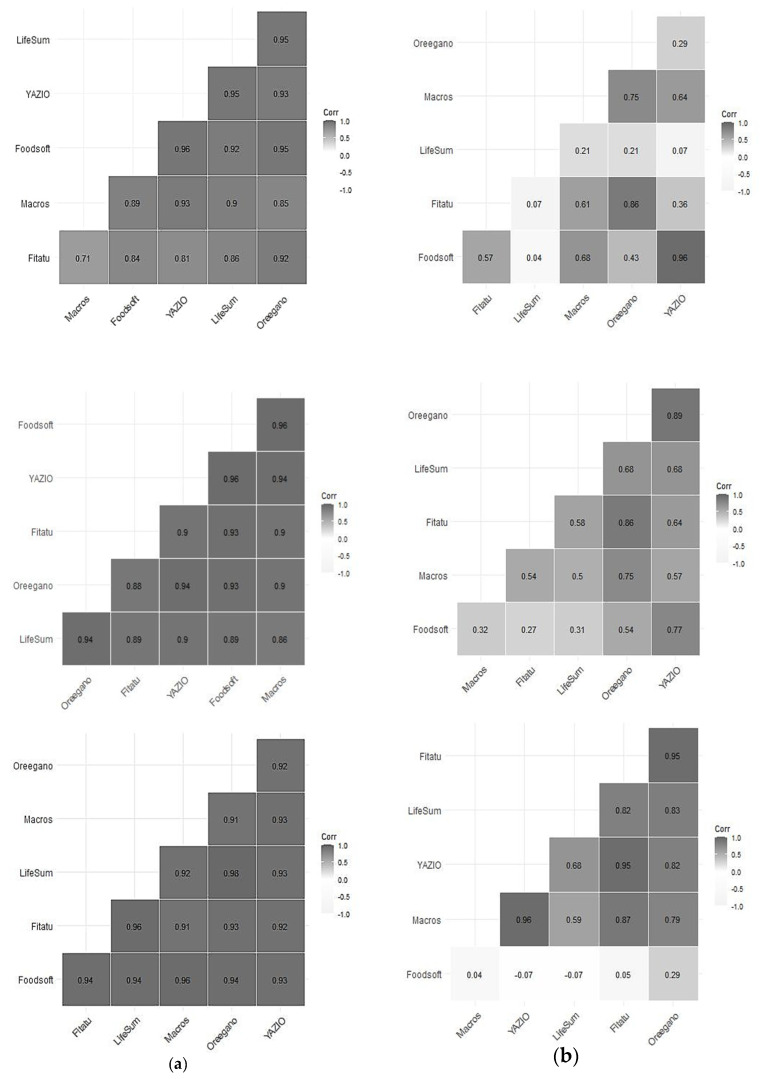
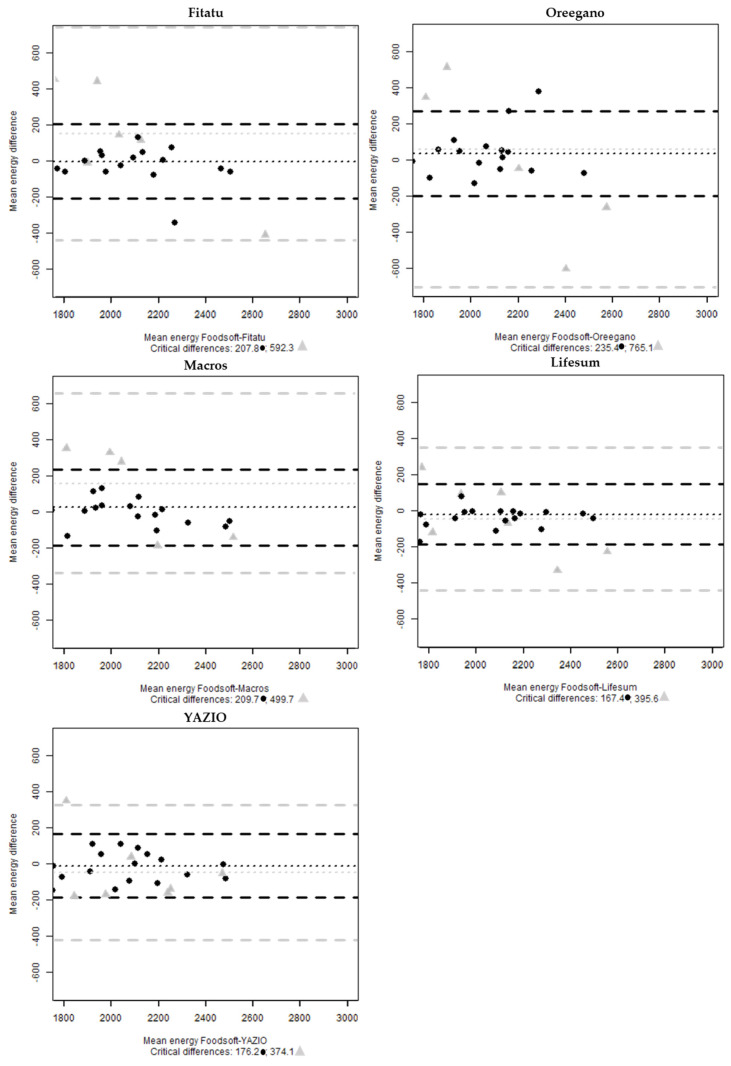
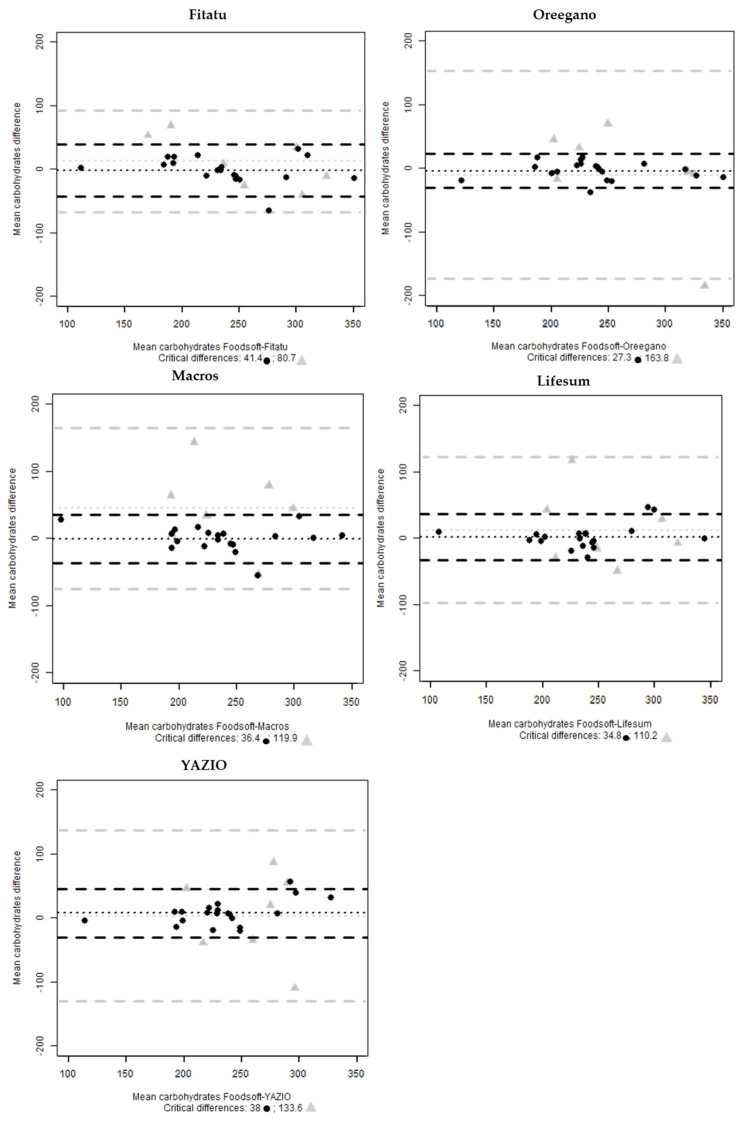
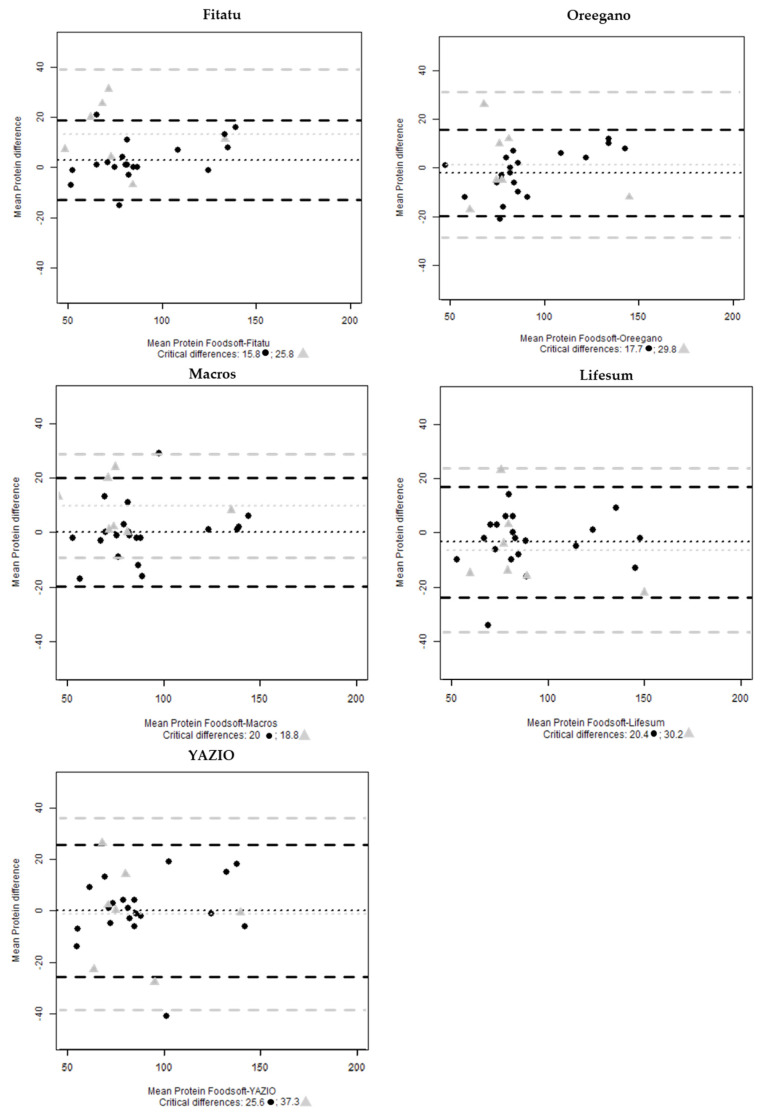
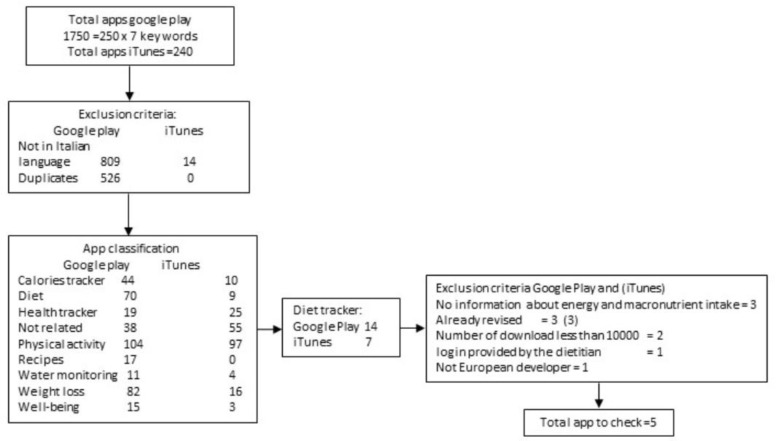
National food consumption surveys are crucial for monitoring the nutritional status of individuals, defining nutrition policies, estimating dietary exposure, and assessing the environmental impact of the diet. The methods for conducting them are time and resource-consuming, so they are usually carried out after extended periods of time, which does not allow for timely monitoring of any changes in the population's dietary patterns. This study aims to compare the results of nutrition-related mobile apps that are most popular in Italy, with data obtained with the dietary software Foodsoft 1.0, which was recently used in the Italian national dietary survey IV SCAI. The apps considered in this study were selected according to criteria, such as popularity (downloads > 10,000); Italian language; input characteristics (daily dietary recording ability); output features (calculation of energy and macronutrients associated with consumption), etc. 415 apps in Google Play and 226 in the iTunes Store were examined, then the following five apps were selected: YAZIO, Lifesum, Oreegano, Macro and Fitatu. Twenty 24-hour recalls were extracted from the IV SCAI database and inputted into the apps. Energy and macronutrient intake data were compared with Foodsoft 1.0 output. Good agreement was found between the selected apps and Foodsoft 1.0 (high correlation index), and no significant differences were found in the mean values of energy and macronutrients, except for fat intakes. In conclusion, the selected apps could be a suitable tool for assessing dietary intake.

摘要

全国性食物消费调查对于监测个体的营养状况、制定营养政策、估计饮食暴露情况以及评估饮食对环境的影响至关重要。开展这些调查的方法既费时又费资源,因此通常在较长时间后进行,这使得无法及时监测人口饮食模式的任何变化。本研究旨在比较在意大利最受欢迎的与营养相关的移动应用程序的结果,以及最近在意大利全国饮食调查 IV SCAI 中使用的饮食软件 Foodsoft 1.0 获得的数据。本研究中考虑的应用程序是根据以下标准选择的,例如流行度(下载量>10,000);意大利语;输入特征(每日饮食记录能力);输出特征(与消费相关的能量和宏量营养素的计算)等。在 Google Play 中检查了 415 个应用程序,在 iTunes Store 中检查了 226 个应用程序,然后选择了以下五个应用程序:YAZIO、Lifesum、Oreegano、Macro 和 Fitatu。从 IV SCAI 数据库中提取了 20 个 24 小时回忆,并将其输入到应用程序中。将能量和宏量营养素摄入量数据与 Foodsoft 1.0 的输出进行比较。所选应用程序与 Foodsoft 1.0 之间存在良好的一致性(高相关指数),并且除了脂肪摄入量外,能量和宏量营养素的平均值没有发现显著差异。总之,所选的应用程序可以作为评估饮食摄入的合适工具。
https://cdn.ncbi.nlm.nih.gov/pmc/blobs/60c5/8465951/1af8ac091597/nutrients-13-03073-g006.jpg
https://cdn.ncbi.nlm.nih.gov/pmc/blobs/60c5/8465951/c851c29942e3/nutrients-13-03073-g001.jpg
https://cdn.ncbi.nlm.nih.gov/pmc/blobs/60c5/8465951/6248ebdeeb90/nutrients-13-03073-g002.jpg
https://cdn.ncbi.nlm.nih.gov/pmc/blobs/60c5/8465951/8e8ff26324d3/nutrients-13-03073-g003.jpg
https://cdn.ncbi.nlm.nih.gov/pmc/blobs/60c5/8465951/c511ae4370ff/nutrients-13-03073-g004.jpg
https://cdn.ncbi.nlm.nih.gov/pmc/blobs/60c5/8465951/59e00e3c229c/nutrients-13-03073-g005.jpg
https://cdn.ncbi.nlm.nih.gov/pmc/blobs/60c5/8465951/1af8ac091597/nutrients-13-03073-g006.jpg
https://cdn.ncbi.nlm.nih.gov/pmc/blobs/60c5/8465951/c851c29942e3/nutrients-13-03073-g001.jpg
https://cdn.ncbi.nlm.nih.gov/pmc/blobs/60c5/8465951/6248ebdeeb90/nutrients-13-03073-g002.jpg
https://cdn.ncbi.nlm.nih.gov/pmc/blobs/60c5/8465951/8e8ff26324d3/nutrients-13-03073-g003.jpg
https://cdn.ncbi.nlm.nih.gov/pmc/blobs/60c5/8465951/c511ae4370ff/nutrients-13-03073-g004.jpg
https://cdn.ncbi.nlm.nih.gov/pmc/blobs/60c5/8465951/59e00e3c229c/nutrients-13-03073-g005.jpg
https://cdn.ncbi.nlm.nih.gov/pmc/blobs/60c5/8465951/1af8ac091597/nutrients-13-03073-g006.jpg

相似文献

1
An Italian Case Study for Assessing Nutrient Intake through Nutrition-Related Mobile Apps.意大利案例研究:通过营养相关的移动应用程序评估营养摄入量。
Nutrients. 2021 Aug 31;13(9):3073. doi: 10.3390/nu13093073.
2
Low Comparability of Nutrition-Related Mobile Apps against the Polish Reference Method-A Validity Study.营养相关移动应用程序与波兰参考方法的可比性低——一项有效性研究。
Nutrients. 2021 Aug 20;13(8):2868. doi: 10.3390/nu13082868.
3
Popular Nutrition-Related Mobile Apps: A Feature Assessment.热门营养相关移动应用程序:功能评估。
JMIR Mhealth Uhealth. 2016 Aug 1;4(3):e85. doi: 10.2196/mhealth.5846.
4
Accuracy of applications to monitor food intake: Evaluation by comparison with 3-d food diary.应用程序监测食物摄入量的准确性:与 3 天食物日记比较评估。
Nutrition. 2021 Apr;84:111018. doi: 10.1016/j.nut.2020.111018. Epub 2020 Sep 10.
5
Assessment of the accuracy of nutrient calculations of five popular nutrition tracking applications.五种流行的营养追踪应用程序的营养素计算准确性评估。
Public Health Nutr. 2018 Jun;21(8):1495-1502. doi: 10.1017/S1368980018000393. Epub 2018 Mar 14.
6
Popular Nutrition-Related Mobile Apps: An Agreement Assessment Against a UK Reference Method.热门营养相关移动应用程序:对英国参考方法的协议评估。
JMIR Mhealth Uhealth. 2019 Feb 20;7(2):e9838. doi: 10.2196/mhealth.9838.
7
Evaluation of the Ability of Diet-Tracking Mobile Applications to Estimate Energy and Nutrient Intake in Japan.评估日本饮食追踪移动应用程序估算能量和营养素摄入量的能力。
Nutrients. 2020 Oct 29;12(11):3327. doi: 10.3390/nu12113327.
8
User-documented food consumption data from publicly available apps: an analysis of opportunities and challenges for nutrition research.用户记录的来自公开可用应用程序的食物消费数据:营养研究的机会和挑战分析。
Nutr J. 2018 Jun 9;17(1):59. doi: 10.1186/s12937-018-0366-6.
9
Comparison of Energy and Macronutrients Between a Mobile Application and a Conventional Dietary Assessment Method in Korea.韩国移动应用程序与传统膳食评估方法的能量和宏量营养素比较。
J Acad Nutr Diet. 2022 Nov;122(11):2127-2133.e4. doi: 10.1016/j.jand.2022.04.007. Epub 2022 Apr 14.
10
The Effects of Dietary Mobile Apps on Nutritional Outcomes in Adults with Chronic Diseases: A Systematic Review and Meta-Analysis.膳食移动应用程序对慢性病成人营养结局的影响:系统评价和荟萃分析。
J Acad Nutr Diet. 2019 Apr;119(4):626-651. doi: 10.1016/j.jand.2018.11.010. Epub 2019 Jan 25.

引用本文的文献

1
Effects of concurrent heat and hypoxic training on cycling anaerobic capacity in men.同时进行热训练和低氧训练对男性自行车无氧能力的影响。
Sci Rep. 2024 Oct 2;14(1):22879. doi: 10.1038/s41598-024-74686-w.
2
Digital applications for diet monitoring, planning, and precision nutrition for citizens and professionals: a state of the art.面向公民和专业人士的饮食监测、规划及精准营养数字应用:现状
Nutr Rev. 2025 Feb 1;83(2):e574-e601. doi: 10.1093/nutrit/nuae035.
3
Stance4Health Nutritional APP: A Path to Personalized Smart Nutrition.立场健康营养 APP:个性化智能营养之路。

本文引用的文献

1
Eating Habits during the COVID-19 Lockdown in Italy: The Nutritional and Lifestyle Side Effects of the Pandemic.意大利封城期间的饮食习惯:疫情带来的营养和生活方式影响。
Nutrients. 2021 Jun 30;13(7):2279. doi: 10.3390/nu13072279.
2
Changes in Lifestyle and Dietary Habits during COVID-19 Lockdown in Italy: Results of an Online Survey.《意大利 COVID-19 封锁期间生活方式和饮食习惯的变化:一项在线调查的结果》。
Nutrients. 2021 Jun 3;13(6):1923. doi: 10.3390/nu13061923.
3
The Age of Artificial Intelligence: Use of Digital Technology in Clinical Nutrition.
Nutrients. 2023 Jan 5;15(2):276. doi: 10.3390/nu15020276.
4
Validating Accuracy of a Mobile Application against Food Frequency Questionnaire on Key Nutrients with Modern Diets for mHealth Era.验证移动应用程序在关键营养素方面与现代饮食的食物频率问卷的准确性,以适应移动医疗时代。
Nutrients. 2022 Jan 26;14(3):537. doi: 10.3390/nu14030537.
人工智能时代:数字技术在临床营养中的应用
Curr Surg Rep. 2021;9(7):20. doi: 10.1007/s40137-021-00297-3. Epub 2021 Jun 8.
4
Changes in physical activity levels, eating habits and psychological well-being during the Italian COVID-19 pandemic lockdown: Impact of socio-demographic factors on the Florentine academic population.意大利新冠疫情封锁期间身体活动水平、饮食习惯和心理健康的变化:社会人口因素对佛罗伦萨学术群体的影响
PLoS One. 2021 May 27;16(5):e0252395. doi: 10.1371/journal.pone.0252395. eCollection 2021.
5
The impact of COVID-19 confinement on the eating habits and lifestyle changes: A cross sectional study.2019冠状病毒病隔离措施对饮食习惯和生活方式改变的影响:一项横断面研究。
Food Sci Nutr. 2021 Feb 16;9(4):2105-2113. doi: 10.1002/fsn3.2179. eCollection 2021 Apr.
6
A Dietary Assessment Training Course Path: The Italian IV SCAI Study on Children Food Consumption.膳食评估培训课程路径:意大利 IV SCAI 儿童食物消费研究。
Front Public Health. 2021 Mar 12;9:590315. doi: 10.3389/fpubh.2021.590315. eCollection 2021.
7
The Impact of Lockdown During the COVID-19 Outbreak on Dietary Habits in Various Population Groups: A Scoping Review.新冠疫情期间封锁措施对不同人群饮食习惯的影响:一项范围综述
Front Nutr. 2021 Mar 4;8:626432. doi: 10.3389/fnut.2021.626432. eCollection 2021.
8
Patterns of Change in Dietary Habits and Physical Activity during Lockdown in Spain Due to the COVID-19 Pandemic.由于 COVID-19 大流行,西班牙封锁期间的饮食习惯和身体活动变化模式。
Nutrients. 2021 Jan 21;13(2):300. doi: 10.3390/nu13020300.
9
Evaluation of the Ability of Diet-Tracking Mobile Applications to Estimate Energy and Nutrient Intake in Japan.评估日本饮食追踪移动应用程序估算能量和营养素摄入量的能力。
Nutrients. 2020 Oct 29;12(11):3327. doi: 10.3390/nu12113327.
10
What Healthcare Professionals Think of "Nutrition & Diet" Apps: An International Survey.《医疗专业人士如何看待“营养与饮食”类应用程序:一项国际调查》。
Nutrients. 2020 Jul 24;12(8):2214. doi: 10.3390/nu12082214.