Cancer Surveillance Branch, International Agency for Research on Cancer, CEDEX 08, 69372 Lyon, France.
Nutrition and Metabolism Branch, International Agency for Research on Cancer, CEDEX 08, 69372 Lyon, France.
Nutrients. 2021 Sep 11;13(9):3173. doi: 10.3390/nu13093173.
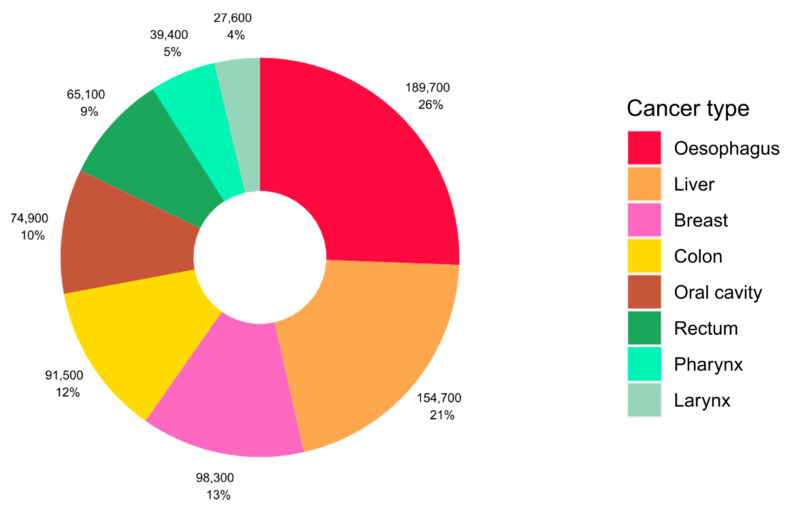
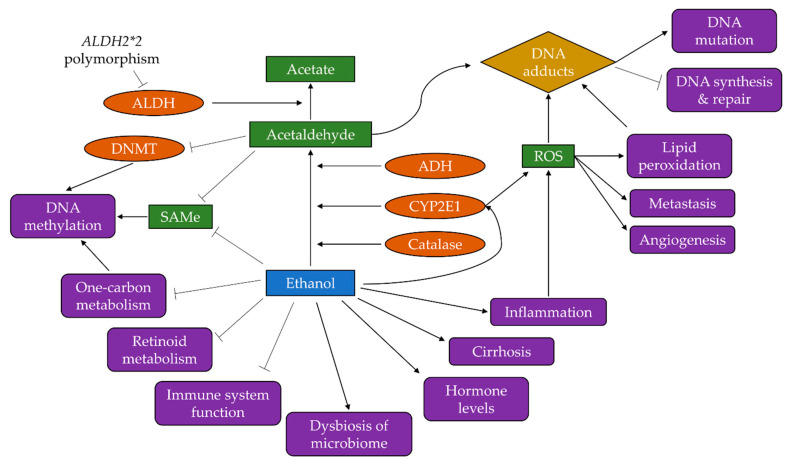
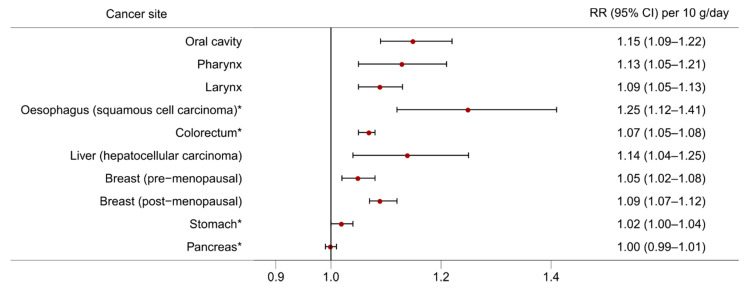
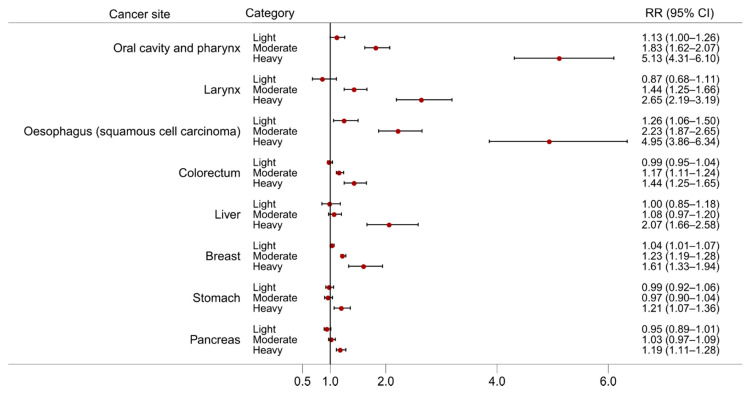
Approximately 4% of cancers worldwide are caused by alcohol consumption. Drinking alcohol increases the risk of several cancer types, including cancers of the upper aerodigestive tract, liver, colorectum, and breast. In this review, we summarise the epidemiological evidence on alcohol and cancer risk and the mechanistic evidence of alcohol-mediated carcinogenesis. There are several mechanistic pathways by which the consumption of alcohol, as ethanol, is known to cause cancer, though some are still not fully understood. Ethanol's metabolite acetaldehyde can cause DNA damage and block DNA synthesis and repair, whilst both ethanol and acetaldehyde can disrupt DNA methylation. Ethanol can also induce inflammation and oxidative stress leading to lipid peroxidation and further DNA damage. One-carbon metabolism and folate levels are also impaired by ethanol. Other known mechanisms are discussed. Further understanding of the carcinogenic properties of alcohol and its metabolites will inform future research, but there is already a need for comprehensive alcohol control and cancer prevention strategies to reduce the burden of cancer attributable to alcohol.
全球约有 4%的癌症是由饮酒导致的。饮酒会增加多种癌症的风险,包括上呼吸道消化道癌、肝癌、结肠癌和乳腺癌。在这篇综述中,我们总结了酒精与癌症风险的流行病学证据,以及酒精致癌的机制证据。酒精(以乙醇形式存在)致癌的机制有几种途径,虽然有些途径尚未完全了解,但乙醇的代谢物乙醛会导致 DNA 损伤并阻断 DNA 的合成和修复,而乙醇和乙醛都可以破坏 DNA 甲基化。乙醇还可以引发炎症和氧化应激,导致脂质过氧化和进一步的 DNA 损伤。乙醇还会损害一碳代谢和叶酸水平。其他已知的机制也在讨论中。进一步了解酒精及其代谢物的致癌特性将为未来的研究提供信息,但目前已经需要制定全面的酒精控制和癌症预防策略,以减轻与酒精有关的癌症负担。