Department of Life and Nanopharmaceutical Sciences, Graduate School, Kyung Hee University, 26, Kyungheedae-ro, Dongdaemun-gu, Seoul 02447, Korea.
Holistic Bio Co., Ltd., Seongnam 13494, Korea.
Nutrients. 2021 Sep 15;13(9):3209. doi: 10.3390/nu13093209.
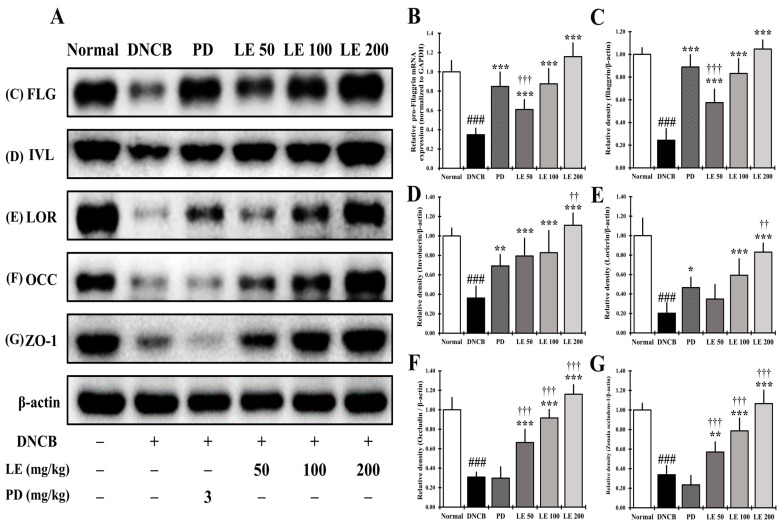
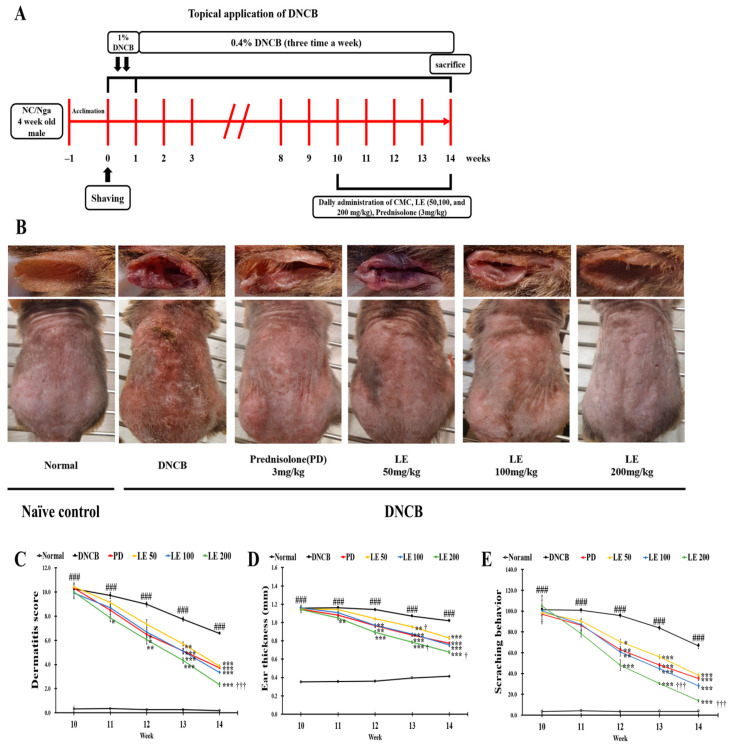
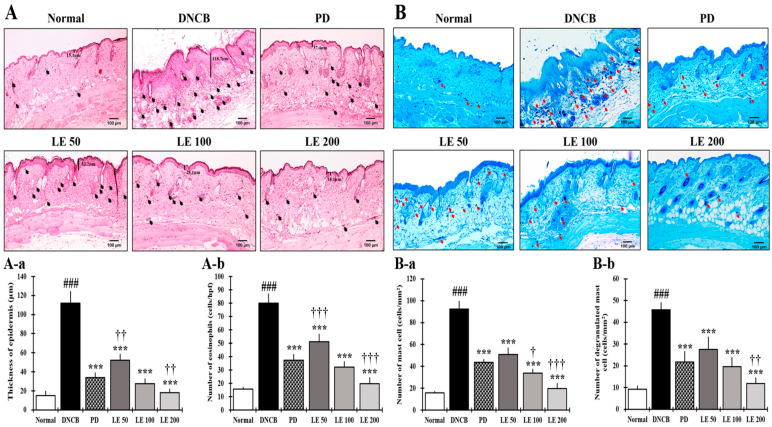
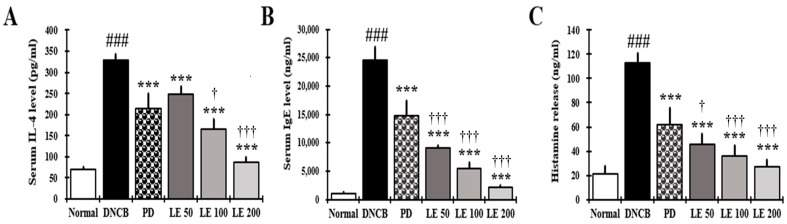
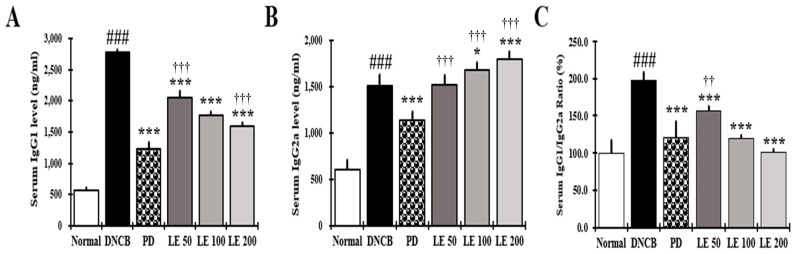
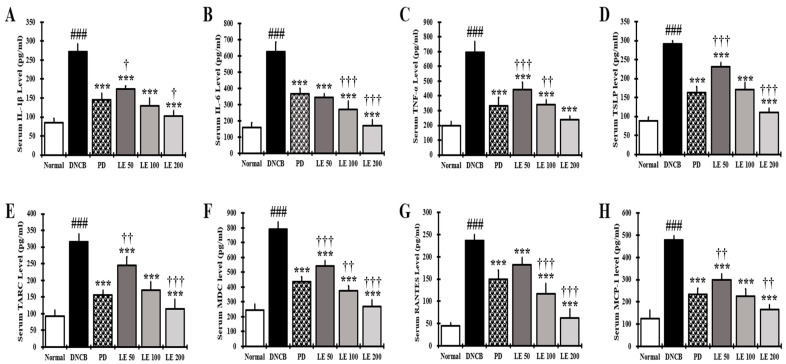
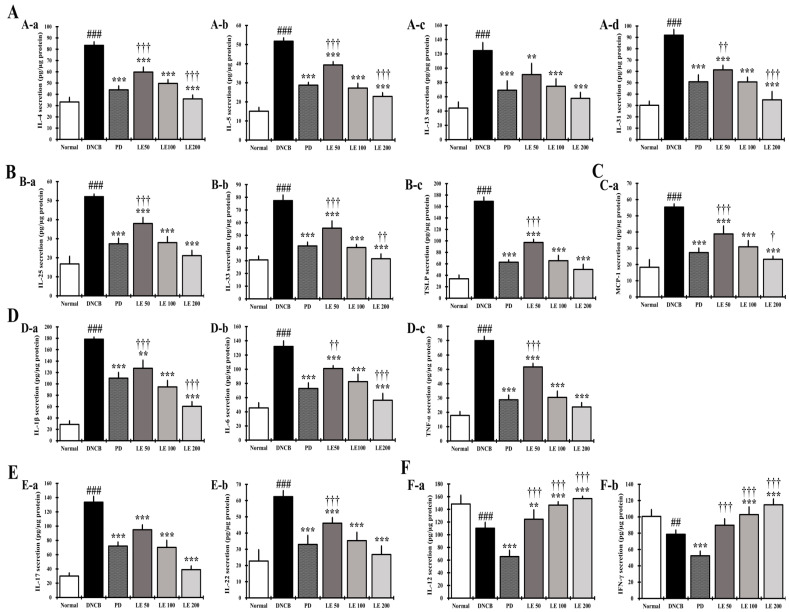
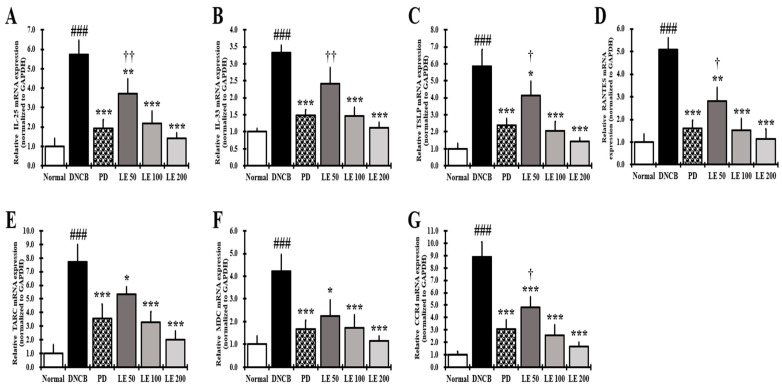
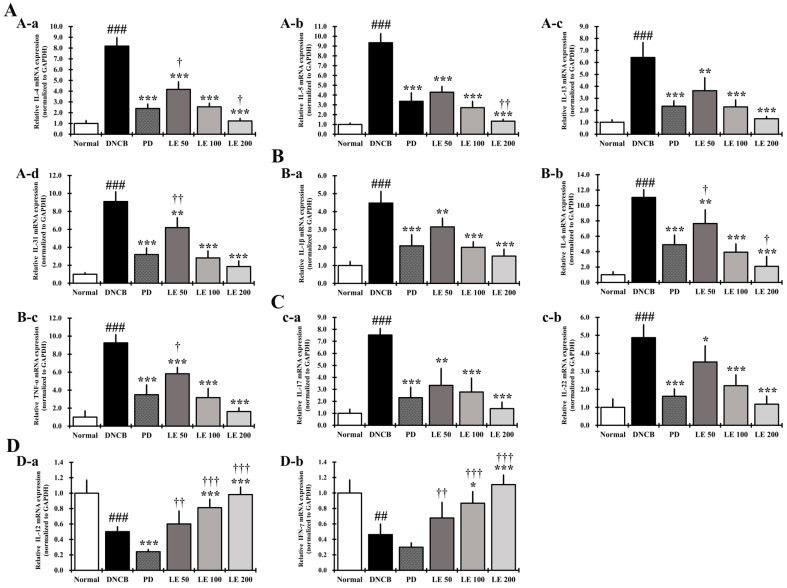
The incidence of atopic dermatitis (AD), a disease characterized by an abnormal immune balance and skin barrier function, has increased rapidly in developed countries. This study investigated the anti-atopic effect of (LE) using NC/Nga mice induced by 2,4-dinitrochlorobenzene. LE reduced AD clinical symptoms, including inflammatory cell infiltration, epidermal thickness, ear thickness, and scratching behavior, in the mice. Additionally, LE reduced serum IgE and histamine levels, and restored the T helper (Th) 1/Th2 immune balance through regulation of the IgG1/IgG2a ratio. LE also reduced the levels of AD-related cytokines and chemokines, including interleukin (IL)-1β, IL-4, IL-6, tumor necrosis factor-α (TNF-α), thymic stromal lymphopoietin, thymus and activation-regulated chemokine, macrophage-derived chemokine, regulated on activation, normal T cell expressed and secreted, and monocyte chemoattractant protein-1 in the serum. Moreover, LE modulated AD-related cytokines and chemokines expressed and secreted by Th1, Th2, Th17, and Th22 cells in the dorsal skin and splenocytes. Furthermore, LE restored skin barrier function by increasing pro-filaggrin gene expression and levels of skin barrier-related proteins filaggrin, involucrin, loricrin, occludin, and zonula occludens-1. These results suggest that LE is a potential therapeutic agent that can alleviate AD by modulating Th1/Th2 immune balance and restoring skin barrier function.
特应性皮炎(AD)是一种以异常免疫平衡和皮肤屏障功能障碍为特征的疾病,在发达国家的发病率迅速上升。本研究使用 2,4-二硝基氯苯诱导的 NC/Nga 小鼠,研究了 (LE) 的抗特应性皮炎作用。LE 减轻了小鼠的 AD 临床症状,包括炎症细胞浸润、表皮厚度、耳厚度和搔抓行为。此外,LE 降低了血清 IgE 和组胺水平,并通过调节 IgG1/IgG2a 比值恢复了辅助性 T 细胞(Th)1/Th2 免疫平衡。LE 还降低了 AD 相关细胞因子和趋化因子的水平,包括白细胞介素(IL)-1β、IL-4、IL-6、肿瘤坏死因子-α(TNF-α)、胸腺基质淋巴细胞生成素、胸腺和激活调节趋化因子、巨噬细胞衍生趋化因子、活化正常 T 细胞表达和分泌、单核细胞趋化蛋白-1。此外,LE 调节了背部皮肤和脾细胞中 Th1、Th2、Th17 和 Th22 细胞表达和分泌的 AD 相关细胞因子和趋化因子。此外,LE 通过增加前丝聚合蛋白基因表达和皮肤屏障相关蛋白丝聚合蛋白、兜甲蛋白、层粘连蛋白、闭合蛋白和闭合蛋白-1 的水平,恢复了皮肤屏障功能。这些结果表明,LE 是一种潜在的治疗药物,可通过调节 Th1/Th2 免疫平衡和恢复皮肤屏障功能来缓解 AD。