Kakabouki Ioanna, Mavroeidis Antonios, Tataridas Alexandros, Roussis Ioannis, Katsenios Nikolaos, Efthimiadou Aspasia, Tigka Evangelia L, Karydogianni Stella, Zisi Charikleia, Folina Antigolena, Bilalis Dimitrios
Laboratory of Agronomy, Department of Crop Science, Agricultural University of Athens, 11855 Athens, Greece.
Institute of Soil and Water Resources, Department of Soil Science of Athens, Hellenic Agricultural Organization DEMETER, Sofokli Venizelou 1, 14123 Lykovrissi, Greece.
Plants (Basel). 2021 Aug 24;10(9):1758. doi: 10.3390/plants10091758.
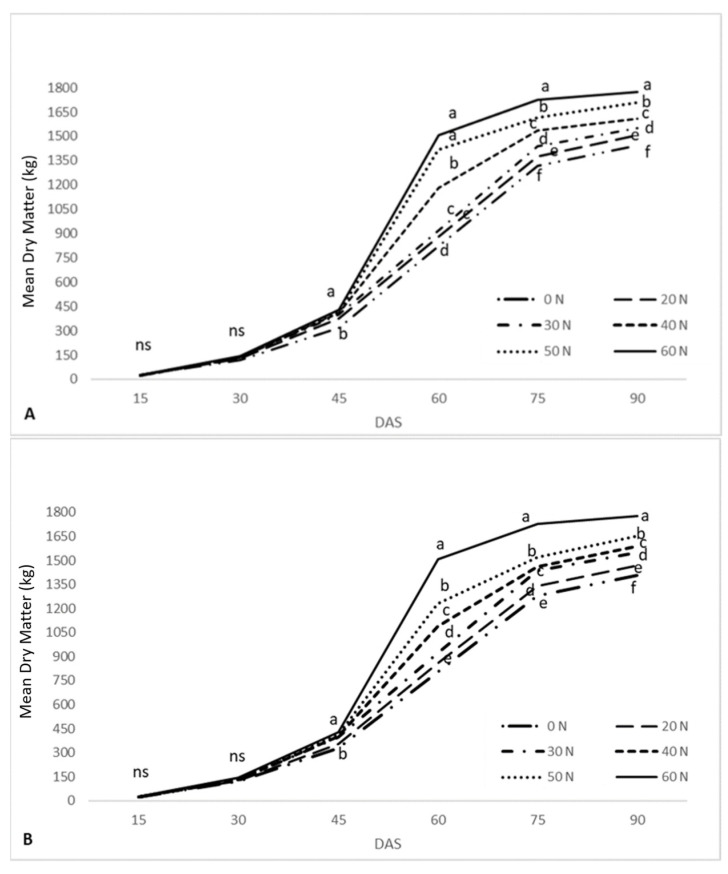
An increasing interest has been reported regarding the reintroduction of flax in the Mediterranean region. The aim of this present study was to evaluate the effects of nitrogen (N) fertilization on the performance of flax cv. Everest, under Mediterranean climate conditions. A two-year study was carried out in 2018-2019, in Western Greece. The experiment was set-up in a randomized complete block design with four replications and six treatments of different N fertilization rates (0, 20, 30, 40, 50, and 60 kg N ha). Measurements included plant biomass, the leaf area index (LAI), the yield, and the Growth Degree Days (GDDs) required for full seed maturity. The N uptake of flax was also evaluated utilizing the Nitrogen Harvesting (NHI) and Nitrogen Utilization Efficiency (NUtE) indices. Although the highest fertilization rate (60N) increased the yield by 35.4% (2018) and 23.1% (2019), a GDDs and N indices assessment revealed that it noted the lowest efficiency and may lead to significant yield losses, as it significantly prolonged the crop cycle. On the contrary, even though fertilization rates of 20 and 30 kg N ha increased the yield only by 7% and 15% (on average), they were more efficient, and prolonged the crop cycle less (compared to 60N).
据报道,地中海地区对重新引入亚麻的兴趣日益浓厚。本研究的目的是评估氮肥施用对亚麻品种Everest在地中海气候条件下生长性能的影响。2018 - 2019年在希腊西部进行了为期两年的研究。试验采用随机完全区组设计,重复四次,设置六种不同氮肥施用量(0、20、30、40、50和60千克氮/公顷)的处理。测量指标包括植物生物量、叶面积指数(LAI)、产量以及种子完全成熟所需的生长度日(GDDs)。还利用氮收获指数(NHI)和氮利用效率指数(NUtE)评估了亚麻的氮吸收情况。尽管最高施肥量(60N)使产量在2018年提高了35.4%,在2019年提高了23.1%,但对生长度日和氮指数的评估表明,其效率最低,可能导致显著的产量损失,因为它显著延长了作物生长周期。相反,尽管20千克氮/公顷和30千克氮/公顷的施肥量仅使产量平均提高了7%和15%,但它们效率更高,对作物生长周期的延长也更少(与60N相比)。