Mugula Ben Belden, Kiboi Samuel Kuria, Kanya James Ireri, Egeru Anthony, Okullo Paul, Curto Manuel, Meimberg Harald
School of Biological Sciences, College of Biological and Physical Sciences, University of Nairobi, Nairobi P.O. Box 30197-00100, Kenya.
Department of Life and Physical Sciences, School of Natural Sciences, Bugema University, Kampala P.O. Box 6529, Uganda.
Plants (Basel). 2021 Aug 26;10(9):1780. doi: 10.3390/plants10091780.
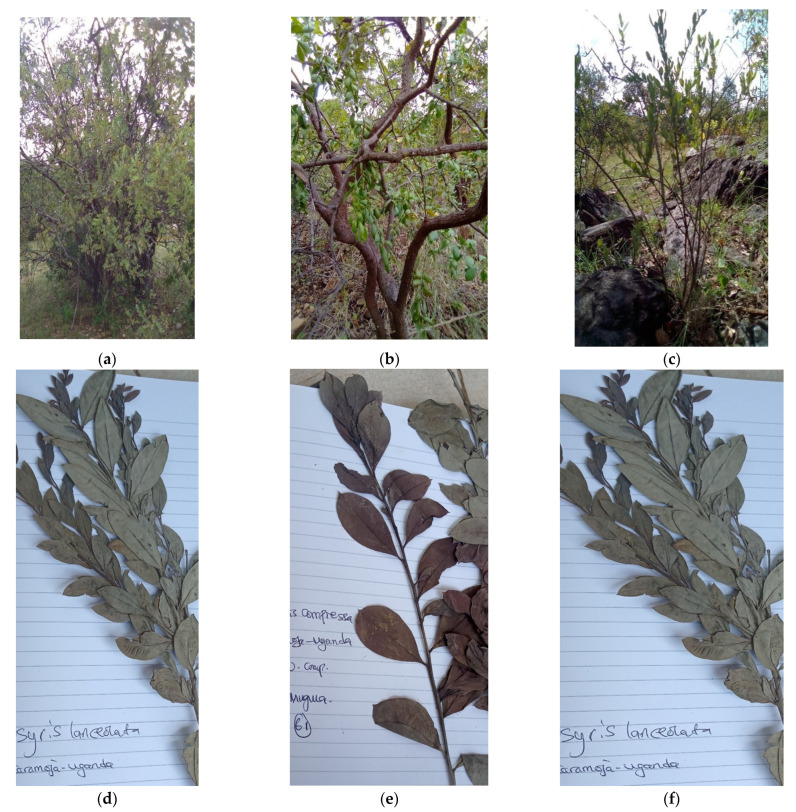
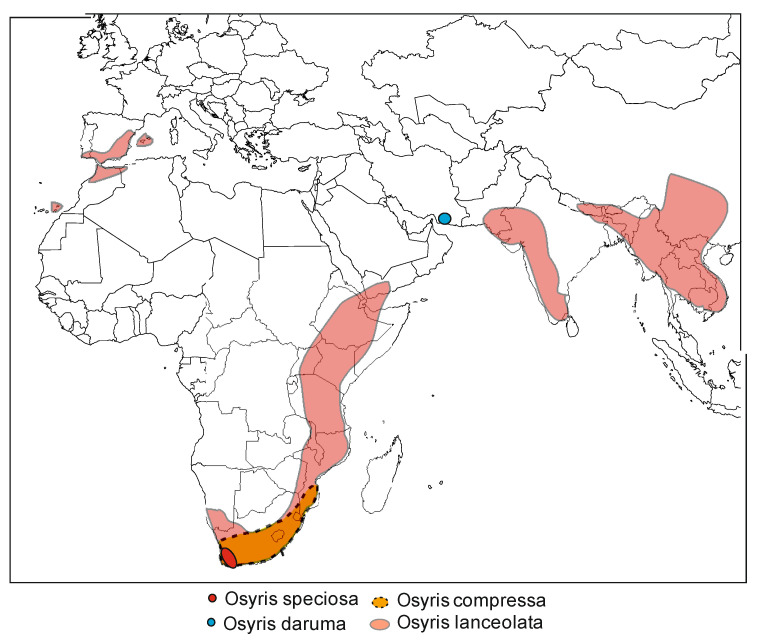
The increasing demand for ornamental, cosmetic and pharmaceutical products is driving exploitation of plant species globally. Sub-Saharan Africa harbours unique and valuable plant resources and is now a target of plant resource depletion. African Sandalwood ( a multi-purpose and drought-tolerant species, has seen increased exploitation for the last thirty years and is now declared endangered. Initiatives to conserve are not yet successful in Africa due to poor understanding of the species. This review surveys relevant research on the ecology, taxonomy, population dynamics, genetic diversity and ethnobotany of , and highlights gaps in the literature for further research. A scoping review of grey literature, scholarly papers and reports was applied with pre-determined criteria to screen relevant information. Review findings indicate is a globally distributed species with no identified center of origin. In Africa, it ranges from Algeria to Ethiopia and south to South Africa; in Europe it occurs in the Iberian Peninsula and Balearic Islands; in Asia from India to China, and also on Socotra. The species has a confusing taxonomy, with unresolved issues in nomenclature, country range distribution, extensive synonymisation and variation in growth form (shrub or tree). The species population is reported to be declining in Africa, but information on population dynamics across its entire range of distribution is anecdotal. Additionally, ecological factors influencing spatial distribution and survival of the species remain unknown. A variety of uses are reported for globally, including: cultural; medicinal and food; dye; perfumery; timber; ethnoveterinary and phytoremediation. Key research areas and implications for conservation of in Sub-Saharan Africa are proposed.
对观赏、化妆品和药品的需求不断增加,正推动着全球对植物物种的开发利用。撒哈拉以南非洲拥有独特而宝贵的植物资源,如今已成为植物资源枯竭的目标。非洲檀香(一种具有多种用途且耐旱的物种)在过去三十年中受到的开发利用不断增加,现已被宣布濒危。由于对该物种了解不足,非洲的保护举措尚未取得成功。本综述调查了有关非洲檀香的生态学、分类学、种群动态、遗传多样性和民族植物学的相关研究,并突出了文献中有待进一步研究的空白。采用预先确定的标准对灰色文献、学术论文和报告进行了范围综述,以筛选相关信息。综述结果表明,非洲檀香是一种全球分布的物种,尚未确定其起源中心。在非洲,它分布于从阿尔及利亚到埃塞俄比亚,南至南非;在欧洲,它出现在伊比利亚半岛和巴利阿里群岛;在亚洲,从印度到中国,以及索科特拉岛也有分布。该物种的分类学令人困惑,在命名、国家分布范围、广泛的同义词化以及生长形式(灌木或乔木)的变异等方面存在未解决的问题。据报道,该物种在非洲的种群数量正在下降,但关于其整个分布范围内种群动态的信息多为传闻。此外,影响该物种空间分布和生存的生态因素仍然未知。全球范围内报道了非洲檀香的多种用途,包括:文化用途;医药和食品用途;染料用途;香料用途;木材用途;民族兽医用途和植物修复用途。本文还提出了撒哈拉以南非洲地区非洲檀香保护的关键研究领域及意义。