Department of Pediatric Surgery, Union Hospital, Tongji Medical College, Huazhong University of Science and Technology, 1277 Jiefang Avenue, Wuhan, Hubei Province, 430022, People's Republic of China.
Clinical Center of Human Genomic Research, Union Hospital, Tongji Medical College, Huazhong University of Science and Technology, 1277 Jiefang Avenue, Wuhan, Hubei Province, 430022, People's Republic of China.
Mol Cancer. 2021 Sep 27;20(1):123. doi: 10.1186/s12943-021-01421-8.
Metabolic reprogramming sustains tumorigenesis and aggressiveness of neuroblastoma (NB), the most common extracranial malignancy in childhood, while underlying mechanisms and therapeutic approaches still remain elusive.
Circular RNAs (circRNAs) were validated by Sanger sequencing. Co-immunoprecipitation, mass spectrometry, chromatin immunoprecipitation (ChIP) sequencing, and RNA sequencing assays were applied to explore protein interaction and target genes. Gene expression regulation was observed by ChIP, dual-luciferase reporter, real-time quantitative RT-PCR, and western blot assays. Gain- and loss-of-function studies were performed to observe the impacts of circRNA-encoded protein and its partners on the lipid metabolism, mitochondrial activity, growth, invasion, and metastasis of NB cells.
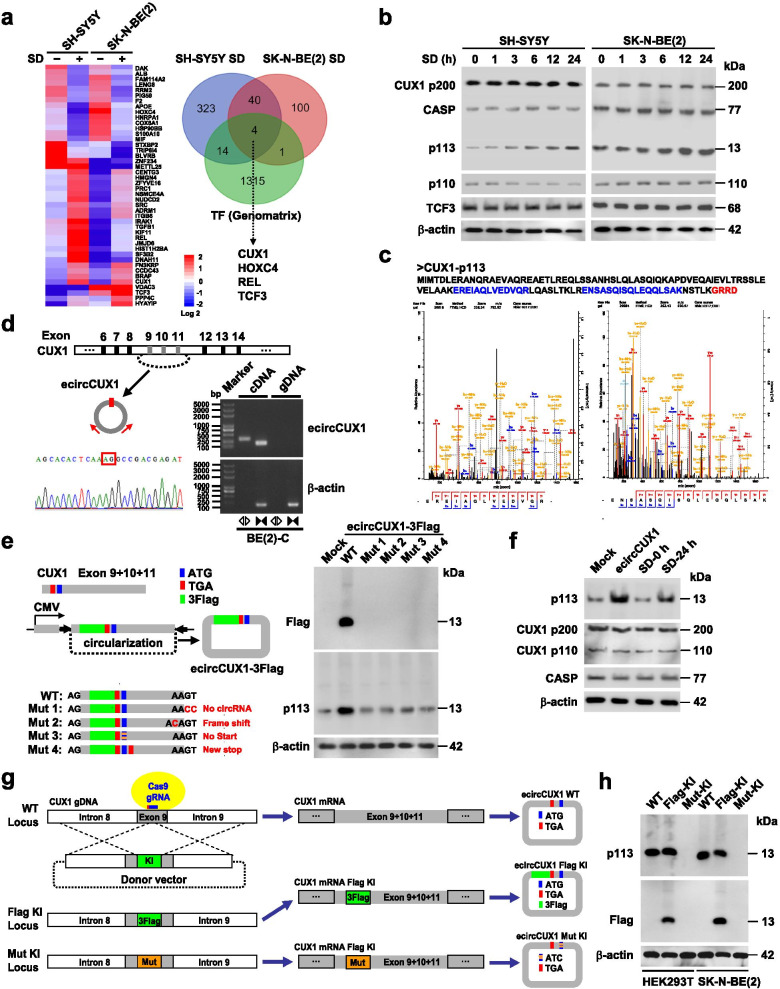
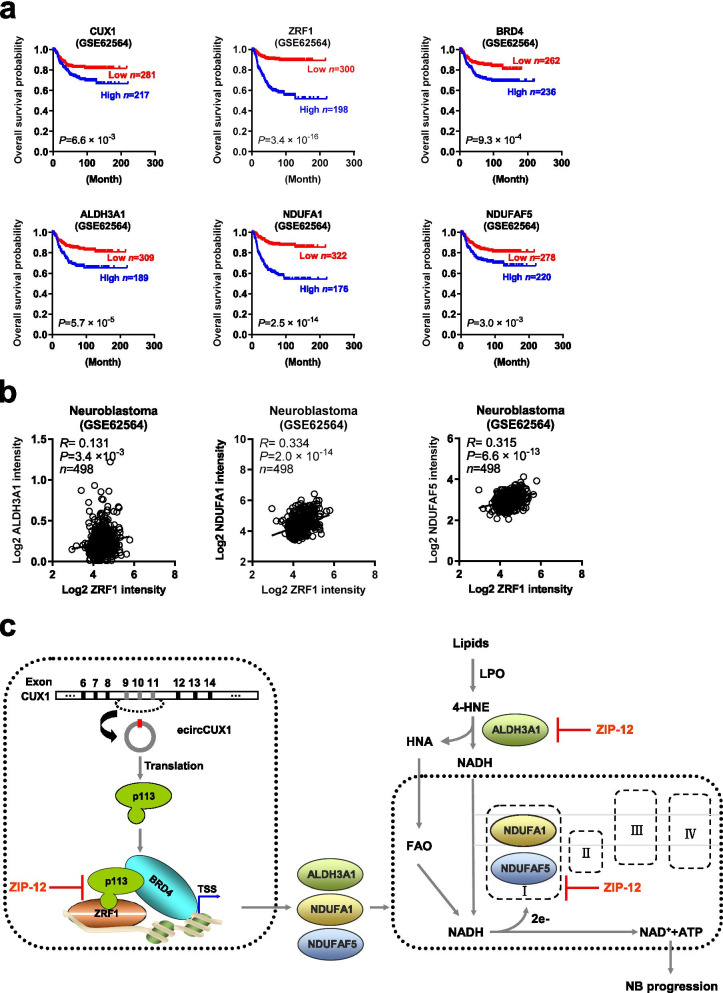
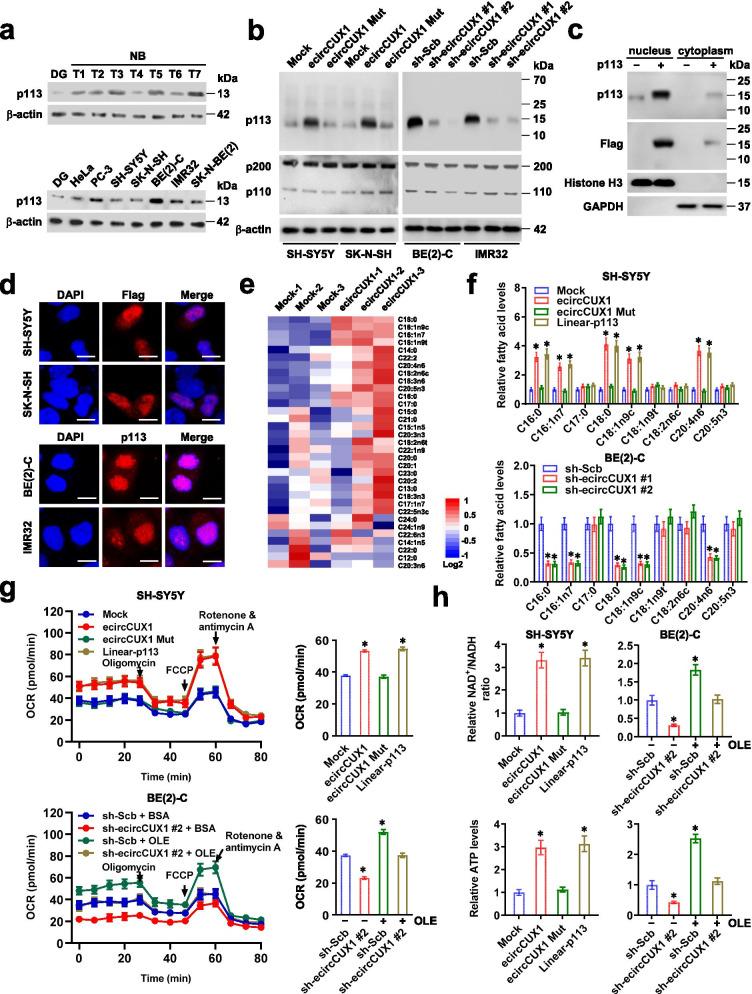
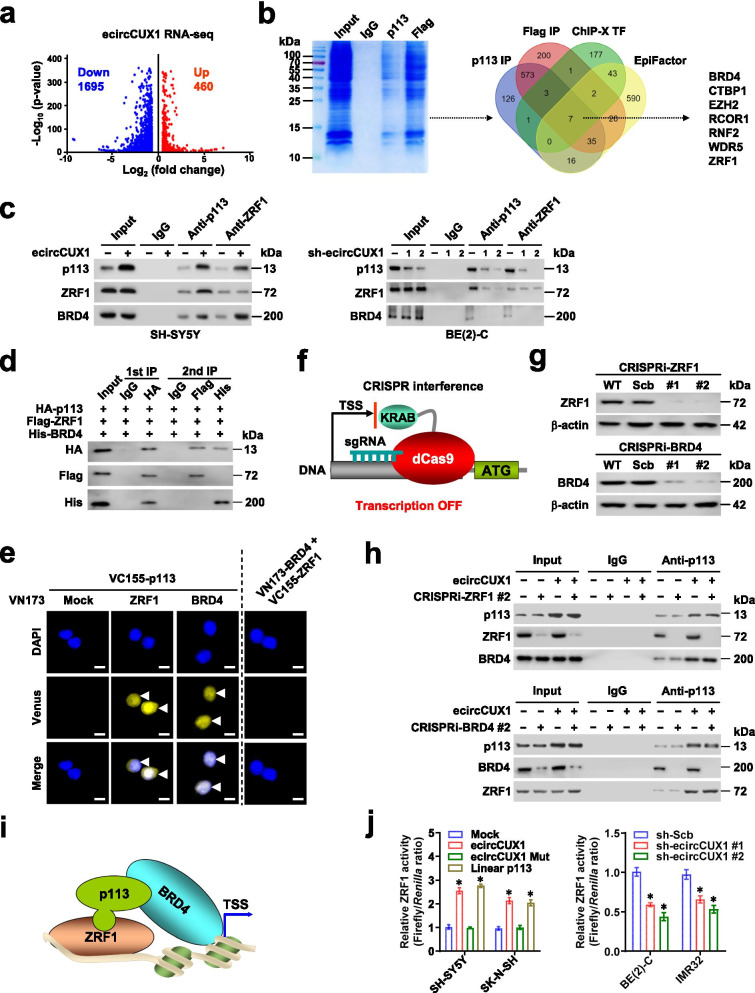
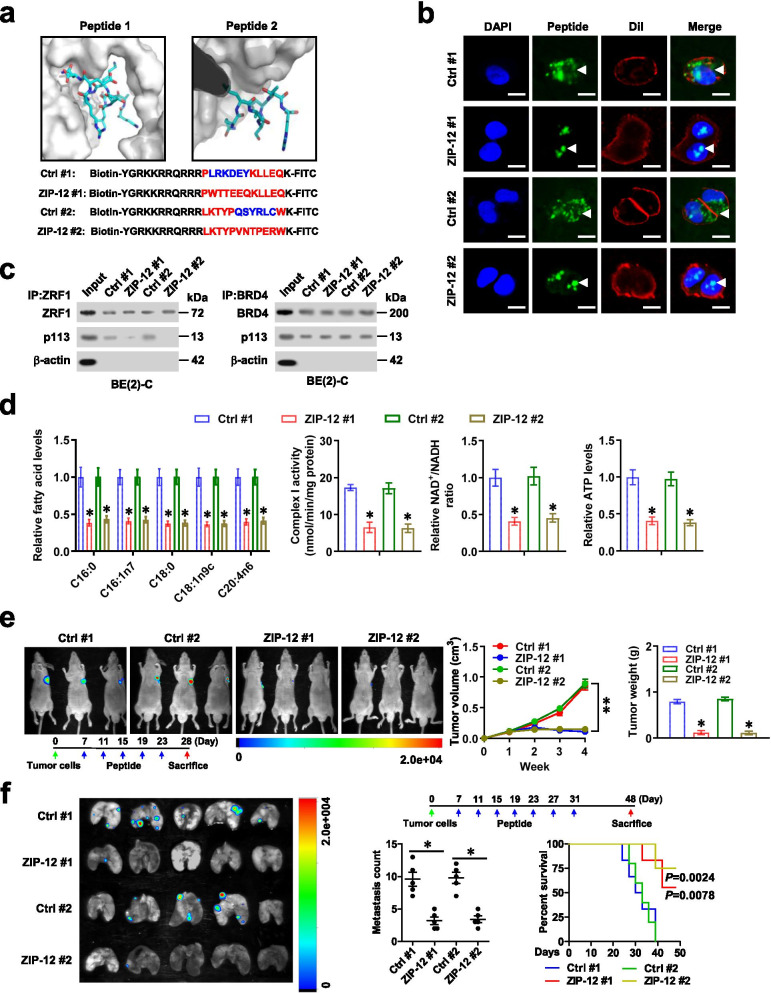
A novel 113-amino acid protein (p113) of CUT-like homeobox 1 (CUX1) was identified in NB cells treated by serum deprivation. Further validating studies revealed that nuclear p113 was encoded by circRNA of CUX1, and promoted the lipid metabolic reprogramming, mitochondrial activity, proliferation, invasion, and metastasis of NB cells. Mechanistically, p113 interacted with Zuotin-related factor 1 (ZRF1) and bromodomain protein 4 (BRD4) to form a transcriptional regulatory complex, and mediated the transactivation of ZRF1/BRD4 in upregulating ALDH3A1, NDUFA1, and NDUFAF5 essential for conversion of fatty aldehydes into fatty acids, fatty acid β-oxidation, and mitochondrial complex I activity. Administration of an inhibitory peptide blocking p113-ZRF1 interaction suppressed the tumorigenesis and aggressiveness of NB cells. In clinical NB cases, high expression of p113, ZRF1, or BRD4 was associated with poor survival of patients.
These results indicate that p113 isoform encoded by CUX1 circular RNA drives tumor progression via facilitating ZRF1/BRD4 transactivation.
代谢重编程维持神经母细胞瘤(NB)的肿瘤发生和侵袭性,NB 是儿童中最常见的颅外恶性肿瘤,但其潜在机制和治疗方法仍难以捉摸。
通过 Sanger 测序验证环状 RNA(circRNA)。应用共免疫沉淀、质谱、染色质免疫沉淀(ChIP)测序和 RNA 测序实验来探索蛋白相互作用和靶基因。通过 ChIP、双荧光素酶报告基因、实时定量 RT-PCR 和 Western blot 实验观察基因表达调控。进行增益和缺失功能研究,观察 circRNA 编码蛋白及其伙伴对 NB 细胞脂代谢、线粒体活性、生长、侵袭和转移的影响。
在血清剥夺处理的 NB 细胞中鉴定出 CUT 样同源盒 1(CUX1)的一种新型 113 个氨基酸蛋白(p113)。进一步验证研究表明,核内 p113 由 CUX1 的 circRNA 编码,并促进 NB 细胞的脂代谢重编程、线粒体活性、增殖、侵袭和转移。在机制上,p113 与 Zuotin 相关因子 1(ZRF1)和溴结构域蛋白 4(BRD4)相互作用形成转录调控复合物,并介导 ZRF1/BRD4 的反式激活,上调 ALDH3A1、NDUFA1 和 NDUFAF5,这些基因对于将脂肪醛转化为脂肪酸、脂肪酸β氧化和线粒体复合物 I 活性至关重要。用一种抑制肽阻断 p113-ZRF1 相互作用可抑制 NB 细胞的肿瘤发生和侵袭性。在临床 NB 病例中,p113、ZRF1 或 BRD4 的高表达与患者的不良生存相关。
这些结果表明,CUX1 环状 RNA 编码的 p113 异构体通过促进 ZRF1/BRD4 反式激活来驱动肿瘤进展。