Department of Gastroenterology, The Second Affiliated Hospital of Chongqing Medical University, Chongqing, People's Republic of China.
Department of Ultrasound, Zhongnan Hospital of Wuhan University, Wuhan, Hubei, People's Republic of China.
Int J Nanomedicine. 2021 Sep 21;16:6455-6475. doi: 10.2147/IJN.S325891. eCollection 2021.
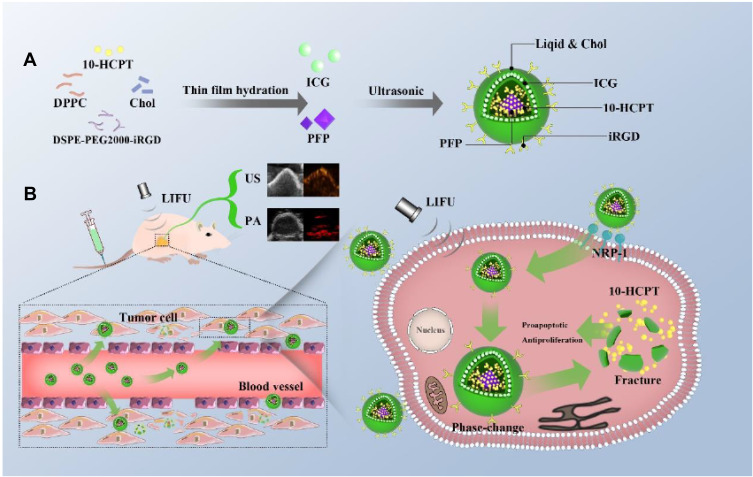
Prepare a multifunctional ultrasound molecular probe, cell-penetrating peptide-modified 10-hydroxycamptothecin-loaded phase-transformation lipid nanoparticles (iRGD-ICG-10-HCPT-PFP-NPs), and to combine iRGD-ICG-10-HCPT-PFP -NPs with low-intensity focused ultrasound (LIFU) for precision theranostics against hepatocellular carcinoma (HCC).
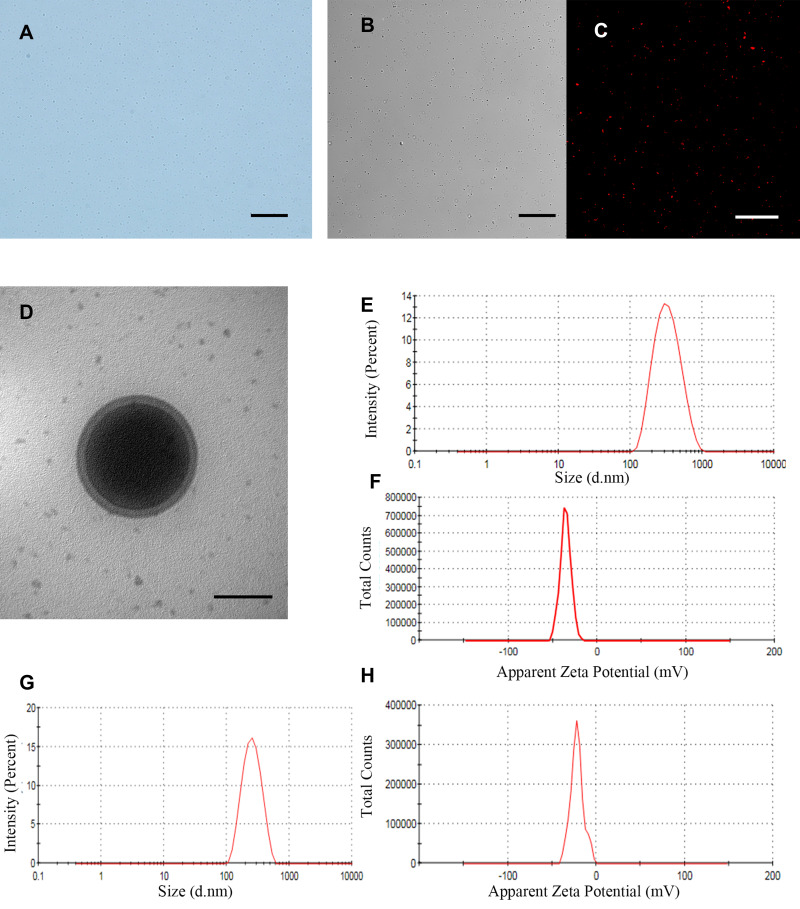
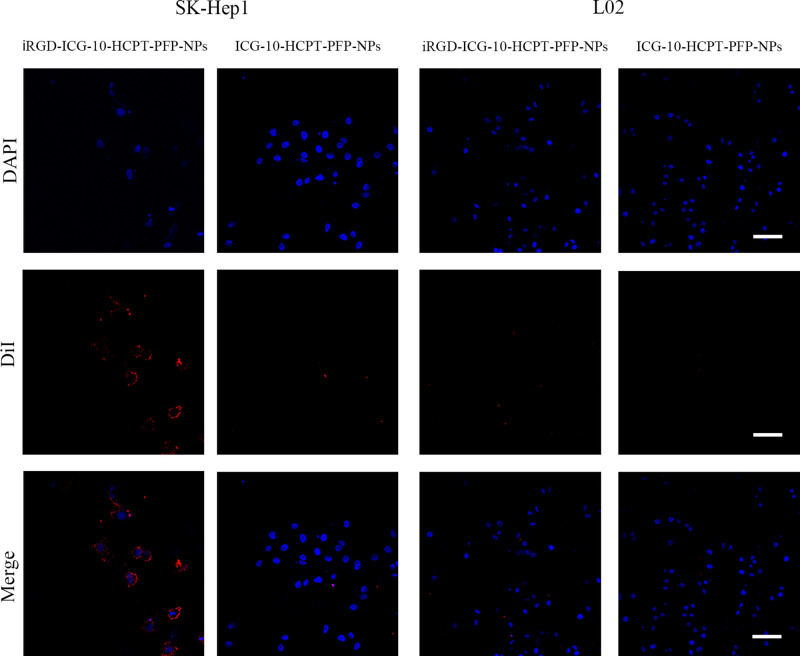
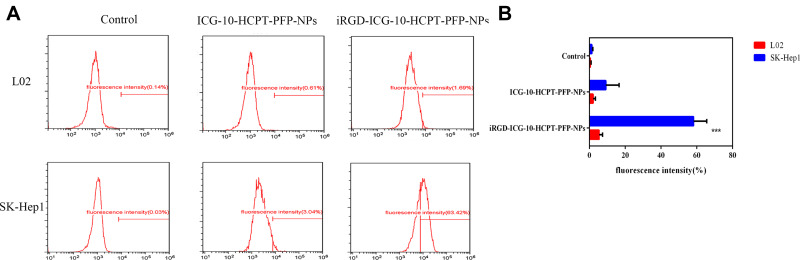
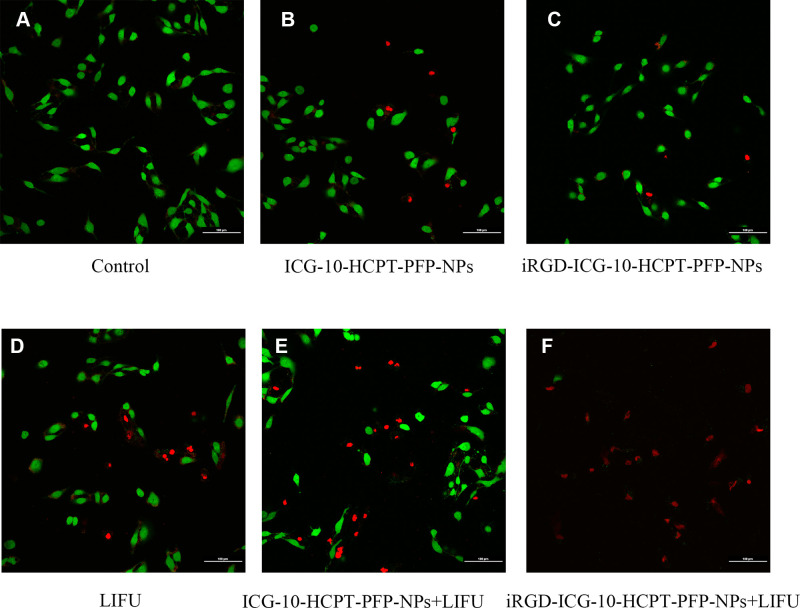
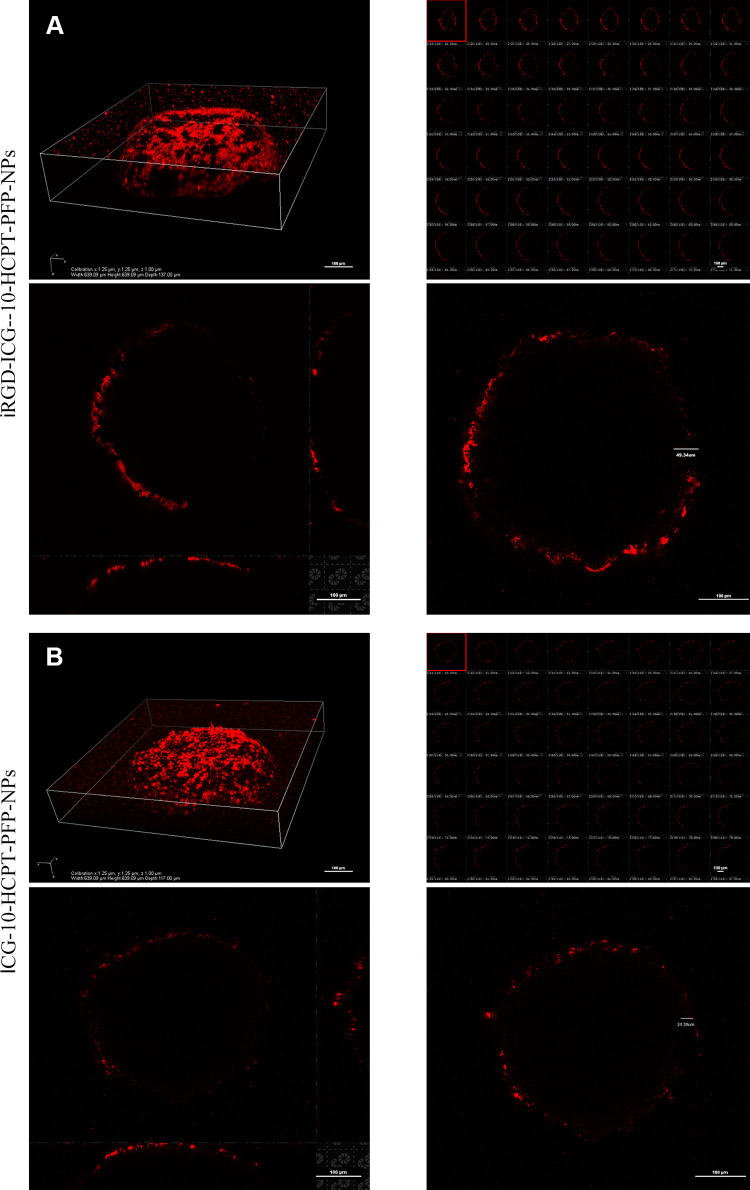
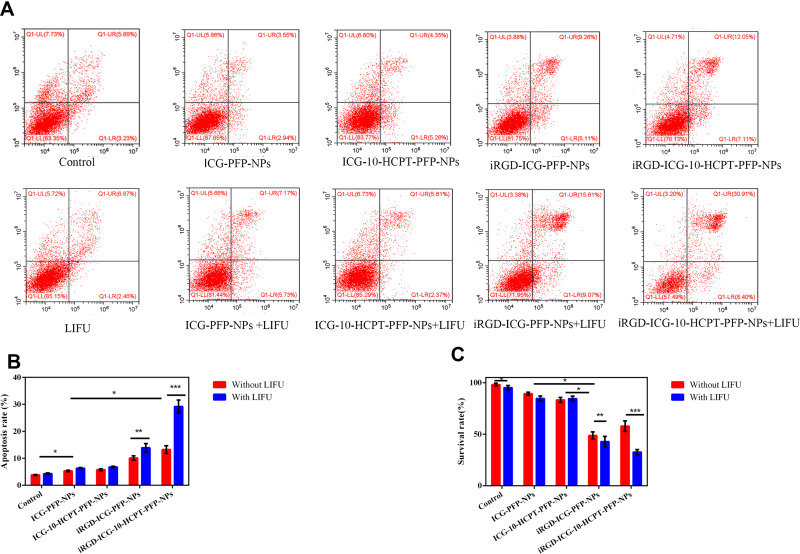
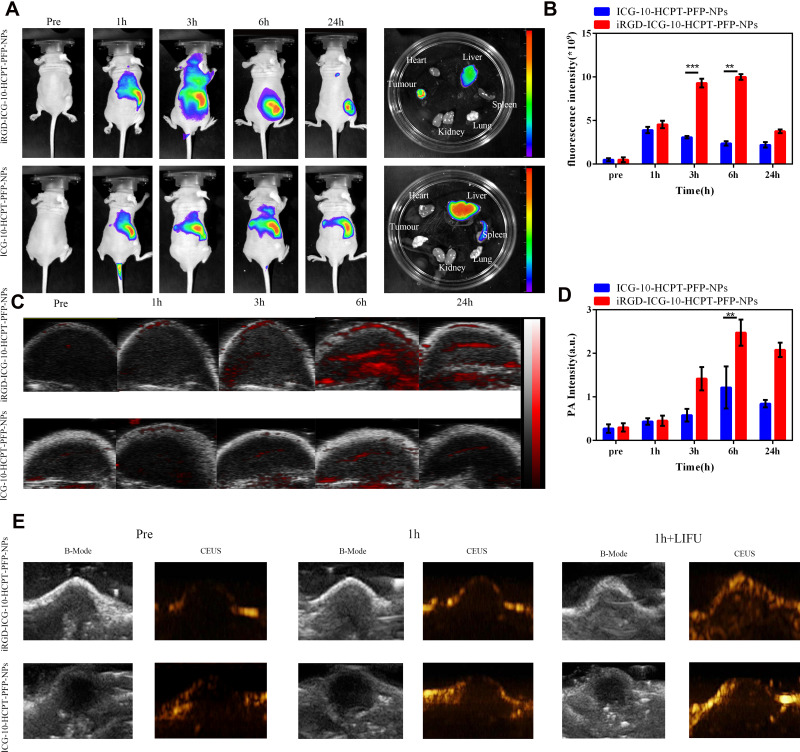
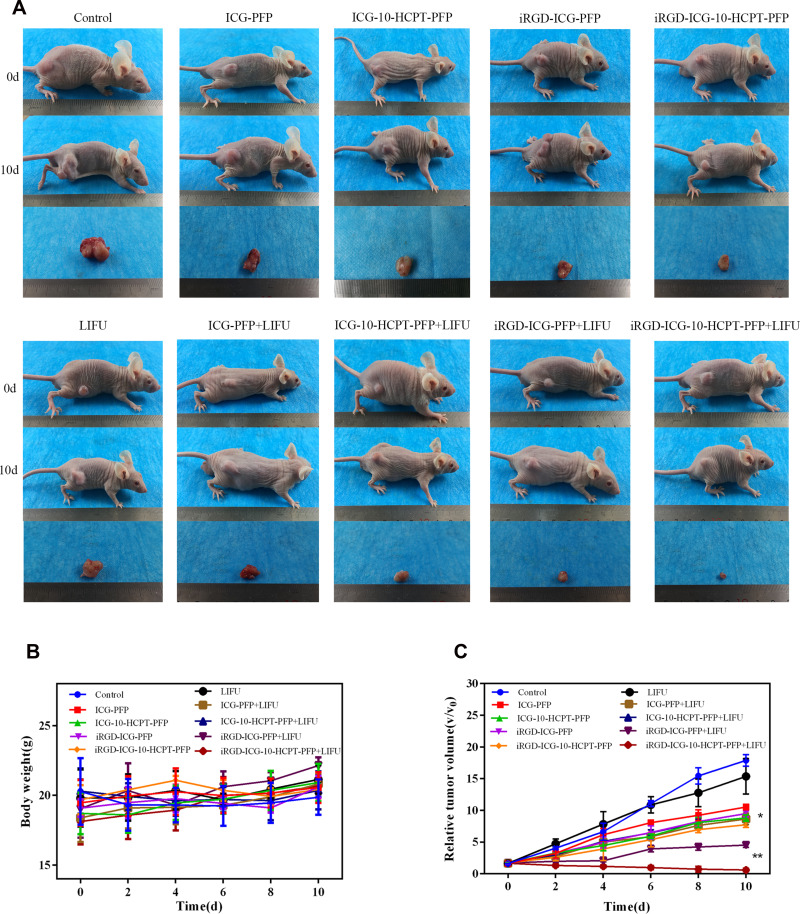
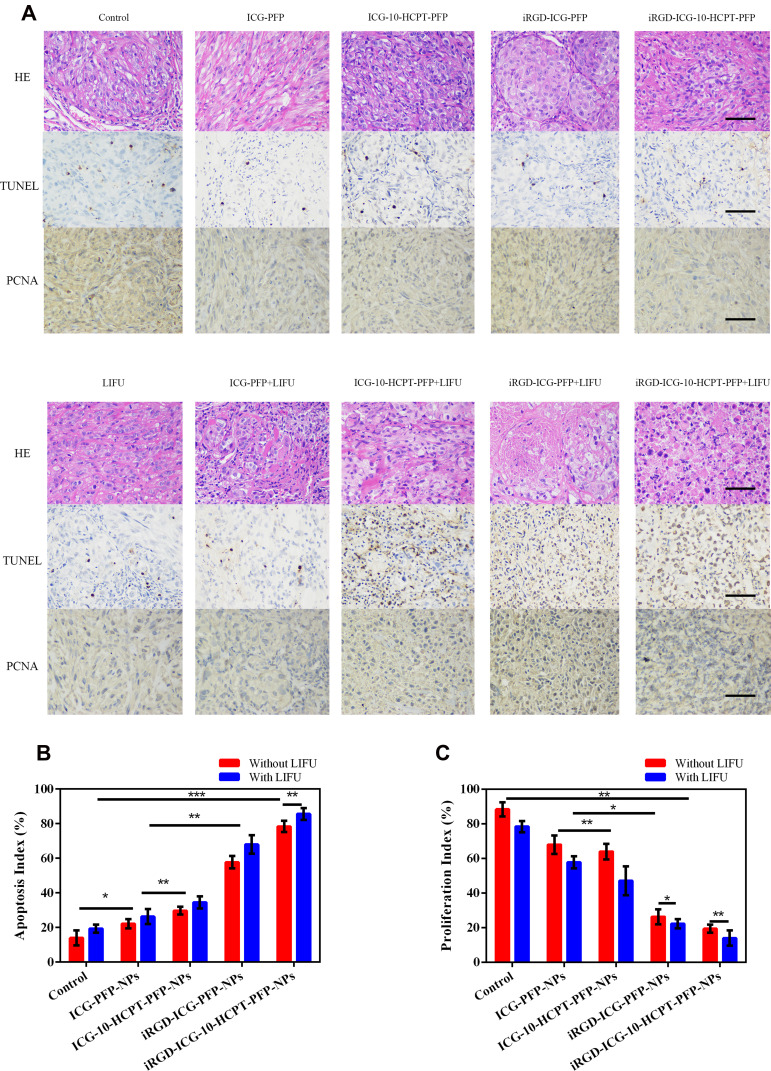
The morphology of nanoparticles (NPs) and iRGD-ICG-10-HCPT-PFP-NPs was detected. In vitro, we examined targeting ability by flow cytometry and confocal laser scanning microscopy (CLSM), assessed penetration ability into hepatoma cells, and assessed killing ability. In vivo, we examined the targeting ability of the NPs with a photoacoustic (PA) imager and fluorometer (FL), while LIFU irradiation was used to trigger the release of chemotherapeutic drugs, which had a therapeutic effect on tumors.
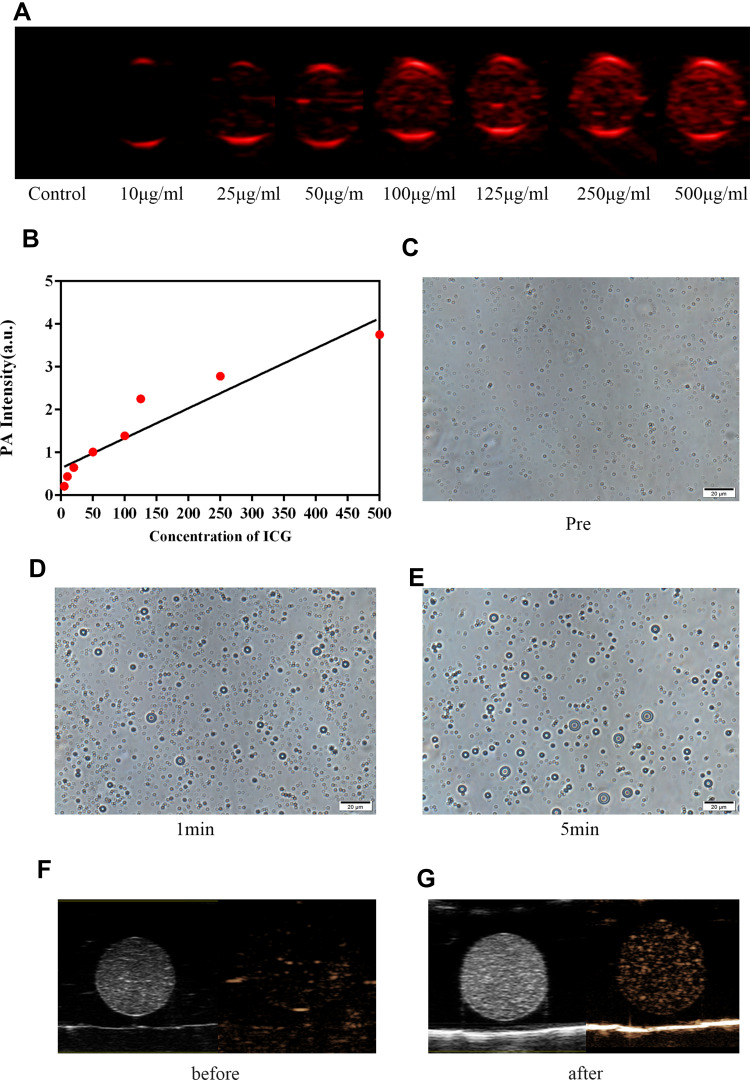
The particle size of iRGD-ICG-10-HCPT-PFP-NPs was 298.4 ± 10.42 nm. In vitro, iRGD-ICG-10-HCPT-PFP-NPs bound more to SK-Hep1 cells than ICG-10-HCPT-PFP-NPs. iRGD-ICG-10-HCPT-PFP-NPs could achieve PA/ultrasound imaging. The percentage of antiproliferative and apoptotic cells in the iRGD-ICG-10-HCPT-PFP-NPs+LIFU group was significantly higher. In vivo, iRGD-ICG-10-HCPT-PFP-NPs can target tumor sites and achieve PA/ultrasound imaging. The tumor volume in the iRGD-ICG-10-HCPT-PFP-NPs+LIFU group was significantly smaller, and the antiproliferative and proapoptotic effects were higher.
We successfully prepared a novel molecular probe that has good targeting, can perform ultrasound/PA dual-modality imaging, and can penetrate deep into tumors to achieve better therapeutic tumor effects, providing a new idea and method for theranostics of HCC.
制备多功能超声分子探针、穿膜肽修饰的 10-羟基喜树碱载相变脂质纳米粒(iRGD-ICG-10-HCPT-PFP-NPs),并将 iRGD-ICG-10-HCPT-PFP-NPs 与低强度聚焦超声(LIFU)联合用于肝癌的精准治疗。
检测纳米粒(NPs)和 iRGD-ICG-10-HCPT-PFP-NPs 的形态。体外通过流式细胞术和共聚焦激光扫描显微镜(CLSM)检测靶向能力,评估穿透肝癌细胞的能力,评估杀伤能力。体内通过光声(PA)成像仪和荧光计(FL)检测 NPs 的靶向能力,同时使用 LIFU 照射触发化疗药物的释放,从而对肿瘤产生治疗效果。
iRGD-ICG-10-HCPT-PFP-NPs 的粒径为 298.4±10.42nm。体外,iRGD-ICG-10-HCPT-PFP-NPs 与 SK-Hep1 细胞的结合能力强于 ICG-10-HCPT-PFP-NPs。iRGD-ICG-10-HCPT-PFP-NPs 可实现 PA/超声成像。iRGD-ICG-10-HCPT-PFP-NPs+LIFU 组的增殖抑制和凋亡细胞比例显著升高。体内,iRGD-ICG-10-HCPT-PFP-NPs 可靶向肿瘤部位并实现 PA/超声成像。iRGD-ICG-10-HCPT-PFP-NPs+LIFU 组的肿瘤体积明显减小,增殖抑制和促凋亡作用更高。
我们成功制备了一种新型分子探针,具有良好的靶向性,可进行超声/PA 双模态成像,并能穿透肿瘤深处,实现更好的治疗肿瘤效果,为肝癌的治疗提供了新的思路和方法。