Department of Neurology, University of California San Francisco, San Francisco, California, USA.
Neurology Service, San Francisco Veterans Affairs Health Care System, San Francisco, California, USA.
J Neurochem. 2021 Dec;159(6):1008-1015. doi: 10.1111/jnc.15522. Epub 2021 Oct 13.
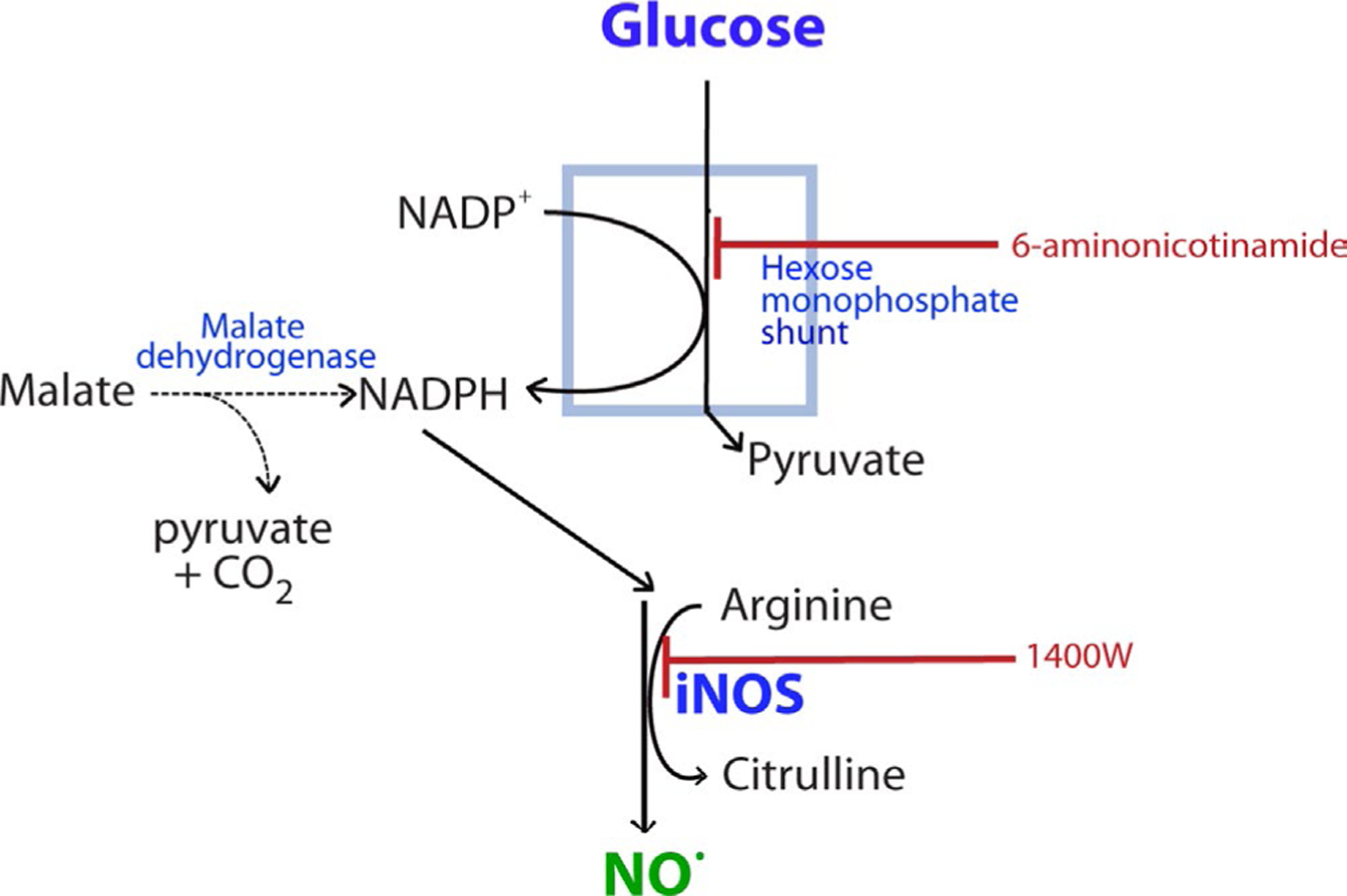
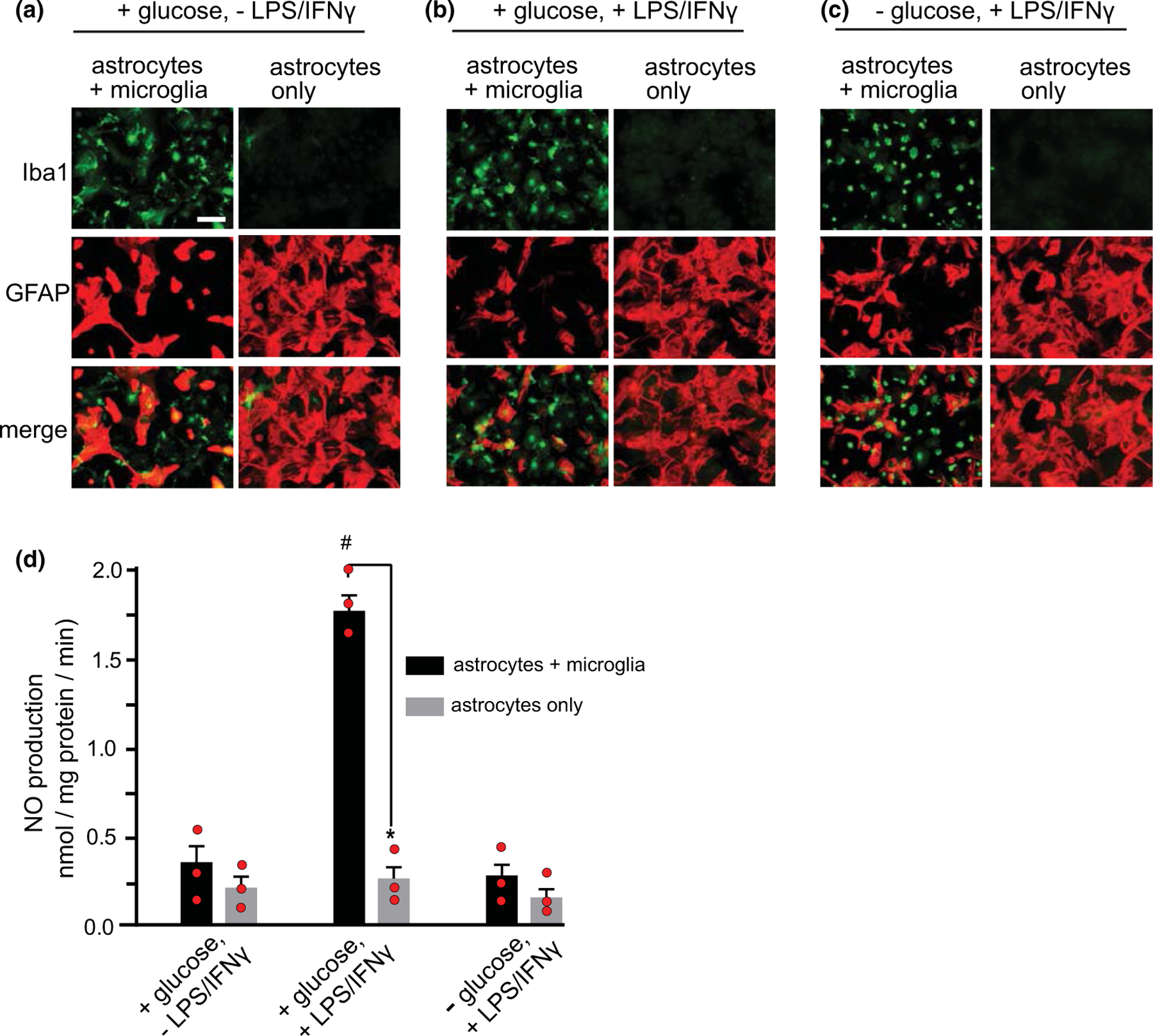
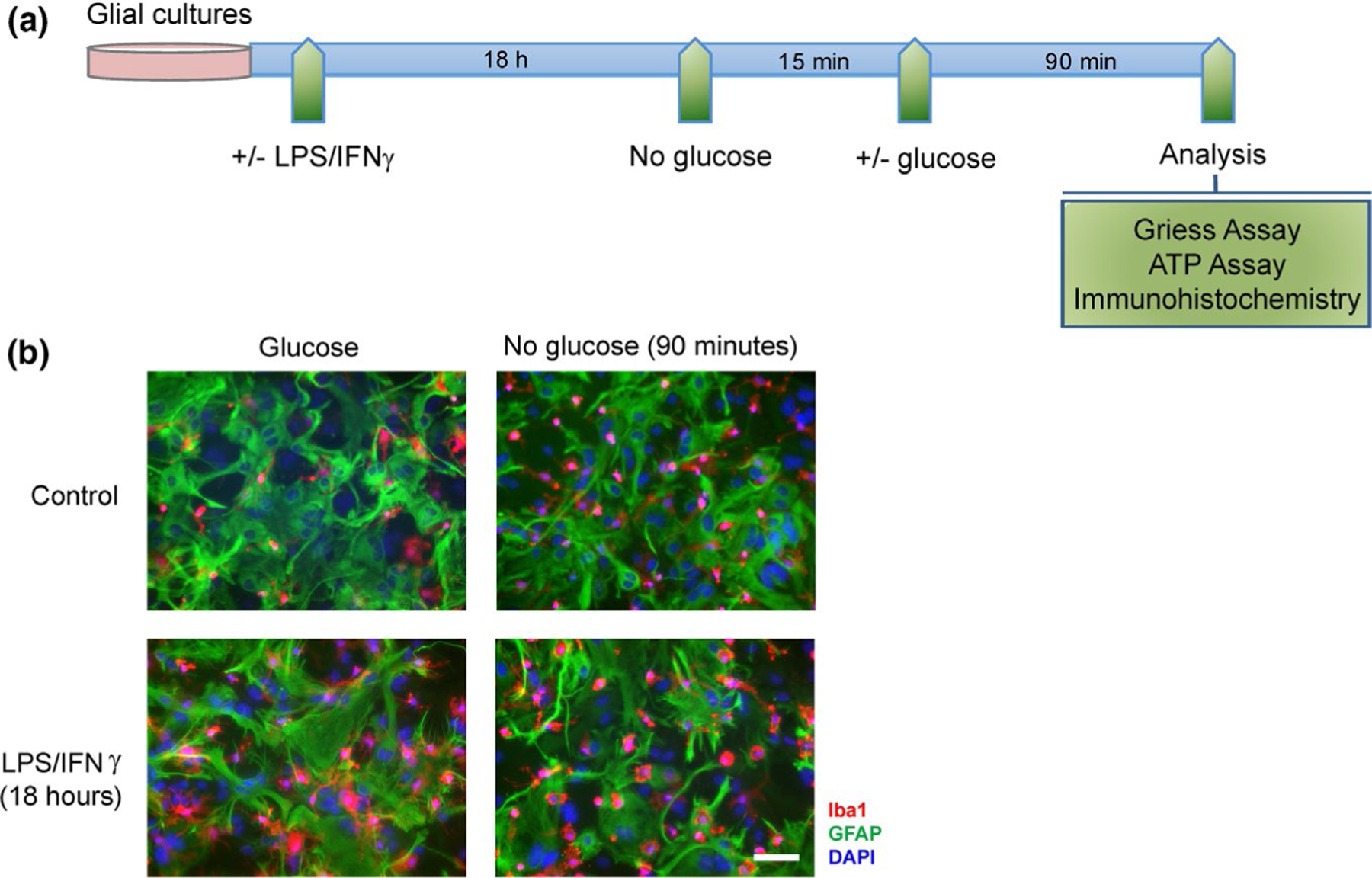
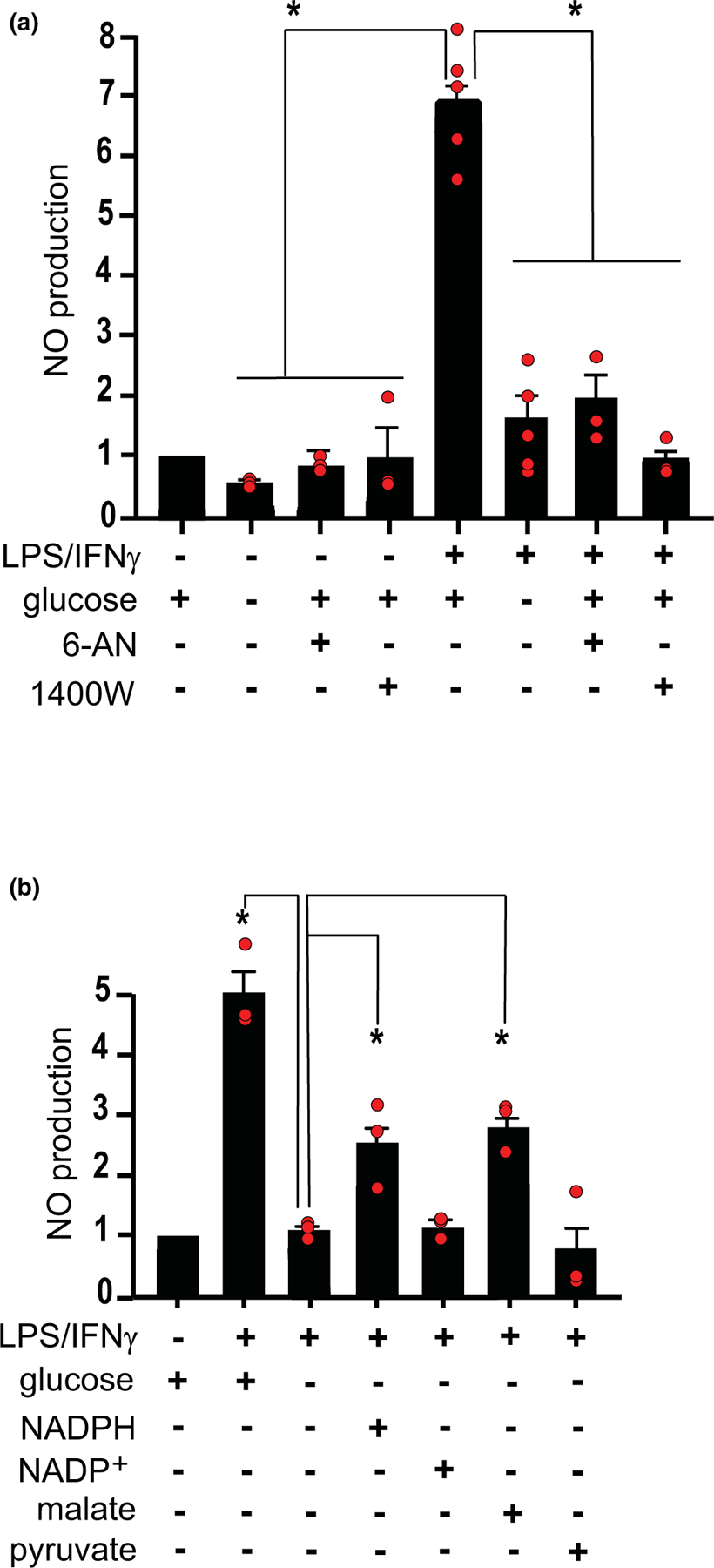
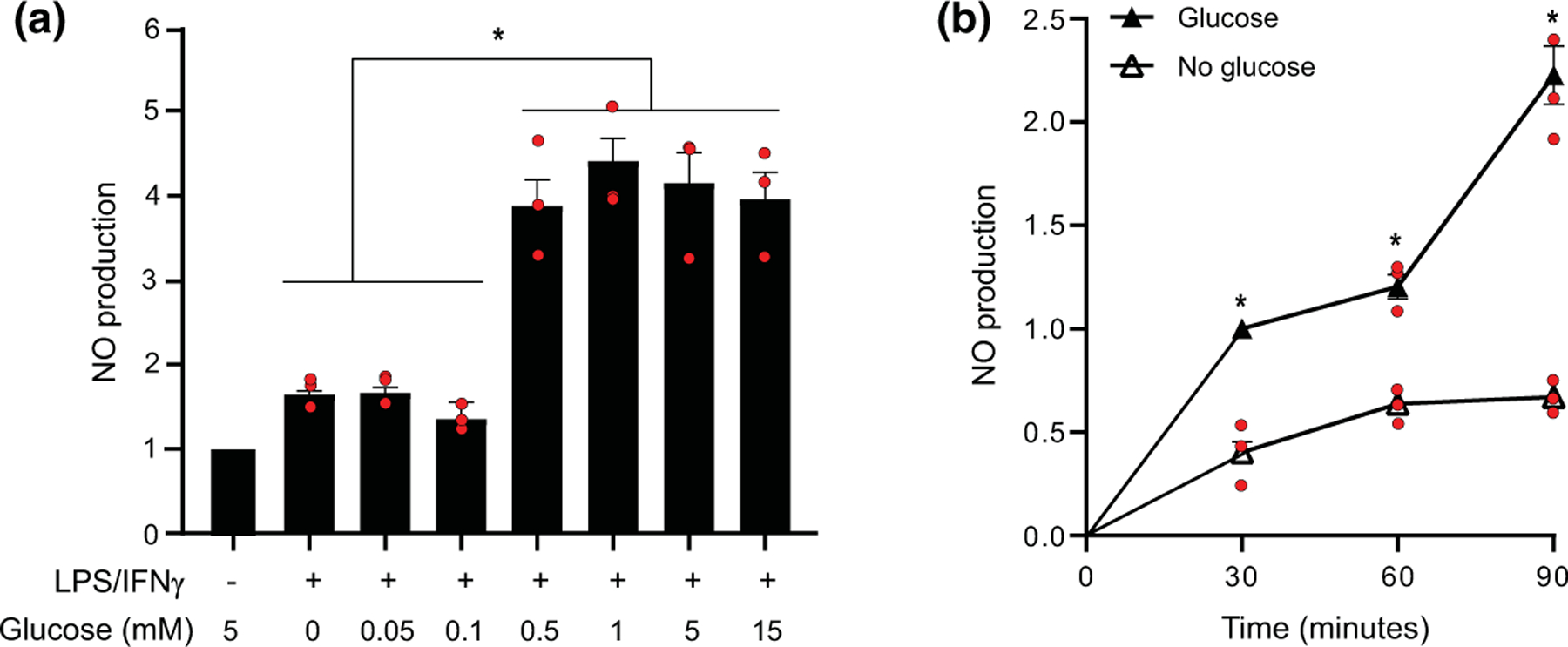
Metabolic intermediates influence inflammation not only through signaling effects, but also by fueling the production of pro-inflammatory molecules. Microglial production of nitric oxide (NO) requires the consumption of NADPH. NADPH consumed in this process is regenerated from NADP primarily through the hexose monophosphate shunt, which can utilize only glucose as a substrate. These factors predict that glucose availability can be rate-limiting for glial NO production. To test this prediction, cultured astrocytes and microglia were incubated with lipopolysaccharide and interferon-γ to promote expression of inducible nitric oxide synthase, and the rate of NO production was assessed at defined glucose concentrations. Increased NO production was detected only in cultures containing microglia. The NO production was markedly slowed at glucose concentrations below 0.5 mM, and comparably reduced by inhibition of the hexose monophosphate shunt with 6-aminonicotinamide. Reduced NO production caused by glucose deprivation was partly reversed by malate, which fuels NADPH production by malate dehydrogenase, and by NADPH itself. These findings highlight the role of the hexose monophosphate shunt in fueling NO synthesis and suggest that microglial NO production in the brain may be limited at sites of low glucose availability, such as abscesses or other compartmentalized infections.
代谢中间产物不仅通过信号作用影响炎症,还通过为促炎分子的产生提供燃料来影响炎症。小胶质细胞产生一氧化氮 (NO) 需要消耗 NADPH。该过程中消耗的 NADPH 主要通过己糖单磷酸途径从 NADP 中再生,该途径只能利用葡萄糖作为底物。这些因素预测葡萄糖的可用性可能是神经胶质细胞 NO 产生的限速因素。为了验证这一预测,用脂多糖和干扰素-γ孵育培养的星形胶质细胞和小胶质细胞,以促进诱导型一氧化氮合酶的表达,并在定义的葡萄糖浓度下评估 NO 产生的速率。只有在含有小胶质细胞的培养物中才检测到 NO 产生增加。在葡萄糖浓度低于 0.5 mM 时,NO 产生明显减慢,并且己糖单磷酸途径的抑制作用(用 6-氨基烟酰胺抑制)同样会降低 NO 产生。由葡萄糖剥夺引起的 NO 产生减少部分被苹果酸逆转,苹果酸通过苹果酸脱氢酶为 NADPH 产生提供燃料,NADPH 本身也可以逆转。这些发现强调了己糖单磷酸途径在为 NO 合成提供燃料方面的作用,并表明大脑中小胶质细胞的 NO 产生可能在葡萄糖供应不足的部位受到限制,例如脓肿或其他分隔感染。