Department of Geriatrics and Neurology, the Second Affiliated Hospital and Yuying Children's Hospital, Wenzhou Medical University, Wenzhou, Zhejiang, 325027, China.
Department of Preventive Medicine, Wenzhou Medical University, Wenzhou, Zhejiang, 325035, China.
J Neuroinflammation. 2020 Feb 5;17(1):50. doi: 10.1186/s12974-020-1712-0.
Astrocytes are the most abundant glial cells in a brain that mediate inflammatory responses and provide trophic support for neurons. We have previously disclosed that paroxetine, a common selective serotonin reuptake inhibitor, ameliorates LPS-induced microglia activation. However, it remains elusive for the role of paroxetine in astrocytic responses.
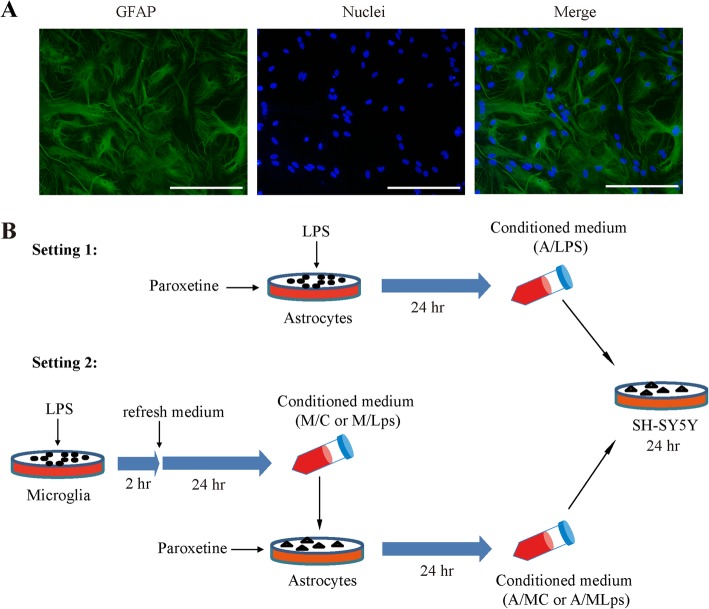
Isolated primary astrocytes were pretreated with paroxetine and stimulated with different stimuli, lipopolysaccharide (LPS) or microglia conditioned medium pre-activated with LPS (M/Lps). Inflammatory and neurotrophic responses, underlying mechanisms and the impact on neuronal survival were assessed.
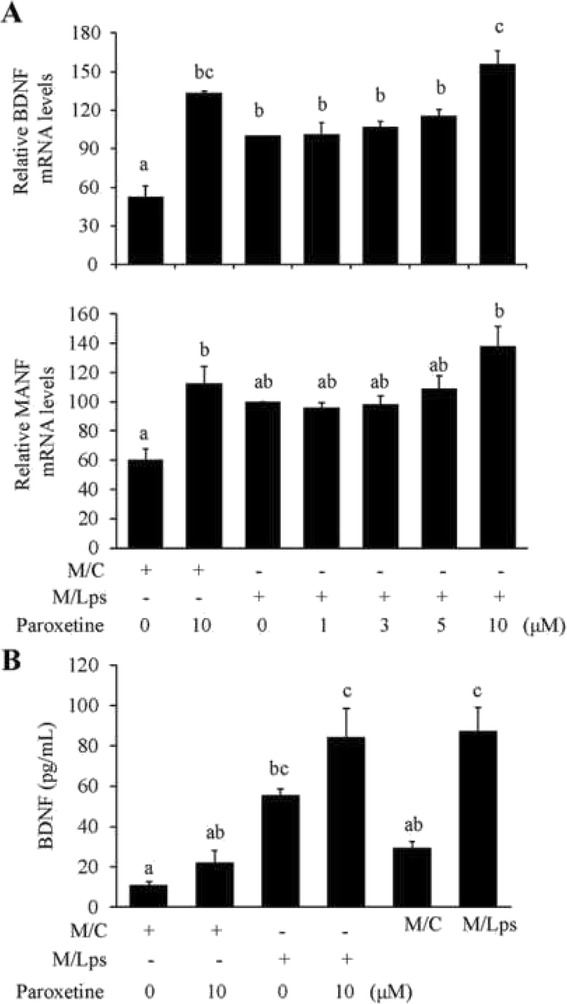
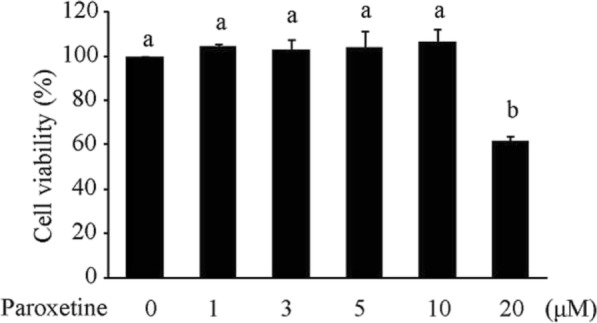
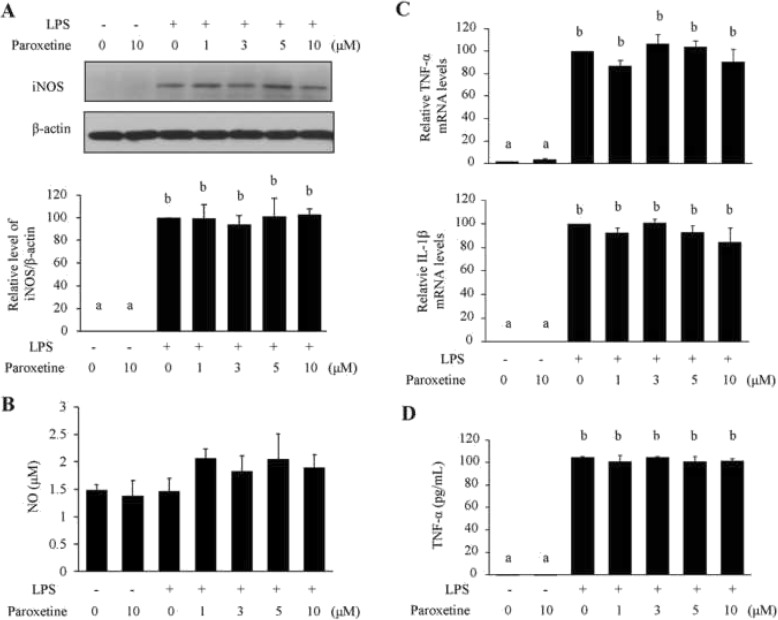
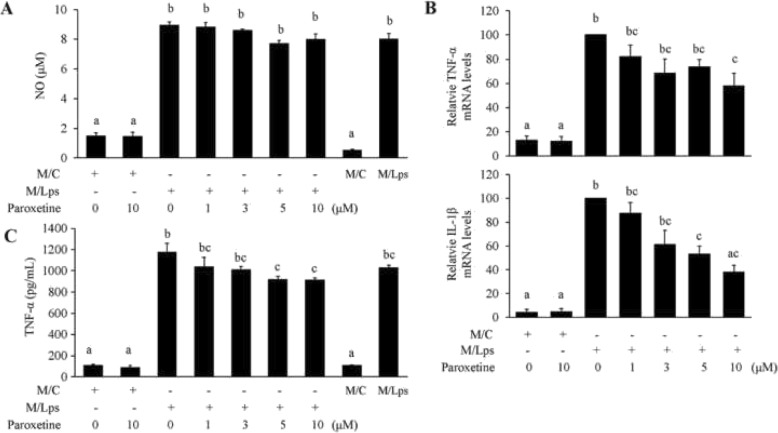
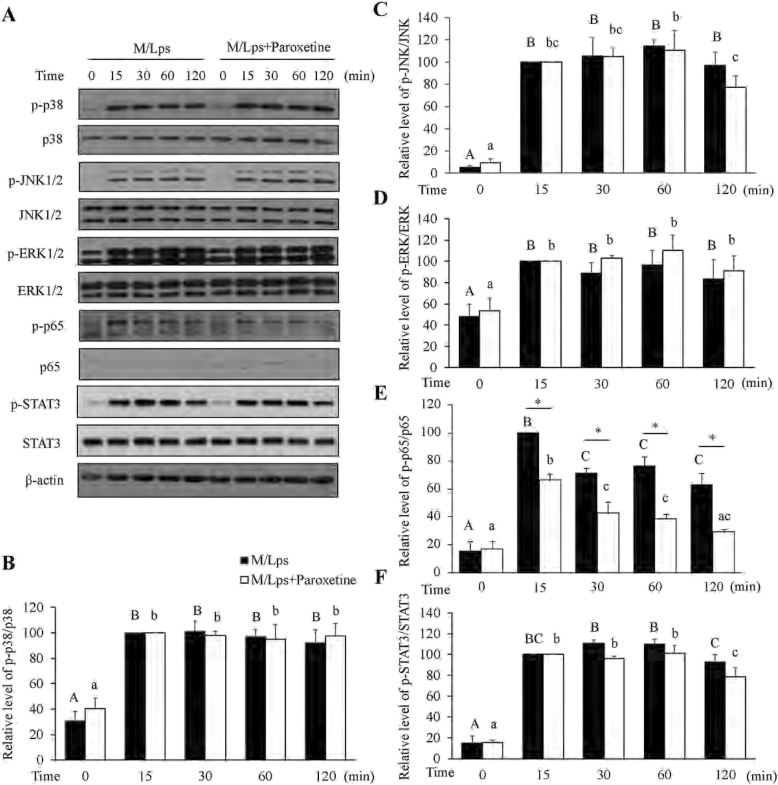
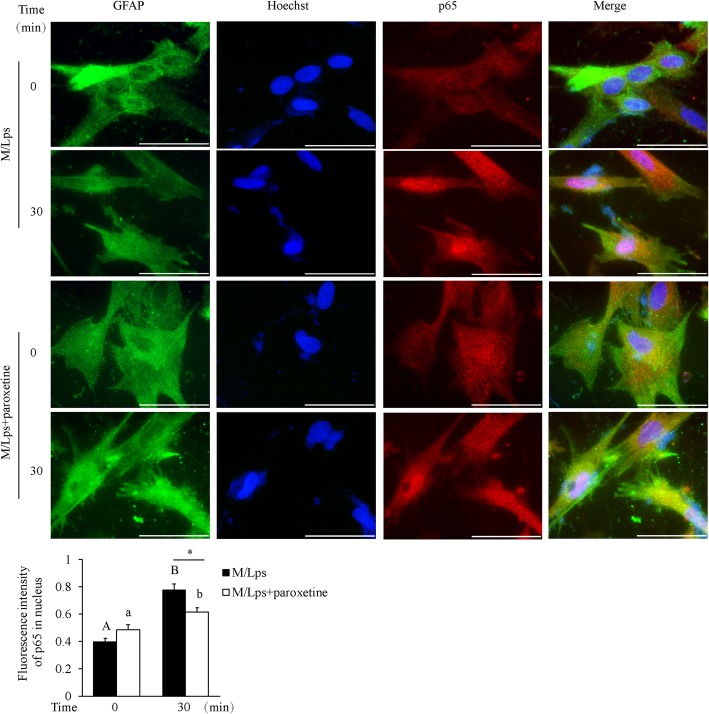
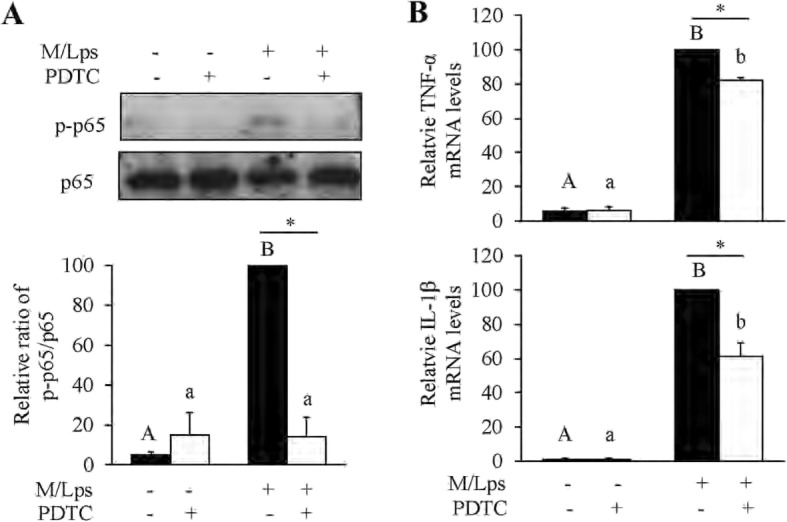
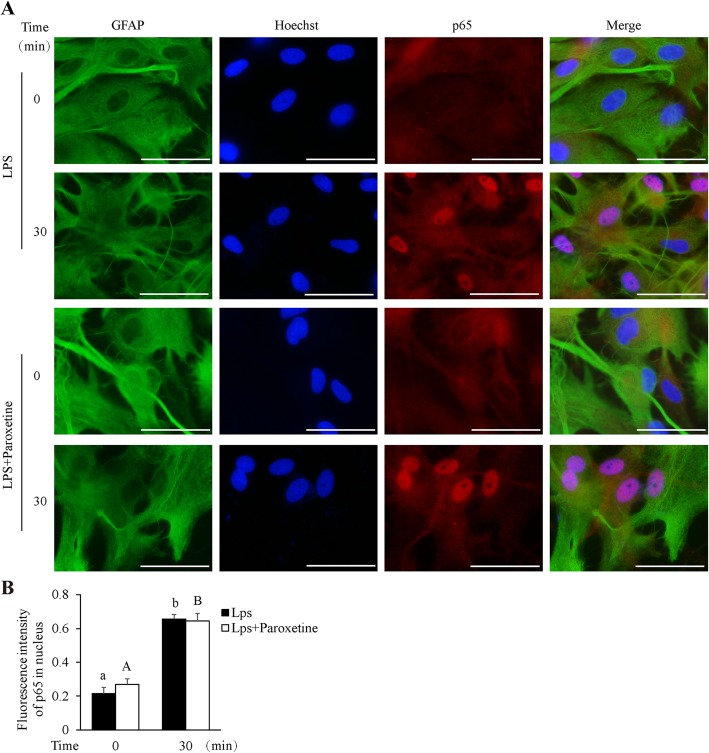
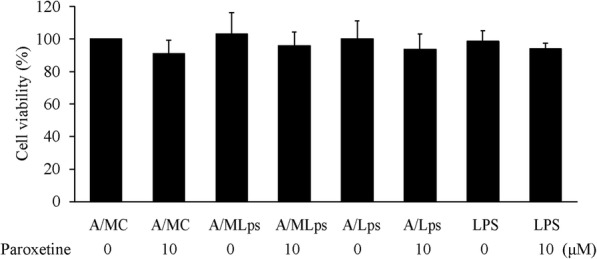
Paroxetine had no impact on LPS-stimulated iNOS, TNF-α, and IL-1β expression, but inhibited M/Lps-induced TNF-α and IL-1β expression in primary astrocytes. Paroxetine suppressed M/Lps- but not LPS-induced activation of NF-κB and had no impact on the activation of MAPKs and STAT3. Incubation with the resulted astrocyte conditioned media caused no change in the viability of SH-SY5Y cells. BDNF and MANF mRNA expressions were upregulated by M/Lps and paroxetine, respectively. However, M/Lps- or LPS-induced extracellular releases of NO, TNF-α, and/or BDNF in astrocytes were in minor amount compared to those by microglia.
Paroxetine ameliorates the reactive microglia-mediated inflammatory responses in astrocytes partially via inhibition of the NF-κB pathway but has no impact on LPS-stimulated astrocyte activation. While the effects of paroxetine on secondary astrocytic responses are not robust compared to its effect on the innate immune responses of microglia, the results together may implicate a therapeutic potential of paroxetine against neuroinflammation-associated neurological disorders such as Parkinson's disease.
星形胶质细胞是大脑中最丰富的神经胶质细胞,它们介导炎症反应,并为神经元提供营养支持。我们之前已经披露,帕罗西汀,一种常见的选择性 5-羟色胺再摄取抑制剂,可改善 LPS 诱导的小胶质细胞激活。然而,帕罗西汀在星形胶质细胞反应中的作用仍不清楚。
用帕罗西汀预处理分离的原代星形胶质细胞,并用不同的刺激物,脂多糖(LPS)或用 LPS 预先激活的小胶质细胞条件培养基(M/Lps)刺激。评估炎症和神经营养反应、潜在机制以及对神经元存活的影响。
帕罗西汀对 LPS 刺激的 iNOS、TNF-α 和 IL-1β 表达没有影响,但抑制了原代星形胶质细胞中 M/Lps 诱导的 TNF-α 和 IL-1β 表达。帕罗西汀抑制了 M/Lps-但不抑制 LPS-诱导的 NF-κB 激活,对 MAPKs 和 STAT3 的激活没有影响。用所得的星形胶质细胞条件培养基孵育不会改变 SH-SY5Y 细胞的活力。BDNF 和 MANF mRNA 的表达分别被 M/Lps 和帕罗西汀上调。然而,与小胶质细胞相比,M/Lps 或 LPS 诱导的 NO、TNF-α 和/或 BDNF 在星形胶质细胞中的细胞外释放量较少。
帕罗西汀部分通过抑制 NF-κB 途径改善反应性小胶质细胞介导的星形胶质细胞炎症反应,但对 LPS 刺激的星形胶质细胞激活没有影响。虽然与帕罗西汀对小胶质细胞固有免疫反应的影响相比,帕罗西汀对星形胶质细胞二次反应的影响不大,但这些结果共同表明帕罗西汀对帕金森病等神经炎症相关神经退行性疾病具有治疗潜力。