Hang Weijian, Shu Hongyang, Wen Zheng, Liu Jinyan, Jin Zhiyuan, Shi Zeqi, Chen Chen, Wang Dao Wen
Division of Cardiology, Department of Internal Medicine, Tongji Hospital, Tongji Medical College, Huazhong University of Science and Technology, Wuhan, China.
Hubei Key Laboratory of Genetics and Molecular Mechanisms of Cardiological Disorders, Wuhan, China.
Front Pharmacol. 2021 Sep 13;12:636204. doi: 10.3389/fphar.2021.636204. eCollection 2021.
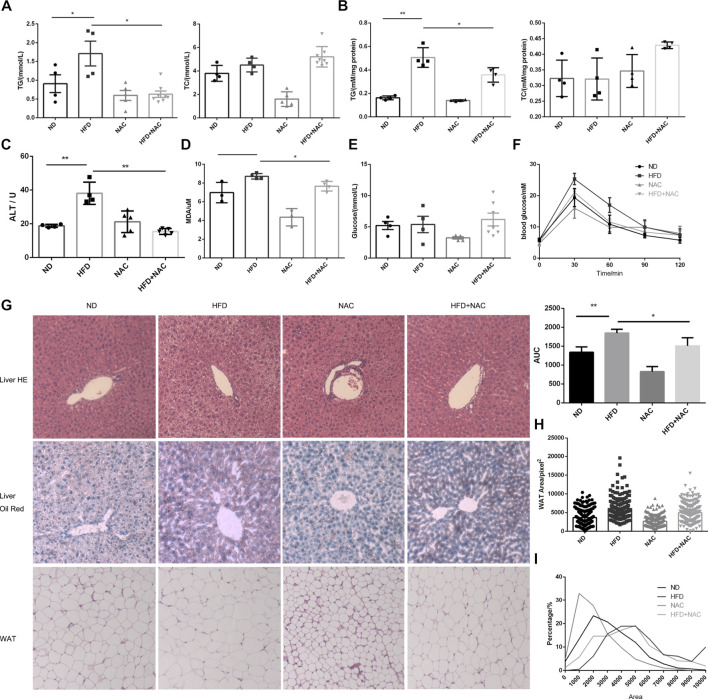
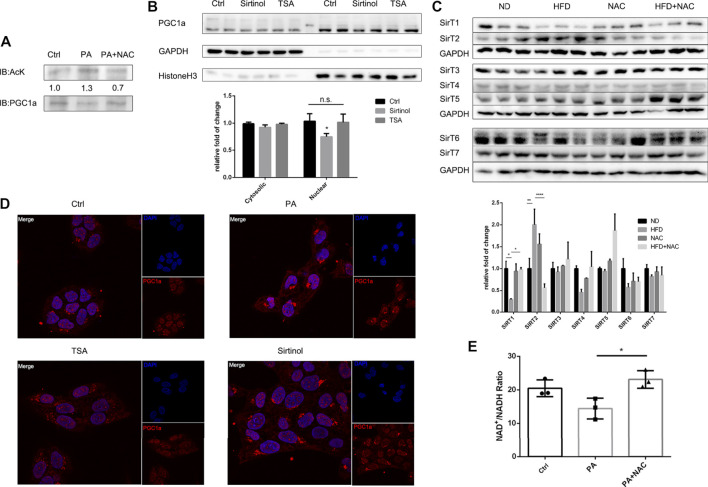
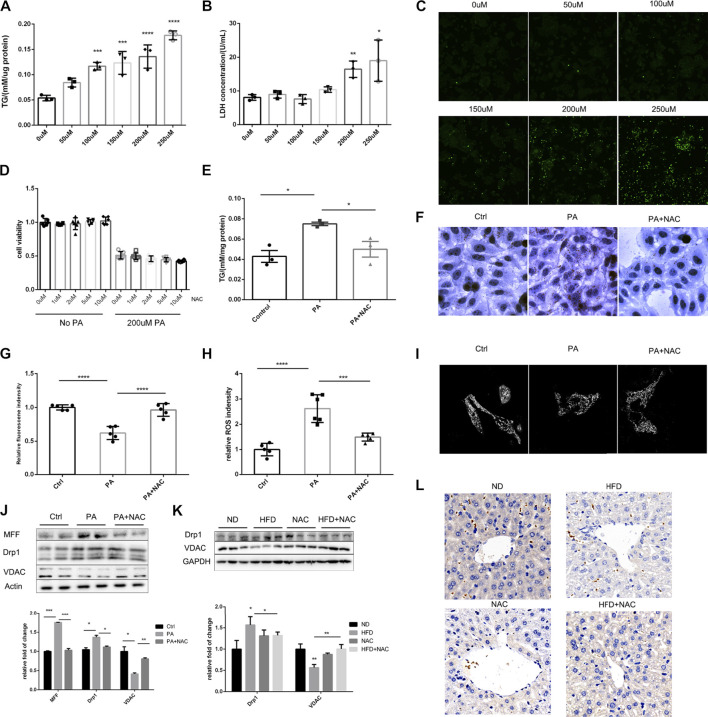
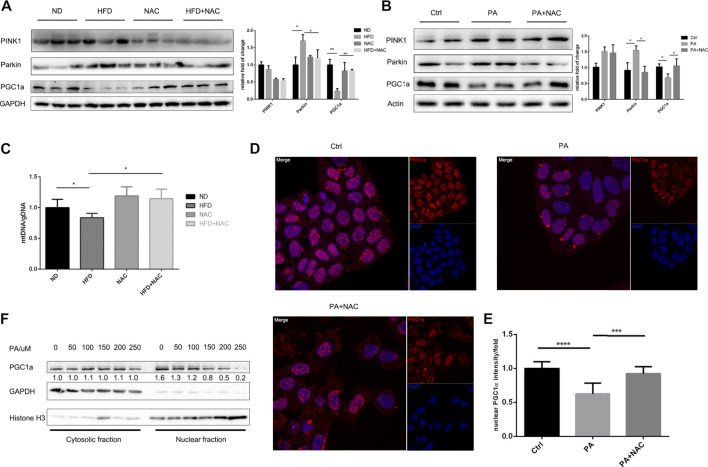
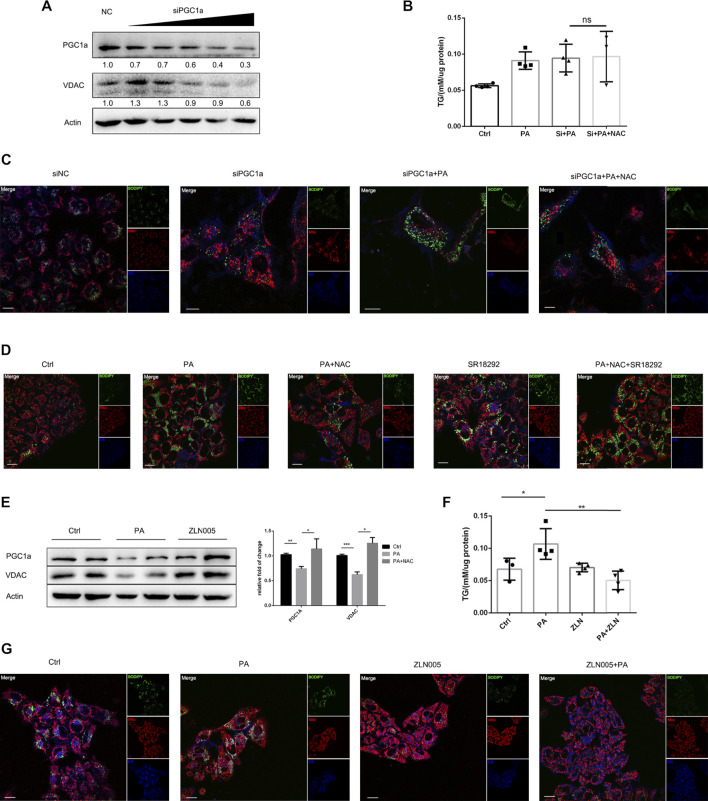
Nonalcoholic fatty liver disease (NAFLD) is a kind of metabolic disease characterized by liver steatosis. Excessive reactive oxygen species (ROS) originating from dysfunctional mitochondria is the major pathophysiological contributor in the development of NAFLD and is thought to be a promising therapeutic target. A few reports demonstrate the antioxidative treatments for NAFLD. Male C57 mice were fed on a normal chow diet (ND) or high-fat diet (HFD) for 8 weeks. PBS or N-acetyl cysteine (NAC) was gavaged to mice. LO2 human liver cell line treated with palmitic acid (PA) was applied as a cellular model. Western blot, immunofluorescence, biochemistry assay, and pathological staining were used to investigate the mechanism of suppressing lipid accumulation of NAC. NAC treatment was able to prevent HFD-induced NAFLD, as evidenced by less hepatic triglyceride accumulation and lipid droplet formation compared with that of mice in the HFD group. NAC could preserve mitochondrial function by inhibiting excessive mitophagy and promoting mitochondria biogenesis to prevent ROS production. NAC also activated Sirt1 and preserved its protein level and subsequently promoted mitochondria biogenesis deacetylating PGC1a. We demonstrated that NAC may be an effective drug to treat NAFLD, which was related to its antioxidative and mitochondrial protective effect.
非酒精性脂肪性肝病(NAFLD)是一种以肝脏脂肪变性为特征的代谢性疾病。功能失调的线粒体产生的过量活性氧(ROS)是NAFLD发生发展的主要病理生理因素,被认为是一个有前景的治疗靶点。有一些报告展示了针对NAFLD的抗氧化治疗。雄性C57小鼠分别给予正常饲料(ND)或高脂饮食(HFD)喂养8周。给小鼠灌胃PBS或N-乙酰半胱氨酸(NAC)。用棕榈酸(PA)处理的LO2人肝细胞系作为细胞模型。采用蛋白质免疫印迹法、免疫荧光法、生化检测法和病理染色法来研究NAC抑制脂质积累的机制。NAC治疗能够预防HFD诱导的NAFLD,与HFD组小鼠相比,肝脏甘油三酯积累和脂滴形成减少证明了这一点。NAC可通过抑制过度的线粒体自噬和促进线粒体生物发生来维持线粒体功能,从而预防ROS产生。NAC还激活Sirt1并维持其蛋白水平,随后通过使PGC1α去乙酰化促进线粒体生物发生。我们证明NAC可能是一种治疗NAFLD的有效药物,这与其抗氧化和线粒体保护作用有关。