Materials and Structural Analysis, Thermo Fisher Scientific, Achtseweg Noord 5, 5651 GG Eindhoven, Netherlands.
Department of Molecular Biology and Biotechnology, University of Sheffield, Sheffield, U.K.
Biochem J. 2021 Oct 29;478(20):3775-3790. doi: 10.1042/BCJ20210631.
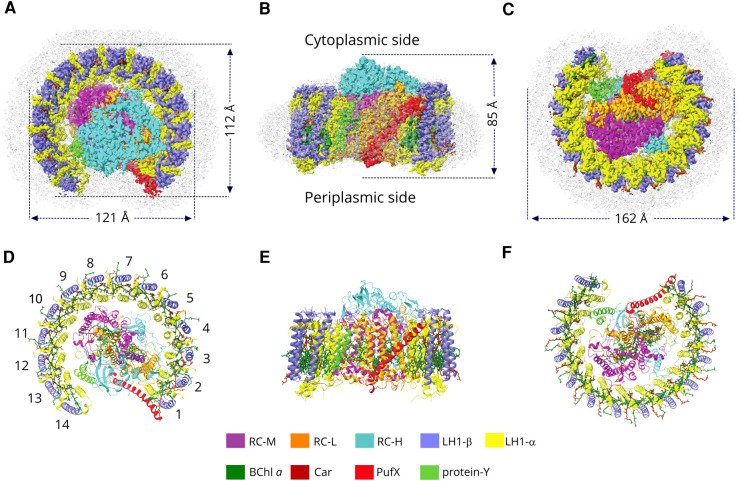
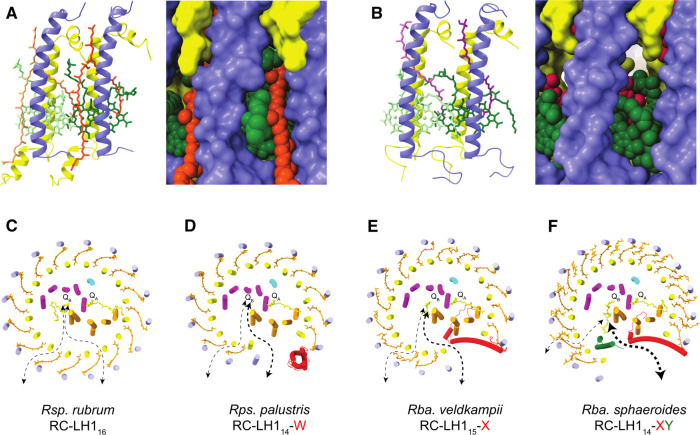
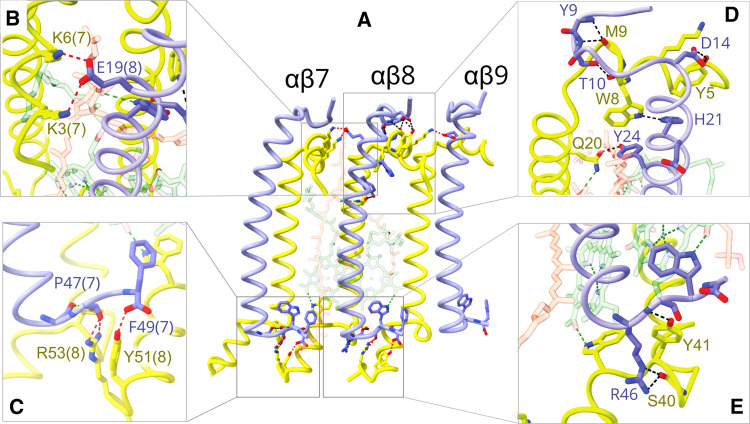
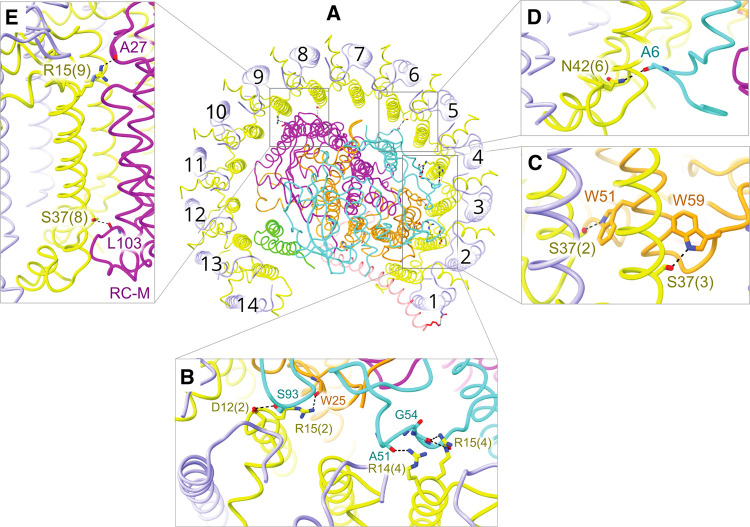
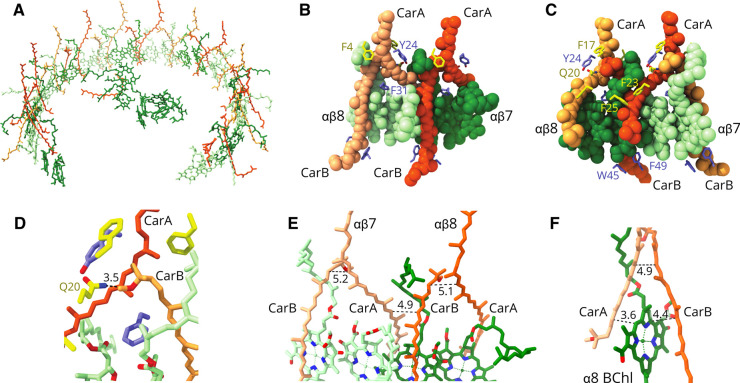
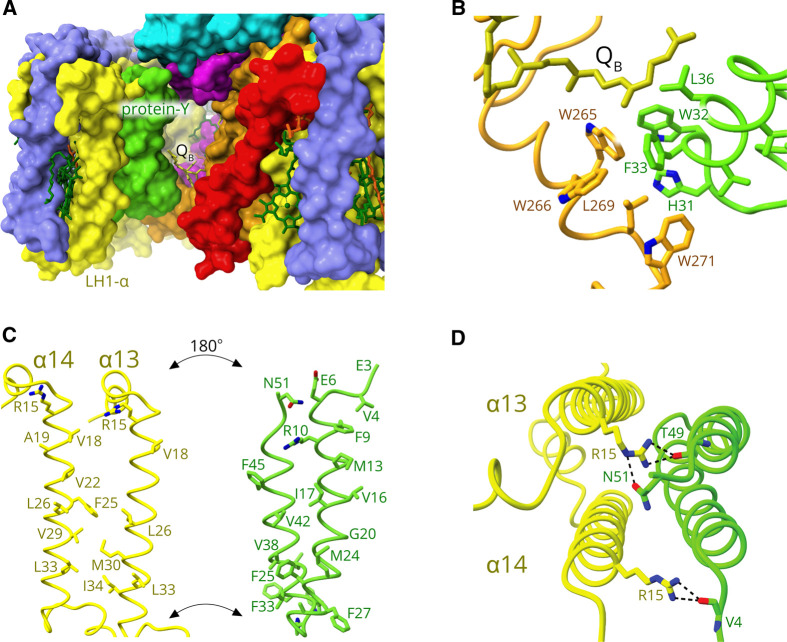
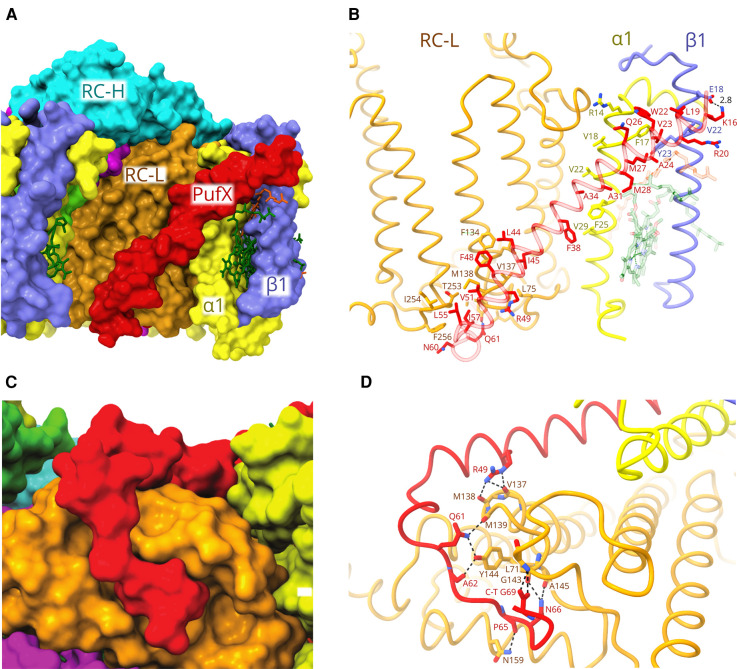
Reaction centre light-harvesting 1 (RC-LH1) complexes are the essential components of bacterial photosynthesis. The membrane-intrinsic LH1 complex absorbs light and the energy migrates to an enclosed RC where a succession of electron and proton transfers conserves the energy as a quinol, which is exported to the cytochrome bc1 complex. In some RC-LH1 variants quinols can diffuse through small pores in a fully circular, 16-subunit LH1 ring, while in others missing LH1 subunits create a gap for quinol export. We used cryogenic electron microscopy to obtain a 2.5 Å resolution structure of one such RC-LH1, a monomeric complex from Rhodobacter sphaeroides. The structure shows that the RC is partly enclosed by a 14-subunit LH1 ring in which each αβ heterodimer binds two bacteriochlorophylls and, unusually for currently reported complexes, two carotenoids rather than one. Although the extra carotenoids confer an advantage in terms of photoprotection and light harvesting, they could impede passage of quinones through small, transient pores in the LH1 ring, necessitating a mechanism to create a dedicated quinone channel. The structure shows that two transmembrane proteins play a part in stabilising an open ring structure; one of these components, the PufX polypeptide, is augmented by a hitherto undescribed protein subunit we designate as protein-Y, which lies against the transmembrane regions of the thirteenth and fourteenth LH1α polypeptides. Protein-Y prevents LH1 subunits 11-14 adjacent to the RC QB site from bending inwards towards the RC and, with PufX preventing complete encirclement of the RC, this pair of polypeptides ensures unhindered quinone diffusion.
反应中心光能捕获 1 复合物(RC-LH1)是细菌光合作用的必需组成部分。膜内在 LH1 复合物吸收光,能量迁移到一个封闭的 RC 中,电子和质子的连续转移将能量作为醌保存下来,醌被输出到细胞色素 bc1 复合物。在一些 RC-LH1 变体中,醌可以通过 16 个亚基 LH1 环的小孔隙完全圆形地扩散,而在其他变体中,缺失的 LH1 亚基为醌的输出创造了一个间隙。我们使用低温电子显微镜获得了一个这样的 RC-LH1 的 2.5 Å分辨率结构,这是一个来自球形红杆菌的单体复合物。该结构表明,RC 部分被一个 14 个亚基的 LH1 环封闭,其中每个 αβ 异二聚体结合两个细菌叶绿素和两个类胡萝卜素,这与目前报道的复合物不同,通常情况下,每个复合物结合一个类胡萝卜素。虽然额外的类胡萝卜素在光保护和光捕获方面具有优势,但它们可能会阻碍醌通过 LH1 环中的小、瞬态孔隙通过,这就需要一种机制来创建一个专门的醌通道。该结构表明,两个跨膜蛋白在稳定开放环结构中发挥作用;其中一个组件,PufX 多肽,被一个以前未描述的蛋白质亚基增强,我们将其指定为蛋白质-Y,它位于第 13 和第 14 个 LH1α 多肽的跨膜区域。蛋白质-Y 防止 RC QB 位点附近的 LH1 亚基 11-14 向内弯曲到 RC 并与 PufX 一起防止 RC 完全包围,这对多肽确保了醌的无障碍扩散。