Zhang Qunqun, Liu Ying, Hu Yabo, Zhao Yuling, Yang Chengyun, Qian Dan, Zhou Ruimin, Li Suhua, Guan Zhou, Lu Deling, Zhang Hongwei, Guo Wanshen
Henan Center for Disease Prevention and Control, Zhengzhou, China.
College of Public Health, Zhengzhou University, Zhengzhou, China.
China CDC Wkly. 2020 Apr 24;2(17):289-292.
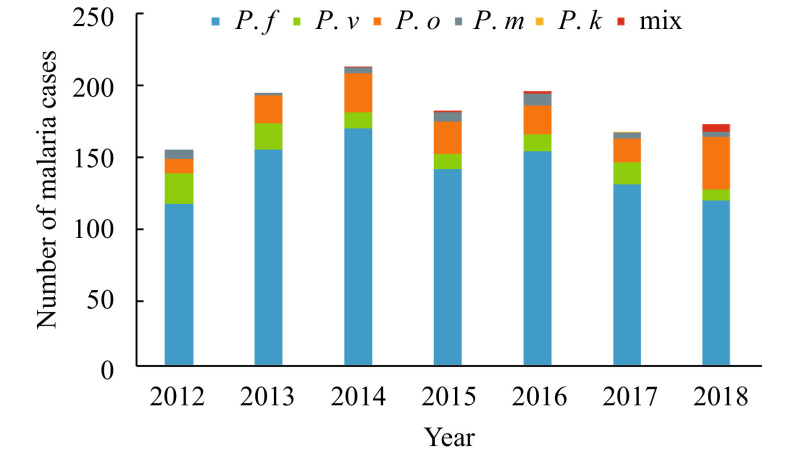
The "1-3-7" approach to malaria surveillance and response was a key measure for malaria elimination in China and was first introduced into the World Health Organization (WHO) as an international guideline for malaria surveillance and response in 2018. The "1-3-7" approach was well implemented in Henan Province from 2012-2018. Over this study period, a total of 1,294 malaria cases were detected and reported, and all cases were diagnosed and reported within 1 day with 99.23% (1,284/1,294) of cases were investigated within 3 days. In addition, 93.7% (1,212/1,294) of foci were investigated and vector control was implemented within 7 days at all residual non-active foci to prevent further spread. The "1-3-7" controlling pattern would be an effective and approachable method for implementation especially in malaria-eliminating countries and regions, but the interval from symptom onset to diagnosis cannot be ignored. Thus, the roles and responsibilities that all actors involved in the health sector must be specified too.
“1-3-7”疟疾监测与应对方法是中国消除疟疾的一项关键措施,于2018年首次作为疟疾监测与应对的国际准则被引入世界卫生组织(WHO)。2012年至2018年期间,河南省很好地实施了“1-3-7”方法。在本研究期间,共检测并报告了1294例疟疾病例,所有病例均在1天内得到诊断和报告,99.23%(1284/1294)的病例在3天内得到调查。此外,93.7%(1212/1294)的疫点得到调查,并且在所有残留的非活跃疫点在7天内实施了病媒控制以防止进一步传播。“1-3-7”防控模式对于实施而言将是一种有效且可行的方法,尤其是在疟疾消除国家和地区,但症状出现到诊断的间隔时间不能被忽视。因此,卫生部门所有参与行为体的角色和责任也必须明确。