Chinese Center for Disease Control and Prevention (Chinese Center for Tropical Diseases Research), NHC Key Laboratory of Parasite and Vector Biology, WHO Collaborating Center for Tropical Diseases, National Center for International Research on Tropical Diseases, National Institute of Parasitic Diseases, Shanghai, People's Republic of China.
Emerg Microbes Infect. 2022 Dec;11(1):314-325. doi: 10.1080/22221751.2022.2026740.
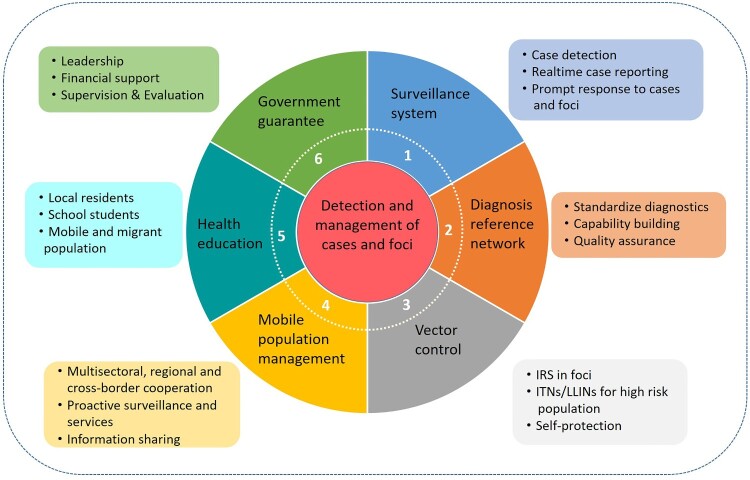
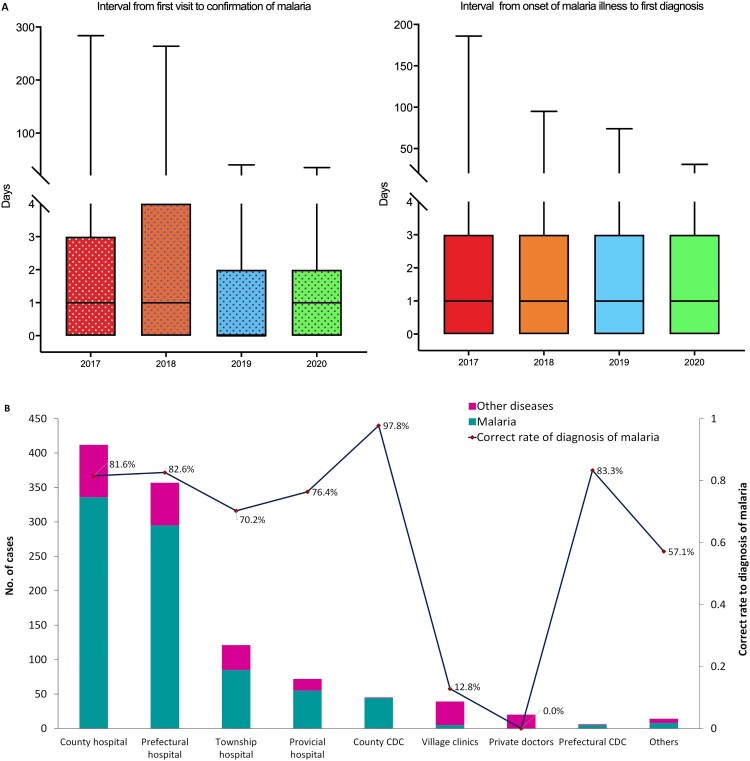
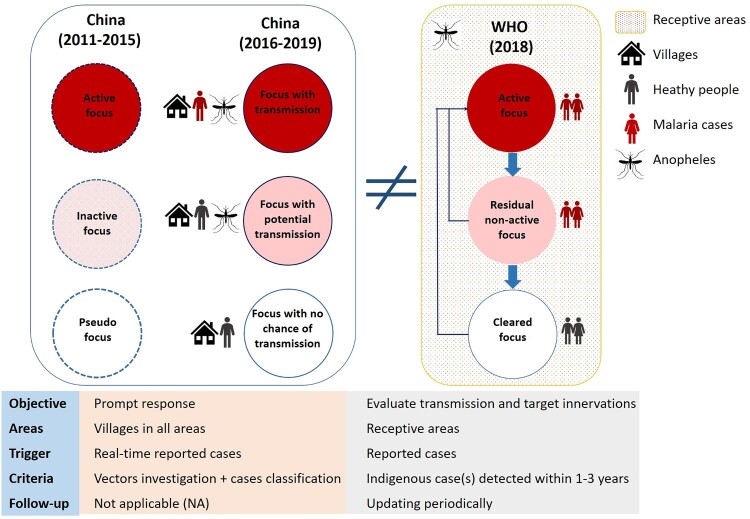
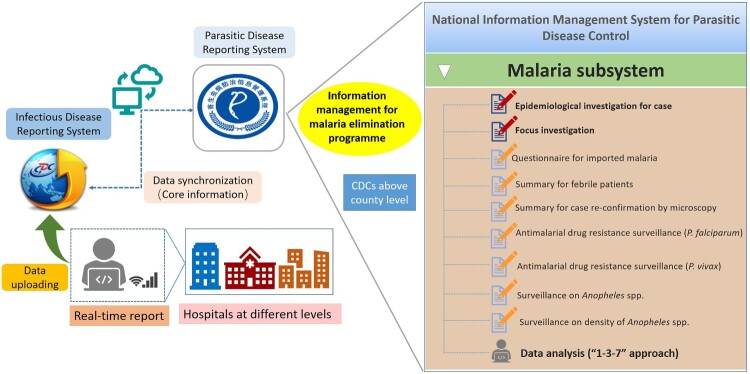
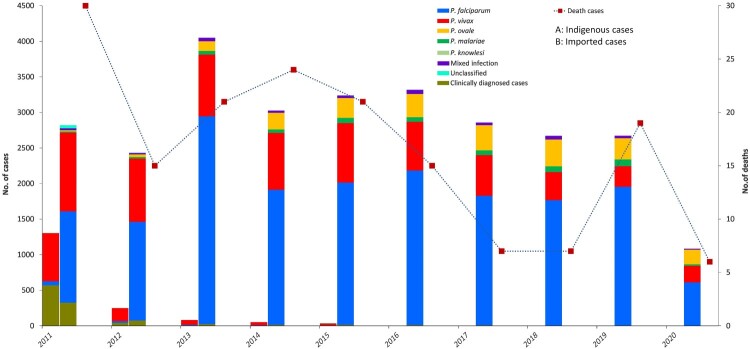
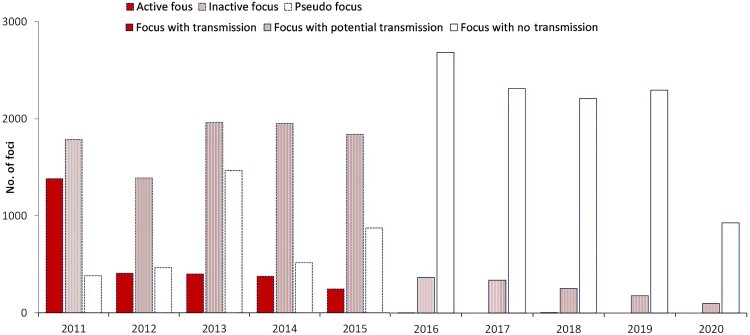
On 30 June 2021, China was certified malaria-free by the World Health Organization. In this study, the evolution, performance, outcomes, and impact of China's adaptive strategy and approach for malaria elimination from 2011 to 2020 were analysed using 10-year data. The strategy and approach focused on timely detection and rapid responses to individual cases and foci. Indigenous cases declined from 1,308 in 2011 to 36 in 2015, and the last one was reported from Yunnan Province in April 2016, although thousands of imported cases still occur annually. The "1-3-7" approach was implemented successfully between 2013 and 2020, with 100% of cases reported within 24 h, 94.5% of cases investigated within three days of case reporting, and 93.4% of foci responses performed within seven days. Additionally, 81.6% of patients attended the first healthcare visit within 1-3 days of onset and 58.4% were diagnosed as malaria within three days of onset, in 2017-2020. The adaptive strategy and approach, along with their universal implementation, are most critical in malaria elimination. In addition to strengthening surveillance on drug resistance and vectors and border malaria collaboration, a further adapted three-step strategy and the corresponding "3-3-7" model are recommended to address the risks of re-transmission and death by imported cases after elimination. China's successful practice and lessons learnt through long-term efforts provide a reference for countries moving towards elimination.
2021 年 6 月 30 日,世界卫生组织宣布中国消除疟疾。本研究利用 10 年的数据,分析了 2011 至 2020 年中国消除疟疾的适应性策略和方法的演变、表现、结果和影响。该策略和方法侧重于及时发现和对单个病例和疫点的快速反应。从 2011 年的 1308 例本土病例下降到 2015 年的 36 例,最后一例报告病例于 2016 年 4 月发生在云南省,尽管每年仍有数千例输入性病例。“1-3-7”策略在 2013 年至 2020 年期间得到成功实施,100%的病例在 24 小时内报告,94.5%的病例在报告后 3 天内调查,93.4%的疫点在 7 天内得到处理。此外,2017 至 2020 年,81.6%的患者在发病后 1-3 天内首次就诊,58.4%的患者在发病后 3 天内确诊为疟疾。适应性策略和方法及其普遍实施是消除疟疾的关键。除了加强对耐药性和媒介的监测以及边境疟疾合作外,建议进一步采取适应性三步策略和相应的“3-3-7”模式,以应对消除后输入性病例再传播和死亡的风险。中国成功的实践和长期努力中吸取的经验教训为迈向消除疟疾的国家提供了参考。