Department of Chemistry & Biochemistry, Florida State University, Tallahassee, Florida, United States of America.
Laboratory of Cancer Biology and Molecular Immunology, Department of Biochemistry, Faculty of Sciences-I, Lebanese University, Beirut, Lebanon.
PLoS One. 2021 Oct 1;16(10):e0257072. doi: 10.1371/journal.pone.0257072. eCollection 2021.
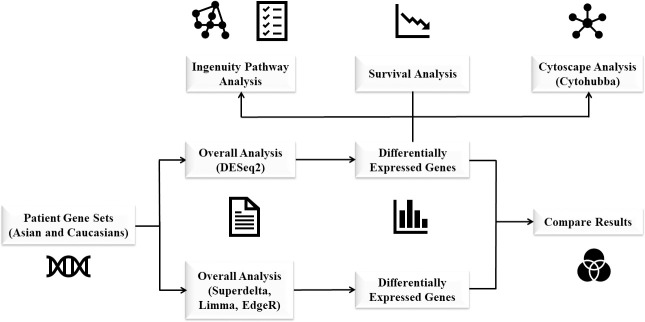
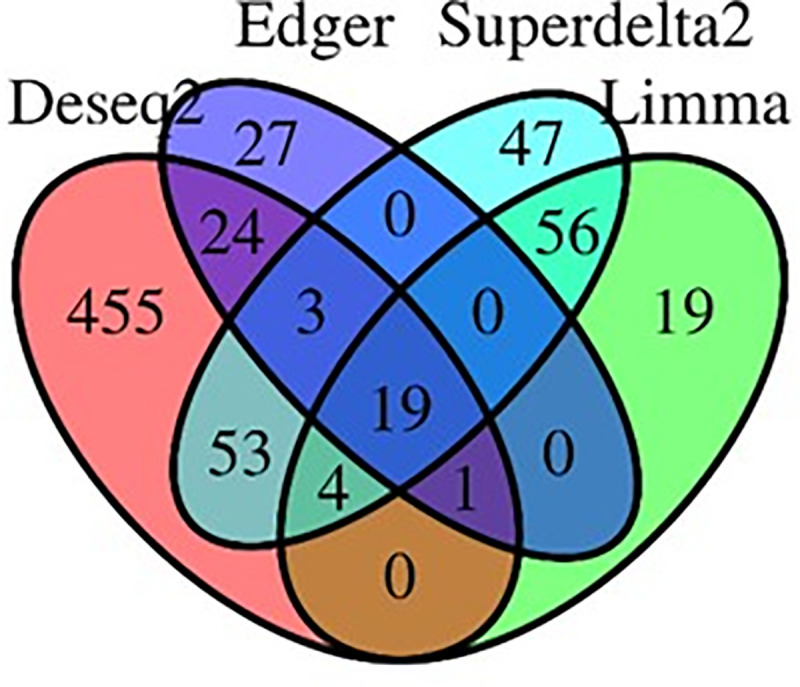
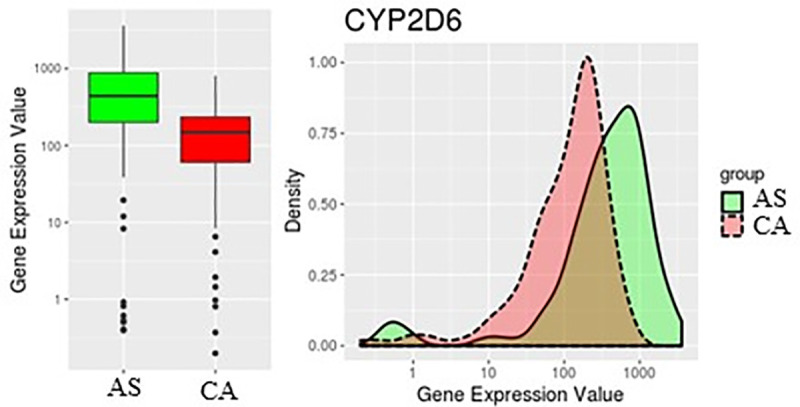
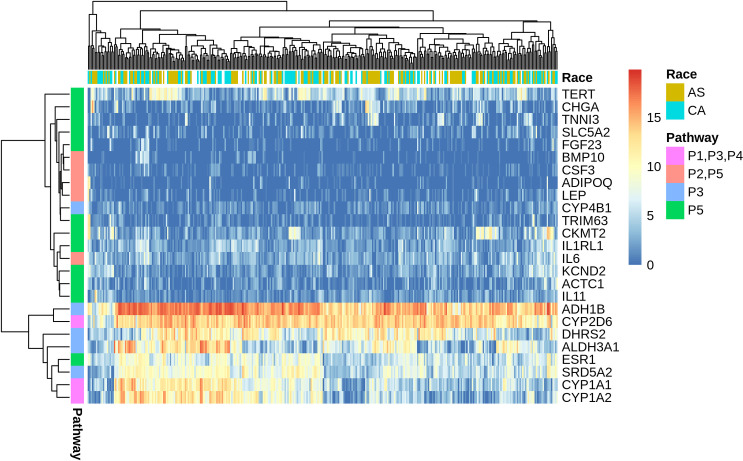
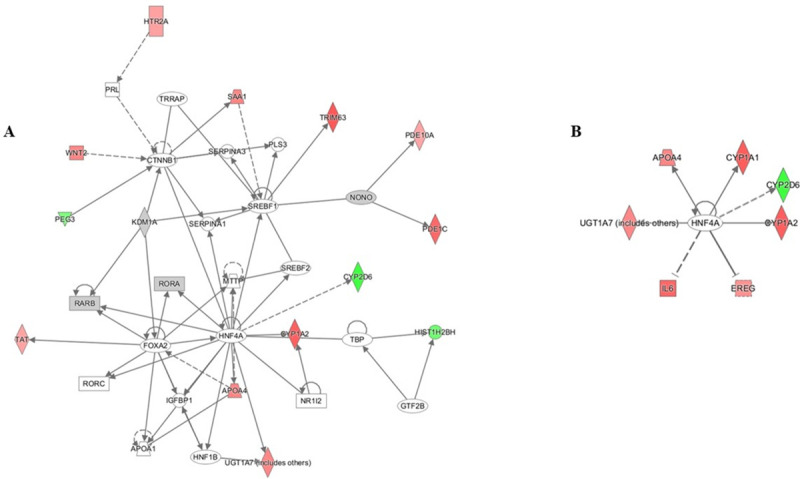
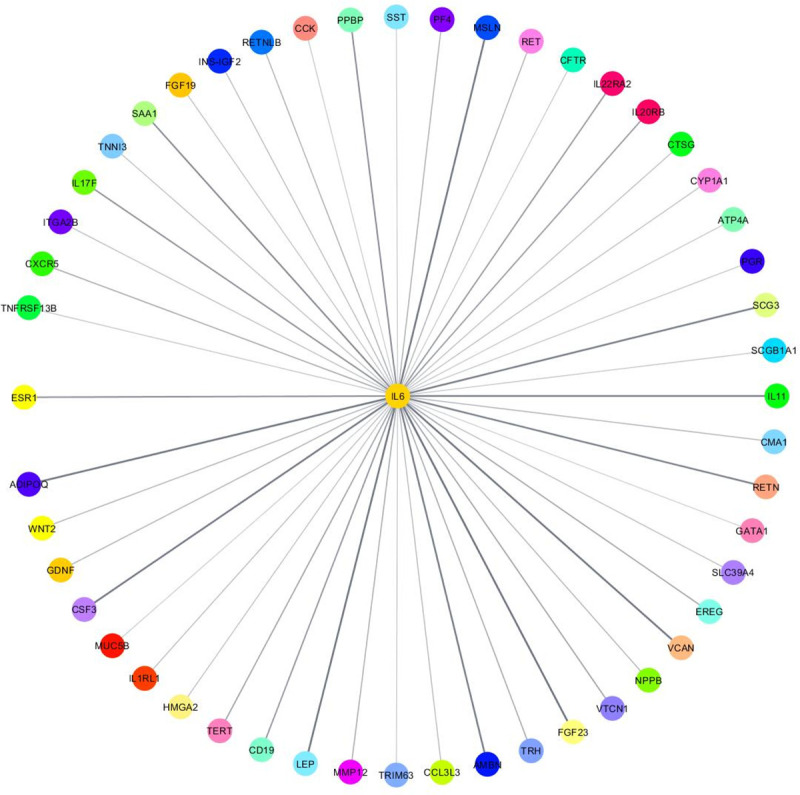
Liver cancer morbidity and mortality rates differ among ethnic groups. In the United States, the burden of liver cancer in Asian Americans (AS) is higher compared to Caucasian Americans (CA). Research on liver cancer health disparities has mainly focused on environmental and socioeconomic factors yet has ignored the genotypic differences among various racial/ethnic groups. This lack of molecular level understanding has hindered the development of personalized medical approaches for liver cancer treatment. To understand the genetic heterogeneity of liver cancer between AS and CA, we performed a systematic analysis of RNA-seq data of AS and CA patients from The Cancer Genome Atlas (TCGA). We used four differential gene expression analysis packages; DESeq2, limma, edgeR, and Superdelta2, to identify the differentially expressed genes. Our analysis identified cytochrome P450-2D6 enzyme (CYP2D6) as the gene with the greatest differential expression with higher levels in AS compared to CA. To scrutinize the underlying mechanism of CYP2D6, Ingenuity Pathway Analysis (IPA) and Cytoscape were conducted and found hepatocyte nuclear factor-4α (HNF4A) and interleukin-6 (IL6) in direct association with CYP2D6. IL6 is downregulated in AS compared to CA, while HNF4A is not significantly different. Herein, we report that CYP2D6 may serve as a putative biomarker in liver cancer health disparities. Its negative association with IL6 proclaims an intricate relationship between CYP2D6 and inflammation in the ethnic differences seen in AS and CA liver cancer patients. The goal of the present study was to understand how genetic factors may contribute to the interethnic variability of liver cancer prevalence and outcomes in AS and CA patients. Identifying ethnic-specific genes may help ameliorate detection, diagnosis, surveillance, and treatments of liver cancer, as well as reduce disease-related incidence and mortality rates in the vulnerable population.
肝癌的发病率和死亡率在不同种族之间存在差异。在美国,亚裔美国人(AS)的肝癌负担高于白种人(CA)。关于肝癌健康差异的研究主要集中在环境和社会经济因素上,但忽略了不同种族/族裔群体之间的基因差异。这种缺乏分子水平理解的情况阻碍了针对肝癌治疗的个性化医疗方法的发展。为了了解 AS 和 CA 之间肝癌的遗传异质性,我们对来自癌症基因组图谱(TCGA)的 AS 和 CA 患者的 RNA-seq 数据进行了系统分析。我们使用了四个差异基因表达分析软件包;DESeq2、limma、edgeR 和 Superdelta2,来识别差异表达基因。我们的分析确定细胞色素 P450-2D6 酶(CYP2D6)为基因,其在 AS 中的表达水平明显高于 CA。为了深入研究 CYP2D6 的潜在机制,我们进行了 Ingenuity 通路分析(IPA)和 Cytoscape 分析,发现肝细胞核因子-4α(HNF4A)和白细胞介素-6(IL6)与 CYP2D6 直接相关。IL6 在 AS 中的表达水平低于 CA,而 HNF4A 则没有显著差异。在此,我们报告 CYP2D6 可能作为肝癌健康差异的潜在生物标志物。它与 IL6 的负相关表明 CYP2D6 与炎症之间存在复杂关系,这种关系在 AS 和 CA 肝癌患者的种族差异中可见。本研究的目的是了解遗传因素如何导致 AS 和 CA 患者肝癌的流行和结局存在种族间差异。确定种族特异性基因可能有助于改善肝癌的检测、诊断、监测和治疗,并降低弱势人群中与疾病相关的发病率和死亡率。