Division of Vascular Endothelium and Microcirculation, Department of Medicine III, University Hospital Carl Gustav Carus Dresden, Technische Universität Dresden, Dresden, Germany.
Group Research & Development, British American Tobacco, Southampton, United Kingdom.
Redox Biol. 2021 Nov;47:102150. doi: 10.1016/j.redox.2021.102150. Epub 2021 Sep 26.
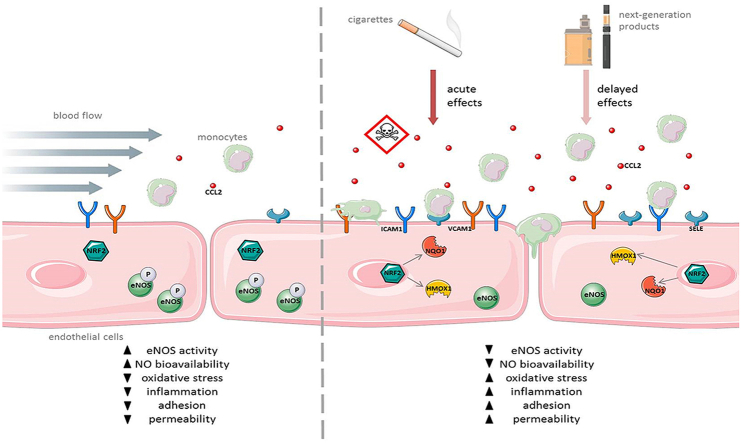
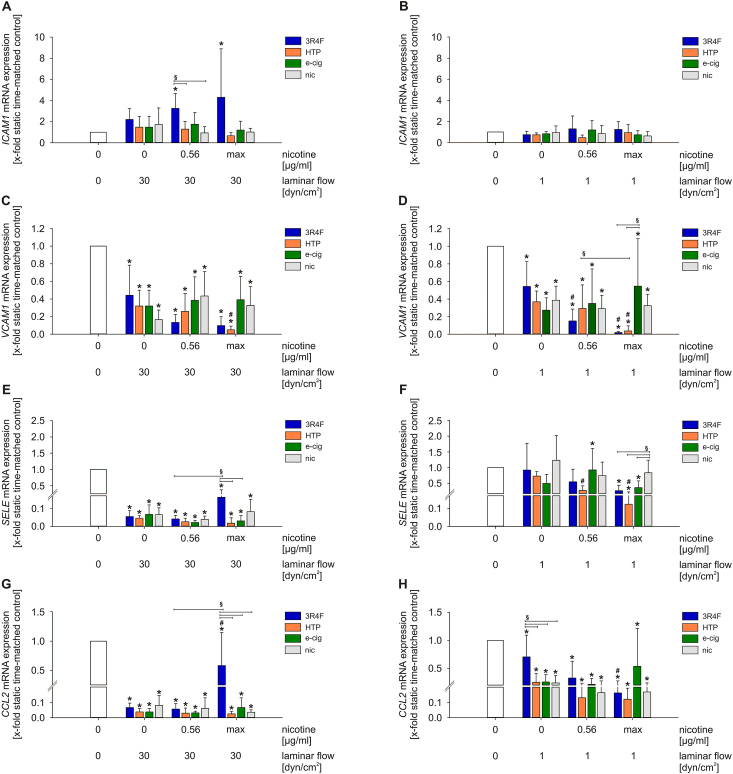
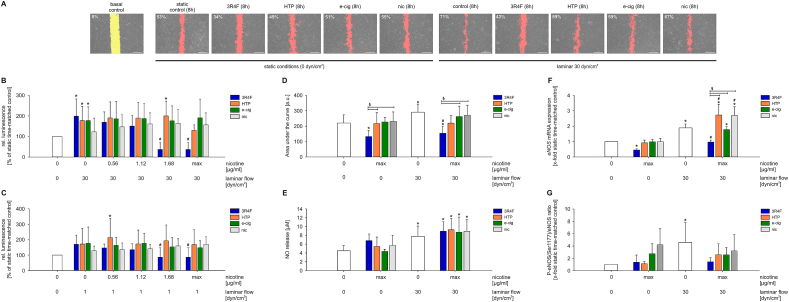
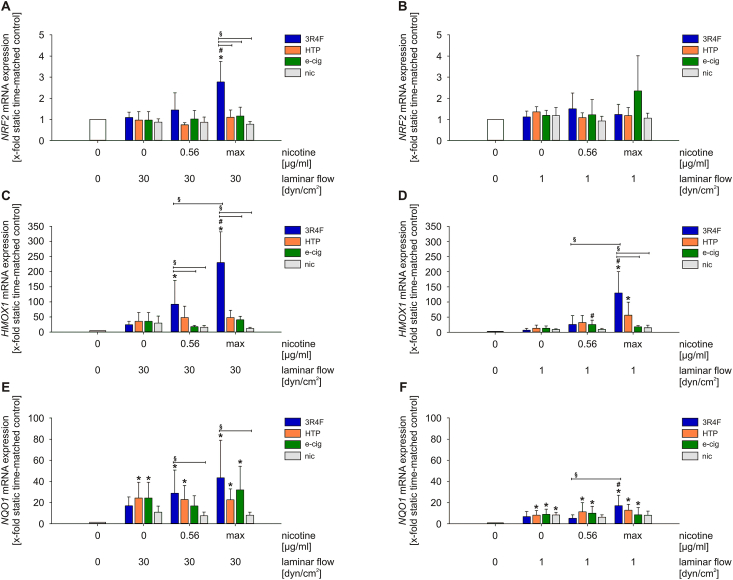
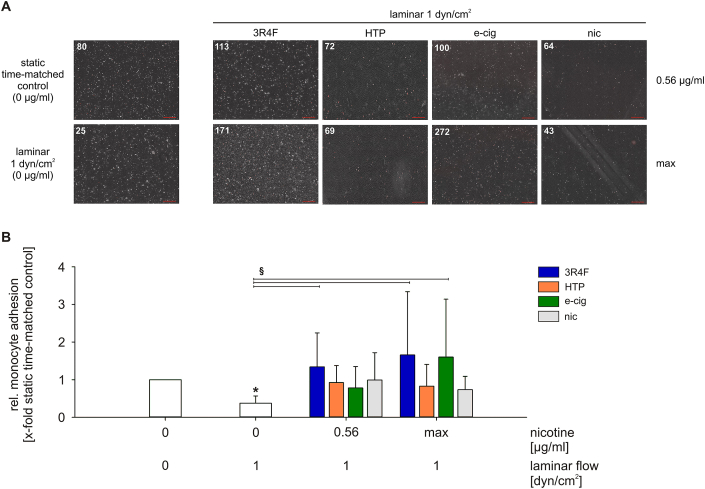
Tobacco smoking and hemodynamic forces are key stimuli for the development of endothelial dysfunction. As an alternative to smoking, next generation tobacco and nicotine products (NGP) are now widely used. However, little is known about their potential pro-inflammatory and atherogenic effects on the endothelium. In this study, we analyzed key parameters of endothelial function after exposure to aqueous smoke extracts (AqE) of a heated tobacco product (HTP), an electronic cigarette (e-cig), a conventional cigarette (3R4F) and pure nicotine. All experiments were performed under atheroprotective high laminar or atherogenic low flow with primary human endothelial cells. Treatment with 3R4F, but not alternative smoking products, reduced endothelial cell viability and wound healing capability via the PI3K/AKT/eNOS(NOS3) pathway. Laminar flow delayed detrimental effects on cell viability by 3R4F treatment. 3R4F stimulation led to activation of NRF2 antioxidant defense system at nicotine concentrations ≥0.56 μg/ml and increased expression of its target genes HMOX1 and NQO1. Treatment with HTP revealed an induction of HMOX1 and NQO1 at dosages with ≥1.68 μg/ml nicotine, whereas e-cig and nicotine exposure had no impact. Analyses of pro-inflammatory genes revealed an increased ICAM1 expression under 3R4F treatment. 3R4F reduced VCAM1 expression in a dose-dependent manner; HTP treatment had similar but milder effects; e-cig and nicotine treatment had no impact. SELE expression was induced by 3R4F under static conditions. High laminar flow prevented this upregulation. Stimulation with laminar flow led to downregulation of CCL2 (MCP-1). From this downregulated level, only 3R4F increased CCL2 expression at higher concentrations. Finally, under static conditions, all components increased adhesion of monocytes to endothelial cells. Interestingly, only stimulation with 3R4F revealed increased monocyte adhesion under atherosclerosis-prone low flow. In conclusion, all product categories activated anti-oxidative or pro-inflammatory patterns. NGP responses were typically lower than in 3R4F exposed cells. Also, 3R4F stimulation led to an impaired endothelial wound healing and induced a pro-inflammatory phenotype compared to NGP treatment.
吸烟和血流动力是内皮功能障碍发展的关键刺激因素。作为吸烟的替代方法,下一代烟草和尼古丁产品(NGP)现在被广泛使用。然而,关于它们对内皮的潜在促炎和动脉粥样硬化作用知之甚少。在这项研究中,我们分析了暴露于加热烟草产品(HTP)、电子烟(e-cig)、传统香烟(3R4F)和纯尼古丁的水烟提取物(AqE)后内皮功能的关键参数。所有实验均在具有保护作用的层流或具有促动脉粥样硬化作用的低流量条件下,用人原代内皮细胞进行。结果发现,3R4F 处理而非替代吸烟产品会通过 PI3K/AKT/eNOS(NOS3)途径降低内皮细胞活力和伤口愈合能力。层流可延迟 3R4F 处理对细胞活力的有害影响。3R4F 刺激在尼古丁浓度≥0.56μg/ml 时激活 NRF2 抗氧化防御系统,并增加其靶基因 HMOX1 和 NQO1 的表达。HTP 处理剂量≥1.68μg/ml 尼古丁时诱导 HMOX1 和 NQO1 的表达,而 e-cig 和尼古丁暴露则没有影响。促炎基因分析显示 3R4F 处理后 ICAM1 表达增加。3R4F 以剂量依赖的方式降低 VCAM1 的表达;HTP 处理具有类似但更温和的作用;e-cig 和尼古丁处理没有影响。SELE 在静态条件下由 3R4F 诱导。高层流可防止这种上调。层流刺激导致 CCL2(MCP-1)下调。在下调的水平上,只有 3R4F 在较高浓度下增加 CCL2 的表达。最后,在静态条件下,所有成分均增加单核细胞与内皮细胞的粘附。有趣的是,只有在易患动脉粥样硬化的低流量下,3R4F 的刺激才会增加单核细胞的粘附。总之,所有类别均激活了抗氧化或促炎模式。NGP 的反应通常低于 3R4F 暴露细胞。此外,与 NGP 处理相比,3R4F 刺激导致内皮伤口愈合受损并诱导促炎表型。