Department of Neurosciences, Biomedicine, and Movement Sciences, Anatomy and Histology Section, University of Verona, Strada le Grazie, 8 37134, Verona, Italy.
Department of Neurosciences, Biomedicine, and Movement Sciences, Neurology Unit, University of Verona, Verona, Italy.
Neurol Sci. 2022 Jan;43(1):99-104. doi: 10.1007/s10072-021-05635-y. Epub 2021 Oct 2.
It is reported that recovery from COVID-19 chemosensory deficit generally occurs in a few weeks, although olfactory dysfunction may persist longer. Here, we provide a detailed follow-up clinical investigation in a very young female patient (17-year-old) with a long-lasting anosmia after a mild infection, with partial recovery 15 months after the onset.
Neuroimaging and neurophysiologic assessments as well as olfactory mucosa swabbing for microbiological and immunocytochemical analyses were performed. Olfactory and gustatory evaluations were conducted through validated tests.
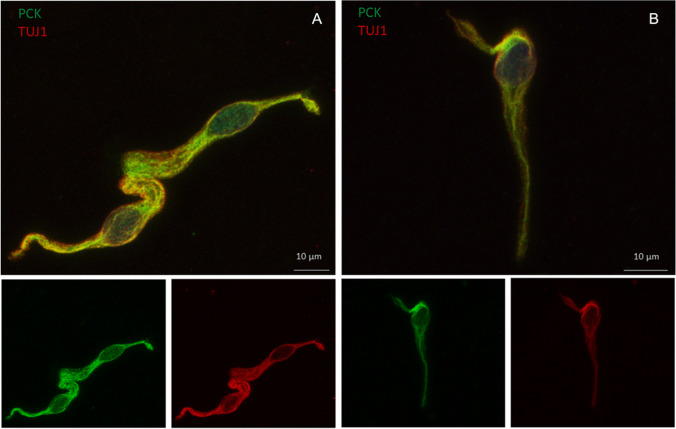
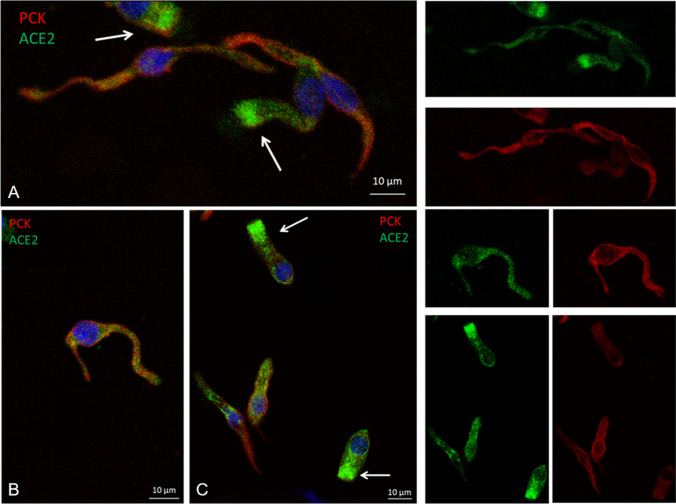
Chemosensory evaluations were consistent with anosmia associated with parosmia phenomena and gustatory impairment, the latter less persistent. Brain MRI (3.0 T) showed no microvascular injury in olfactory bulbs and brain albeit we cannot rule out slight structural abnormalities during the acute phase, and a high-density EEG was negative. Immunocytochemistry of olfactory mucosa swabs showed high expression of ACE2 in sustentacular cells and lower dot-like cytoplasmic positivity in neuronal-shaped cells.
The occurrence of long-term persistent olfactory deficit in spite of the absence of structural brain and olfactory bulb involvement supports the view of a possible persistent dysfunction of both sustentacular cells and olfactory neurons. The gustatory dysfunction even if less persisting for the described features could be related to a primary gustatory system involvement. Future longitudinal studies are needed to investigate the persistence of chemosensory impairment, which could have a relevant impact on the daily life.
有报道称,COVID-19 患者的化学感觉缺陷一般会在几周内恢复,尽管嗅觉功能障碍可能持续时间更长。在此,我们对一名年轻女性患者(17 岁)进行了详细的随访临床研究,该患者在轻度感染后出现持久的嗅觉丧失,发病 15 个月后部分恢复。
进行了神经影像学和神经生理学评估,以及嗅黏膜拭子的微生物和免疫细胞化学分析。通过验证过的测试进行嗅觉和味觉评估。
化学感觉评估与嗅觉丧失伴幻嗅现象和味觉障碍一致,后者的持续时间较短。尽管我们不能排除在急性阶段存在轻微的结构异常,但大脑 MRI(3.0T)显示嗅球和大脑均无微血管损伤,高密度脑电图为阴性。嗅黏膜拭子的免疫细胞化学显示支持细胞中 ACE2 高表达,神经元状细胞的点状细胞质阳性较低。
尽管没有脑和嗅球结构受累,但长期持续的嗅觉缺陷的发生支持了支持细胞和嗅神经元可能持续功能障碍的观点。味觉障碍即使持续时间较短,也可能与原发性味觉系统受累有关。需要进行未来的纵向研究来调查化学感觉损伤的持续性,这可能对日常生活有重大影响。