National Institute of Traditional Chinese Medicine Constitution and Preventive Treatment of Diseases, Beijing University of Chinese Medicine, Beijing, China.
College of Chinese Medicine, Beijing University of Chinese Medicine, Beijing, China.
Front Public Health. 2021 Sep 16;9:722604. doi: 10.3389/fpubh.2021.722604. eCollection 2021.
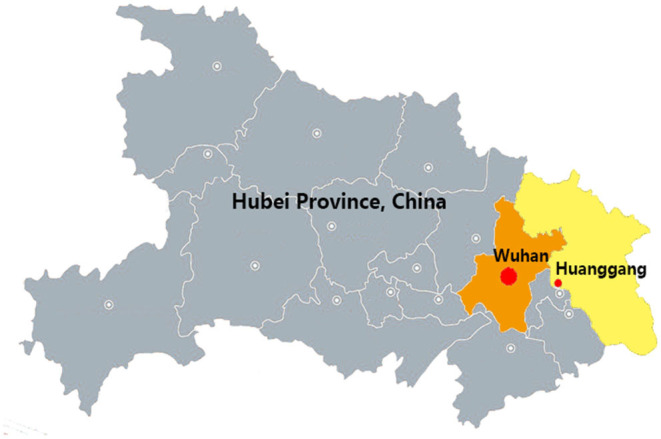
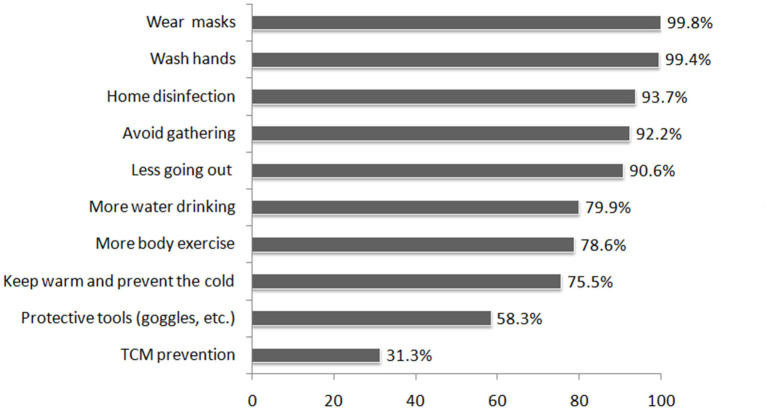
The objective of this study was to investigate how knowledge and practice of coronavirus disease 2019 (COVID-19) prevention measures affected concerns about returning to work among supermarket staff. Attitudes about the ability of traditional Chinese medicine (TCM) to prevent COVID-19 were also assessed. A cross-sectional study was conducted in Huanggang, Hubei Province, China from April 23 to 25, 2020. Participants were invited to fill out an electronic questionnaire on their cell phones. The results showed that from 2,309 valid questionnaires, 61.5% of participants were concerned about resuming work. Major concerns included asymptomatic infection (85.01%) and employees gathering in the workplace (78.96%). Multivariate logistic regression indicated that the female gender, having school-aged children and pregnancy were risk factors for being concerned about resuming work, while good knowledge and practice of preventive measures were protective factors. Knowledge and practice of preventive measures were positively correlated. Among preventive measures, the highest percentage of participants knew about wearing masks and washing hands. Meanwhile, 65.8% of participants expressed confidence in the ability of TCM to prevent COVID-19, where 74 and 51.3% thought there was a need and a strong need, respectively, for preventive TCM-based products. Among them, 71.5% preferred oral granules. Regarding TCM as a COVID-19 preventative, most were interested in information about safety and efficacy. These findings suggested that promoting knowledge and practices regarding COVID-19 prevention can help alleviate concerns about returning to work. Meanwhile, TCM can feasibly be accepted to diversify COVID-19 prevention methods. http://www.chictr.org.cn/, identifier: ChiCTR2000031955.
本研究旨在探讨对新冠病毒肺炎(COVID-19)预防措施的了解和实践如何影响超市员工对重返工作岗位的担忧。还评估了对传统中医(TCM)预防 COVID-19 的能力的态度。2020 年 4 月 23 日至 25 日,在中国湖北省黄冈市进行了一项横断面研究。邀请参与者用手机填写电子问卷。结果显示,在 2309 份有效问卷中,61.5%的参与者对恢复工作表示担忧。主要关注点包括无症状感染(85.01%)和员工在工作场所聚集(78.96%)。多变量逻辑回归表明,女性、有学龄儿童和怀孕是对恢复工作感到担忧的危险因素,而预防措施的良好知识和实践是保护因素。预防措施的知识和实践呈正相关。在预防措施中,参与者最了解戴口罩和洗手。同时,65.8%的参与者对 TCM 预防 COVID-19 的能力表示信心,其中 74%和 51.3%分别认为有必要和强烈需要预防基于 TCM 的产品。其中,71.5%的人更喜欢口服颗粒。将 TCM 作为 COVID-19 的预防方法,大多数人对安全性和有效性的信息感兴趣。这些发现表明,促进 COVID-19 预防知识和实践可以帮助减轻对重返工作岗位的担忧。同时,TCM 可以被接受来多样化 COVID-19 的预防方法。http://www.chictr.org.cn/,标识符:ChiCTR2000031955。