Gagat Maciej, Zielińska Wioletta, Mikołajczyk Klaudia, Zabrzyński Jan, Krajewski Adrian, Klimaszewska-Wiśniewska Anna, Grzanka Dariusz, Grzanka Alina
Department of Histology and Embryology, Faculty of Medicine, Nicolaus Copernicus University in Toruń, Collegium Medicum in Bydgoszcz, Bydgoszcz, Poland.
Department of Clinical Pathomorphology, Faculty of Medicine, Nicolaus Copernicus University in Toruń, Collegium Medicum in Bydgoszcz, Bydgoszcz, Poland.
Front Cell Dev Biol. 2021 Sep 17;9:668032. doi: 10.3389/fcell.2021.668032. eCollection 2021.
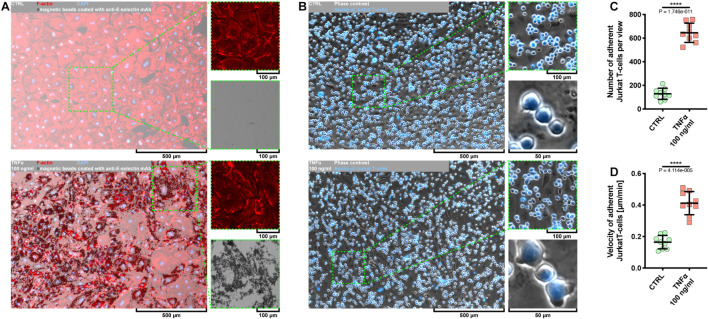
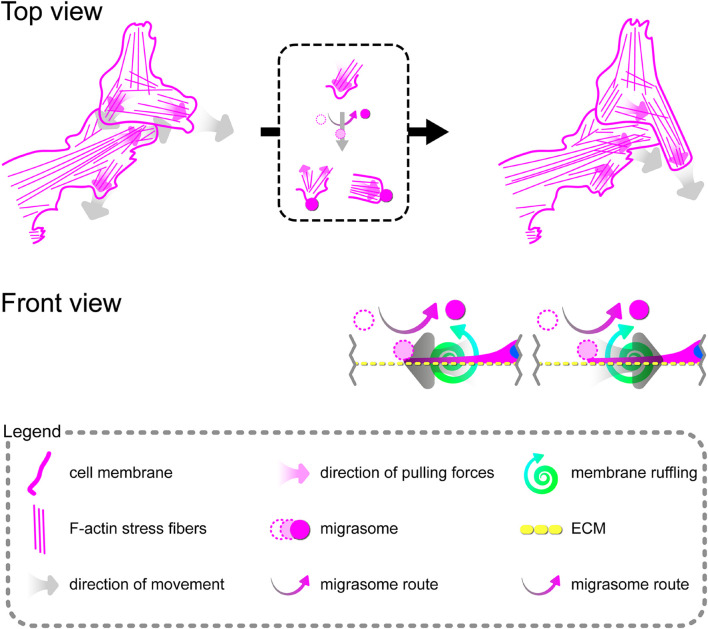
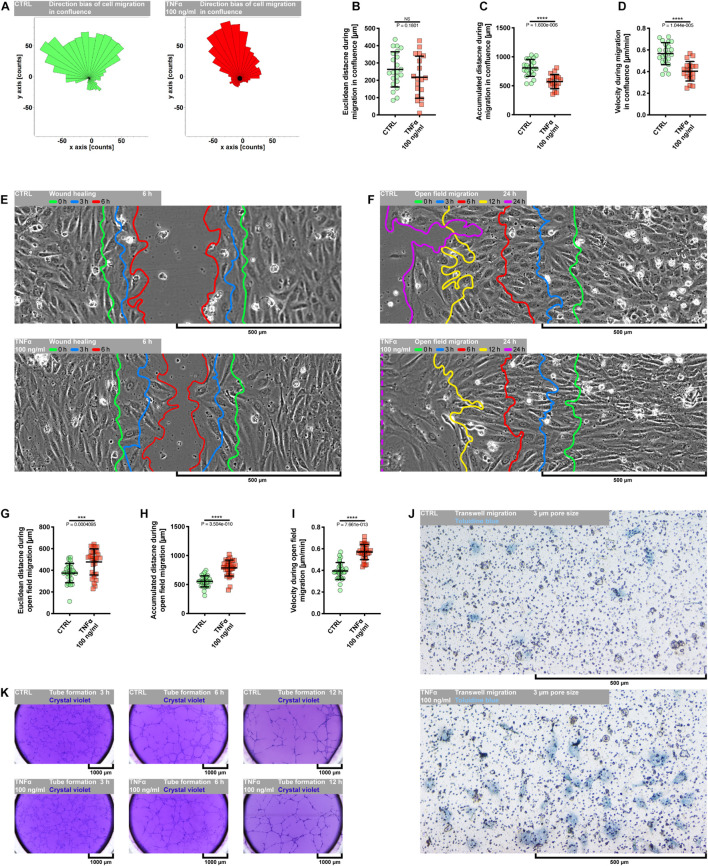
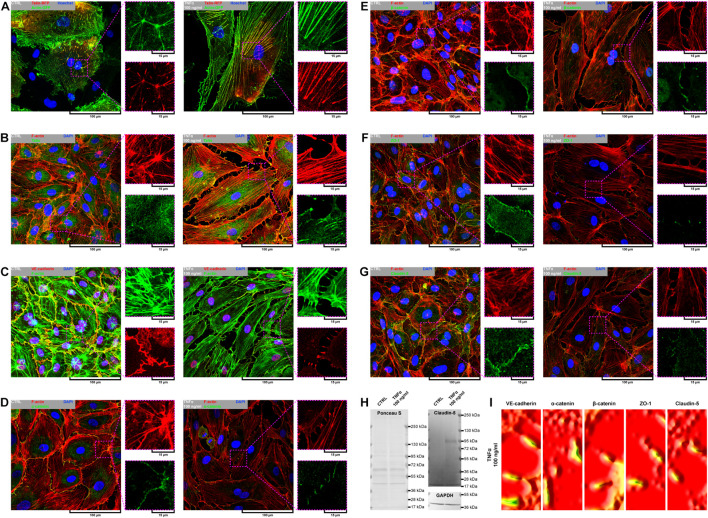
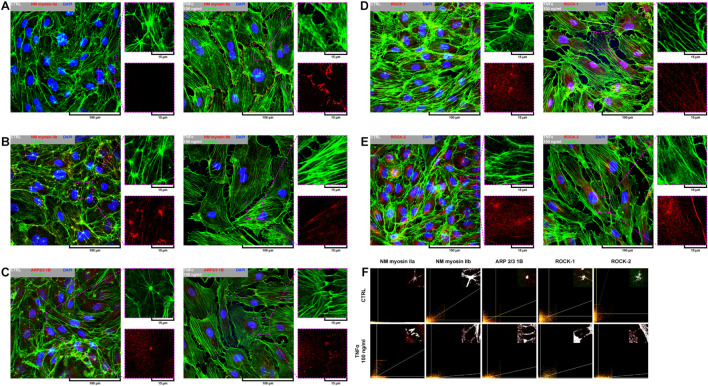
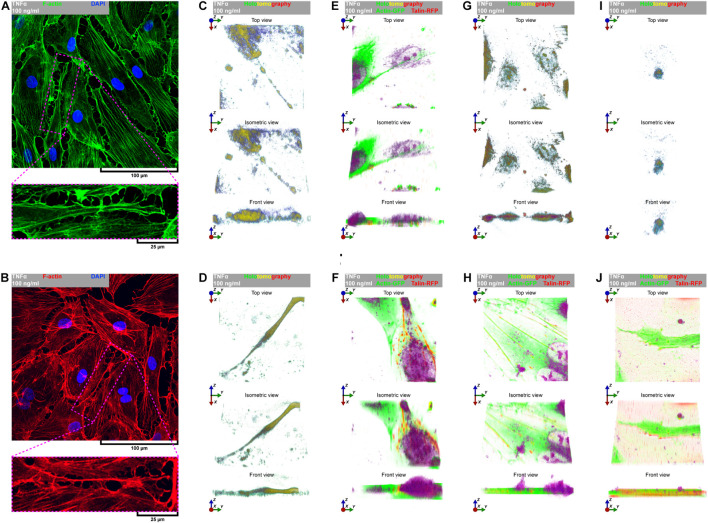
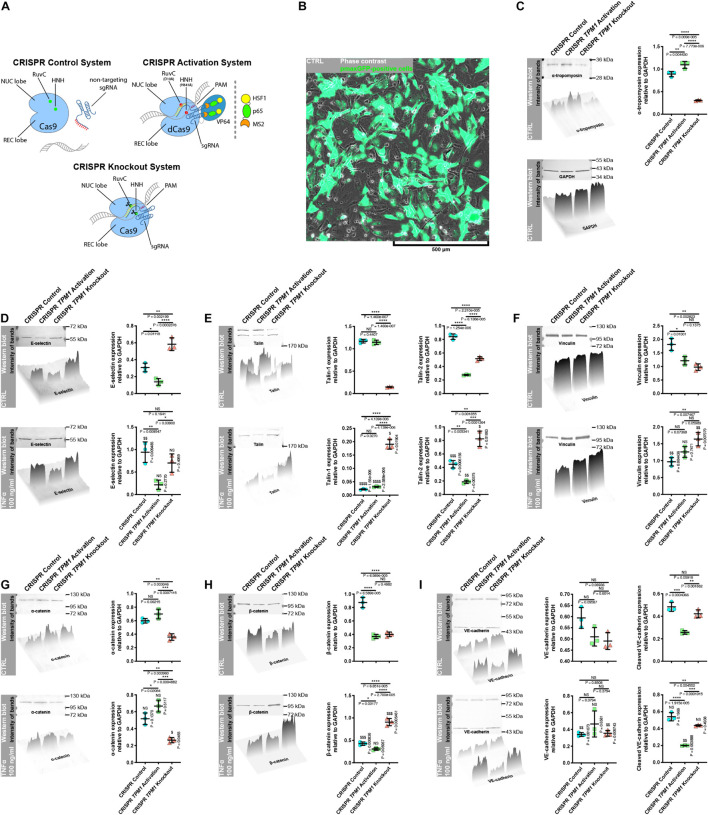
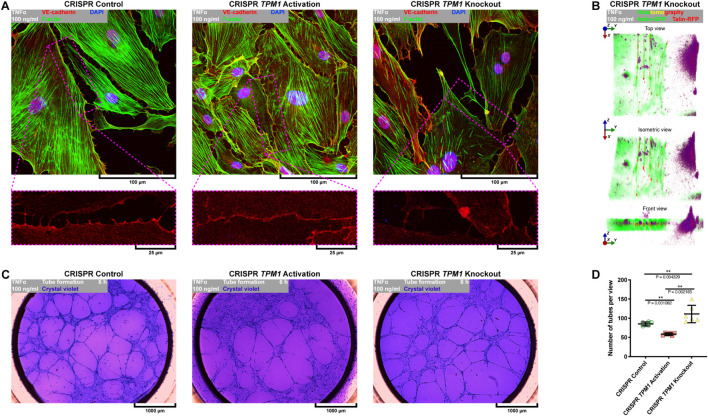
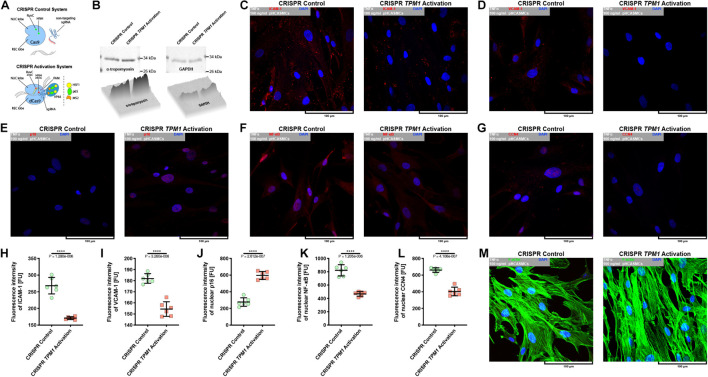
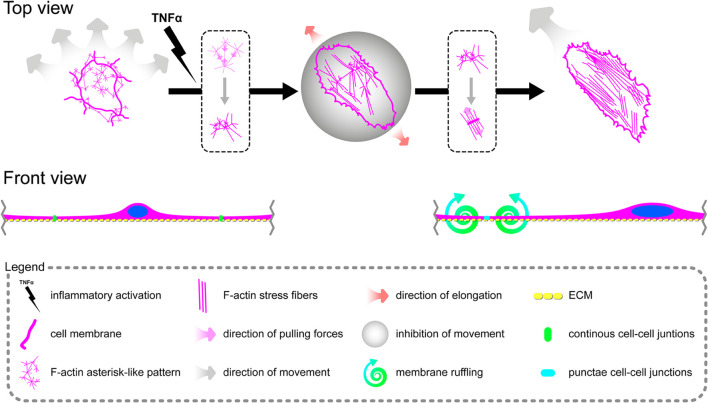
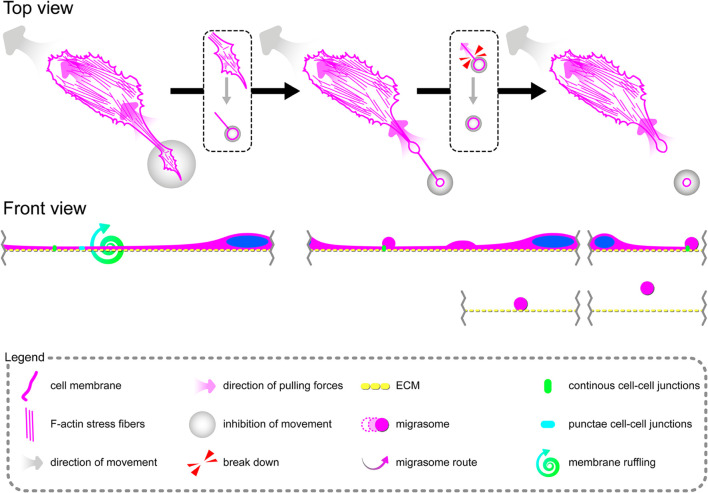
Tumor necrosis factor α (TNFα) is one of the most important proinflammatory cytokines, which affects many processes associated with the growth and characteristics of endothelial, smooth muscle, and immune system cells. However, there is no correlation between most and studies on its role in endothelial cell proliferation and migration. In this study, we examined the effect of recombinant human (rh) TNFα produced in HEK293 cells on primary human coronary artery endothelial cells (pHCAECs) in the context of F-actin organization and such processes as migration and adhesion. Furthermore, we evaluated the possibility of the inhibition of the endothelial inflammatory response by the CRISPR-based regulation of gene expression. We showed that TNFα-induced activation of pHCAECs was related to the reorganization of the actin cytoskeleton into parallel-arranged stress fibers running along the longer axis of pHCAECs. It allowed for the directed and parallel motion of the cells during coordinated migration. This change in F-actin organization promoted strong but discontinuous cell-cell contacts involved in signalization between migrating cells. Moreover, this form of intercellular connections together with locally increased adhesion was related to the formation of migrasomes and further migracytosis. Stabilization of the actin cytoskeleton through the CRISPR-based activation of endogenous expression of resulted in the inhibition of the inflammatory response of pHCAECs following treatment with rh TNFα and stabilization of cell-cell junctions through reduced cleavage of vascular endothelial cadherin (VE-cadherin) and maintenance of the stable levels of α- and β-catenins. We also showed that CRISPR-based activation of reduced inflammatory activation, proliferation, and migration of primary human coronary artery smooth muscle cells. Therefore, products of the gene may be a potential therapeutic target for the treatment of proinflammatory vascular disorders.
肿瘤坏死因子α(TNFα)是最重要的促炎细胞因子之一,它影响许多与内皮细胞、平滑肌细胞和免疫系统细胞的生长及特性相关的过程。然而,关于其在内皮细胞增殖和迁移中作用的大多数研究之间并无关联。在本研究中,我们在F-肌动蛋白组织以及迁移和黏附等过程的背景下,检测了HEK293细胞中产生的重组人(rh)TNFα对原代人冠状动脉内皮细胞(pHCAECs)的影响。此外,我们评估了通过基于CRISPR的基因表达调控抑制内皮炎症反应的可能性。我们发现,TNFα诱导的pHCAECs激活与肌动蛋白细胞骨架重组成沿pHCAECs较长轴平行排列的应力纤维有关。这使得细胞在协调迁移过程中能够定向和平行移动。F-肌动蛋白组织的这种变化促进了迁移细胞之间信号传导所涉及的强烈但不连续的细胞间接触。此外,这种细胞间连接形式与局部增加的黏附一起与迁移小体的形成及进一步的迁移胞吐作用有关。通过基于CRISPR的内源性表达激活来稳定肌动蛋白细胞骨架,导致在用rh TNFα处理后pHCAECs的炎症反应受到抑制,并且通过减少血管内皮钙黏蛋白(VE-钙黏蛋白)的裂解以及维持α-连环蛋白和β-连环蛋白的稳定水平来稳定细胞间连接。我们还表明,基于CRISPR的激活减少了原代人冠状动脉平滑肌细胞的炎症激活、增殖和迁移。因此,该基因的产物可能是治疗促炎性血管疾病的潜在治疗靶点。