Yuan Yumeng, Chen Yihuan, Yao Fen, Zeng Mi, Xie Qingdong, Shafiq Muhammad, Noman Sohail Muhammad, Jiao Xiaoyang
Department of Cell Biology and Genetics, Shantou University Medical College, Shantou, China.
The Second Affiliated Hospital of Shantou University Medical College, Shantou, China.
Front Cell Dev Biol. 2021 Sep 17;9:736994. doi: 10.3389/fcell.2021.736994. eCollection 2021.
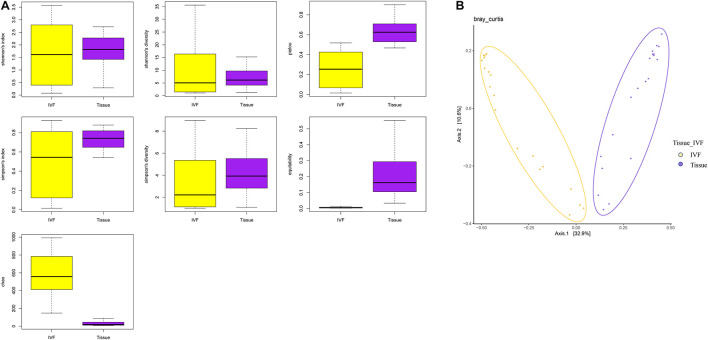
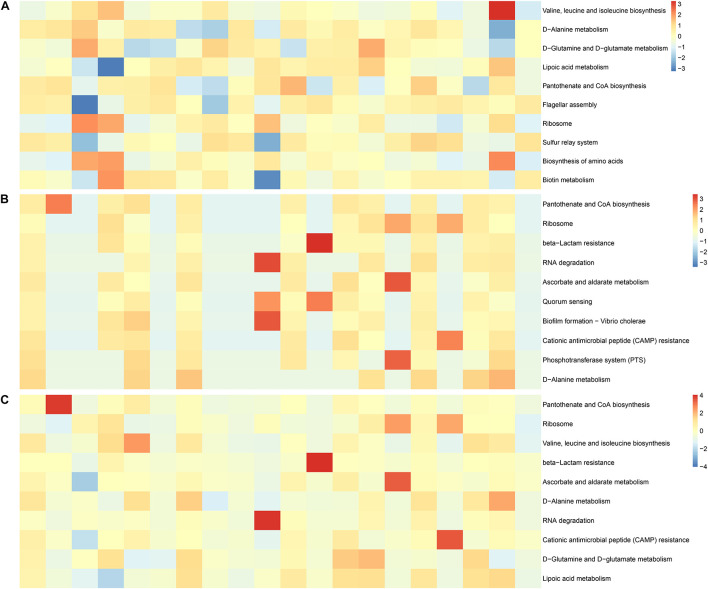
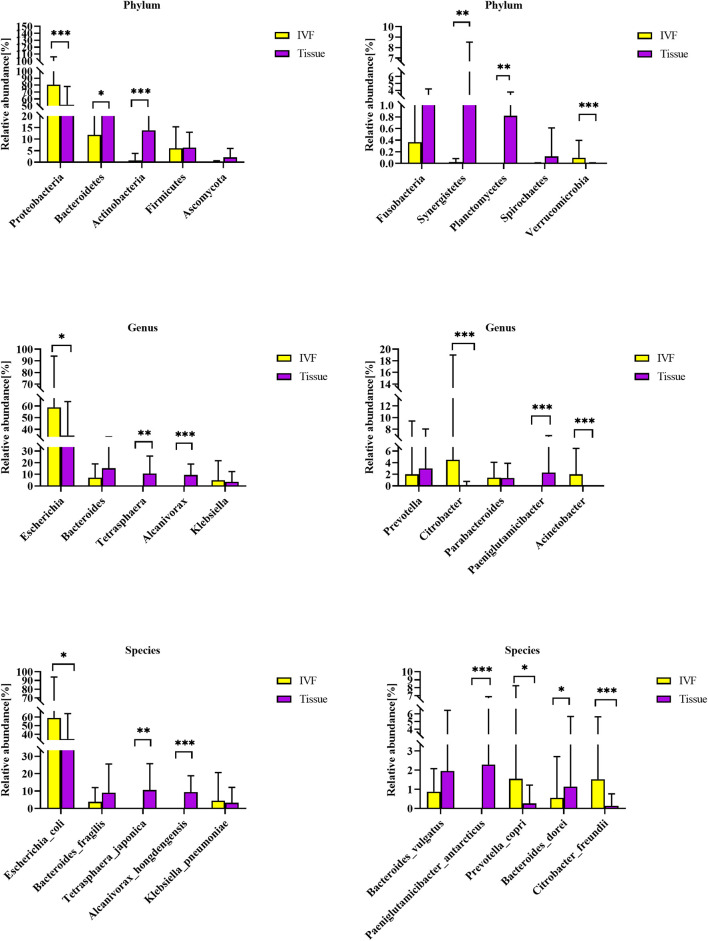
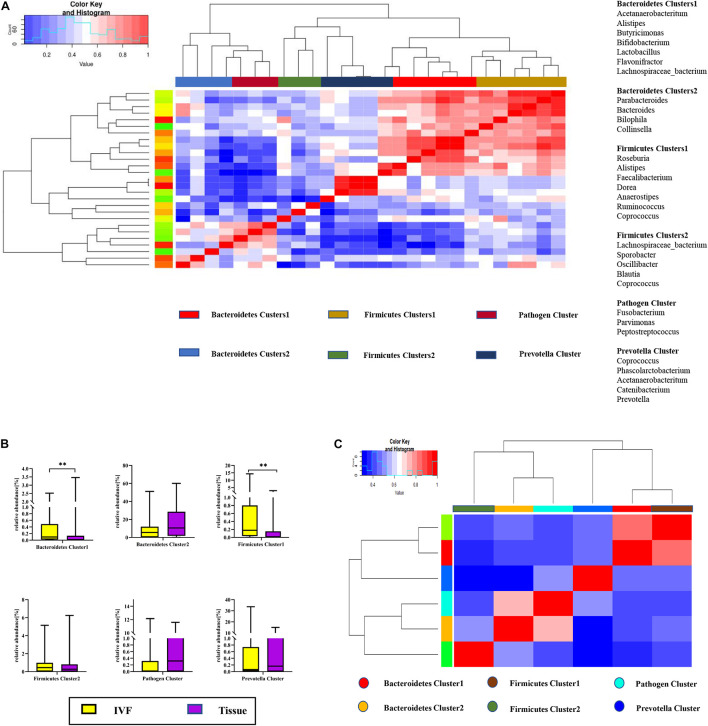
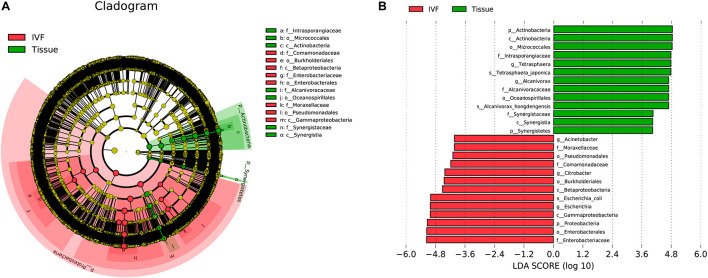
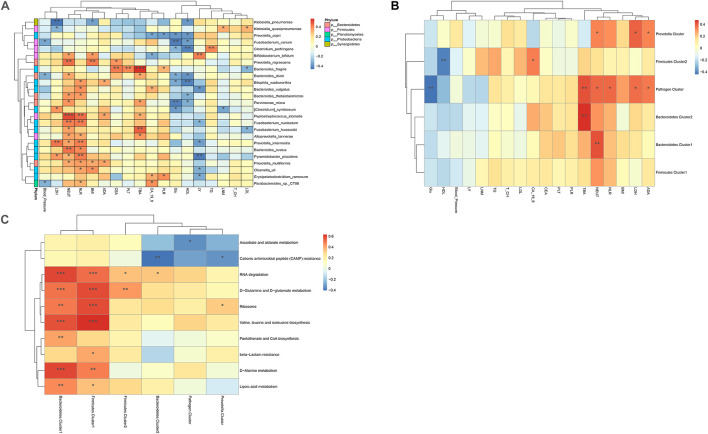
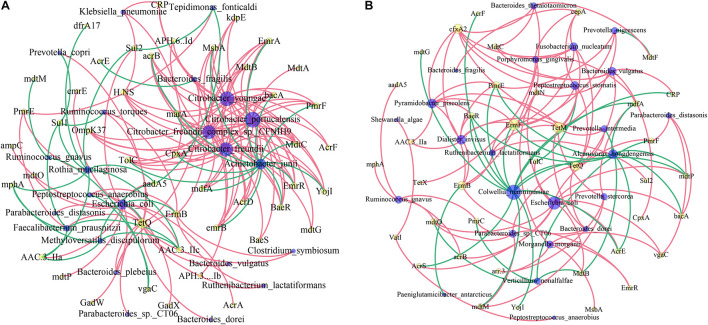
The gut microbiome plays a crucial role in colorectal cancer (CRC) tumorigenesis, but compositions of microorganisms have been inconsistent in previous studies due to the different types of specimens. We investigated the microbiomes and resistomes of CRC patients with colonic biopsy tissue and intestinal lavage fluid (IVF). Paired samples (biopsy tissue and IVF) were collected from 20 patients with CRC, and their gut microbiomes and resistomes were measured by shotgun metagenomics. Clinical and laboratory data were recorded. Bioinformatics (KneadData, Kraken2, and FMAP) and statistical analysis were done using the R (v4.0.2) software. Bacterial diversity in IVF was higher than in tissue samples, and bacterial operational taxonomic units (OTUs) were 2,757 in IVF vs. 197 in tissue. β-diversity showed distinct clusters in paired samples. The predominant bacteria in IVF were phylum Proteobacteria, while the predominant bacteria of tissue were phylum Actinobacteria. Twenty-seven representative bacteria were selected to form six bacterial clusters, which showed only Firmicutes Cluster 1, and the Bacteroidetes Cluster 1 were significantly more abundant in the IVF group than those in the tissue group ( < 0.05). The Firmicutes Cluster 2, Bacteroidetes Cluster 2, Pathogen Cluster, and Cluster were not significantly different between IVF and tissue ( > 0.05). Correlation analysis revealed that some bacteria could have effects on metabolic and inflammatory parameters of CRC patients. A total of 1,295 antibiotic resistance genes (ARGs) were detected in the gut microbiomes, which conferred multidrug resistance, as well as resistance to tetracycline, aminoglycoside, and more. Co-occurrence patterns revealed by the network showed mainly ARG-carrying bacteria to be similar between IVF and tissue, but leading bacteria located in the hub differed between IVF and tissue. Heterogeneity of microbiota is particularly evident when studied with IVF and tissue samples, but bacterial clusters that have close relationships with CRC carcinogenesis are not significantly different, using IVF as an alternative to tissue for gut microbiome, and resistome assessment may be a feasible method.
肠道微生物群在结直肠癌(CRC)的肿瘤发生中起着关键作用,但由于样本类型不同,以往研究中的微生物组成并不一致。我们研究了结直肠癌患者结肠活检组织和肠道灌洗液(IVF)的微生物群和耐药基因组。从20例CRC患者中收集配对样本(活检组织和IVF),并通过鸟枪法宏基因组学测量其肠道微生物群和耐药基因组。记录临床和实验室数据。使用R(v4.0.2)软件进行生物信息学分析(KneadData、Kraken2和FMAP)和统计分析。IVF中的细菌多样性高于组织样本,IVF中的细菌操作分类单元(OTU)为2757个,而组织样本中为197个。β-多样性在配对样本中显示出明显的聚类。IVF中主要的细菌是变形菌门,而组织中主要的细菌是放线菌门。选择27种代表性细菌形成6个细菌簇,结果显示只有厚壁菌门簇1和拟杆菌门簇1在IVF组中的丰度显著高于组织组(<0.05)。厚壁菌门簇2、拟杆菌门簇2、病原体簇和其他簇在IVF和组织之间没有显著差异(>0.05)。相关性分析表明,一些细菌可能会对CRC患者的代谢和炎症参数产生影响。在肠道微生物群中总共检测到1295个抗生素抗性基因(ARG),这些基因赋予了多重耐药性,以及对四环素、氨基糖苷类等的耐药性。网络显示的共现模式表明,IVF和组织之间携带ARG的主要细菌相似,但位于中心的主导细菌在IVF和组织之间有所不同。当使用IVF和组织样本进行研究时,微生物群的异质性尤为明显,但与CRC致癌密切相关的细菌簇没有显著差异,使用IVF替代组织进行肠道微生物群和耐药基因组评估可能是一种可行的方法。