Mueller Matthias, Grafeneder Juergen, Schoergenhofer Christian, Schwameis Michael, Schriefl Christoph, Poppe Michael, Clodi Christian, Koch Moritz, Sterz Fritz, Holzer Michael, Ettl Florian
Department of Emergency Medicine, Medical University of Vienna, Vienna, Austria.
Department of Clinical Pharmacology, Medical University of Vienna, Vienna, Austria.
Front Med (Lausanne). 2021 Sep 16;8:697906. doi: 10.3389/fmed.2021.697906. eCollection 2021.
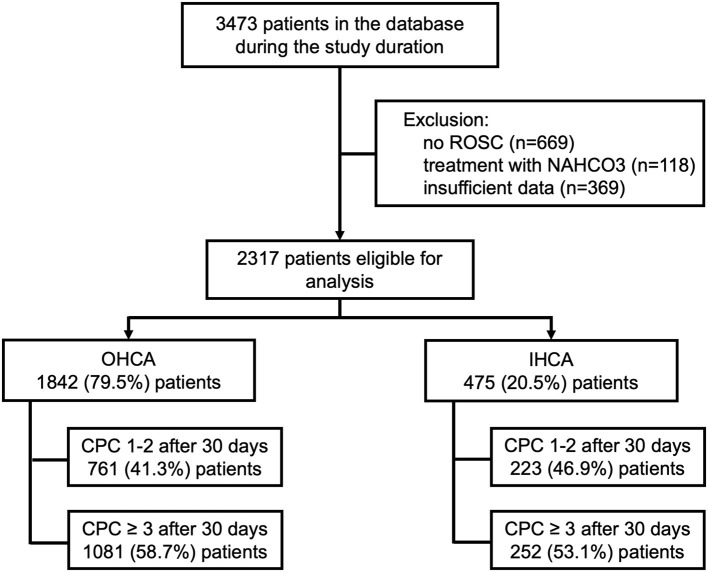
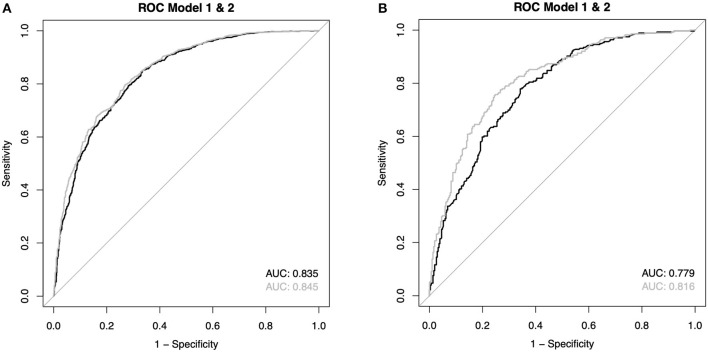
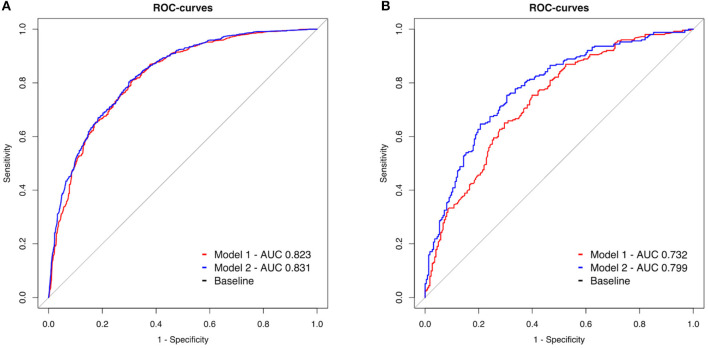
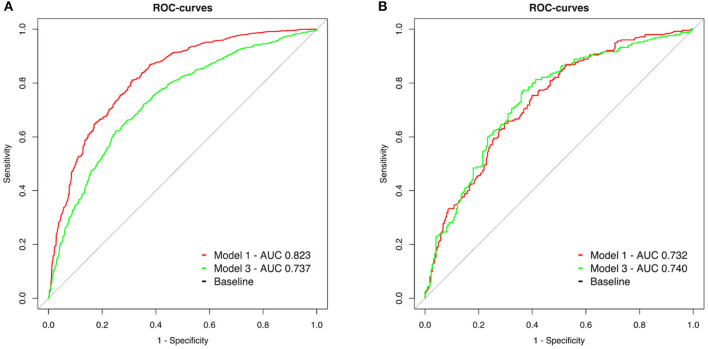
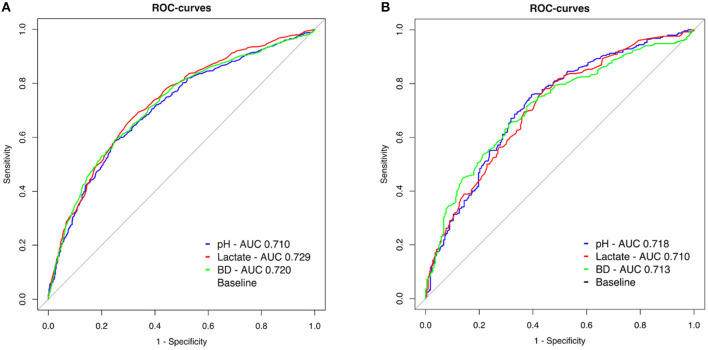
In cardiac arrest survivors, metabolic parameters [pH value, lactate concentration, and base deficit (BD)] are routinely added to peri-arrest factors (including age, sex, bystander cardiopulmonary resuscitation, shockable first rhythm, resuscitation duration, adrenaline dose) to enhance early outcome prediction. However, the additional value of this strategy remains unclear. We used our resuscitation database to screen all patients ≥18 years who had suffered in- or out-of-hospital cardiac arrest (IHCA, OHCA) between January 1st, 2005 and May 1st, 2019. Patients with incomplete data, without return of spontaneous circulation or treatment with sodium bicarbonate were excluded. To analyse the added value of metabolic parameters to prognosticate neurological function, we built three models using logistic regression. These models included: (1) Peri-arrest factors only, (2) peri-arrest factors plus metabolic parameters and (3) metabolic parameters only. Receiver operating characteristics curves regarding 30-day good neurological function (Cerebral Performance Category 1-2) were analysed. A total of 2,317 patients (OHCA: = 1842) were included. In patients with OHCA, model 1 and 2 had comparable predictive value. Model 3 was inferior compared to model 1. In IHCA patients, model 2 performed best, whereas both metabolic (model 3) and peri-arrest factors (model 1) demonstrated similar power. PH, lactate and BD had interchangeable areas under the curve in both IHCA and OHCA. Although metabolic parameters may play a role in IHCA, no additional value in the prediction of good neurological outcome could be found in patients with OHCA. This highlights the importance of accurate anamnesis especially in patients with OHCA.
在心脏骤停幸存者中,代谢参数[pH值、乳酸浓度和碱缺失(BD)]通常会被纳入心脏骤停期间的因素(包括年龄、性别、旁观者心肺复苏、可电击的初始心律、复苏持续时间、肾上腺素剂量)中,以加强早期预后预测。然而,这一策略的附加价值仍不明确。我们利用我们的复苏数据库筛选了2005年1月1日至2019年5月1日期间所有18岁及以上在院内心脏骤停(IHCA)或院外心脏骤停(OHCA)的患者。数据不完整、未恢复自主循环或未接受碳酸氢钠治疗的患者被排除。为了分析代谢参数对神经功能预后的附加价值,我们使用逻辑回归建立了三个模型。这些模型包括:(1)仅心脏骤停期间的因素,(2)心脏骤停期间的因素加代谢参数,以及(3)仅代谢参数。分析了关于30天良好神经功能(脑功能分类1-2)的受试者工作特征曲线。共纳入2317例患者(OHCA:=1842)。在OHCA患者中,模型1和模型2具有相当的预测价值。模型3比模型1差。在IHCA患者中,模型2表现最佳,而代谢因素(模型3)和心脏骤停期间的因素(模型1)显示出相似的预测能力。在IHCA和OHCA患者中,pH、乳酸和BD在曲线下的面积可相互替换。虽然代谢参数可能在IHCA中起作用,但在OHCA患者中未发现其对良好神经功能预后预测的附加价值。这突出了准确病史采集的重要性,尤其是在OHCA患者中。