Department of Virology, Nagoya University Graduate School of Medicine, Nagoya, Japan.
Department of Pathology and Laboratory Medicine, Nagoya University Graduate School of Medicine, Nagoya, Japan.
Cancer Sci. 2021 Dec;112(12):5088-5099. doi: 10.1111/cas.15152. Epub 2021 Oct 11.
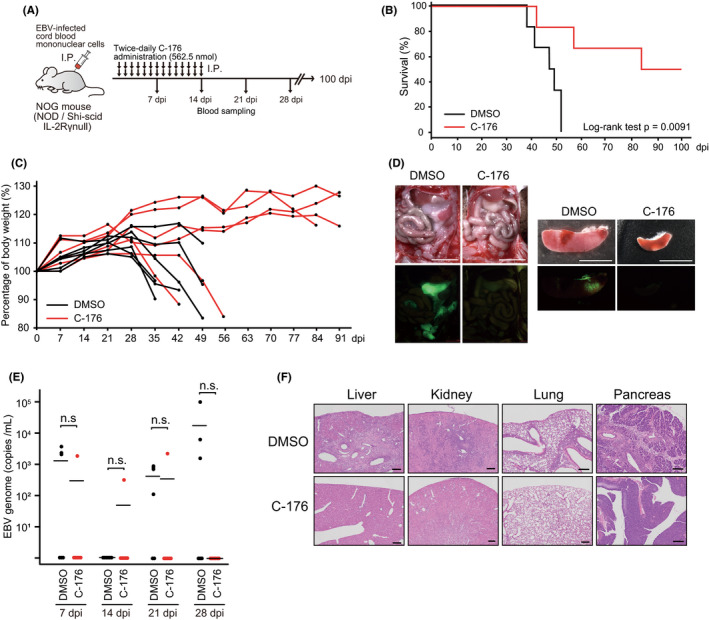
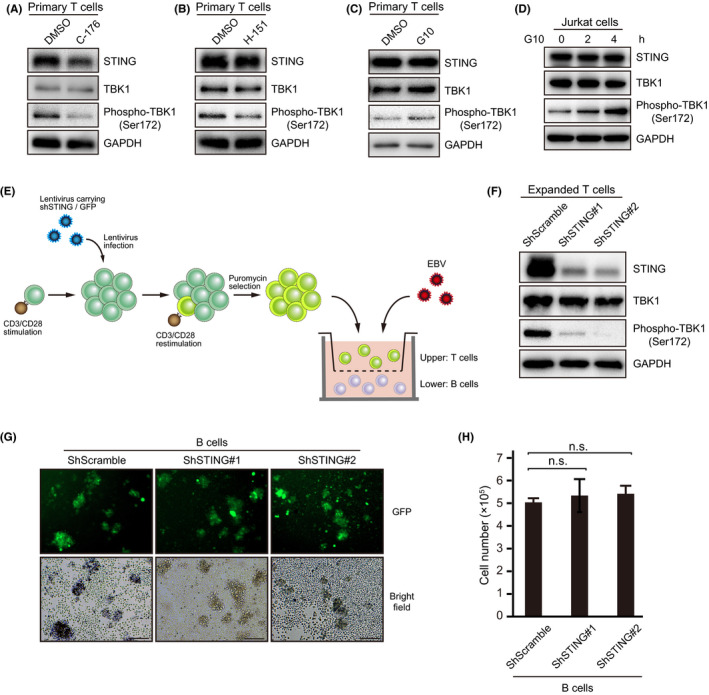
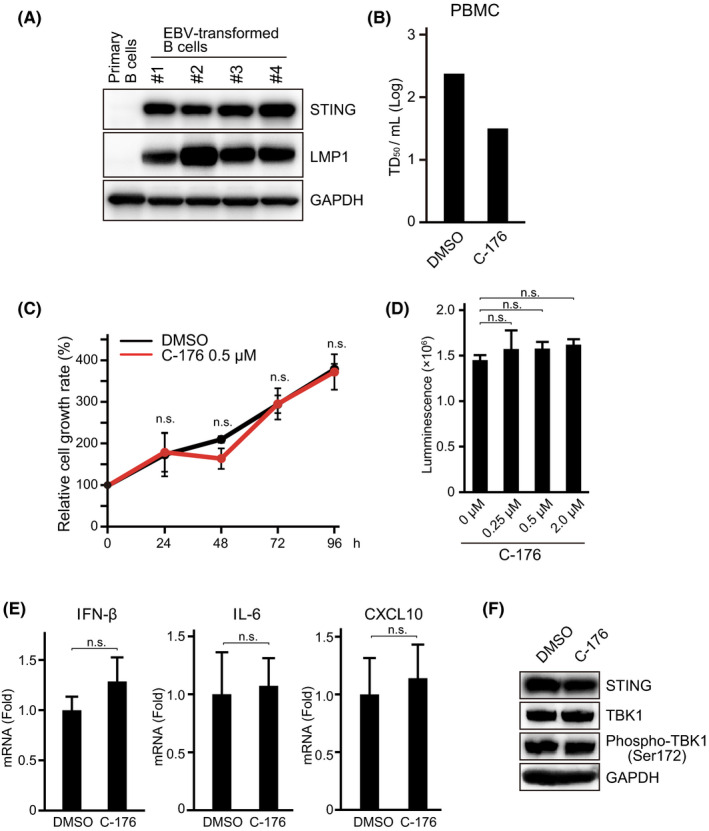
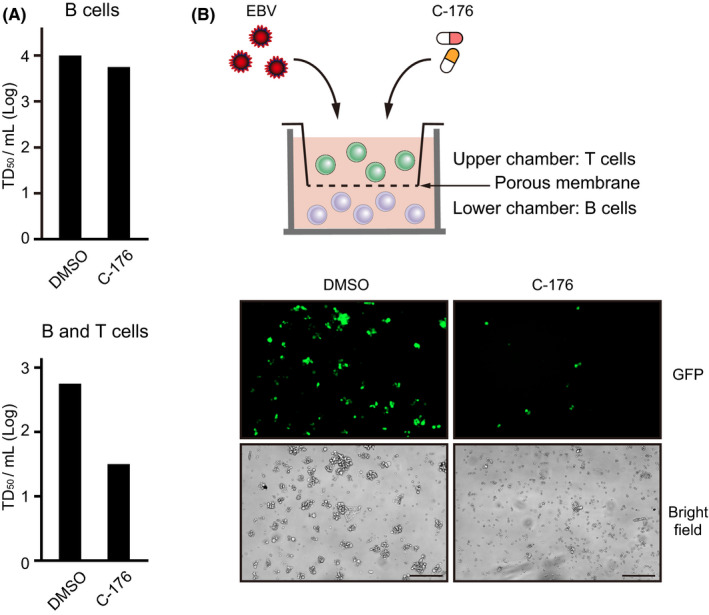
Epstein-Barr virus-associated lymphoproliferative disease (EBV-LPD) is frequently fatal. Innate immunity plays a key role in protecting against pathogens and cancers. The stimulator of interferon genes (STING) is regarded as a key adaptor protein allowing DNA sensors recognizing exogenous cytosolic DNA to activate the type I interferon signaling cascade. In terms of EBV tumorigenicity, the role of STING remains elusive. Here we showed that treatment with the STING inhibitor, C-176, suppressed EBV-induced transformation in peripheral blood mononuclear cells. In an EBV-LPD mouse model, C-176 treatment also inhibited tumor formation and prolonged survival. Treatment with B cells alone did not affect EBV transformation, but suppression of EBV-induced transformation was observed in the presence of T cells. Even without direct B cell-T cell contact in a transwell system, the inhibitor reduced the transformation activity, indicating that intercellular communication by humoral factors was critical to prevent EBV-induced transformation. These findings suggest that inhibition of STING signaling pathway with C-176 could be a new therapeutic target of EBV-LPD.
EBV 相关淋巴组织增生性疾病(EBV-LPD)常导致死亡。固有免疫在抵抗病原体和癌症方面发挥着关键作用。干扰素基因刺激蛋白(STING)被认为是一种关键衔接蛋白,使识别细胞外细胞质 DNA 的 DNA 传感器能够激活 I 型干扰素信号级联反应。就 EBV 的致瘤性而言,STING 的作用仍不清楚。本研究表明,STING 抑制剂 C-176 可抑制外周血单核细胞中的 EBV 诱导转化。在 EBV-LPD 小鼠模型中,C-176 治疗还抑制了肿瘤形成并延长了生存期。单独用 B 细胞处理不会影响 EBV 的转化,但在存在 T 细胞的情况下观察到抑制 EBV 诱导的转化。即使在 Transwell 系统中没有直接的 B 细胞-T 细胞接触,抑制剂也降低了转化活性,表明细胞间通过体液因子的通讯对于防止 EBV 诱导的转化至关重要。这些发现表明,用 C-176 抑制 STING 信号通路可能是 EBV-LPD 的一个新的治疗靶点。