Faculty of Medicine and Health Sciences, Sana'a University, The Sixty St., Sana'a, Yemen.
Affiliated researcher at the Centre for Business Research, Cambridge Judge Business School, Cambridge, UK.
BMC Public Health. 2021 Oct 5;21(1):1793. doi: 10.1186/s12889-021-11845-y.
HIV stigma undermines a person's wellbeing and quality of life and hinders HIV control efforts. This study examined the extent and drivers of HIV stigma in the teaching hospitals in Sana'a City, Yemen. The country has low HIV prevalence (4000 (2000-11,000) per 100,000) and limited HIV control funds, worsened by a long conflict and an economic crisis.
We conducted a cross-sectional study of 320 Yemeni health professionals in all the four teaching hospitals in Sana'a City. Data were collected anonymously, using an adapted self-completed Arabic version of the Health Policy Project HIV Stigma tool. The questionnaire covered the respondents' background, the stigmatising practices, and potential personal and professional drivers of stigma.
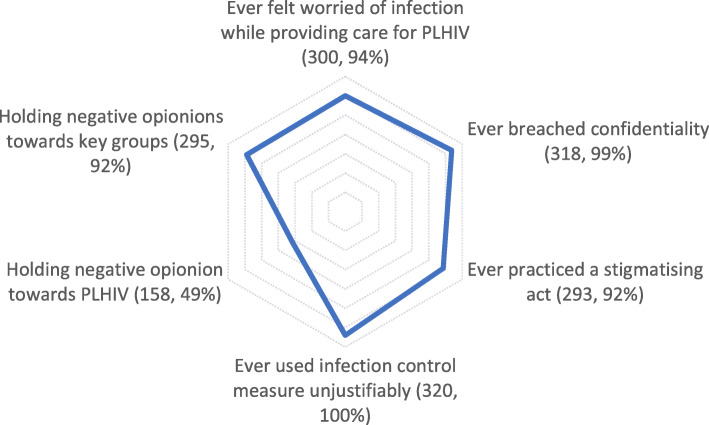
The majority of the participants were: females (68%), 20-39 years old (85%), nurses (84%), and holding a nursing diploma (69%) or a bachelor's degree (27%). None of the hospitals had institutional policies against HIV stigma, and 93% of the participants believed the current infection control measures were inadequate. Less than half of the participants provided care for people living with HIV (PLHIV) (45%), had received HIV training (33%), and were confident that their HIV knowledge was adequate (23%). The majority indicated a preference to test patients for HIV prior to surgical procedures (77%) and disclose positive HIV results to others (99%) without prior knowledge or consent. All the participants had exhibited a form of HIV-related stigmatization, such as avoiding physical contact with PLHIV (87%) or wearing gloves throughout the consultation (96.5%). These practices were significantly correlated with the fear of infection, high perceived risk of infection, and poor work environment (p < 0.05).
PLHIV face widespread stigmatizing behaviour in the teaching hospitals in Sana'a City, consistent with the higher level of stigma in low HIV prevalence countries and its links to the fear of infection, poor HIV knowledge, and limited funding for HIV control. Stigma reduction interventions are required at institutional and individual levels. In addition, anti-discrimination policies and structural adjustments are needed, in combination with training on HIV and universal precautions, and action to tackle negative attitudes towards PLHIV and key populations.
艾滋病毒污名化损害了一个人的福祉和生活质量,并阻碍了艾滋病毒防控工作。本研究调查了也门萨那市教学医院中艾滋病毒污名的程度和驱动因素。该国艾滋病毒流行率较低(每 10 万人中有 4000(2000-11000)人),艾滋病毒防控资金有限,长期冲突和经济危机使情况进一步恶化。
我们对萨那市 4 所教学医院的 320 名也门卫生专业人员进行了横断面研究。数据是匿名收集的,使用了经过改编的阿拉伯语版健康政策项目艾滋病毒污名工具。问卷涵盖了受访者的背景、污名化做法以及污名化的潜在个人和专业驱动因素。
大多数参与者是:女性(68%)、20-39 岁(85%)、护士(84%)、持有护理文凭(69%)或学士学位(27%)。没有一家医院有针对艾滋病毒污名的机构政策,93%的参与者认为当前的感染控制措施不足。不到一半的参与者(45%)为艾滋病毒感染者(PLHIV)提供护理,接受过艾滋病毒培训(33%),并且(23%)认为自己的艾滋病毒知识足够。大多数参与者表示,他们倾向于在手术前对患者进行艾滋病毒检测(77%),并在未经事先知情或同意的情况下向他人披露艾滋病毒阳性结果(99%)。所有参与者都表现出某种形式的与艾滋病毒相关的污名化,例如避免与 PLHIV 进行身体接触(87%)或在整个咨询过程中一直戴手套(96.5%)。这些做法与对感染的恐惧、高感染风险感知以及较差的工作环境显著相关(p<0.05)。
在萨那市的教学医院中,PLHIV 面临着广泛的污名化行为,这与低艾滋病毒流行国家较高的污名化程度以及其与对感染的恐惧、艾滋病毒知识匮乏和艾滋病毒防控资金有限相关。需要在机构和个人层面开展减少污名化的干预措施。此外,还需要采取反歧视政策和结构调整措施,结合艾滋病毒和普遍防护培训,并采取行动解决对 PLHIV 和重点人群的负面态度。