College of Agriculture, Yangzhou University, Yangzhou, 225009, China.
Joint International Research Laboratory of Water and Nutrient in Crops, College of Life Sciences, Fujian Agriculture and Forestry University, Fuzhou, 350002, China.
BMC Genomics. 2021 Oct 6;22(1):723. doi: 10.1186/s12864-021-08015-0.
White lupin (Lupinus albus) is a leguminous crop with elite adaptive ability in phosphorus-deficient soil and used as a model plant for studying phosphorus (P) use. However, the genetic basis of its adaptation to low P (LP) remains unclear. ATPase binding cassette (ABC) transports G subfamily play a crucial role in the transportation of biological molecules across the membrane. To date, identification of this subfamily has been analyzed in some plants, but no systematic analysis of these transporters in phosphorus acquisition is available for white lupin.
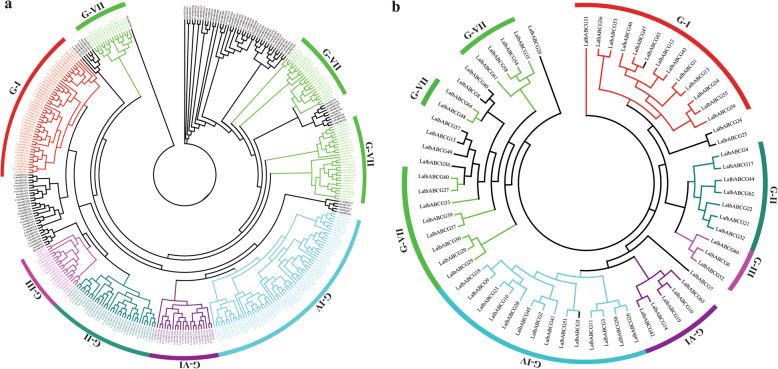
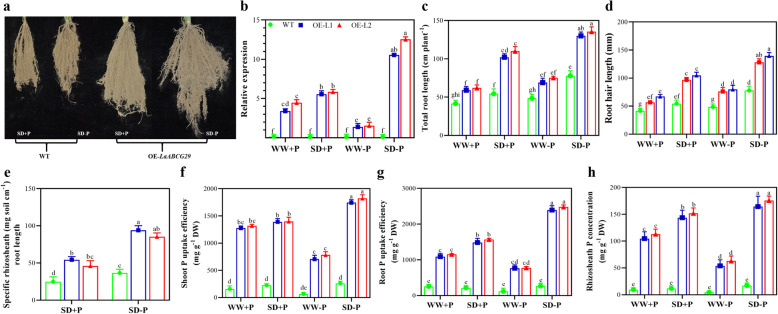
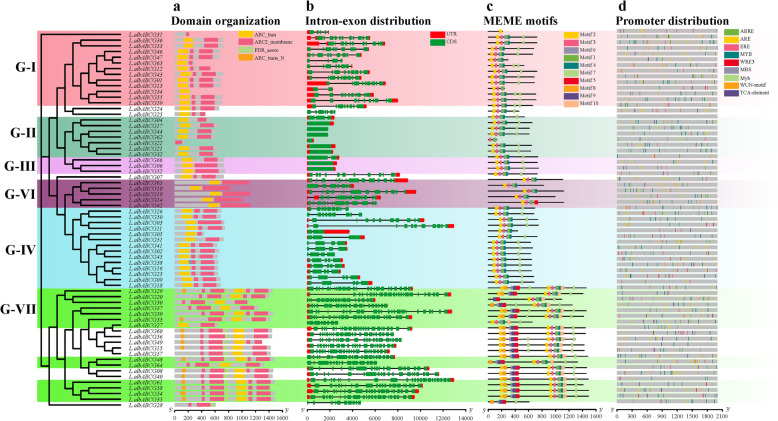
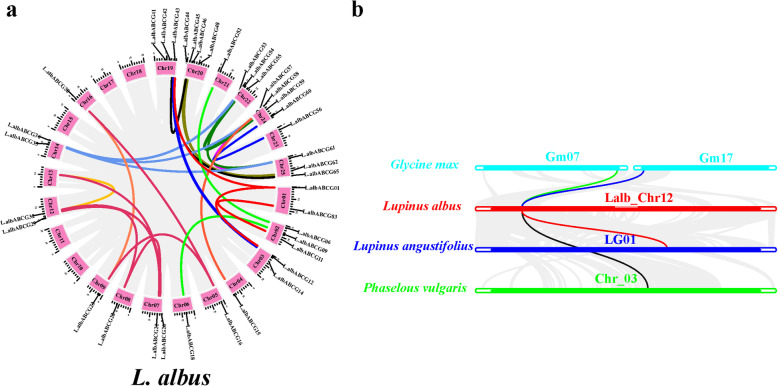
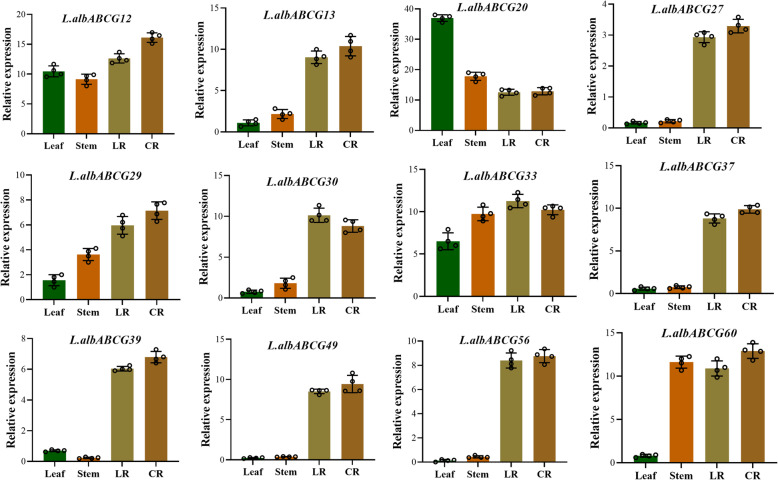
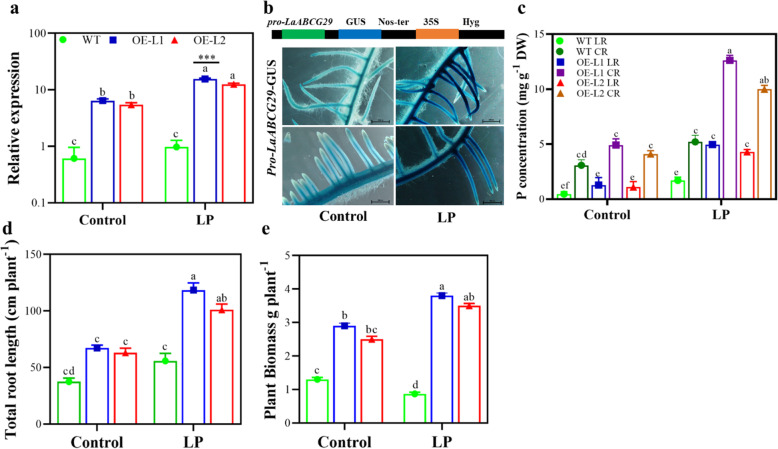
This study identified 66 ABCG gene family members in the white lupin genome using comprehensive approaches. Phylogenetic analysis of white lupin ABCG transporters revealed six subclades based on their counterparts in Arabidopsis, displaying distinct gene structure and motif distribution in each cluster. Influences of the whole genome duplication on the evolution of L.albABCGs were investigated in detail. Segmental duplications appear to be the major driving force for the expansion of ABCGs in white lupin. Analysis of the Ka/Ks ratios indicated that the paralogs of the L.albABCG subfamily members principally underwent purifying selection. However, it was found that L.albABCG29 was a result of both tandem and segmental duplications. Overexpression of L.albABCG29 in white lupin hairy root enhanced P accumulation in cluster root under LP and improved plant growth. Histochemical GUS staining indicated that L.albABCG29 expression increased under LP in white lupin roots. Further, overexpression of L.albABCG29 in rice significantly improved P use under combined soil drying and LP by improving root growth associated with increased rhizosheath formation.
Through systematic and comprehensive genome-wide bioinformatics analysis, including conserved domain, gene structures, chromosomal distribution, phylogenetic relationships, and gene duplication analysis, the L.albABCG subfamily was identified in white lupin, and L.albABCG29 characterized in detail. In summary, our results provide deep insight into the characterization of the L.albABCG subfamily and the role of L.albABCG29 in improving P use.
白 Lupinus albus 是一种豆科作物,具有在缺磷土壤中适应的卓越能力,被用作研究磷(P)利用的模式植物。然而,其适应低磷(LP)的遗传基础尚不清楚。ATPase 结合盒(ABC)转运 G 亚家族在生物分子跨膜运输中起着至关重要的作用。迄今为止,已经在一些植物中分析了这个亚家族的鉴定,但对于白 Lupinus 来说,没有关于这些转运体在磷获取中的系统分析。
本研究采用综合方法从白 Lupinus 基因组中鉴定出 66 个 ABCG 基因家族成员。白 Lupinus ABCG 转运蛋白的系统发育分析表明,根据其在拟南芥中的对应物,分为六个亚簇,每个簇的基因结构和基序分布都不同。详细研究了全基因组复制对 L.albABCG 进化的影响。片段复制似乎是白 Lupinus ABCG 扩张的主要驱动力。Ka/Ks 比值分析表明,L.albABCG 亚家族成员的旁系同源物主要经历了纯化选择。然而,发现 L.albABCG29 是串联和片段复制的结果。在白 Lupinus 毛状根中过表达 L.albABCG29 可增强 LP 下丛根中的 P 积累并改善植物生长。组织化学 GUS 染色表明,在白 Lupinus 根中 LP 下 L.albABCG29 的表达增加。此外,在水稻中过表达 L.albABCG29 通过改善与增加根鞘形成相关的根生长,显著提高了在土壤干燥和 LP 下的 P 利用。
通过系统和全面的全基因组生物信息学分析,包括保守结构域、基因结构、染色体分布、系统发育关系和基因复制分析,在白 Lupinus 中鉴定出了 L.albABCG 亚家族,并详细描述了 L.albABCG29。总之,我们的研究结果深入了解了 L.albABCG 亚家族的特征以及 L.albABCG29 在提高 P 利用中的作用。