Department of Orthopaedics, The First Affiliated Hospital of Soochow University, 899 Pinghai Road, Suzhou, 215006, China.
The Affiliated Suzhou Science & Technology Town Hospital of Nanjing Medical University, No. 1, Lijiang Road, Suzhou, 215006, Jiangsu, China.
BMC Musculoskelet Disord. 2021 Oct 5;22(1):850. doi: 10.1186/s12891-021-04736-1.
Few reports to date have evaluated the effects of different pedicle screw insertion depths on sagittal balance and prognosis after posterior lumbar interbody and fusion (PLIF) in patients with lumbar degenerative spondylolisthesis (LDS).
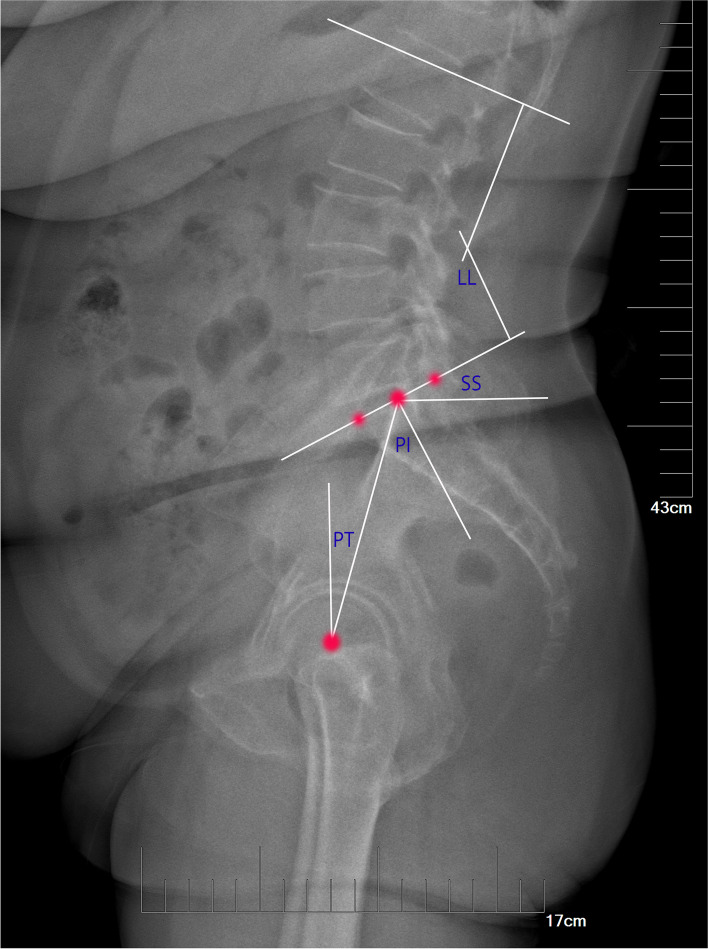
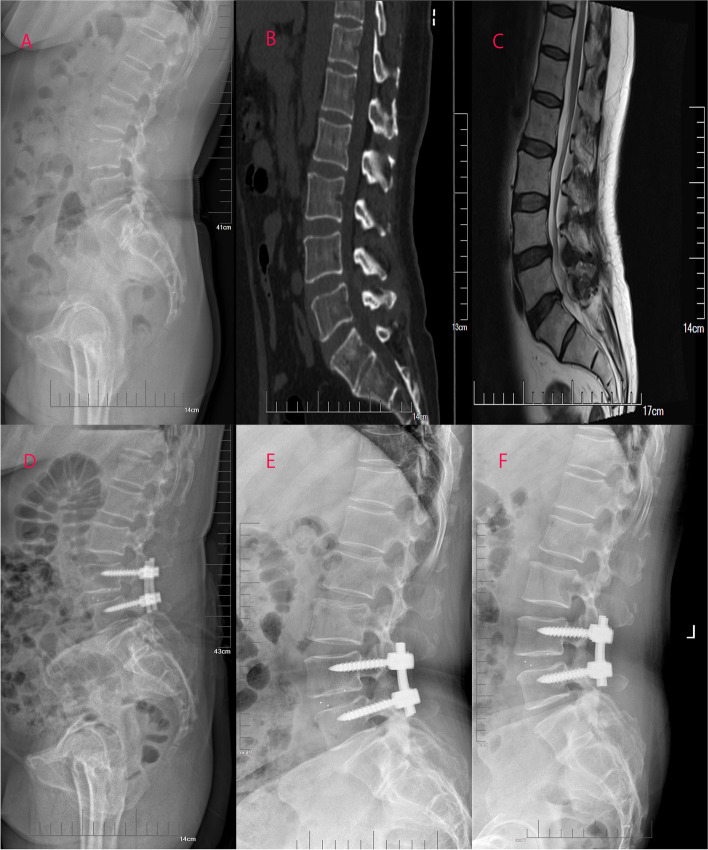
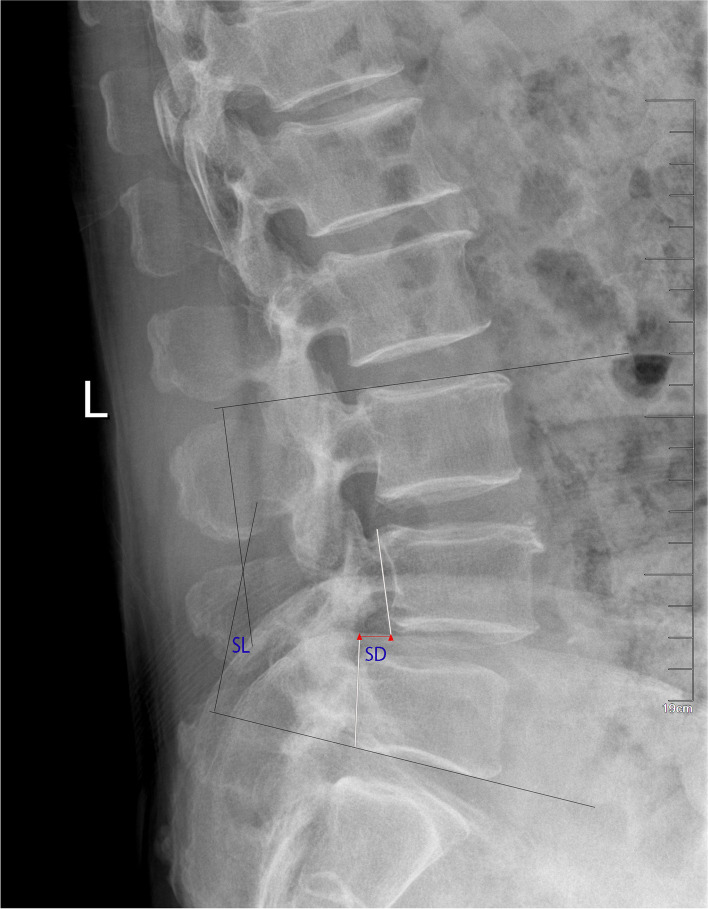
A total of 88 patients with single-level PLIF for LDS from January 2018 to December 2019 were enrolled. Long screw group (Group L): 52 patients underwent long pedicle screw fixation (the leading edge of the screw exceeded 80% of the anteroposterior diameter of vertebral body). Short screw group (Group S): 36 patients underwent short pedicle screw fixation (the leading edge of the screw was less than 60% of the anteroposterior diameter of vertebral body). Local deformity parameters of spondylolisthesis including slip degree (SD) and segment lordosis (SL), spino-pelvic sagittal plane parameters including pelvic incidence (PI), pelvic tilt (PT), sacral slope (SS) and lumbar lordosis (LL), Oswestry Disability Index (ODI), and Visual Analog Scale (VAS) for back pain of both groups were compared. Postoperative complications, including vertebral fusion rate and screw loosening rate, were recorded.
Except that PI in Group S at the final follow-up was not statistically different from the preoperative value (P > 0.05), other parameters were significantly improved compared with preoperative values one month after surgery and at the final follow-up (P < 0.05). There was no significant difference in parameters between Group L and Group S before and one month after surgery (P > 0.05). At the final follow-up, SD, SL, LL, PT and PI-LL differed significantly between the two groups (P < 0.05). Compared with the preoperative results, ODI and VAS in both groups decreased significantly one month after surgery and at the final follow-up (P < 0.05). Significant differences of ODI and VAS were found between the two groups at the final follow-up (P < 0.05). Postoperative complications were not statistically significant between the two groups (P > 0.05).
PLIF can significantly improve the prognosis of patients with LDS. In terms of outcomes with an average follow-up time of 2 years, the deeper the screw depth is within the safe range, the better the spino-pelvic sagittal balance may be restored and the better the quality of life may be.
目前鲜有报道评估不同椎弓根螺钉置入深度对腰椎退变性脊柱滑脱症(LDS)后路腰椎间融合(PLIF)术后矢状位平衡和预后的影响。
回顾性分析 2018 年 1 月至 2019 年 12 月 88 例行单节段 PLIF 治疗的 LDS 患者的临床资料,根据椎弓根螺钉固定方式的不同分为长螺钉组(L 组)和短螺钉组(S 组)。L 组 52 例患者行长螺钉固定(螺钉前缘超过椎体前后径的 80%),S 组 36 例行短螺钉固定(螺钉前缘小于椎体前后径的 60%)。比较两组局部滑脱参数(滑脱度 SD 和节段前凸角 SL)、脊柱骨盆矢状面参数(骨盆入射角 PI、骨盆倾斜角 PT、骶骨倾斜角 SS 和腰椎前凸角 LL)、Oswestry 功能障碍指数(ODI)和腰痛视觉模拟评分(VAS)。记录两组术后并发症(植骨融合率和螺钉松动率)。
除 S 组术后最终随访时 PI 与术前比较差异无统计学意义(P>0.05)外,其余参数术后 1 个月及最终随访时与术前比较差异均有统计学意义(P<0.05)。两组术前及术后 1 个月各参数比较差异均无统计学意义(P>0.05)。最终随访时,两组间 SD、SL、LL、PT 和 PI-LL 比较差异有统计学意义(P<0.05)。与术前比较,两组术后 1 个月及最终随访时 ODI 和 VAS 评分均明显降低(P<0.05),且最终随访时两组间 ODI 和 VAS 评分比较差异有统计学意义(P<0.05)。两组术后并发症发生率比较差异无统计学意义(P>0.05)。
PLIF 可显著改善 LDS 患者的预后。在平均随访时间 2 年的情况下,螺钉置入深度在安全范围内越深,越有利于恢复脊柱骨盆矢状位平衡,提高患者生活质量。