Department of Surgery, University of California, San Francisco, San Francisco, CA, United States.
Diabetes Center, University of California, San Francisco, San Francisco, CA, United States.
Front Immunol. 2021 Sep 20;12:686439. doi: 10.3389/fimmu.2021.686439. eCollection 2021.
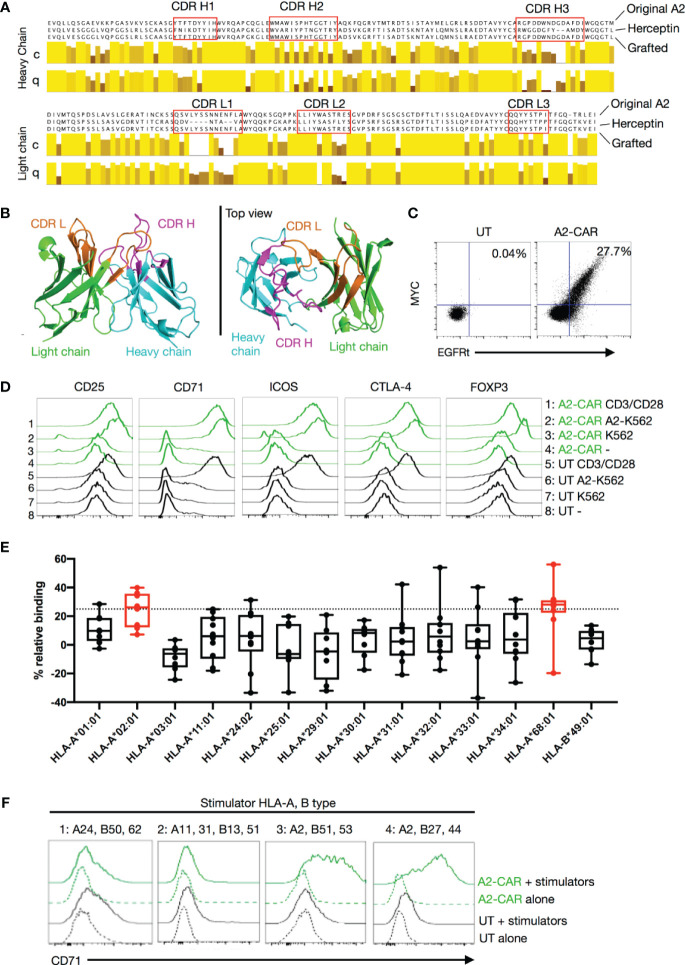
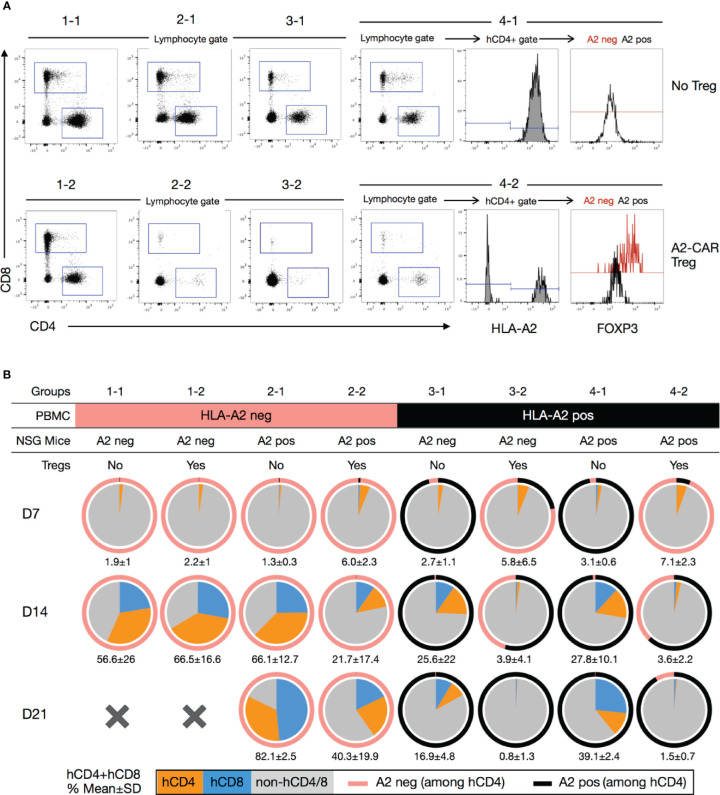
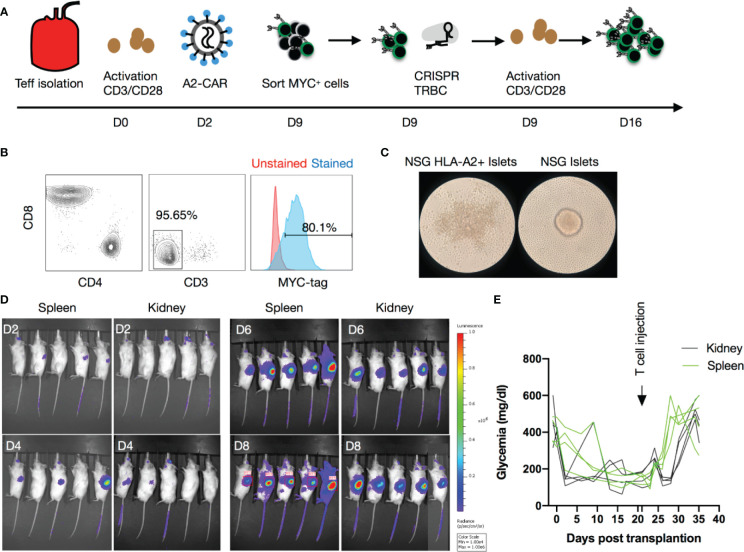
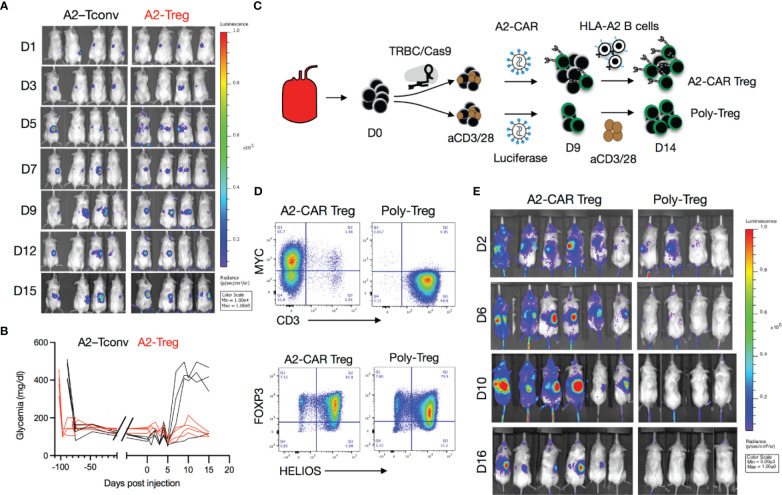
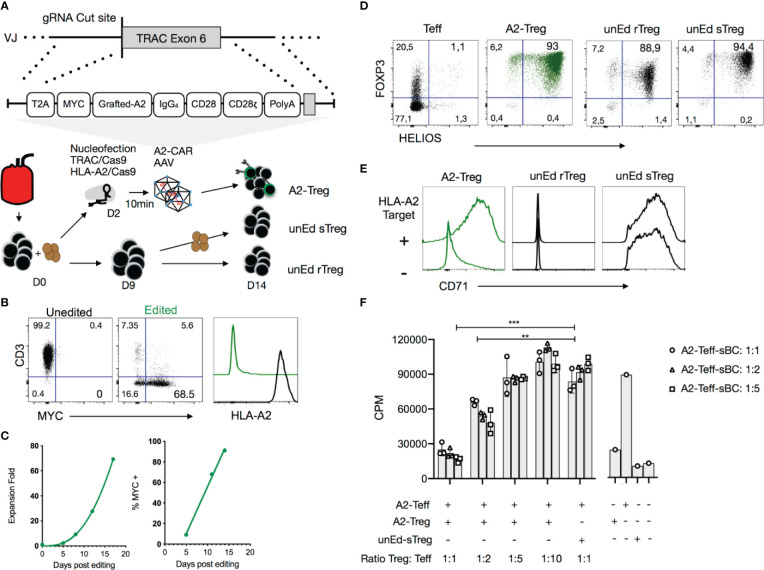
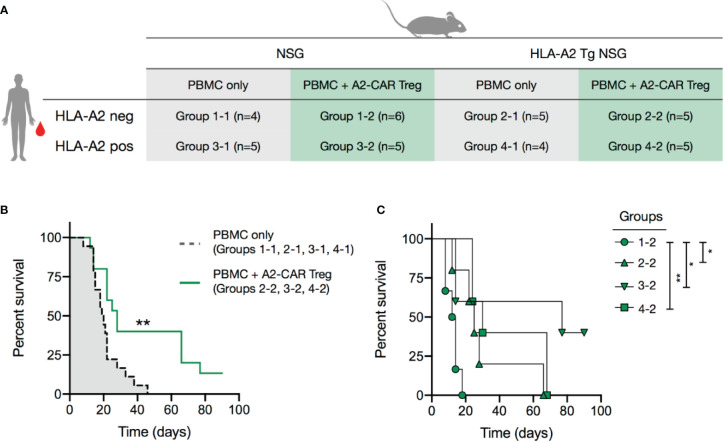
Infusion of regulatory T cells (Tregs) engineered with a chimeric antigen receptor (CAR) targeting donor-derived human leukocyte antigen (HLA) is a promising strategy to promote transplant tolerance. Here, we describe an anti-HLA-A2 CAR (A2-CAR) generated by grafting the complementarity-determining regions (CDRs) of a human monoclonal anti-HLA-A2 antibody into the framework regions of the Herceptin 4D5 single-chain variable fragment and fusing it with a CD28-ζ signaling domain. The CDR-grafted A2-CAR maintained the specificity of the original antibody. We then generated HLA-A2 mono-specific human CAR Tregs either by deleting the endogenous T-cell receptor (TCR) CRISPR/Cas9 and introducing the A2-CAR using lentiviral transduction or by directly integrating the CAR construct into the TCR alpha constant locus using homology-directed repair. These A2-CARTCR human Tregs maintained both Treg phenotype and function . Moreover, they selectively accumulated in HLA-A2-expressing islets transplanted from either HLA-A2 transgenic mice or deceased human donors. A2-CARTCR Tregs did not impair the function of these HLA-A2 islets, whereas similarly engineered A2-CARTCRCD4 conventional T cells rejected the islets in less than 2 weeks. A2-CARTCR Tregs delayed graft--host disease only in the presence of HLA-A2, expressed either by co-transferred peripheral blood mononuclear cells or by the recipient mice. Altogether, we demonstrate that genome-engineered mono-antigen-specific A2-CAR Tregs localize to HLA-A2-expressing grafts and exhibit antigen-dependent suppression, independent of TCR expression. These approaches may be applied towards developing precision Treg cell therapies for transplant tolerance.
输注嵌合抗原受体(CAR)修饰的调节性 T 细胞(Tregs),该受体靶向供体来源的人类白细胞抗原(HLA),是促进移植耐受的一种很有前途的策略。在这里,我们描述了一种针对 HLA-A2 的 CAR(A2-CAR),该 CAR 通过将人源单克隆抗 HLA-A2 抗体的互补决定区(CDRs)移植到 Herceptin 4D5 单链可变片段的框架区域中,并与 CD28-ζ 信号结构域融合而产生。CDR 移植的 A2-CAR 保持了原始抗体的特异性。然后,我们通过 CRISPR/Cas9 敲除内源性 T 细胞受体(TCR)并用慢病毒转导引入 A2-CAR,或者通过同源定向修复将 CAR 构建体直接整合到 TCR α 恒定基因座中,从而生成 HLA-A2 单特异性人 CAR Tregs。这些 A2-CARTCR 人 Tregs 既保持了 Treg 表型又保持了功能。此外,它们选择性地在从 HLA-A2 转基因小鼠或已故人类供体移植的 HLA-A2 表达胰岛中积累。A2-CARTCR Tregs 不会损害这些 HLA-A2 胰岛的功能,而类似设计的 A2-CARTCRCD4 常规 T 细胞在不到 2 周的时间内排斥胰岛。A2-CARTCR Tregs 仅在存在 HLA-A2 时延迟移植物抗宿主病,该 HLA-A2 可以由共转导的外周血单核细胞或受体小鼠表达。总之,我们证明了基因组工程化的单抗原特异性 A2-CAR Tregs 定位于 HLA-A2 表达的移植物,并表现出抗原依赖性抑制,而与 TCR 表达无关。这些方法可用于开发针对移植耐受的精确 Treg 细胞疗法。