Örebro Life Science Center, School of Science and Technology, Örebro University, SE-70182 Örebro, Sweden.
College of Horticulture, Hainan University, Haikou 570228, China.
Plant Physiol. 2021 Sep 4;187(1):378-395. doi: 10.1093/plphys/kiab262.
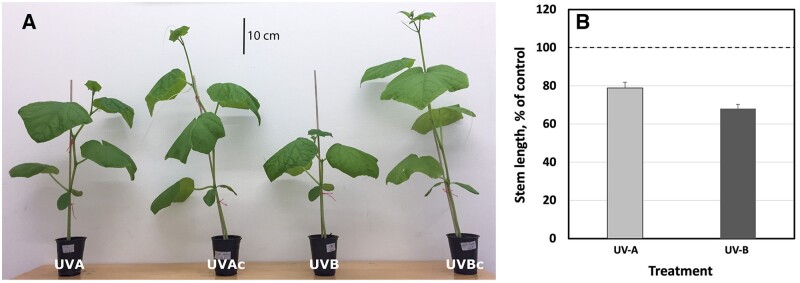
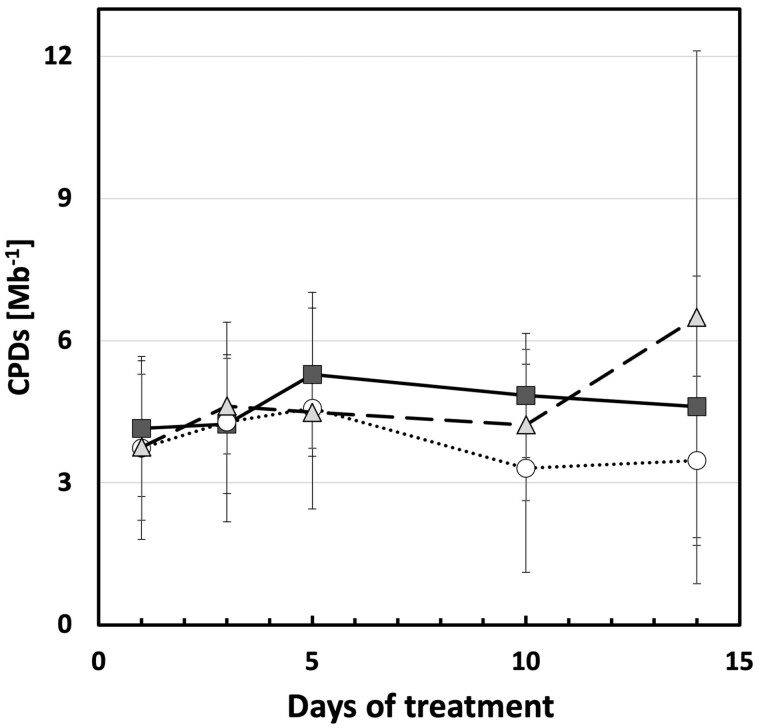
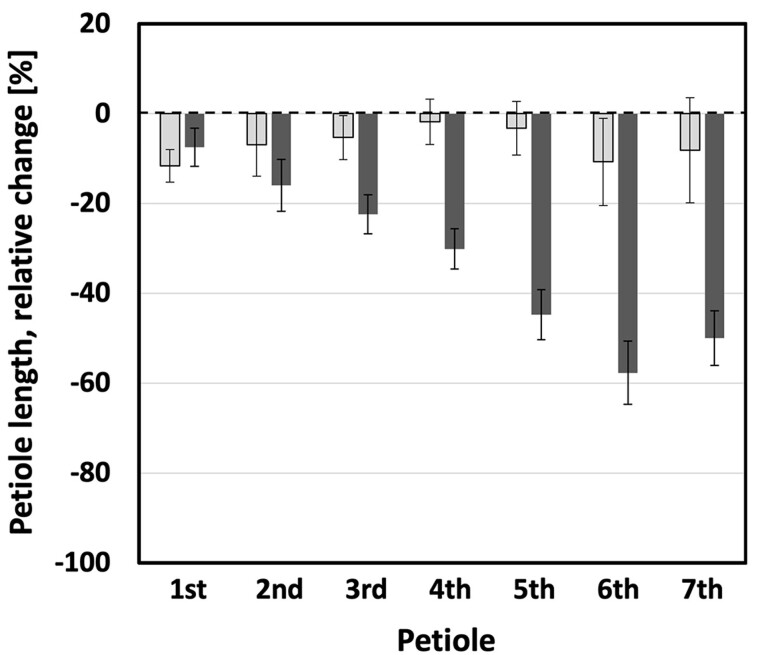
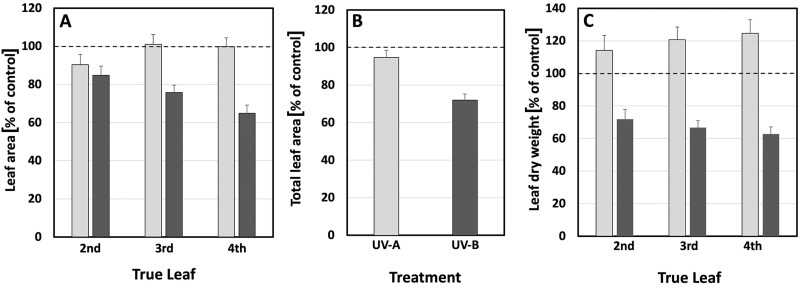
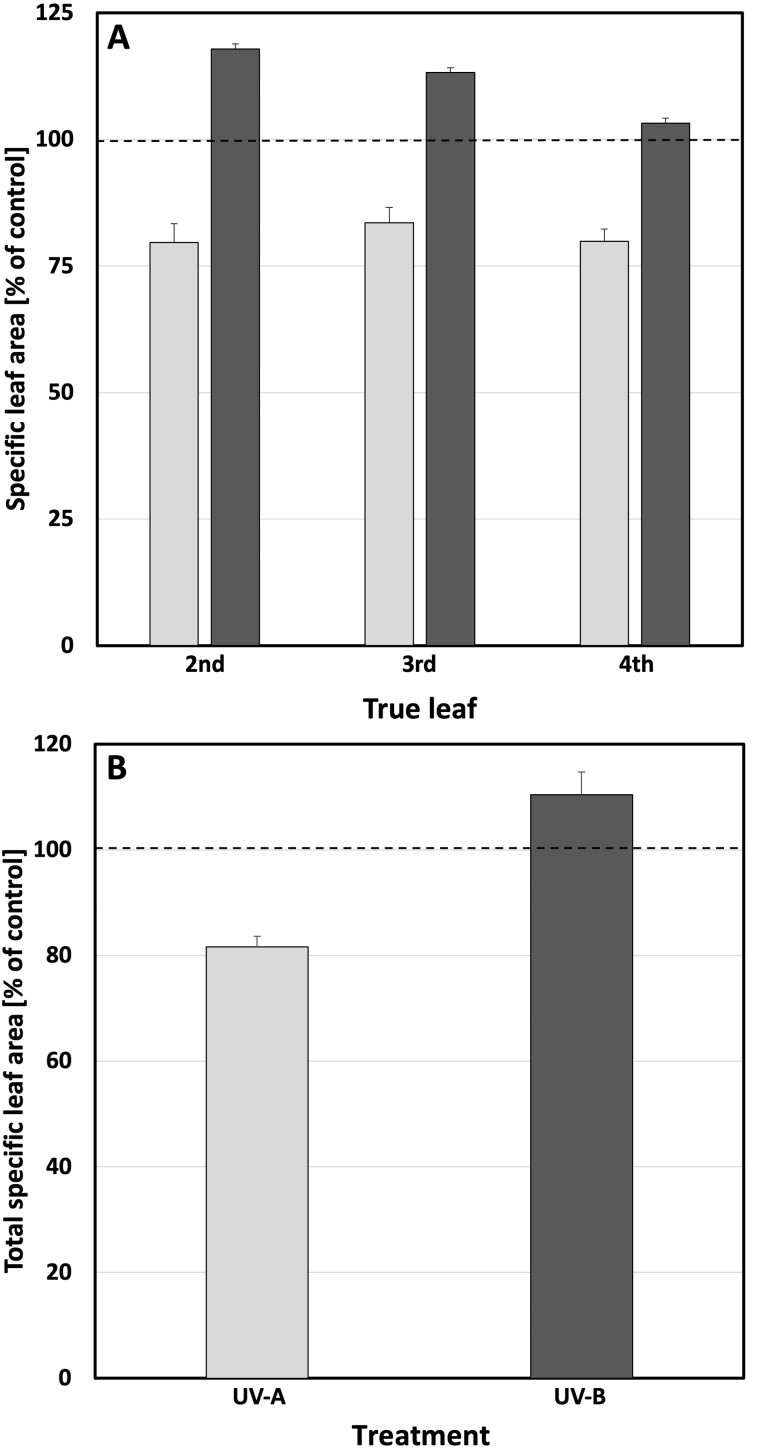
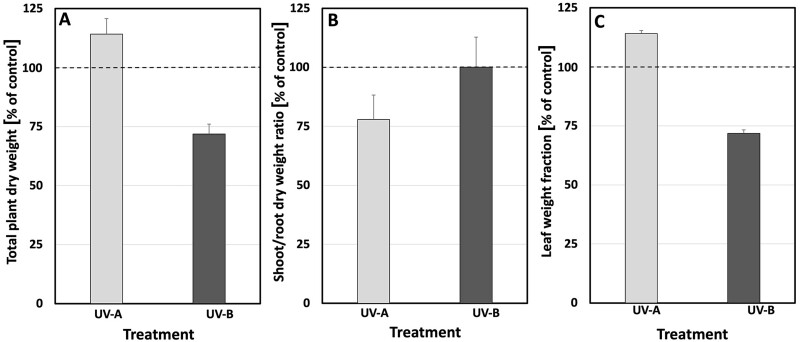
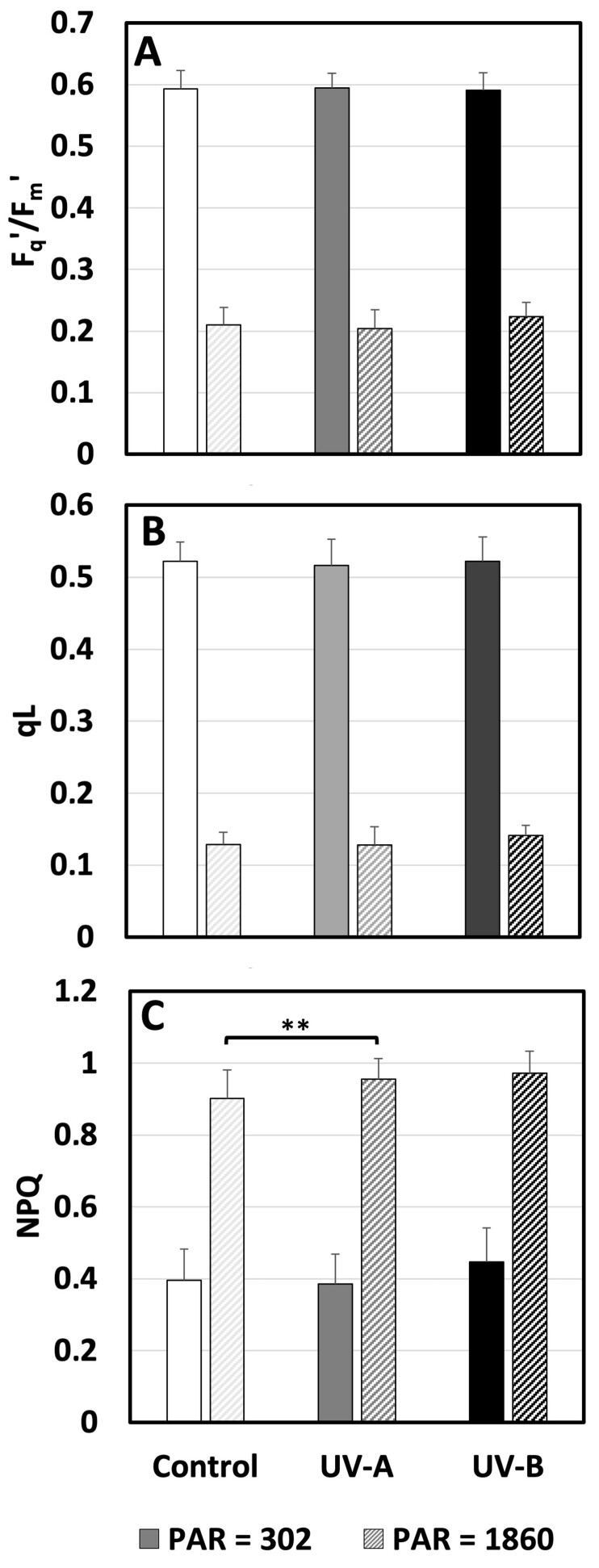
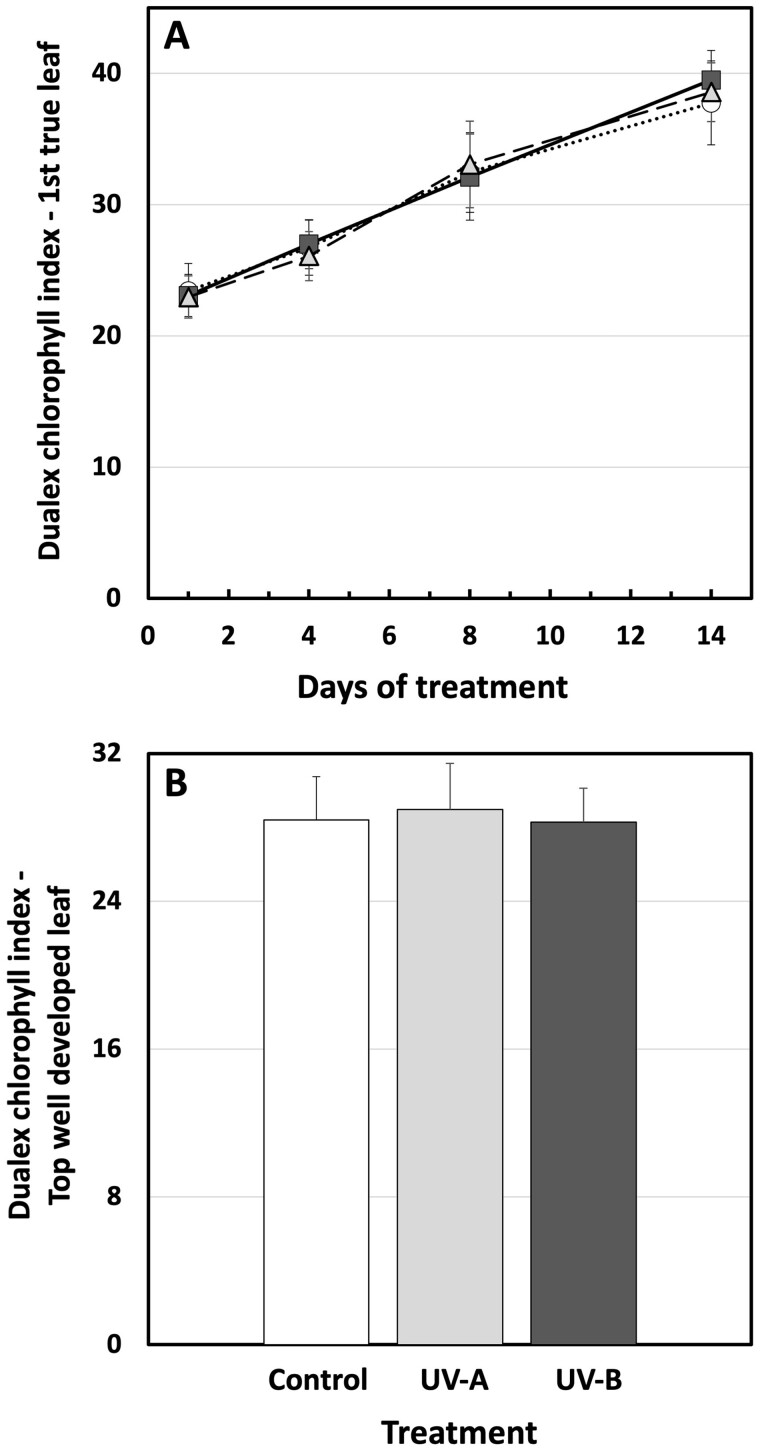
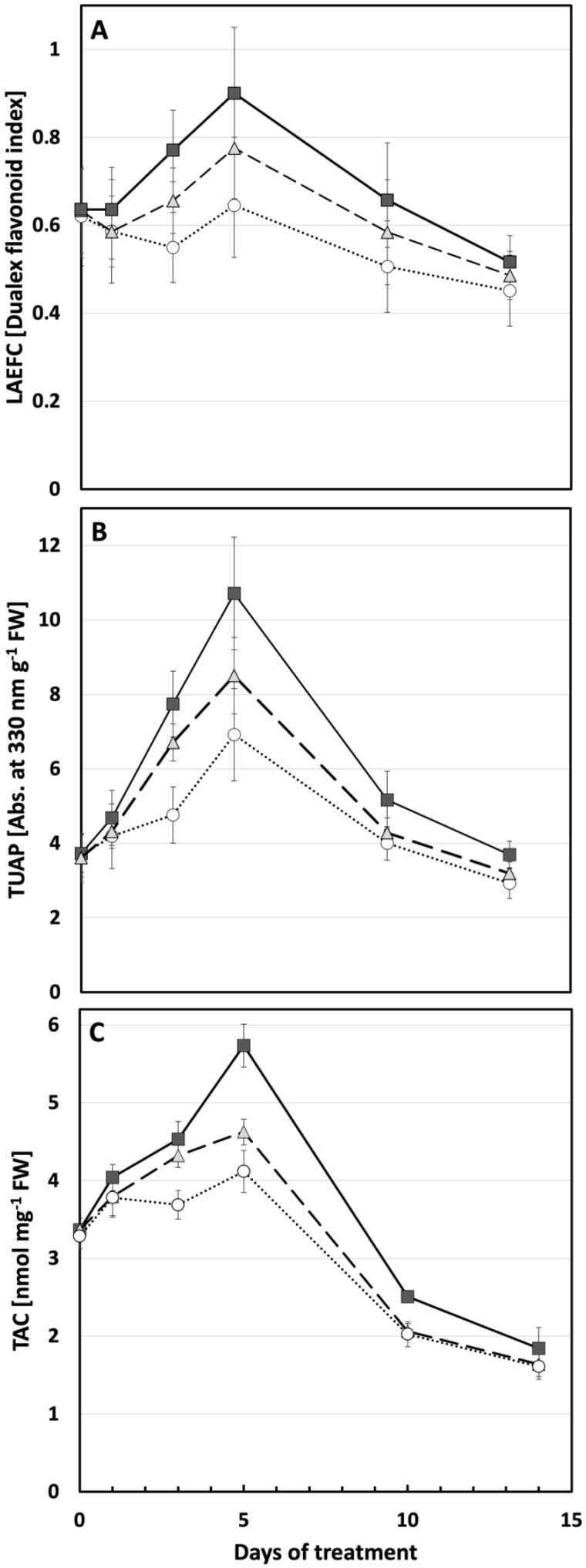
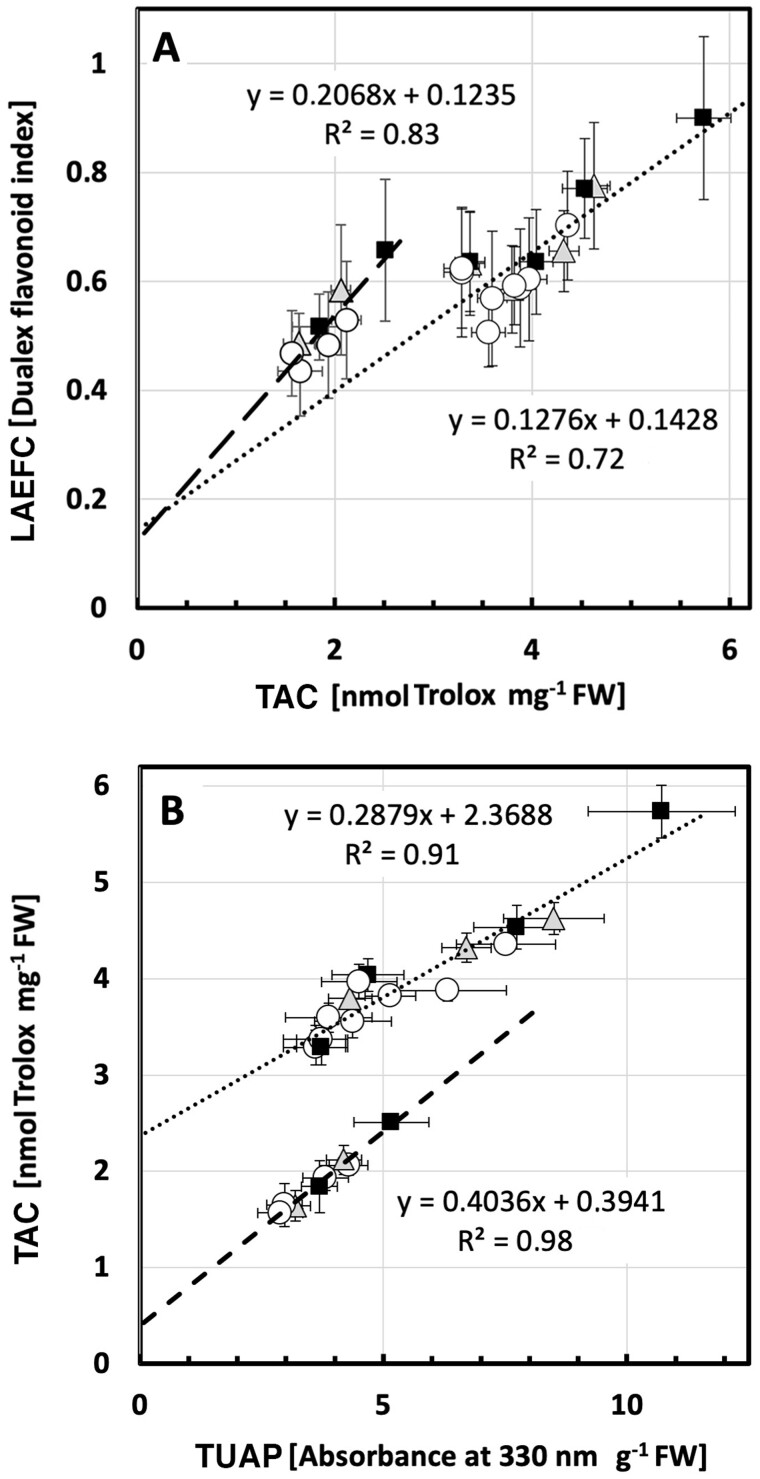
Ultraviolet (UV) light induces a stocky phenotype in many plant species. In this study, we investigate this effect with regard to specific UV wavebands (UV-A or UV-B) and the cause for this dwarfing. UV-A- or UV-B-enrichment of growth light both resulted in a smaller cucumber (Cucumis sativus L.) phenotype, exhibiting decreased stem and petiole lengths and leaf area (LA). Effects were larger in plants grown in UV-B- than in UV-A-enriched light. In plants grown in UV-A-enriched light, decreases in stem and petiole lengths were similar independent of tissue age. In the presence of UV-B radiation, stems and petioles were progressively shorter the younger the tissue. Also, plants grown under UV-A-enriched light significantly reallocated photosynthates from shoot to root and also had thicker leaves with decreased specific LA. Our data therefore imply different morphological plant regulatory mechanisms under UV-A and UV-B radiation. There was no evidence of stress in the UV-exposed plants, neither in photosynthetic parameters, total chlorophyll content, or in accumulation of damaged DNA (cyclobutane pyrimidine dimers). The abscisic acid content of the plants also was consistent with non-stress conditions. Parameters such as total leaf antioxidant activity, leaf adaxial epidermal flavonol content and foliar total UV-absorbing pigment levels revealed successful UV acclimation of the plants. Thus, the UV-induced dwarfing, which displayed different phenotypes depending on UV wavelengths, occurred in healthy cucumber plants, implying a regulatory adjustment as part of the UV acclimation processes involving UV-A and/or UV-B photoreceptors.
紫外线(UV)会诱导许多植物物种呈现矮壮形态。在这项研究中,我们研究了特定 UV 波段(UV-A 或 UV-B)对此的影响,以及导致这种矮化的原因。生长光中 UV-A 或 UV-B 的富集都导致黄瓜(Cucumis sativus L.)表型变小,表现为茎和叶柄长度以及叶面积(LA)减小。在 UV-B 富集光中生长的植物的影响大于在 UV-A 富集光中生长的植物。在 UV-A 富集光中生长的植物中,茎和叶柄长度的减少与组织年龄无关,均相似。在存在 UV-B 辐射的情况下,茎和叶柄随着组织的年轻化而逐渐变短。此外,在 UV-A 富集光下生长的植物将光合作用产物从地上部分重新分配到根部,叶片也变厚,比叶面积(LA)降低。因此,我们的数据表明,在 UV-A 和 UV-B 辐射下,植物有不同的形态调节机制。暴露在 UV 下的植物没有出现应激的迹象,无论是在光合作用参数、总叶绿素含量还是在受损 DNA(环丁烷嘧啶二聚体)的积累方面。植物中的脱落酸含量也与非应激条件一致。叶片总抗氧化活性、叶片上表皮类黄酮含量和叶片总紫外吸收色素水平等参数表明植物成功地适应了 UV。因此,这种由 UV 诱导的矮化现象,根据 UV 波长呈现不同的表型,发生在健康的黄瓜植株中,这意味着这是一种作为涉及 UV-A 和/或 UV-B 光受体的 UV 适应过程的一部分的调节性调整。