Division of Neonatology, Department of Pediatrics, University of Washington, Seattle, WA.
Department of Biostatistics, University of Washington, Seattle, WA.
EBioMedicine. 2021 Oct;72:103605. doi: 10.1016/j.ebiom.2021.103605. Epub 2021 Oct 4.
In the Preterm Erythropoietin (Epo) NeUroproTection (PENUT) Trial, potential biomarkers of neurological injury were measured to determine their association with outcomes at two years of age and whether Epo treatment decreased markers of inflammation in extremely preterm (<28 weeks' gestation) infants.
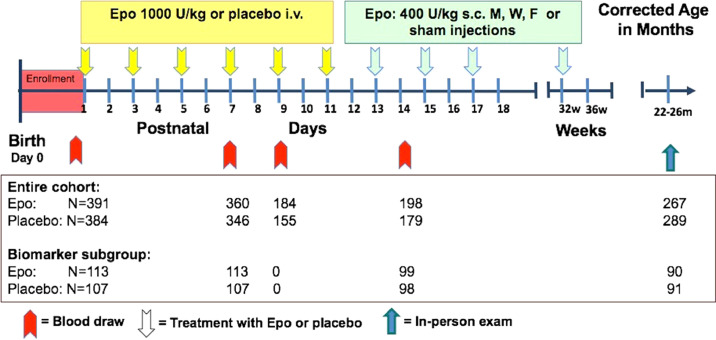
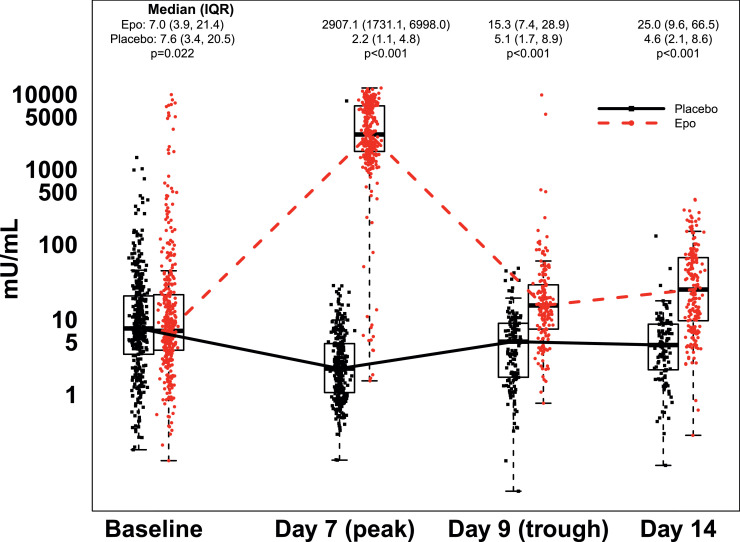
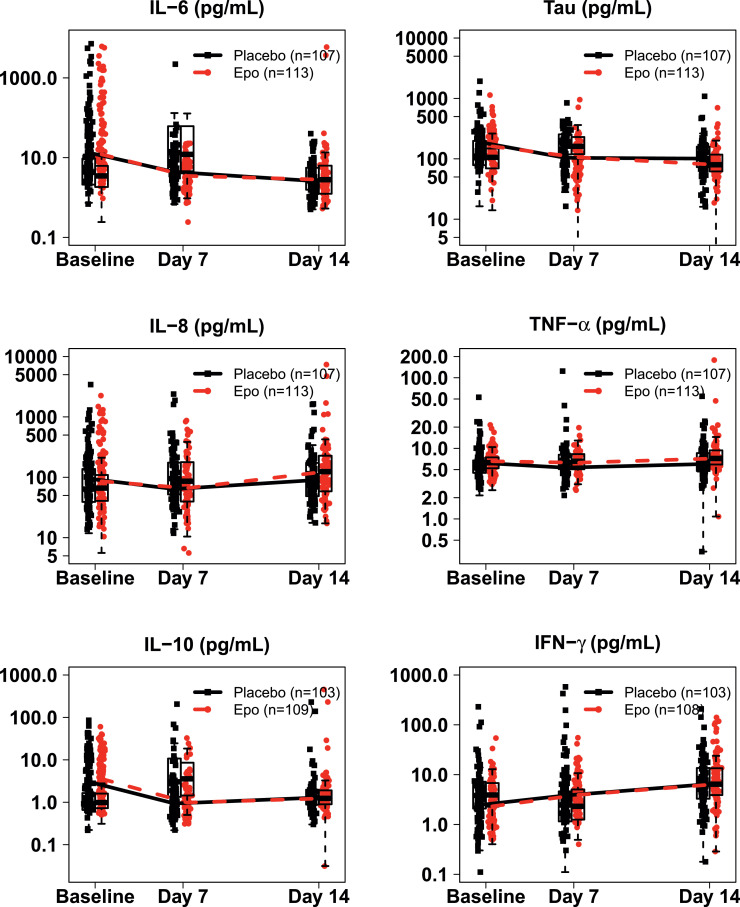
Plasma Epo was measured (n=391 Epo, n=384 placebo) within 24h after birth (baseline), 30min after study drug administration (day 7), 30min before study drug (day 9), and on day 14. A subset of infants (n=113 Epo, n=107 placebo) had interferon-gamma (IFN-γ), Interleukin (IL)-6, IL-8, IL-10, Tau, and tumour necrosis factor-α (TNF-α) levels evaluated at baseline, day 7 and 14. Infants were then evaluated at 2 years using the Bayley Scales of Infant and Toddler Development, 3rd Edition (BSID-III).
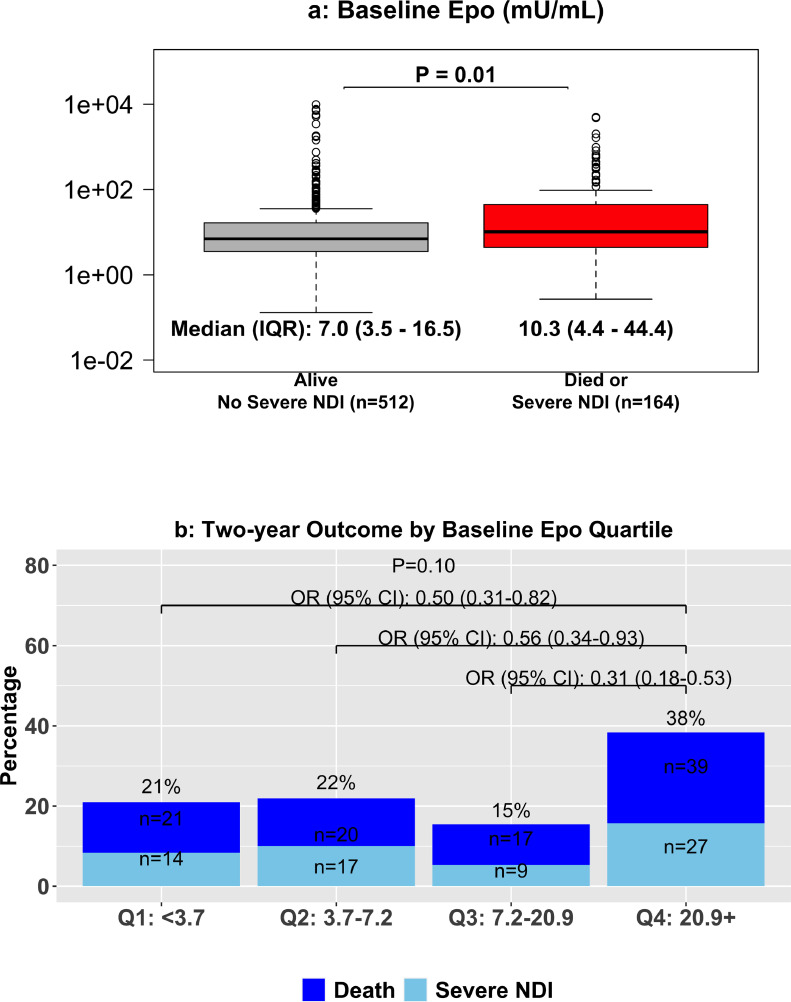
Elevated baseline Epo was associated with increased risk of death or severe disability (BSID-III Motor and Cognitive subscales <70 or severe cerebral palsy). No difference in other biomarkers were seen between treatment groups at any time, though Epo appeared to mitigate the association between elevated baseline IL-6 and lower BSID-III scores in survivors. Elevated baseline, day 7 and 14 Tau concentrations were associated with worse BSID-III Cognitive, Motor, and Language skills at two years.
Elevated Epo at baseline and elevated Tau in the first two weeks after birth predict poor outcomes in infants born extremely preterm. However, no clear prognostic cut-off values are apparent, and further work is required before these biomarkers can be widely implemented in clinical practice.
PENUT was funded by the National Institute of Neurological Disorders and Stroke (U01NS077955 and U01NS077953).
在早产儿促红细胞生成素(Epo)神经保护(PENUT)试验中,测量了潜在的神经损伤生物标志物,以确定它们与 2 岁时的结果的关系,以及 Epo 治疗是否降低了极早产儿(<28 周妊娠)婴儿的炎症标志物。
在出生后 24 小时内(基线)、研究药物给药后 30 分钟(第 7 天)、研究药物前 30 分钟(第 9 天)和第 14 天测量血浆 Epo(n=391 Epo,n=384 安慰剂)。一部分婴儿(n=113 Epo,n=107 安慰剂)在基线、第 7 天和第 14 天评估了干扰素-γ(IFN-γ)、白细胞介素(IL)-6、IL-8、IL-10、Tau 和肿瘤坏死因子-α(TNF-α)水平。然后,使用贝利婴幼儿发育量表,第三版(BSID-III)在 2 岁时对婴儿进行评估。
基线时 Epo 升高与死亡或严重残疾(BSID-III 运动和认知子量表<70 或严重脑瘫)的风险增加有关。在任何时候,治疗组之间在其他生物标志物方面均无差异,尽管 Epo 似乎减轻了存活者中基线升高的 IL-6 与较低的 BSID-III 评分之间的关联。基线、第 7 天和第 14 天高 Tau 浓度与 2 岁时 BSID-III 认知、运动和语言技能较差有关。
出生时 Epo 升高和出生后前两周 Tau 升高预测了极早产儿的不良结局。然而,目前尚不清楚明确的预后截断值,在这些生物标志物能够广泛应用于临床实践之前,还需要进一步的研究。
PENUT 由美国国立神经病学与卒中研究所(U01NS077955 和 U01NS077953)资助。