Department of Microbiology and Immunology, Stony Brook University, Stony Brook, NY, USA.
Department of Chemistry, Stony Brook University, Stony Brook, NY, USA.
Nat Commun. 2021 Oct 7;12(1):5885. doi: 10.1038/s41467-021-26163-5.
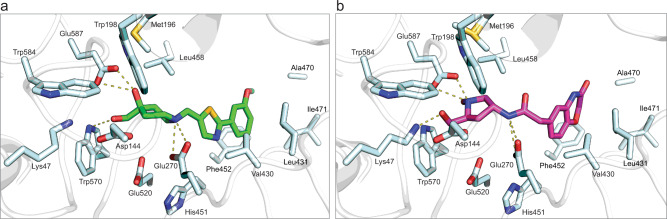
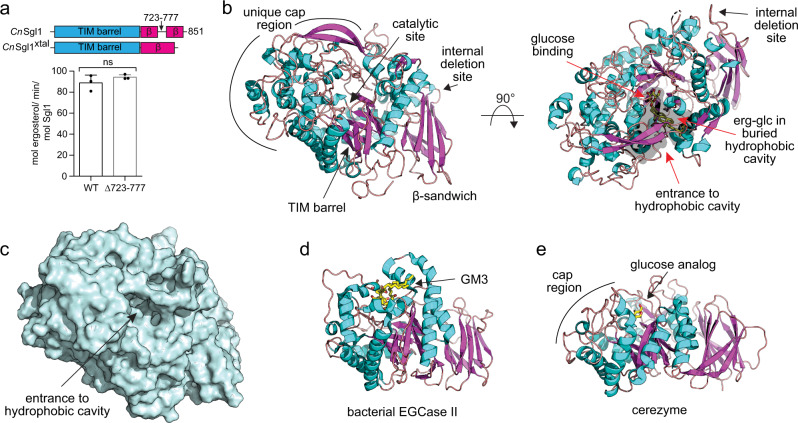
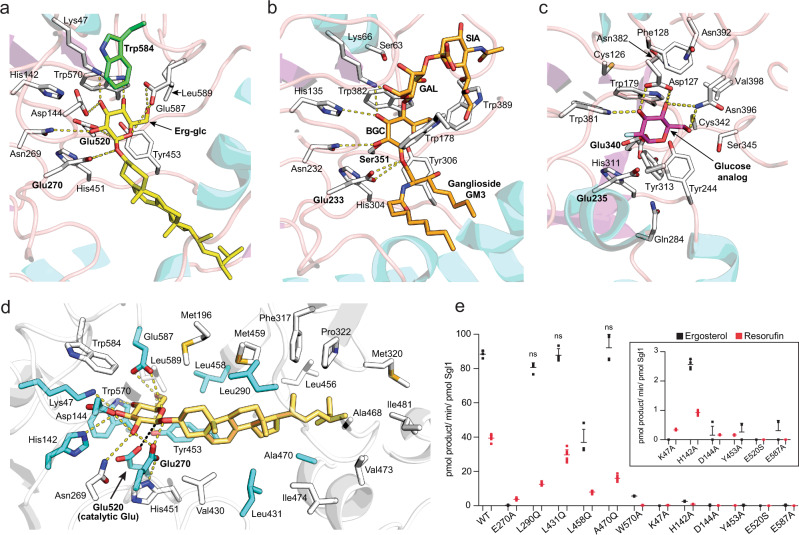
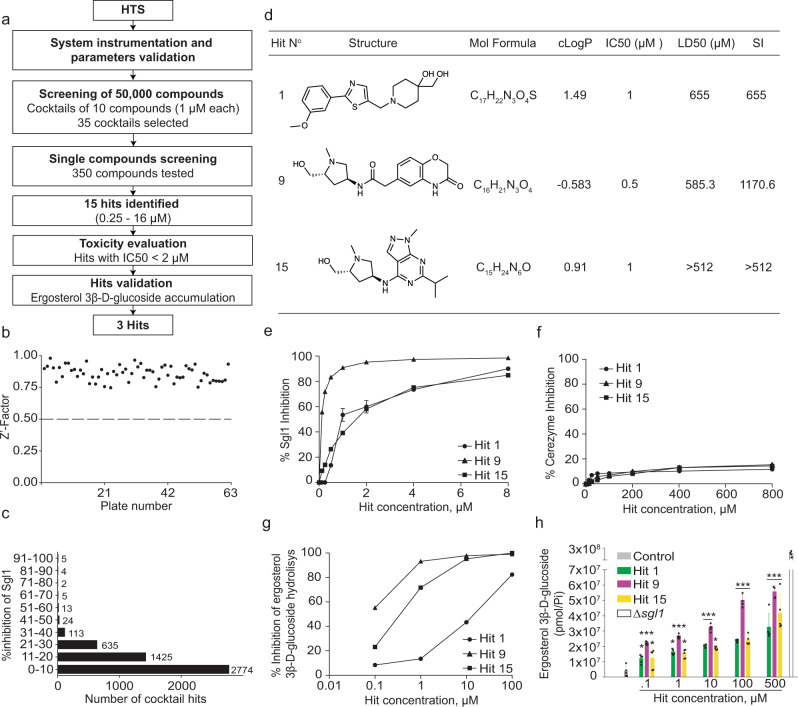
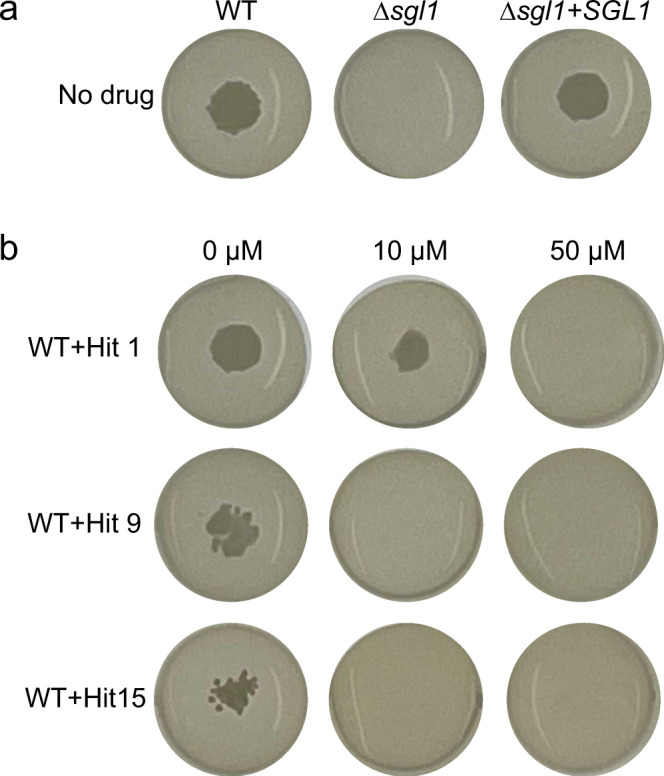
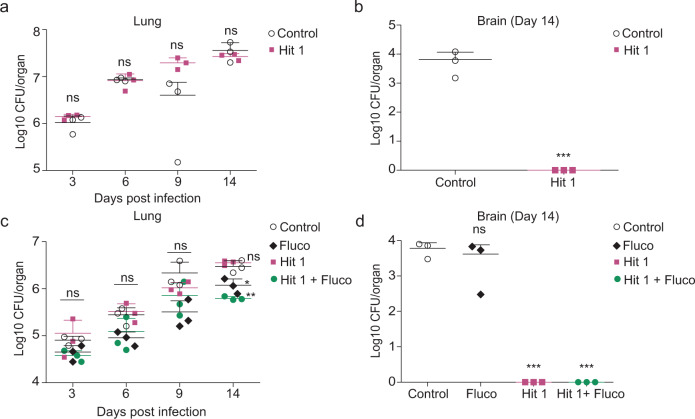
Pathogenic fungi exhibit a heavy burden on medical care and new therapies are needed. Here, we develop the fungal specific enzyme sterylglucosidase 1 (Sgl1) as a therapeutic target. Sgl1 converts the immunomodulatory glycolipid ergosterol 3β-D-glucoside to ergosterol and glucose. Previously, we found that genetic deletion of Sgl1 in the pathogenic fungus Cryptococcus neoformans (Cn) results in ergosterol 3β-D-glucoside accumulation, renders Cn non-pathogenic, and immunizes mice against secondary infections by wild-type Cn, even in condition of CD4+ T cell deficiency. Here, we disclose two distinct chemical classes that inhibit Sgl1 function in vitro and in Cn cells. Pharmacological inhibition of Sgl1 phenocopies a growth defect of the Cn Δsgl1 mutant and prevents dissemination of wild-type Cn to the brain in a mouse model of infection. Crystal structures of Sgl1 alone and with inhibitors explain Sgl1's substrate specificity and enable the rational design of antifungal agents targeting Sgl1.
致病真菌给医疗带来了沉重负担,因此需要新的治疗方法。在这里,我们将真菌特异性酶甾醇葡糖苷酶 1(Sgl1)作为治疗靶点。Sgl1 将免疫调节糖脂麦角固醇 3β-D-葡糖苷转化为麦角固醇和葡萄糖。此前,我们发现,在致病性真菌新生隐球菌(Cn)中,Sgl1 的基因缺失会导致麦角固醇 3β-D-葡糖苷积累,使 Cn 失去致病性,并使小鼠对野生型 Cn 的二次感染产生免疫,即使在 CD4+T 细胞缺乏的情况下也是如此。在这里,我们揭示了两类可在体外和 Cn 细胞中抑制 Sgl1 功能的化合物。Sgl1 的药理学抑制可模拟 Cn Δsgl1 突变体的生长缺陷,并防止野生型 Cn 在感染小鼠模型中向大脑传播。Sgl1 及其抑制剂的晶体结构解释了 Sgl1 的底物特异性,并为靶向 Sgl1 的抗真菌药物的合理设计提供了依据。