Department of Microbiology and Immunology, Stony Brook University, Stony Brook, NY, 11794, USA.
Division of Infectious Diseases, School of Medicine, Stony Brook University, Stony Brook, NY, 11794, USA.
Mucosal Immunol. 2022 Jun;15(6):1416-1430. doi: 10.1038/s41385-022-00570-3. Epub 2022 Oct 13.
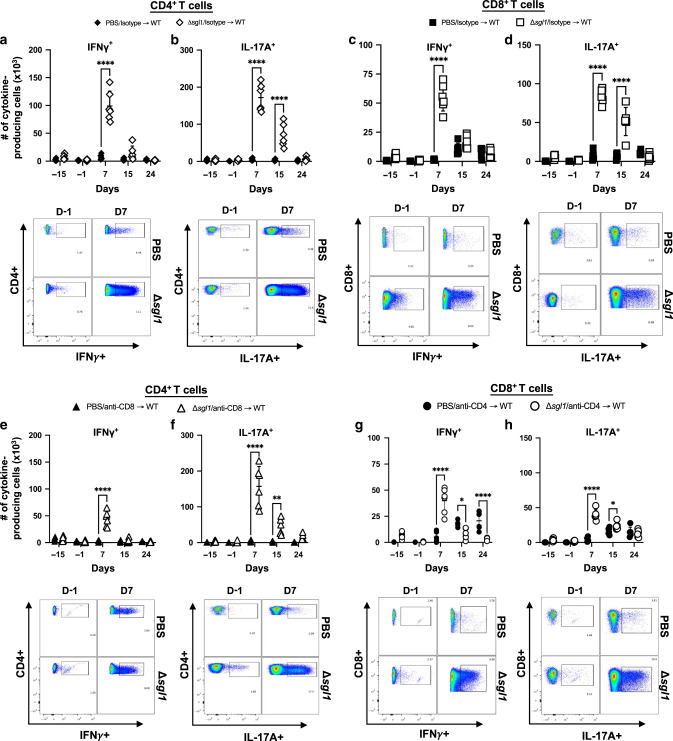
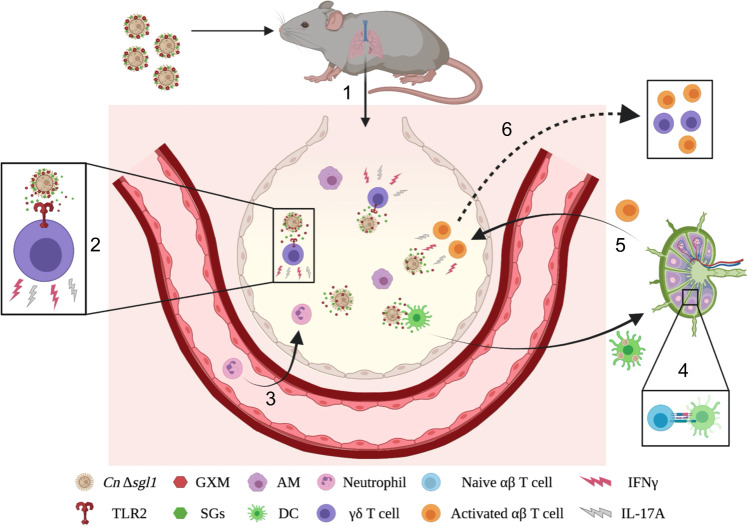
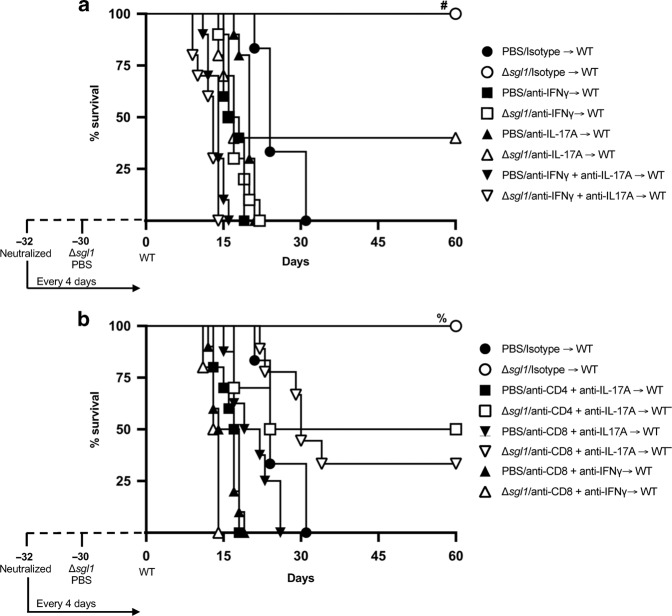
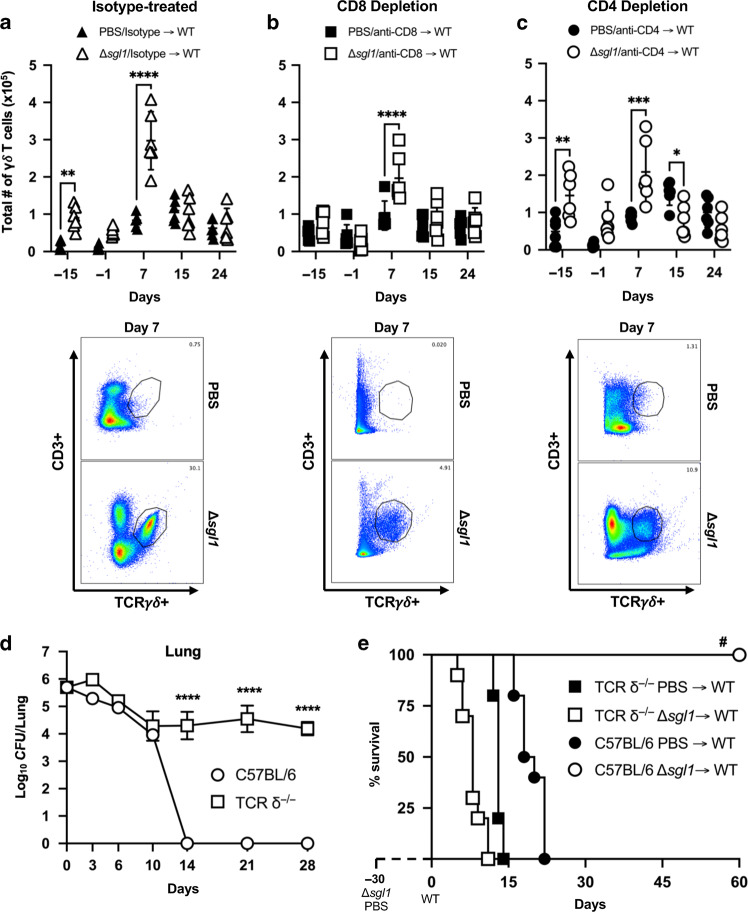
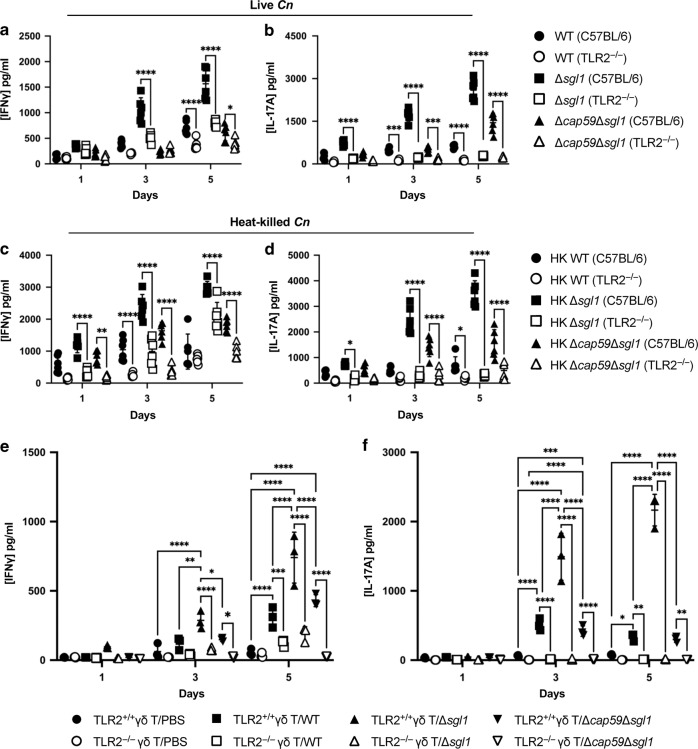
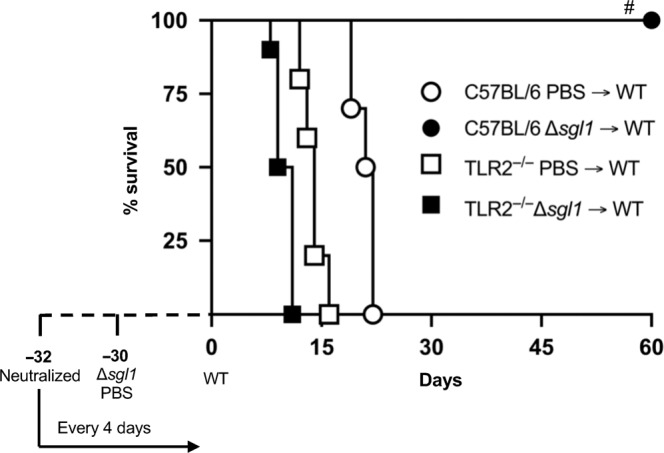
We previously reported that administration of Cryptococcus neoformans Δsgl1 mutant vaccine, accumulating sterylglucosides (SGs) and having normal capsule (GXM), protects mice from a subsequent infection even during CD4 T cells deficiency, a condition commonly associated with cryptococcosis. Here, we studied the immune mechanism that confers host protection during CD4T deficiency. Mice receiving Δsgl1 vaccine produce IFNγ and IL-17A during CD4 T (or CD8 T) deficiency, and protection was lost when either cytokine was neutralized. IFNγ and/or IL-17A are produced by γδ T cells, and mice lacking these cells are no longer protected. Interestingly, ex vivo γδ T cells are highly stimulated in producing IFNγ and/or IL-17A by Δsgl1 vaccine, but this production was significantly decreased when cells were incubated with C. neoformans Δcap59/Δsgl1 mutant, accumulating SGs but lacking GXM. GXM modulates toll-like receptors (TLRs), including TLR2. Importantly, neither Δsgl1 nor Δcap59/Δsgl1 stimulate IFNγ or IL-17A production by ex vivo γδ T cells from TLR2 mice. Finally, TLR2 animals do not produce IL-17A in response to Δsgl1 vaccine and were no longer protected from WT challenge. Our results suggest that SGs may act as adjuvants for GXM to stimulate γδ T cells in producing IFNγ and IL-17A via TLR2, a mechanism that is still preserved upon CD4 T deficiency.
我们之前报道过,施用积累甾醇葡糖苷(SGs)且具有正常荚膜(GXM)的新型隐球菌Δsgl1 突变体疫苗可保护小鼠免受随后的感染,即使在 CD4 T 细胞缺乏的情况下,这种情况通常与隐球菌病有关。在这里,我们研究了在 CD4T 缺乏期间赋予宿主保护的免疫机制。接受Δsgl1 疫苗的小鼠在 CD4T(或 CD8T)缺乏时会产生 IFNγ和 IL-17A,当中和任何一种细胞因子时,保护作用都会丧失。IFNγ和/或 IL-17A 由 γδ T 细胞产生,缺乏这些细胞的小鼠不再受到保护。有趣的是,体外γδ T 细胞受到 Δsgl1 疫苗的强烈刺激,产生 IFNγ和/或 IL-17A,但当细胞与积累 SGs 但缺乏 GXM 的新型隐球菌Δcap59/Δsgl1 突变体孵育时,这种产生显著减少。GXM 调节 Toll 样受体(TLR),包括 TLR2。重要的是,Δsgl1 和 Δcap59/Δsgl1 均不会刺激 TLR2 小鼠的体外γδ T 细胞产生 IFNγ或 IL-17A。最后,TLR2 动物不会对Δsgl1 疫苗产生 IL-17A,并且不再对 WT 挑战有保护作用。我们的结果表明,SGs 可能作为 GXM 的佐剂,通过 TLR2 刺激 γδ T 细胞产生 IFNγ和 IL-17A,这种机制在 CD4T 缺乏时仍然存在。