Wang Wendy Jingwen, Grymak Anastasiia, Waddell John Neil, Choi Joanne Jung Eun
Sir John Walsh Research Institute, Faculty of Dentistry, University of Otago, Dunedin, New Zealand.
Biomater Investig Dent. 2021 Sep 29;8(1):137-151. doi: 10.1080/26415275.2021.1979981. eCollection 2021.
The aim of this study was to assess the effect of light curing intensity and wavelength spectrum on heat generation and chemomechanical properties of bulk-fill composites.
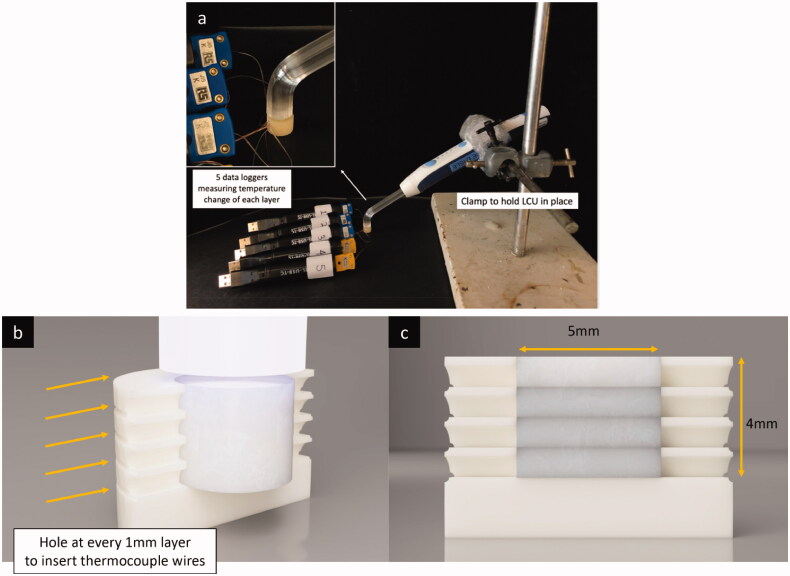
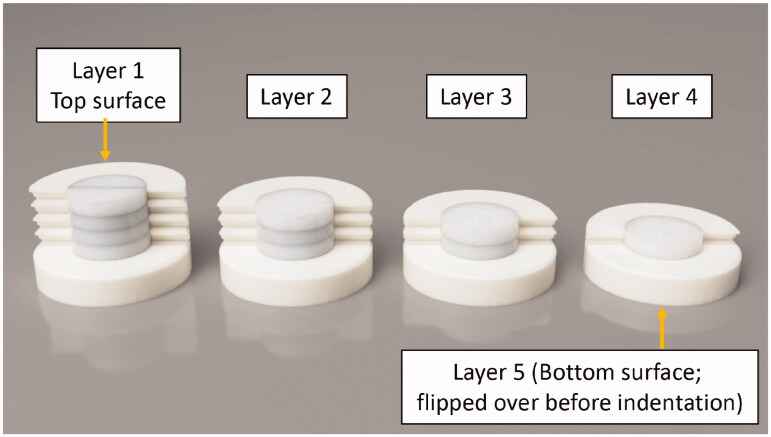
Four bulk-fill restorative materials (Filtek bulk-fill, Tetric PowerFill bulk-fill, Beautifil Bulk restorative and Admira Fusion X-tra were used in this study. A total of 100 cylindrical specimens of each composite ( = 25/group) were prepared, then cured using monowave light curing unit (LCU) with a single light intensity of 1470 mW/cm, and polywave LCU with three different light intensities (1200,2100, 3050mW/cm). The temperature change during polymerisation was measured by five K-type thermocouples placed in each 1 mm layer from top to bottom. Hardness and degree of conversion of composites at each level were evaluated. Results were statistically analysed.
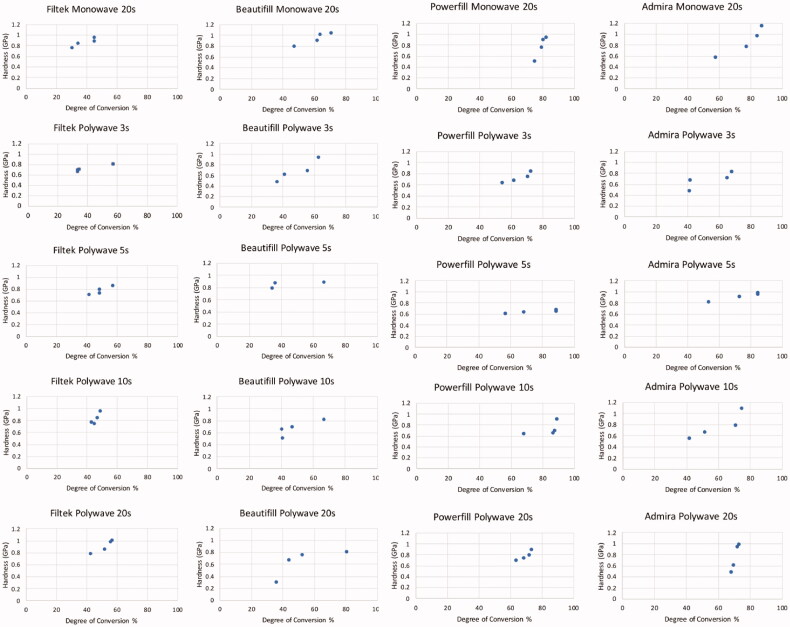
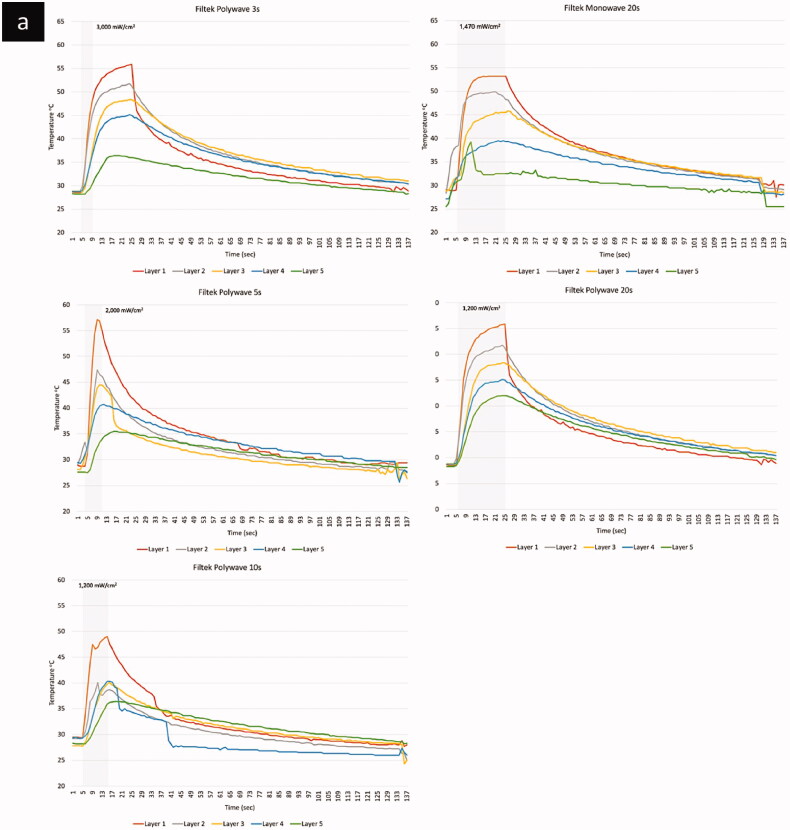
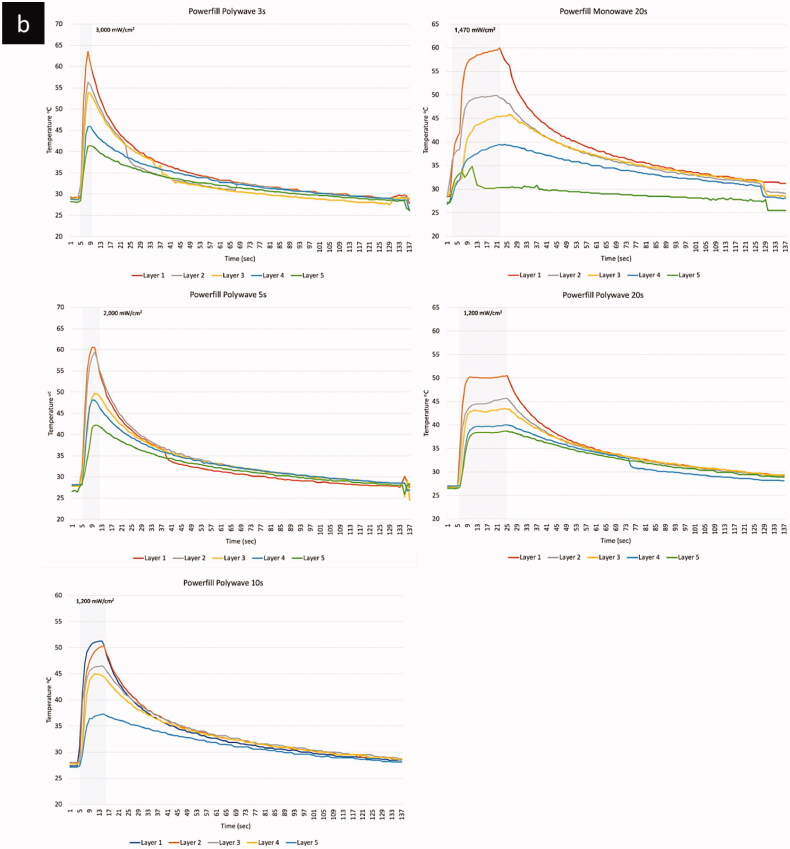
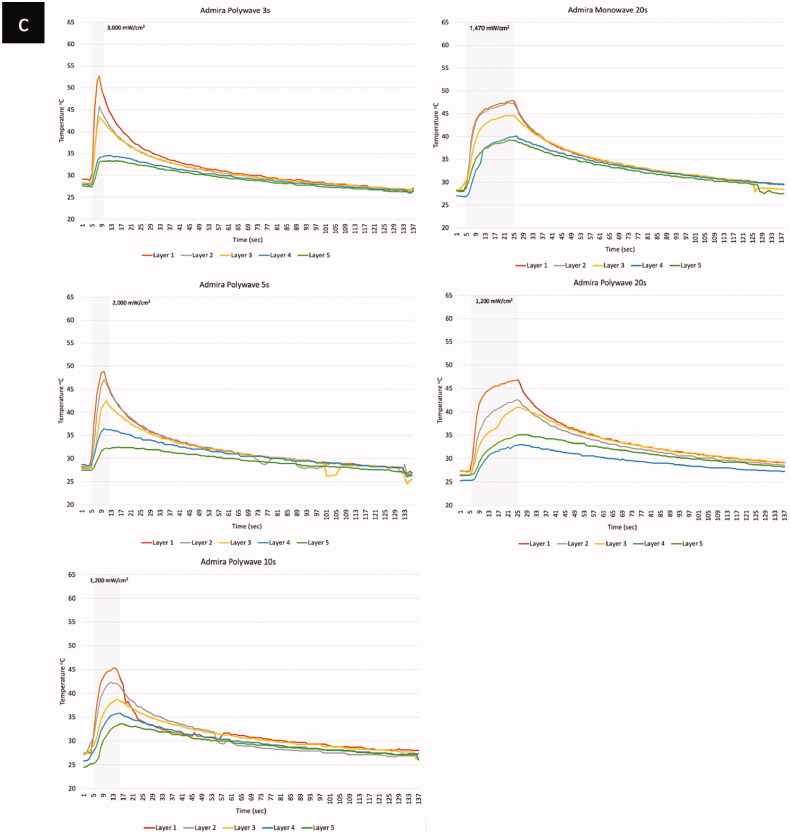
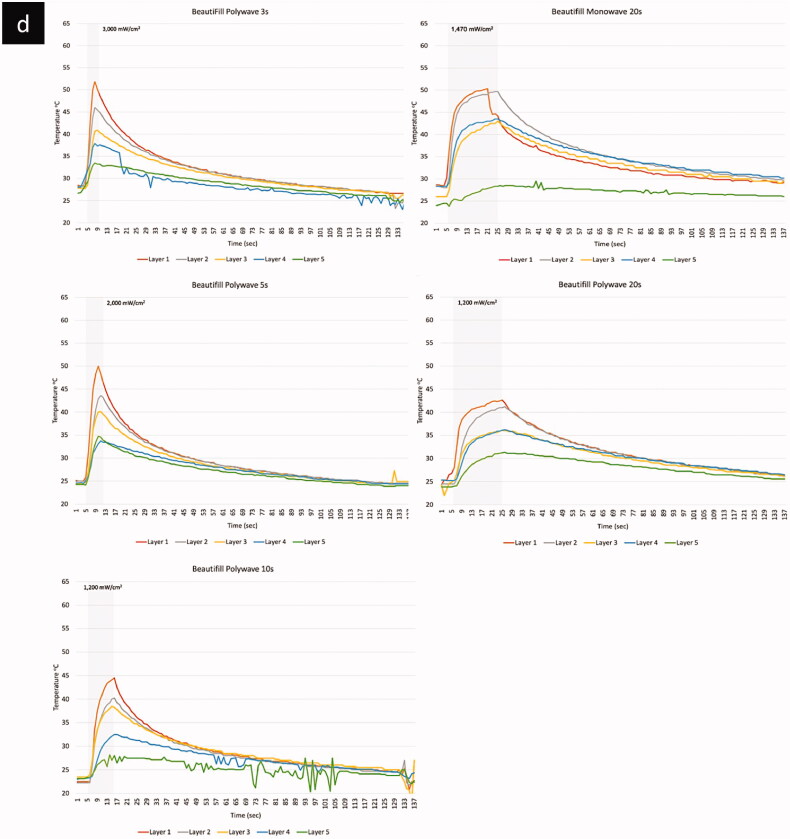
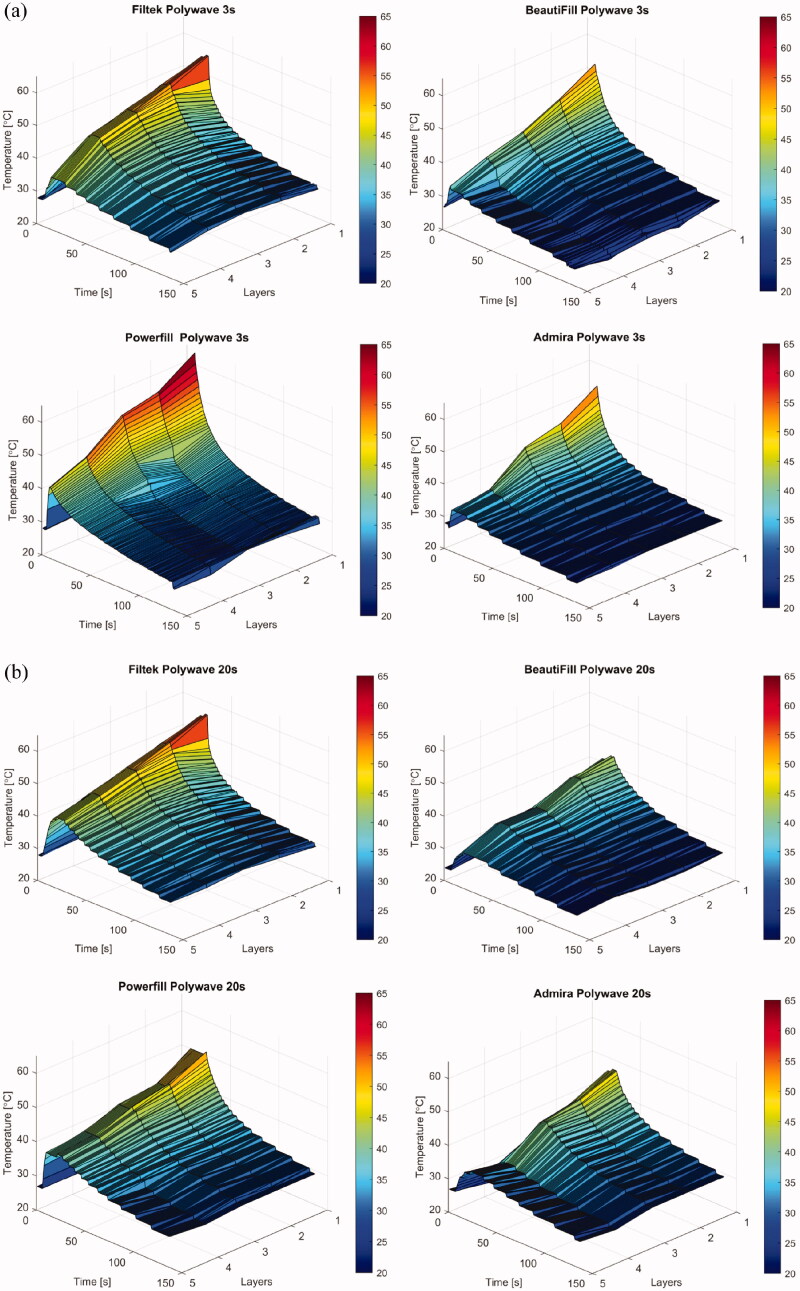
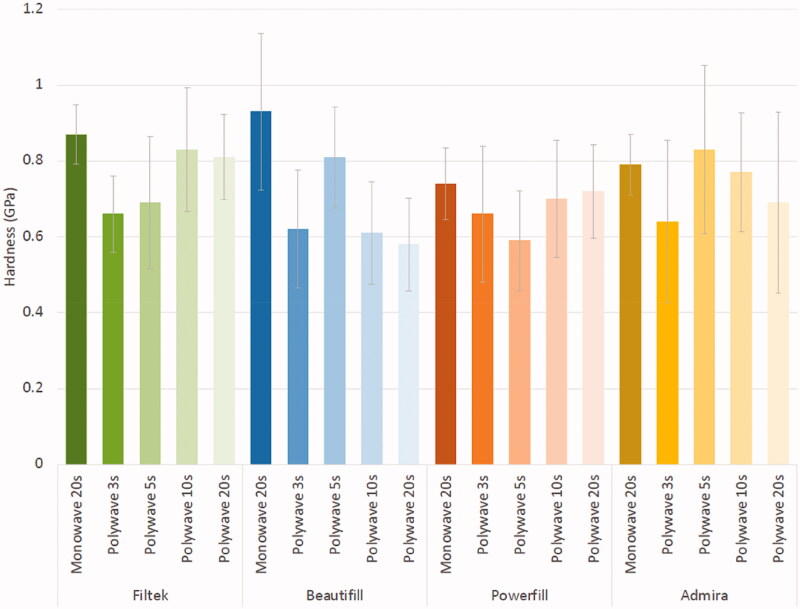
The use of polywave LCU resulted in statistically higher peak temperatures ranging between 31.4-63.5 °C compared to the temperature generated by monowave LCU ranging between 29.5-60 °C ( < .05). Curing using polywave LCU with the highest light intensity of 3050 mW/cm caused the highest peak temperature irrespective of the composite types. There was no significant difference in hardness with different light curing intensities and curing times, regardless of the bulk-fill resin materials ( > .05). A positive correlation was also found between the hardness and the DoC of the four bulk-fill composites.
The change in temperature during polymerisation of bulk-fill composites were found to be proportional to the increase in light curing intensity. Mechanical properties of the bulk-fill composites were dependent on the composition and the type of photoinitiators.
本研究旨在评估光固化强度和波长光谱对大块充填复合树脂产热及化学机械性能的影响。
本研究使用了四种大块充填修复材料(Filtek大块充填材料、Tetric PowerFill大块充填材料、Beautifil Bulk修复材料和Admira Fusion X-tra)。每种复合材料制备了总共100个圆柱形试件(每组25个),然后使用单波1470 mW/cm光强的单波光固化机(LCU)和三种不同光强(1200、2100、3050 mW/cm)的多波LCU进行固化。通过沿试件从顶部到底部每1 mm层放置的5个K型热电偶测量聚合过程中的温度变化。评估各水平下复合材料的硬度和转化率。对结果进行统计学分析。
与单波LCU产生的29.5 - 60°C的温度相比,使用多波LCU导致的峰值温度在统计学上更高,范围为31.4 - 63.5°C(P < 0.05)。无论复合材料类型如何,使用光强最高为3050 mW/cm的多波LCU进行固化都会导致最高的峰值温度。无论大块充填树脂材料如何,不同光固化强度和固化时间下的硬度均无显著差异(P > 0.05)。还发现四种大块充填复合材料的硬度和转化率之间存在正相关。
发现大块充填复合树脂聚合过程中的温度变化与光固化强度的增加成正比。大块充填复合树脂的机械性能取决于光引发剂的组成和类型。