Department of Psychological and Brain Sciences, The University of Iowa & The University of Iowa College of Medicine, Iowa City, United States.
Cognitive Control Collaborative, The University of Iowa & The University of Iowa College of Medicine, Iowa City, United States.
Elife. 2021 Oct 8;10:e69480. doi: 10.7554/eLife.69480.
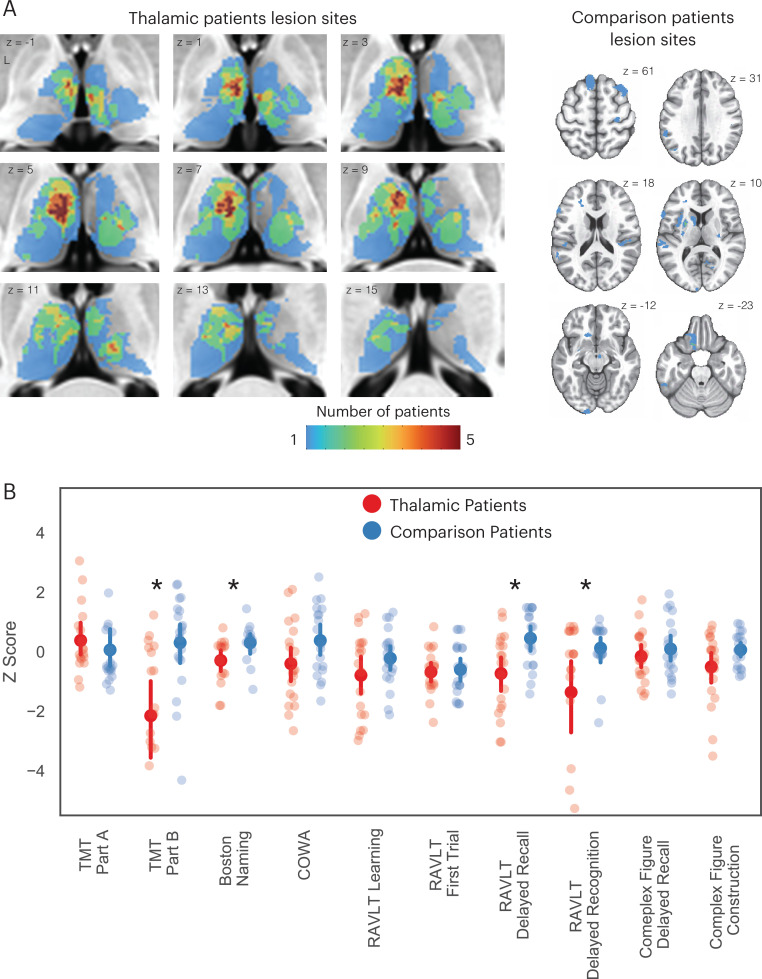
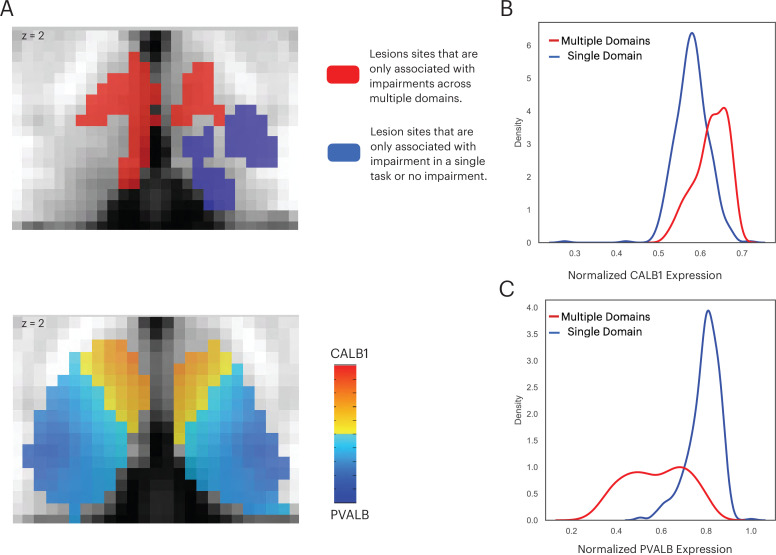
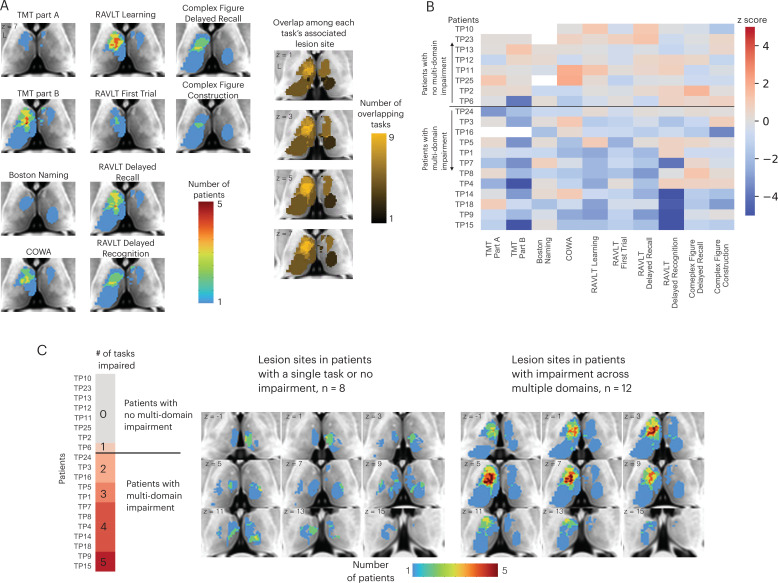
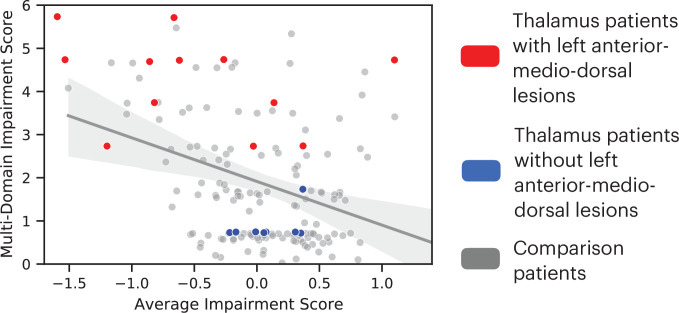
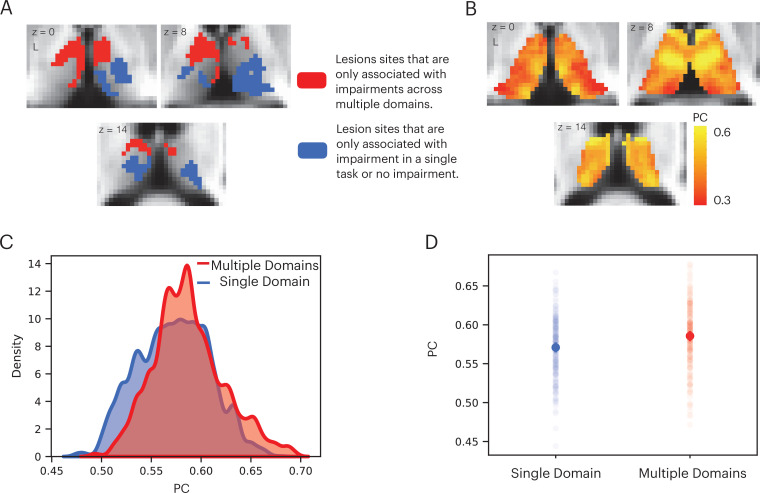
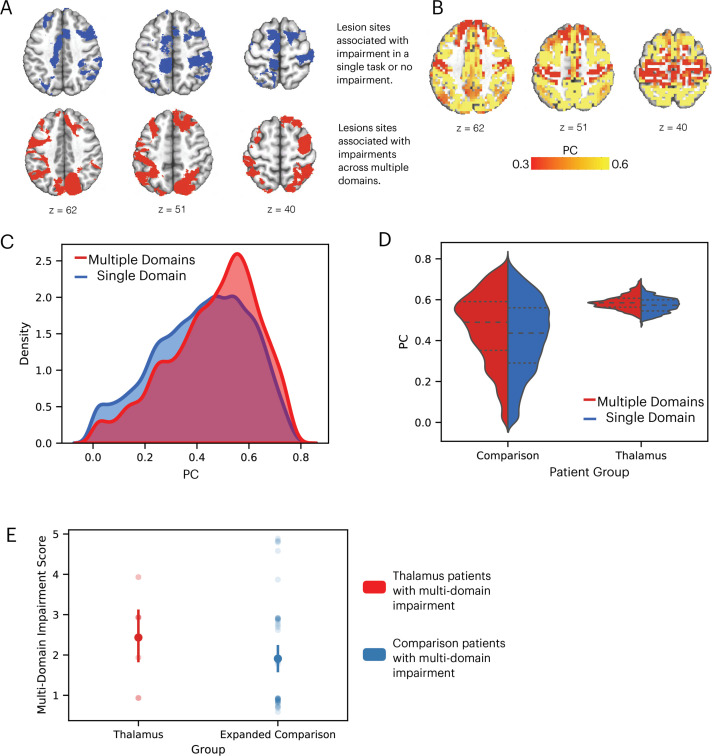
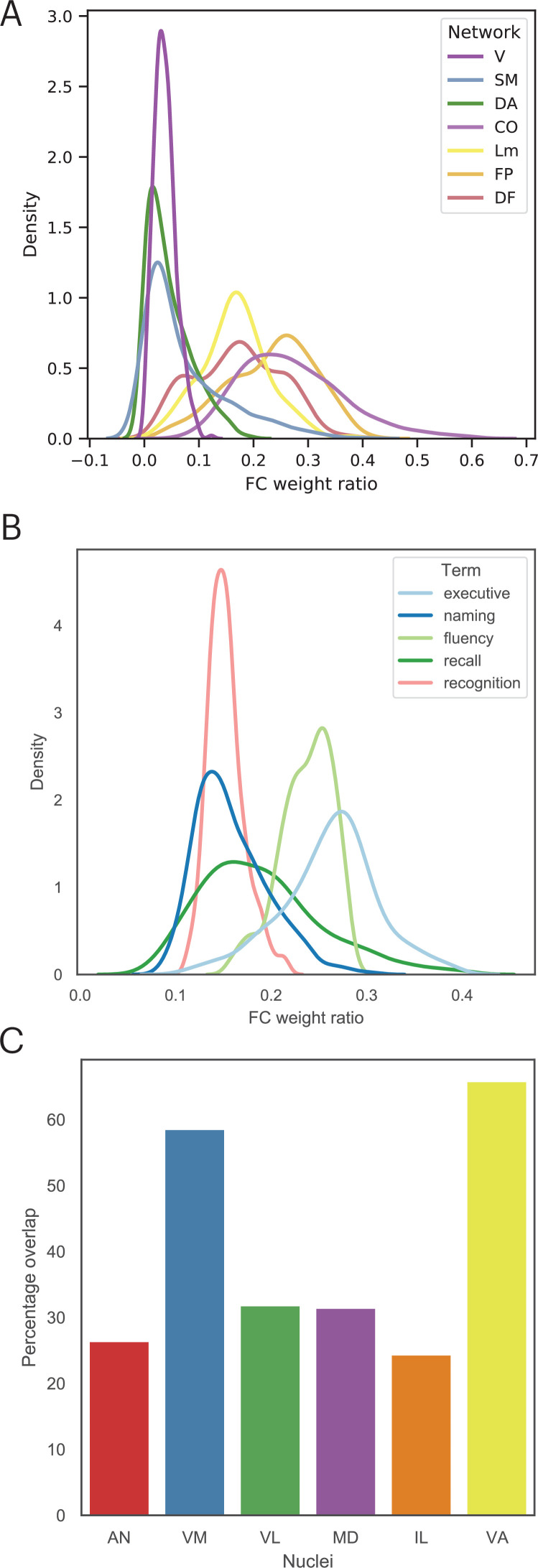
Hubs in the human brain support behaviors that arise from brain network interactions. Previous studies have identified hub regions in the human thalamus that are connected with multiple functional networks. However, the behavioral significance of thalamic hubs has yet to be established. Our framework predicts that thalamic subregions with strong hub properties are broadly involved in functions across multiple cognitive domains. To test this prediction, we studied human patients with focal thalamic lesions in conjunction with network analyses of the human thalamocortical functional connectome. In support of our prediction, lesions to thalamic subregions with stronger hub properties were associated with widespread deficits in executive, language, and memory functions, whereas lesions to thalamic subregions with weaker hub properties were associated with more limited deficits. These results highlight how a large-scale network model can broaden our understanding of thalamic function for human cognition.
人脑中的枢纽支持源于大脑网络相互作用的行为。先前的研究已经确定了与多个功能网络相连的人类丘脑中的枢纽区域。然而,丘脑枢纽的行为意义尚未确定。我们的框架预测,具有强枢纽特性的丘脑亚区广泛参与多个认知领域的功能。为了验证这一预测,我们研究了人类丘脑局灶性病变患者,并结合人类丘脑皮质功能连接组的网络分析。支持我们的预测,具有更强枢纽特性的丘脑亚区的病变与执行、语言和记忆功能的广泛缺陷有关,而具有较弱枢纽特性的丘脑亚区的病变与更有限的缺陷有关。这些结果突出了大规模网络模型如何拓宽我们对人类认知中丘脑功能的理解。